How to Tell If Pressure Treated Wood Is Dry
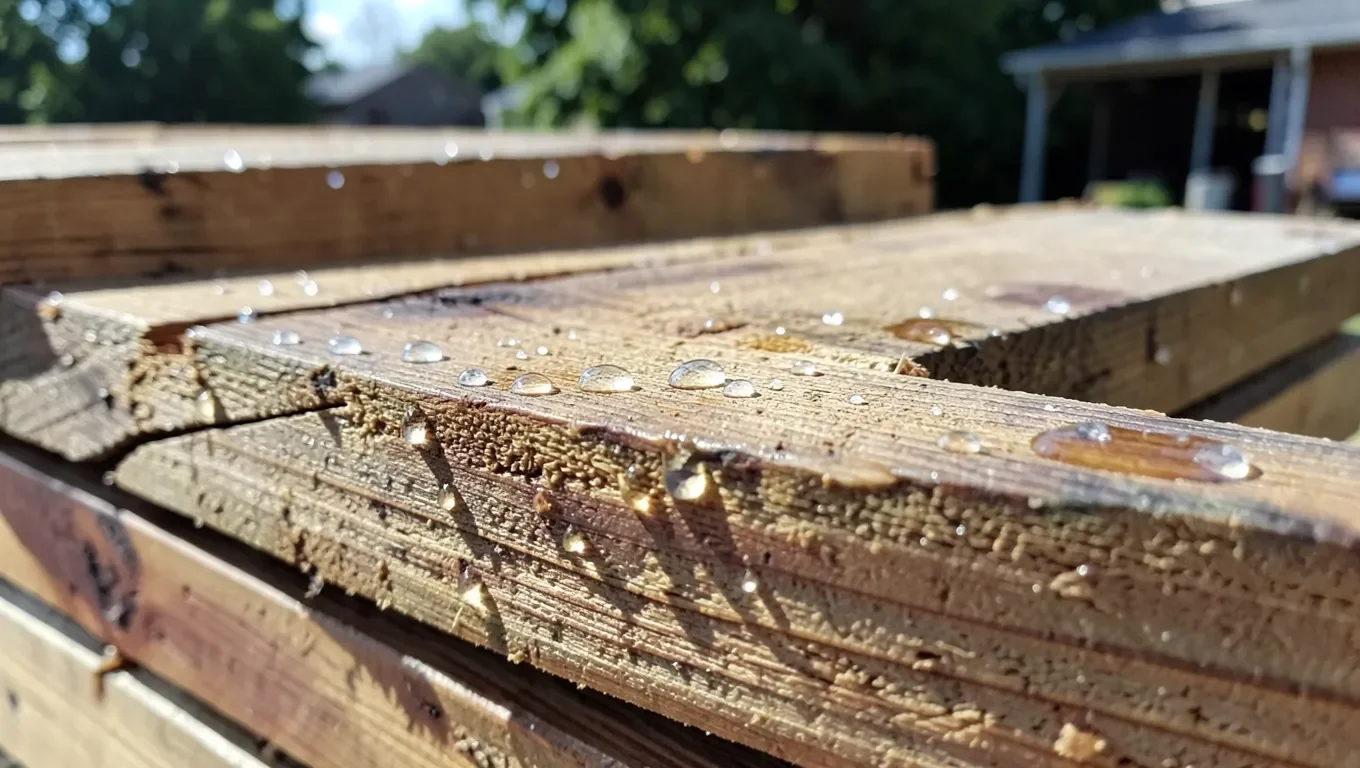
To tell if pressure treated wood is dry, sprinkle water on the surface: if it soaks in within a few seconds, the wood is dry; if it beads up or pools, it needs more time. A pin-type moisture meter reading below 15% confirms it more precisely than the water test alone.
Skipping this check before staining or painting has real consequences worth knowing. This page covers the actual testing methods in depth – for a quick lookup table of typical drying times by climate, see our treated lumber drying time chart.
Why This Actually Matters
Pressure treatment forces preservative solution deep into the wood, leaving it far wetter than it looks or feels at first glance. Finishing it before that moisture has escaped traps it under the coating, which typically shows up within a season as peeling, bubbling, or an uneven, blotchy finish. Testing first isn’t extra caution – it’s the difference between a finish that lasts and one that fails fast.
The Most Precise Way To Check
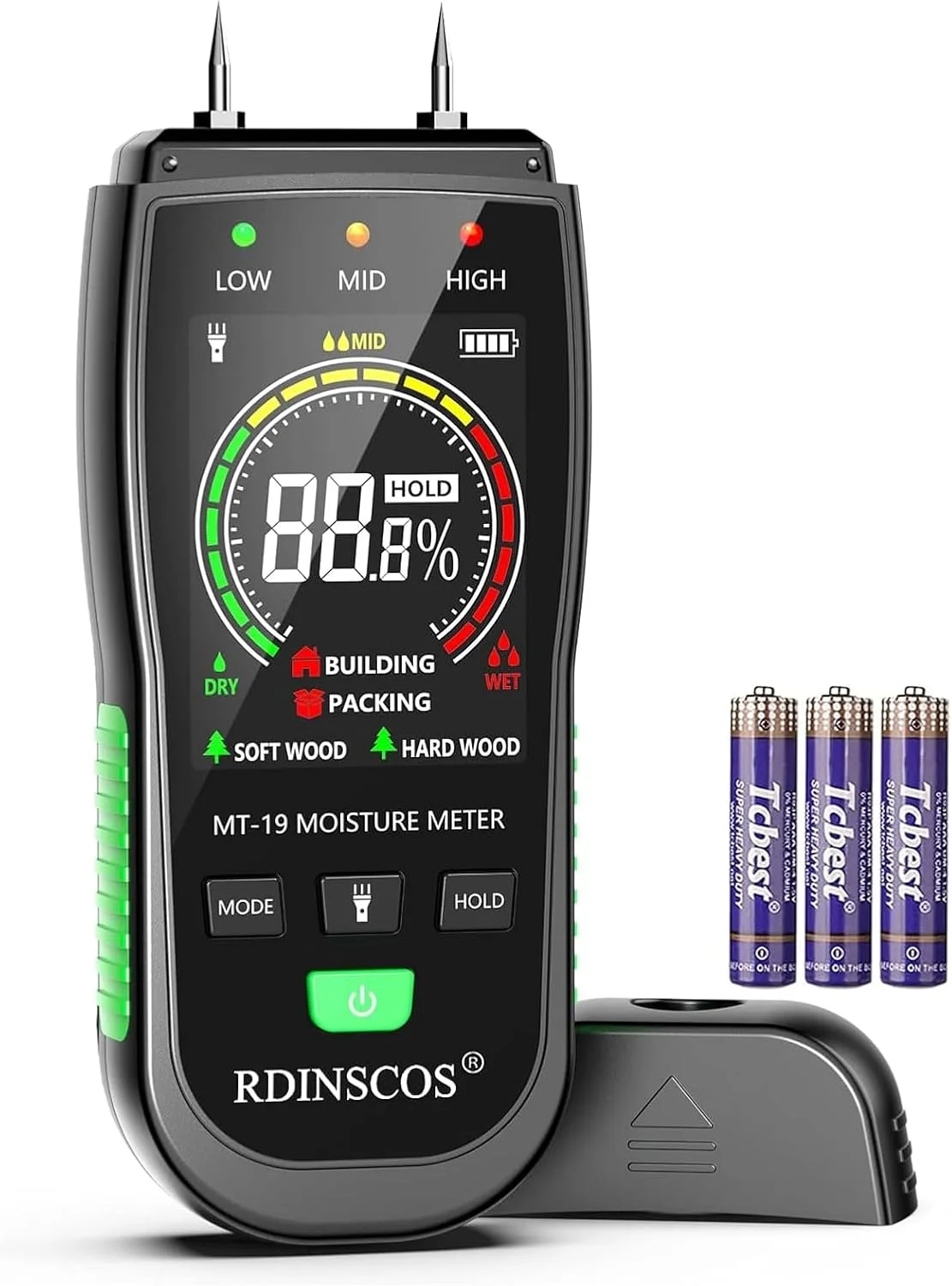 |
RDINSCOS Pin-Type Digital Moisture Meter Pins penetrate about 10mm into the board for a real internal reading, not just a surface guess – the water-bead test can’t tell you the wood is dry an inch below the surface.
|
Visual and Tactile Signs
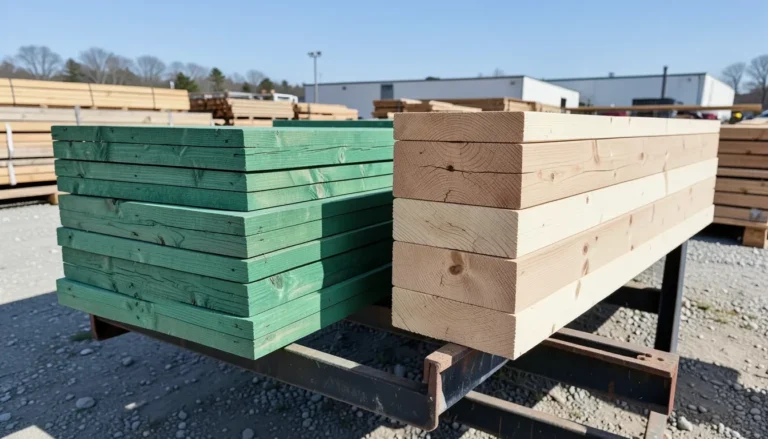
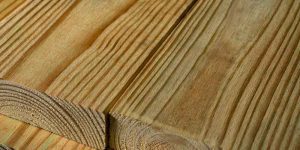
Before reaching for any tool, a quick look and touch tells you a lot. Wet pressure-treated wood often looks darker and can have a slightly greenish or damp sheen; as it dries, it lightens to a more uniform tan or gray. Touch matters too – wood that still feels cool or faintly damp against your palm, especially compared to a piece you know is dry, hasn’t finished releasing its moisture yet. Neither sign is precise enough to rely on alone, but they’re a useful first check before running the water or meter test.
The Water-Bead Test, Step by Step
- Fill a spray bottle with plain water.
- Mist a light spray onto a flat section of the board, away from any cut ends (which dry differently than the face).
- Watch what happens over the next 10-15 seconds.
- If the water soaks in and darkens the wood evenly, it’s dry enough to finish. If it beads up, sits on the surface, or pools, the wood is still too wet.
Test more than one spot, especially on a full deck or fence – boards that sat in shade or stacked flat on the ground often dry slower than ones that got full sun and airflow, even from the same batch.
Using a Moisture Meter
A moisture meter replaces the guesswork of the water test with an actual number. There are two types:
- Pin-type meters use small pins that penetrate the surface to measure moisture below the outer layer, which is more accurate on rough or uneven lumber but leaves tiny holes.
- Pinless meters scan the surface electromagnetically with no marks left behind, which is preferable on finished or visible surfaces but can be thrown off by surface-only moisture.
To use a pin-type meter: insert the pins fully into the wood at a few different spots, and take the highest reading you get rather than an average – the wettest pocket is what determines whether the board is safe to finish. A reading of 15% or below is the standard target before staining or painting.
How Long This Actually Takes
Typical drying time is 2-4 weeks in a warm, dry climate, 6-8 weeks somewhere humid, and up to 2-3 months over a cold, wet season – not the 6+ months sometimes claimed elsewhere, which overstates it for most standard treated lumber. KDAT (kiln-dried after treatment) lumber, marked on the tag, is ready for finishing almost immediately since it skips this waiting period entirely. These are starting estimates; the water and meter tests above are what actually confirm readiness, not the calendar.
Common Testing Mistakes
- Testing only one spot – moisture varies across a board and across a project; test several boards and several spots per board.
- Testing right after rain or dew – surface moisture from weather will fail both tests even if the wood’s core is genuinely dry; wait for the surface to fully dry first.
- Relying on the calendar alone – two boards from the same batch can dry at very different rates depending on storage and sun exposure.
- Averaging moisture meter readings – use the highest reading among your test points, not an average, since that’s the wettest spot that could still cause finish failure.
Frequently Asked Questions
How long does it take for pressure-treated wood to dry?
Typically 2-4 weeks in a warm, dry climate, 6-8 weeks in a humid one, and up to 2-3 months in cold, wet weather. Always confirm with the water-bead test or a moisture meter rather than relying on the calendar alone.
How can I tell if pressure-treated wood is dry enough to paint?
Sprinkle water on the surface – if it soaks in within seconds rather than beading up, it’s likely dry. A moisture meter reading of 15% or below confirms it more precisely.
What’s the best way to test pressure-treated wood for dryness?
A pin-type moisture meter gives the most precise answer, since it measures moisture below the surface rather than just how water behaves on top. The water-bead test is a reliable free alternative if you don’t have a meter on hand.
What moisture percentage is safe for staining pressure-treated wood?
15% or below is the standard target on a moisture meter before staining or painting treated lumber.
Conclusion
Telling if pressure treated wood is dry comes down to two reliable checks: the water-bead test for a quick free answer, and a moisture meter reading below 15% for a precise one. Skip the guesswork of a fixed waiting period and test the actual wood in front of you before staining or painting it.
Sponsored / affiliate links. As an Amazon Associate I earn from qualifying purchases. I may earn additional commission from eligible campaigns.