How Long to Let Wood Dry After Pressure Washing (Staining & Painting Guide)
After pressure washing wood, wait at least 48 hours before staining or sealing — 72 hours in humid or cool conditions. For painting, extend the wait to 3–4 days. Wood must read below 15% moisture on a meter before any finish will bond properly. Rushing this step causes peeling, bubbling, and finishes that fail within months. This guide covers exact wait times by wood type and weather, how to test moisture correctly, and the fastest safe way to prep for staining or painting after pressure washing.
⚡ Quick Answer
Wait 48 hours after pressure washing before staining wood in average weather. In hot, dry conditions, 24 hours may suffice. In humid weather or for thick hardwoods, wait 72 hours or more. For painting, wait 3–4 days. Always confirm with a moisture meter — wood must read below 15% before applying any stain or sealer.
Why Drying Time Matters After Pressure Washing Wood
That high-powered water spray doesn’t just clean — it soaks deep into the wood fibers. If you apply stain or paint too soon, the trapped moisture fights back, causing bubbles, cracks, or a finish that flakes off in months.
Proper drying ensures the stain soaks in evenly, protecting your wood from weather, UV rays, and bugs. According to experts at the USDA Forest Products Laboratory, wood needs time to release absorbed water to avoid defects like warping. This isn’t just about looks — it’s about making your project last years longer.
Factors That Influence Drying Time for Pressure-Washed Wood
How long to let wood dry after pressure washing depends on a few key factors. Understanding these helps you plan accurately rather than guessing.
Weather is the biggest variable. Warm, sunny days with low humidity let water evaporate fast. Cool, humid, or cloudy conditions can extend drying significantly. Wood type matters too — softwoods like pine and cedar dry quicker because they’re less dense. Hardwoods and pressure-washed pressure-treated lumber take longer. Higher PSI means deeper water penetration and longer wait times.
How these factors affect drying time:
| Factor | Fast Drying (Under 48 Hours) | Slow Drying (3+ Days) |
|---|---|---|
| Temperature | 70°F+ (warm and sunny) | Below 50°F (cool or overcast) |
| Humidity | Low (under 50%) | High (over 70%, muggy) |
| Sunlight | Direct exposure all day | Shaded or cloudy |
| Wood Type | Pine, cedar (softwood) | Oak, pressure-treated (dense) |
| Pressure Used | Low PSI (1,000–1,500) | High PSI (over 2,000) |
How Long Should You Wait? General Guidelines
As a rule of thumb, aim for at least 48 hours. That’s the sweet spot for most decks and fences in average weather — it gives the surface a chance to dry while the inside catches up. In a drier climate, 24 hours might be sufficient for lighter softwoods.
For painting instead of staining, extend the wait to 3–4 days. Paint needs even drier wood to bond without blistering. If rain falls after washing, add at least a full day after skies clear. In humid regions, the wait can stretch to 5–7 days — use a moisture meter to confirm rather than guessing.
If the wood required multiple passes with the washer due to heavy grime, allow extra time. The more water forced into the fibers, the longer the full dry takes.
How to Check If Your Wood Is Ready After Pressure Washing
Waiting blindly is unnecessary. Testing is straightforward and takes just minutes.
- Touch Test: Run your hand over the wood. It should feel dry, not cool or damp. If it’s still chilly, wait longer — moisture makes it cooler to the touch.
- Water Drop Test: Sprinkle a few drops on the surface. If they bead up like on a waxed surface, it’s too wet. If they soak right in, you’re ready.
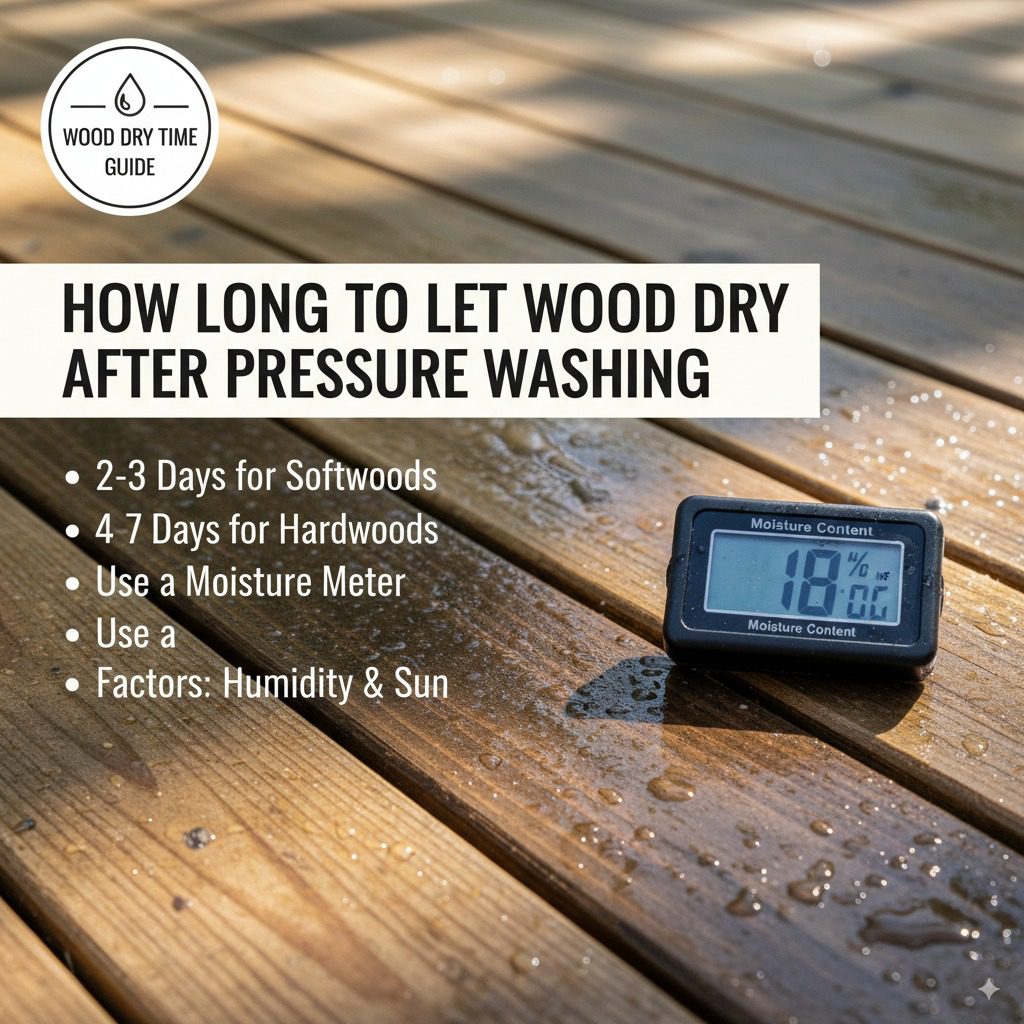
- Moisture Meter: Aim for under 15% moisture content. Test a few spots and average the readings. If any reading is above 19%, wait longer.
- Bag Test: Seal a board edge in a black trash bag under sun for an hour. No condensation inside means the wood is dry through.
Step-by-Step Guide to Pressure Washing and Proper Drying
Safety first: wear goggles, gloves, and closed shoes. Keep children and pets away, and never aim the wand at yourself.
- Gather Your Tools: Pressure washer (1,500–2,000 PSI for wood), wood cleaner or mild soap, garden hose, stiff brush, moisture meter, and tarps to protect plants.
- Prep the Area: Clear furniture and sweep debris. Wet nearby plants to shield them from runoff. Test the washer on a small hidden spot first.
- Wash Gently: Use a wide fan tip (40-degree nozzle). Hold it 12–18 inches away, working in sections from top to bottom. Use a wood-safe cleaner for mildew if needed. Rinse thoroughly.
- Inspect and Repeat: Check for missed grime. Go over stubborn spots at lower pressure. Avoid over-soaking — less water means less drying time.
- Start Drying: Once rinsed, allow air circulation. Prop boards if possible. Cover only if rain threatens, but don’t seal tightly.
- Monitor Weather: Check daily with the tests above. In good conditions, a fan or dehumidifier can safely speed drying.
- Move to Finishing: Once dry (48+ hours and tests pass), sand lightly for smoothness, then stain or paint.
Common Mistakes to Avoid When Drying Wood After Pressure Washing
- Rushing the Wait: Staining at 24 hours when conditions are humid leads to peeling. Patience is the single most important step.
- Ignoring Weather: Washing before a storm adds moisture instead of removing it. Plan for dry days ahead.
- Over-Pressuring: High PSI scars wood and drives water deep into the fibers. Use gentle settings (1,500 PSI or less for softwoods).
- Skipping the Moisture Test: Surface-dry doesn’t mean inside-dry. Always confirm with a moisture meter.
- Poor Airflow: Stacked or crowded boards trap moisture. Space them out for even drying on all sides.
Best Practices for Staining or Painting Your Dried Wood
Once dry, choose a quality stain or paint suited for outdoor use — oil-based for maximum protection, water-based for easier cleanup. Apply in shade or on overcast days to prevent the finish from drying too quickly before it can penetrate.
Drying time recommendations by wood type:
| Wood Type | Recommended Drying Time | Tips for Staining |
|---|---|---|
| Pine / Cedar (Softwood) | 24–48 hours | Light sand, one coat penetrates well. |
| Pressure-Treated | 48–72 hours | Use a moisture meter; aim for under 15%. |
| Oak / Mahogany (Hardwood) | 3–5 days | Two coats for even color coverage. |
| Redwood | 36–48 hours | Natural oils help; avoid over-staining. |
Stir your stain well, use a brush for edges and a roller for flat surfaces. Allow each coat to dry per label directions — typically 4–6 hours between coats.
Frequently Asked Questions About Drying Wood After Pressure Washing
How long does it really take for wood to dry after pressure washing?
Most times, 48 hours is enough in good weather. Humidity or thick hardwood can push it to 72 hours or more. Always confirm with a moisture meter — if it reads over 15%, wait longer regardless of how much time has passed.
Can I speed up the drying process safely?
Yes. Use fans for airflow or a dehumidifier in damp spots. Direct sun and a light breeze are the most effective natural helpers. Avoid heat lamps — they can warp wood by drying the surface before the interior moisture can escape.
What if I pressure washed in the rain?
Wait for the rain to stop, then allow at least a full extra day of dry weather before staining. Wet conditions during washing simply add moisture — skies need to be clear for the evaporation process to begin properly.
Is a moisture meter worth buying for this?
Yes — for under $20, a moisture meter removes all the guesswork. Aim for a reading under 15% before staining. It’s the single most reliable way to know if your wood is truly ready, and it works across every wood type and weather condition.
Recommended Product
General Tools MMD4E Digital Moisture Meter
Pin-type moisture meter with backlit LCD display and audible/visual alerts for high, medium, and low moisture levels. Reads wood moisture in seconds — perfect for confirming decks, fences, and siding are below 15% before staining.
Check Price on Amazon →What happens if I stain too soon?
The stain won’t penetrate properly, leading to peeling, blotching, or uneven color. It also traps moisture under the finish, which can cause mold. The fix is stripping and re-staining — far more work than simply waiting the extra 24 hours.
Does wood type change the drying time?
Yes — softwoods like pine and cedar dry in 24–48 hours. Pressure-treated lumber and hardwoods like oak take 48–72 hours or longer. See the drying time table above for a full breakdown by wood type.
Can I paint instead of stain after drying?
Yes. For painting, wait 3–4 days to ensure the wood is thoroughly dry. Use exterior-grade paint and prime first for extra protection against the elements and weather cycling.
Wrapping It Up: Your Path to a Beautiful, Lasting Wood Project
The 48-hour rule is your baseline — but conditions, wood type, and how much water the wash forced in all affect the real wait time. Use the moisture meter test as your final confirmation before reaching for the stain brush. A wood surface below 15% moisture is ready. Above that, another day of drying saves you from a failed finish and a costly redo.
Sponsored / affiliate links. As an Amazon Associate I earn from qualifying purchases. I may earn additional commission from eligible campaigns.