Can You Paint Pressure Treated Wood? Wait Time & Water Test
You can paint pressure treated wood once it is dry, and a passing water test is a better signal than a calendar date. Lumber can leave the treating cylinder above 50% moisture, so early paint traps water and peels. This guide covers the water-drop test, how long to wait, the right primer and paint (including one popular primer your deck should not get), and safe sanding.
Can You Paint Pressure Treated Wood?
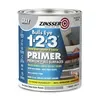 |
Best Primer for Treated Fences & Rails Zinsser Bulls Eye 1-2-3 All Surface Primer, Gray, Quart ($11.99) This is the quart whose data sheet we quote in the primer steps below: it dries to the touch in 30 minutes, takes a topcoat after 1 hour and bonds without sanding to glossy surfaces.
|
As an Amazon Associate we earn from qualifying purchases.
Yes, you can paint pressure treated wood treated with waterborne preservatives, which covers nearly all lumber sold for decks and fences. The Southern Forest Products Association (SFPA) says Southern Pine treated this way “accepts a finish similar to untreated Southern Pine,” with one condition: the wood should be dry before you finish it. The same guide says creosote and oilborne pentachlorophenol treatments are not paintable on a practical basis, so railroad ties and utility poles are out.
Why the dryness condition matters comes down to numbers. According to the SFPA guide to pressure-treated Southern Pine, dimension lumber must be at 19% moisture content or less before treatment, can exceed 50% when it comes out of the treating cylinder, and most of it is delivered without being redried.
Dimension lumber can exceed 50% moisture content when it leaves the treating cylinder (SFPA). Painted over that much water, the film blisters and peels as the board dries from underneath.
Look at the end tag for a KDAT (kiln-dried after treatment) or ADAT (air-dried after treatment) mark. SFPA describes both as returning the wood to its dry condition. If you are shopping, our guide to Lowe’s pressure treated lumber sizes and ratings explains how to read the rest of that tag. For posts and framing, retention matters too, and we cover it in our ground contact pressure treated wood guide.
How Long to Wait Before Painting Pressure Treated Wood
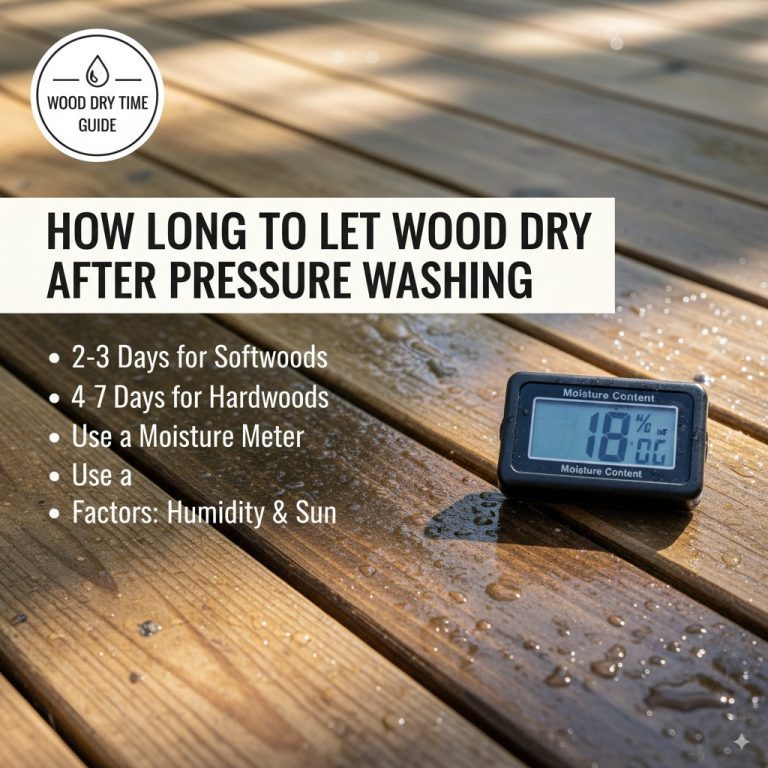
You will see “wait 3 to 6 months” repeated everywhere, and it is only a rule of thumb. The treater and wood-industry sources we read do not give a calendar number for painting. SFPA says the wood should be dry and leaves it there. YellaWood, a Southern Pine treated-lumber brand, goes further: it says to stain “within six weeks after construction so long as the wood is sufficiently dry,” and notes this differs from older advice to wait six months to a year.
| Source | What it says | What it means for you |
|---|---|---|
| SFPA, pressure-treated Southern Pine | Dry before finishing; lumber starts at 19% or less, can top 50% after treatment | Moisture decides, not the date |
| YellaWood staining guide | Stain within six weeks if the wood is sufficiently dry; old advice was six to 12 months | A dry board can be ready in weeks, a wet one in months |
| KDAT or ADAT end tag | Dried after treatment to return the wood to a dry condition | Run the water test first, then paint |
| Common “3 to 6 months” rule | A calendar guess that ignores climate, board thickness and stacking | Use it only as a reminder to test, not as proof of dryness |
Treat the table as a reason to test rather than wait blindly. A thin board stacked with airflow in a hot, dry spell can be ready far sooner than the same board in a damp, shaded pile.
How to Test If Pressure Treated Wood Is Ready to Paint
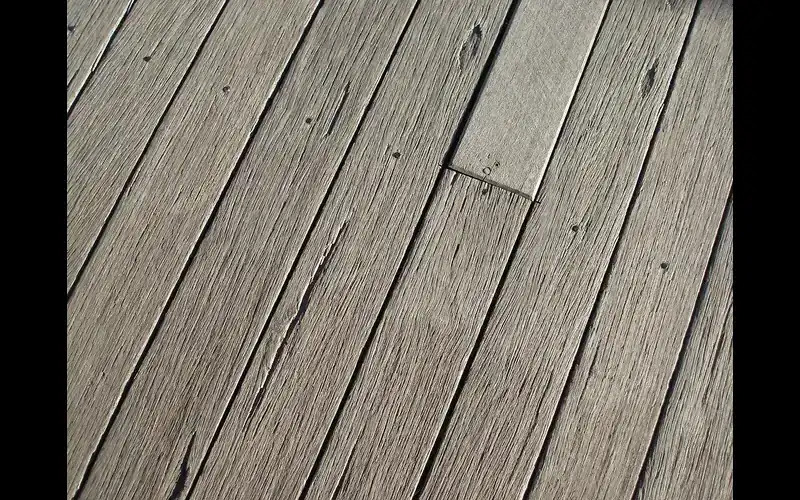
The water-drop (sprinkle) test is the check YellaWood describes: drop water on the boards. If it beads up, the wood is still too wet, so wait several days and retest. When the water absorbs into the wood, it is ready for a finish. Sources do not agree on how many minutes to watch, and YellaWood gives no number, so judge by absorbed versus beaded rather than by a stopwatch.
- Pick a dry day: test boards that have not been rained on recently, or surface water will mislead you.
- Test several boards: check boards from different parts of the stack or structure, including shaded ones, since they dry at different rates.
- Sprinkle drops of water: use a few small drops, not a pour, and watch whether they soak in or sit as beads.
- Retest after a few days if they bead: beading means wait; absorption means the board can move on to cleaning and priming.
One caution from my reading of SFPA: some treatments include a water repellent, which SFPA recommends for decking to limit swelling and shrinking. A board that is plainly dry but still beads may be carrying that repellent. In that case, follow the paint or stain maker’s instructions for treated wood, since SFPA says finishing recommendations vary by preservative type. A pin moisture meter gives a number instead of a guess if you own one.
Tools and Materials You’ll Need
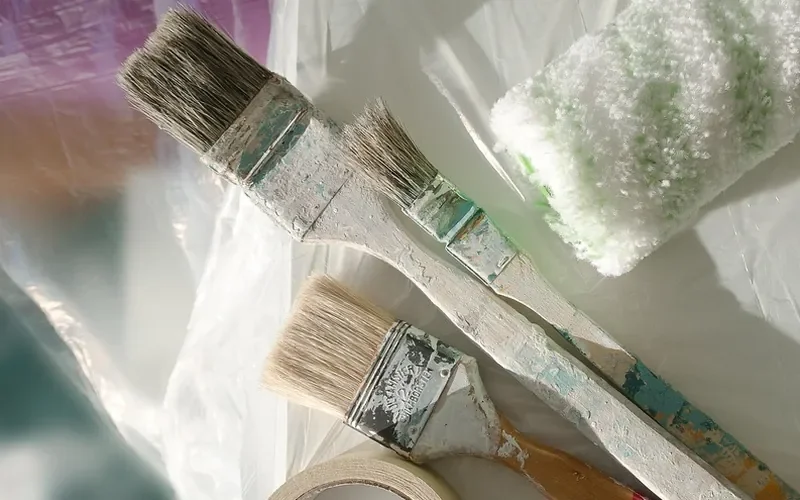
- Brushes and roller: a 2 to 3 inch angled sash brush for edges and a roller for flat boards.
- Cleaner: deck cleaner or a soap and water mix (YellaWood suggests either).
- Sandpaper: 80 to 100 grit, the range the Zinsser data sheet gives for bare exterior wood.
- Primer: an exterior primer approved for your surface, like the pick in the box above for fences and rails.
- Topcoat: 100% acrylic exterior latex. See our roundup of the best wood primer and undercoat if you want to compare primers.
- Safety gear: gloves, eye protection and a dust mask or respirator for sanding and cutting.
Step-by-Step Guide to Painting Pressure Treated Wood
Step 1: Check That the Wood Is Dry
Run the water test above on several boards and do not move on until the drops absorb. This single check prevents most peeling.
Step 2: Clean the Wood
Scrub with deck cleaner or a soap and water mix, rinse, and let the boards dry for about 24 hours before the next step, as YellaWood advises after cleaning. YellaWood also warns against excessive pressure washing that could damage boards. If you plan to use the Zinsser primer, skip TSP: its data sheet says “do not use TSP as a cleaner” and suggests an ammoniated cleaning solution instead.
Step 3: Sand Rough Spots
Lightly sand exposed exterior wood with 80 to 100 grit paper to remove loose or weathered fibers and mill glaze, per the same data sheet. Wear a respirator while you do (see the safety section below), then wipe or vacuum the dust off.
Step 4: Prime
Apply primer with a synthetic bristle brush, roller or airless sprayer. For the Zinsser 286258 quart, the data sheet gives about 400 to 450 square feet per gallon, a 30-minute dry-to-touch time, a 1-hour wait before the topcoat and a 7-day wait for full adhesion and hardness. Apply it only when air, material and surface temperatures are between 35 and 90 degrees F and relative humidity is below 85%. Treat cut ends and drilled holes as the lumber label directs before priming them.
Step 5: Paint Two Coats
Apply two thin coats of 100% acrylic exterior latex, following the recoat time printed on your paint can. Brush into end grain and edges first, then roll the flat faces.
What Paint Works Best for Pressure Treated Wood?
Use a 100% acrylic exterior latex over a compatible primer. It stays flexible while boards swell and shrink, a cycle SFPA says subjects a finish to “excessive stress,” especially on decks. What goes where matters more than the brand name:
| Surface | What to use | Why |
|---|---|---|
| Fence pickets, rails, posts, trim | Exterior primer, then two coats of 100% acrylic latex | Vertical, low-wear surfaces suit paint |
| Deck boards and stair treads | A coating whose label lists decks or floors | The Zinsser sheet says its primer is not recommended for floors or decks |
| Fresh cuts and drilled holes | Field treatment per the lumber label, then prime | SFPA: cuts that penetrate the treated zone must be field treated (AWPA M4) |
| Creosote or oilborne penta wood | Do not paint | SFPA: not paintable on a practical basis |
For fences specifically, see our guide to wood fence paint, prep, primer and coats. For deck floors, our guide to painting a treated wood deck covers the foot-traffic side that this page only touches.
Staining vs. Painting: Which Is Better?
Paint gives opaque color and hides the green tint but forms a film that can peel if moisture gets under it. Stain soaks in, shows grain and fades instead of peeling, and YellaWood suggests semi-transparent for a balance of color and grain. If you cannot decide, read whether it is better to stain or paint pressure treated wood, or follow our steps to stain a treated wood deck. A clear finish is another route, covered in can you seal treated wood.
Common Mistakes to Avoid
- Painting before the water test passes: the most common cause of blistering and peeling.
- Priming a deck floor with a primer that excludes decks: read the limitations line on the data sheet.
- Using TSP before a Zinsser primer: the data sheet specifically says not to.
- Skipping the primer: the topcoat needs a sealed, uniform surface to hold.
- Painting creosote or oilborne penta wood: SFPA says it is not paintable in practice.
Safety When Sanding and Cutting Treated Wood
SFPA lists these practices for treated wood: wear gloves to avoid splinters, a dust mask when machining wood, and eye protection; clean up all sawdust and debris; wash hands thoroughly with mild soap and water after working with treated wood; wash work clothes separately from other household clothing; and never burn treated wood in open fires, stoves, fireplaces or residential boilers. For sanding, I would step up to an N95 or better respirator. That is my recommendation, not an SFPA requirement. If you spray primer, the Zinsser sheet calls for a NIOSH-approved respirator and ventilation.
Frequently Asked Questions
Can I paint pressure treated wood right away?
No. Dimension lumber can leave the treating cylinder above 50% moisture, and most pressure treated Southern Pine is delivered without being redried, so paint applied right away traps water and tends to peel. Wait until the water test passes. Lumber stamped KDAT (kiln-dried after treatment) or ADAT (air-dried after treatment) has already been dried and usually needs far less waiting.
Do you have to prime pressure treated wood before painting?
Yes, prime it. Primer gives the topcoat a uniform, sealed surface to grip, and the Zinsser data sheet for the primer in our pick calls for 80 to 100 grit sanding of bare exterior wood first. Use a primer that lists exterior wood on its label, and check that it is allowed on your surface: the Zinsser sheet excludes floors and decks.
Can you paint pressure treated lumber that still looks green?
Yes, once it is dry. The green or brown tint comes from the copper-based preservative, and it does not stop paint from bonding to waterborne-treated wood. Southern Pine treated with waterborne preservatives accepts a finish similar to untreated Southern Pine. Wood treated with creosote or oilborne pentachlorophenol is a different case and should not be painted.
What kind of paint is best for pressure treated wood?
A 100% acrylic exterior latex over a compatible primer is the standard choice for fences, rails and trim. It stays flexible while boards swell and shrink with the weather. For the walking surface of a deck or stairs, use a coating whose label lists decks, because many wall paints and primers exclude floors.
What should I do if paint on treated wood starts peeling?
Scrape off all loose paint, sand the edges smooth, let the wood dry, then prime bare spots and repaint. Peeling usually points to moisture in the board at painting time or to a skipped primer. If the paint is old, assume it may contain lead and use a NIOSH-approved respirator and wet cleanup, as the Zinsser data sheet warns.
Wrapping It Up
Painting pressure treated wood works when the board is dry, the surface is clean and lightly sanded, and the primer is allowed on your surface. Test with water instead of trusting the calendar, prime, then use two coats of acrylic latex. Unsure whether paint is the right finish? Compare it with stain in our stain versus paint guide.
Sponsored / affiliate links. As an Amazon Associate I earn from qualifying purchases. I may earn additional commission from eligible campaigns.