Can Baking Soda Remove Stains Effectively? A Cleaning Guide
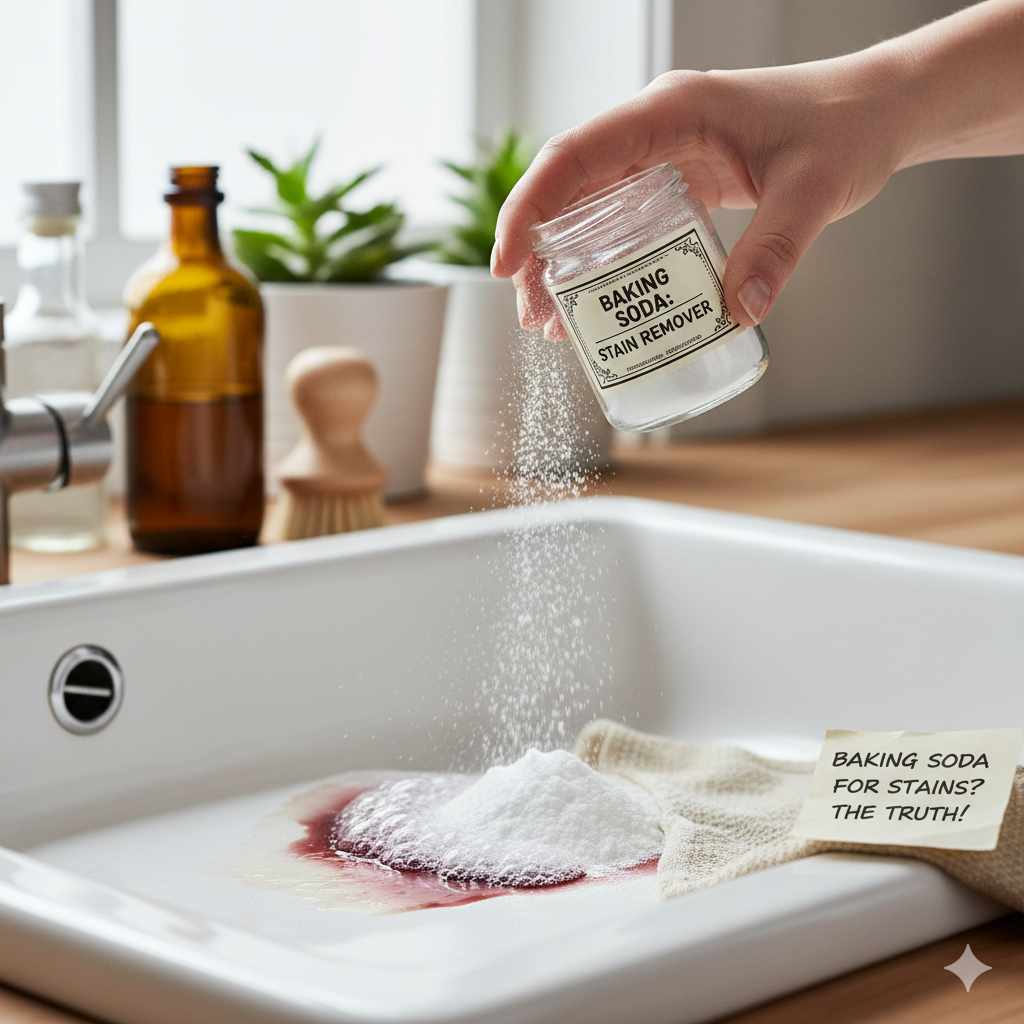
Figuring out if Can Baking Soda Remove Stains Effectively? is a common question, especially for those new to cleaning. It’s easy to get confused by all the cleaning products out there. Don’t worry, though! It can seem overwhelming, but using baking soda is a simple, often overlooked, way to tackle stains. This guide will walk you through, step-by-step, everything you need to know. We’ll explore exactly how baking soda works its magic. Let’s get started!
Baking Soda’s Stain-Fighting Superpowers
Baking soda, also known as sodium bicarbonate, has a unique chemical makeup that makes it a great cleaning agent. It’s a mild abrasive, meaning it can gently scrub away stains without damaging surfaces. Additionally, baking soda has the ability to neutralize odors and absorb moisture, which are helpful properties for dealing with stains. Its versatility makes it a must-have for any cleaner. It’s also an eco-friendly option, a great choice for keeping your home clean without harsh chemicals. This section will discuss the amazing uses of baking soda.
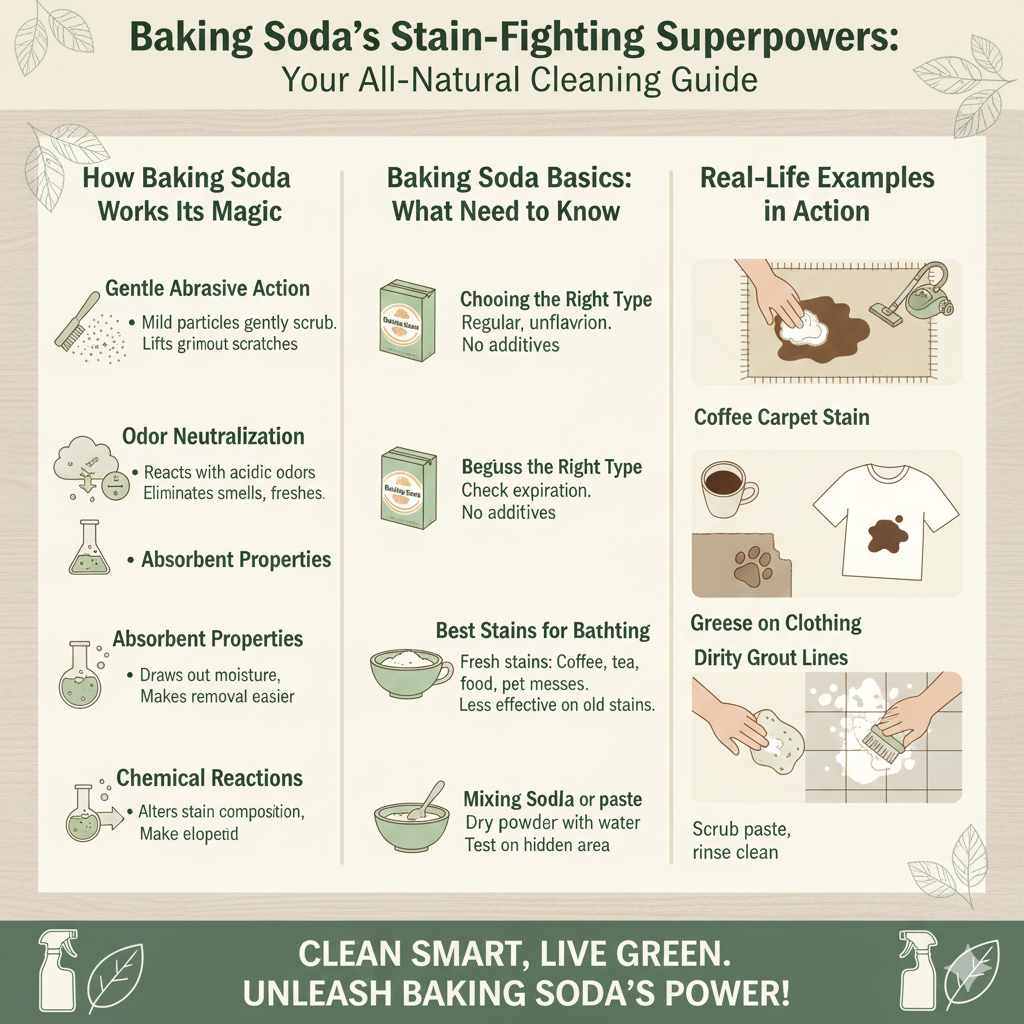
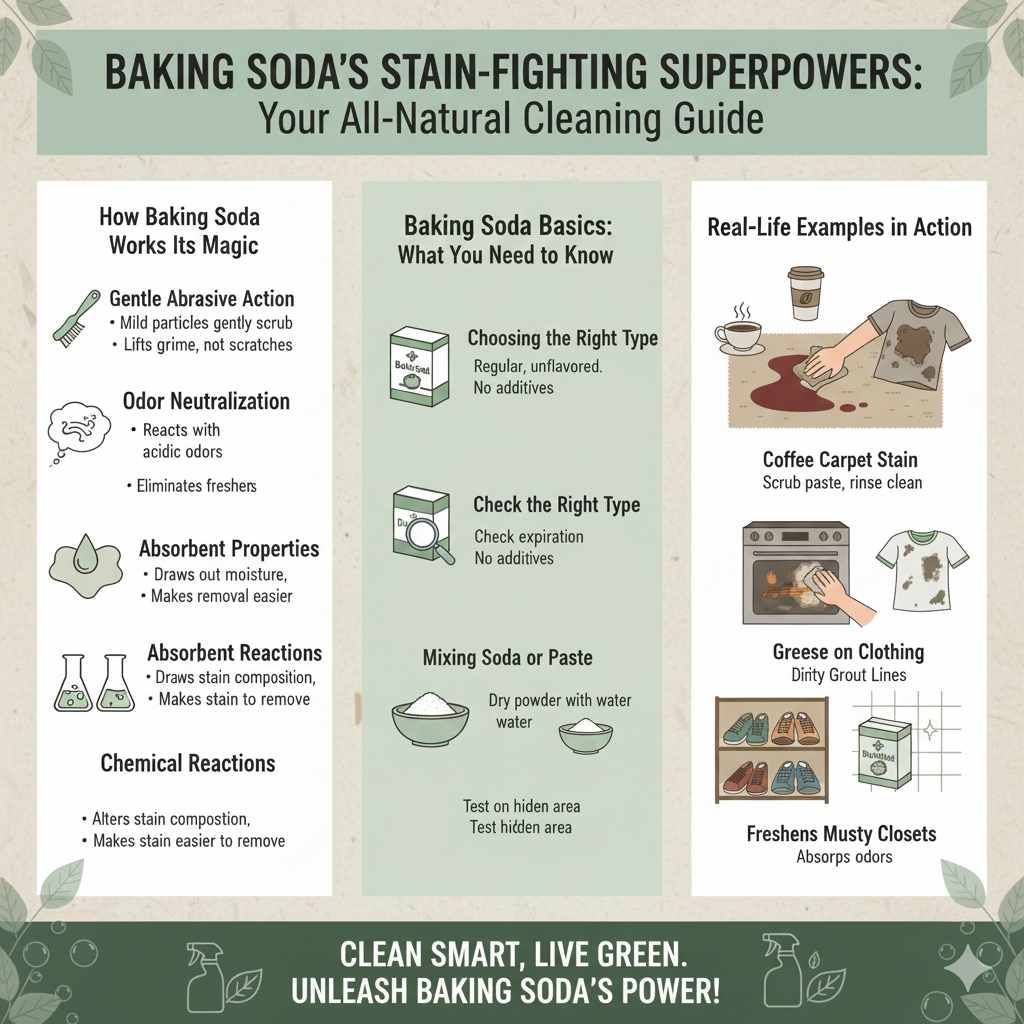
How Baking Soda Works Its Magic
The secret to baking soda’s cleaning power lies in its chemical properties. When mixed with water, baking soda becomes slightly alkaline. This alkalinity helps to lift dirt and stains from surfaces, making them easier to remove. The mild abrasiveness of baking soda also helps to physically scrub away stubborn stains, acting like a gentle sandpaper. Furthermore, baking soda can react with acidic substances, neutralizing odors and preventing them from lingering. This makes it particularly effective in tackling food spills or pet accidents. Lastly, baking soda’s ability to absorb moisture is important. It helps to prevent stains from spreading or setting. These multiple methods give baking soda its reputation.
Gentle Abrasive Action: Baking soda’s fine particles work as a mild abrasive. This helps to lift stains.
Unlike harsh chemicals, baking soda’s gentle abrasive nature is safe for various surfaces. It physically scrubs away grime without causing scratches or damage. This makes it an effective cleaner for delicate materials, such as upholstery and carpets. It works by breaking down the bonds that hold stains to surfaces. That’s why baking soda is a great choice for everyday cleaning.
Odor Neutralization: Baking soda effectively neutralizes odors by reacting with acidic compounds.
Baking soda’s ability to absorb and neutralize odors is a valuable asset. It acts as an odor-eater. When baking soda comes into contact with smelly substances, it breaks down the odor molecules. This leaves behind a fresh, clean scent. This feature makes it great for cleaning garbage disposals or pet areas. Baking soda’s natural ability to freshen up your home helps with cleaning.
Absorbent Properties: Baking soda is highly absorbent, drawing out moisture and preventing stains from spreading.
This is crucial for preventing stains from setting into materials. Baking soda soaks up the liquid, preventing it from penetrating the surface. This is particularly useful for cleaning up spills on carpets or rugs. It helps contain the stain and makes it easier to remove. By absorbing moisture, baking soda also helps to reduce the chance of mold or mildew growth. This is a helpful aspect of using baking soda.
Chemical Reactions: Baking soda can react with certain substances, altering their composition and making them easier to remove.
This is key to tackling tough stains. The chemical reactions that baking soda undergoes are a part of what makes it special. When baking soda comes into contact with certain stains, it causes a chemical reaction. This makes the stain less strong and easier to lift away. This reaction is one of the many ways baking soda helps clean.
Baking Soda Basics: What You Need to Know
Before you start cleaning with baking soda, it’s important to understand the basics. This includes choosing the right type of baking soda, knowing which stains it works best on, and learning how to prepare it for use. Baking soda is a simple ingredient but knowing the essentials ensures effective and safe cleaning. This section will tell you all the basic facts about baking soda.
Choosing the Right Type of Baking Soda: Using the right baking soda is important.
Regular baking soda is fine for most cleaning tasks. However, make sure it is fresh and not expired. The main thing is to use regular, unflavored baking soda. This ensures you’re getting the best cleaning results. Make sure to use the baking soda for cleaning purposes and not the kind that has additives.
Best Stains for Baking Soda: Baking soda is great for fresh stains.
Baking soda works best on fresh stains. It’s perfect for things like food spills, coffee or tea stains, and certain types of pet messes. Baking soda is less effective on old or set-in stains. The key is to act quickly. By treating the stain right away, you increase your chances of complete removal. This can lead to your cleaning efforts being much easier.
Mixing Baking Soda: Baking soda can be used in several forms, from a dry powder to a paste.
For many cleaning tasks, you’ll need to mix baking soda with water. The most common mixture is to make a paste. This can be done by combining baking soda with a little water until you get a thick consistency. You can also mix baking soda with other cleaning agents, like vinegar. However, be careful when mixing. Some combinations can result in unwanted reactions. Always test the mixture on a hidden area first to make sure it is safe for the surface.
Using Baking Soda to Remove Common Stains
Baking soda can be used on many surfaces and types of stains, from carpets to clothes. Its versatility makes it a valuable cleaning agent for many households. This section will guide you through effective ways to use baking soda on different materials. It also offers advice on using baking soda for specific stains. This way you’ll be able to make the most of baking soda’s stain-fighting capabilities. This section will help you know how to clean things using baking soda.
Cleaning Fabrics and Upholstery
Baking soda is a safe and effective way to clean fabrics and upholstery. Its gentle nature prevents damage while still effectively removing stains. It is important to test baking soda on a hidden area of the fabric first to make sure it doesn’t cause discoloration or damage. Here are several ways baking soda is used for fabric and upholstery.
Stain Removal on Fabrics: Make a paste of baking soda and water to spot-treat stains.
Gently rub the paste onto the stained area. Let it sit for a few minutes. Then, blot the area with a damp cloth. This method works well on fresh spills. Baking soda lifts the stain. After this, rinse the area with clean water. Finally, let the fabric air dry. This cleaning method is great for all sorts of fabrics. It is very simple to do and can be very effective.
Refreshing Upholstery: Sprinkle baking soda on upholstery to remove odors and refresh fabrics.
Sprinkle a generous amount of baking soda evenly over the upholstery. Let it sit for 15-30 minutes, or longer for tough odors. Vacuum the baking soda thoroughly. This helps get rid of trapped odors. It’s a simple way to freshen up furniture and carpets. You can use this method for sofas, chairs, and other fabric-covered items. This can keep your house smelling and looking clean.
Pre-Treating Laundry Stains: Add baking soda to your laundry routine to boost the cleaning power of your detergent.
Add half a cup of baking soda to your washing machine along with your regular detergent. Baking soda can help to lift stains and brighten whites. It also helps with odors. This is a simple step to improve the effectiveness of your laundry. It will help get your clothes cleaner and fresher. It is a good way to clean your clothes more efficiently.
Cleaning Carpets and Rugs
Carpets and rugs can accumulate dirt, stains, and odors, but baking soda offers a gentle and efficient way to clean them. It’s important to test the baking soda in a hidden area first. This ensures there’s no discoloration or damage to the carpet fibers. These methods can help keep your carpets and rugs looking fresh and clean.
Removing Carpet Stains: Apply a paste of baking soda and water directly to the stain.
Gently rub the paste into the stained area. Allow it to sit for several hours or overnight. Once the baking soda has dried, vacuum the area thoroughly. This method works well for removing fresh spills and dirt. You can even try it for older stains. It may take several applications. Using baking soda, you can usually take care of stains.
Deodorizing Carpets: Sprinkle baking soda generously over the carpet.
Let it sit for several hours, or preferably overnight. Then, vacuum the baking soda. This method helps to absorb and neutralize odors trapped in the carpet fibers. This technique is especially useful in high-traffic areas. You can use it in rooms where pets spend a lot of time. By vacuuming up the baking soda, you will leave your carpet smelling fresh and clean.
Dealing with Pet Stains: For pet accidents, first blot up excess liquid.
Then, apply a paste of baking soda and water to the affected area. Let it dry completely and vacuum the area thoroughly. Baking soda helps neutralize pet odors and absorb any remaining moisture. Baking soda is a great way to deal with pet stains. This method can help remove stains while also getting rid of odors from your pets.
Dealing with Kitchen and Bathroom Messes
Baking soda is a versatile cleaner for both the kitchen and bathroom, effectively tackling many issues. Baking soda is safe to use on a variety of surfaces. Always test the baking soda in a hidden area first to make sure it doesn’t damage the surface. Here’s how to use baking soda in the kitchen and bathroom.
Cleaning Kitchen Surfaces: Make a paste of baking soda and water to scrub countertops, sinks, and stovetops.
Gently rub the paste onto the surface to remove grease, grime, and food stains. Rinse with water and wipe dry. Baking soda is a gentle yet effective way to keep your kitchen surfaces clean. It works on many materials, but be careful on surfaces like granite and marble. This cleaning method is great for everyday use. It will keep your kitchen surfaces looking their best.
Cleaning Bathroom Fixtures: Use a paste of baking soda and water to scrub bathtubs, sinks, and showers.
This will help remove soap scum, mildew, and hard water stains. Rinse with water and dry. Baking soda is a safe alternative to harsh chemical cleaners. This helps get rid of mildew and soap scum. Baking soda’s mild abrasive nature helps to remove stains without scratching surfaces. This helps keep your bathroom clean and safe.
Cleaning Appliances: You can clean your refrigerator, microwave, and oven using baking soda.
Sprinkle baking soda on a damp sponge and wipe down the interior. This helps remove odors and food spills. Baking soda can also be used to scrub the inside of your oven and microwave. This is a safe and eco-friendly way to clean appliances. It helps remove smells. Using baking soda will keep your appliances clean and fresh.
Advanced Tips and Tricks for Baking Soda Success
To take your baking soda cleaning skills to the next level, here are some advanced tips. These methods will help to deal with stubborn stains and difficult cleaning situations. These tricks will ensure you get the best cleaning results. These methods will help you get the most out of baking soda.
Combining Baking Soda with Other Cleaners
Combining baking soda with other cleaning agents can boost its effectiveness. However, it’s important to use caution and test any new mixtures in a hidden area first. This helps ensure that the mixture doesn’t cause any damage to the surface. Combining baking soda with the right cleaners is a helpful thing to learn.
Baking Soda and Vinegar: Combine baking soda and vinegar for extra cleaning power.
The reaction between baking soda and vinegar can create a fizzing action. This can help to loosen dirt and stains. Mix a small amount of baking soda with vinegar to make a paste. Apply it to the stained area. Let it sit for a few minutes. Then, wipe clean with a damp cloth. Be careful when mixing these two, because it can create a strong reaction.
Baking Soda and Lemon Juice: Combine baking soda and lemon juice for a natural cleaning solution.
Lemon juice adds extra cleaning power and a fresh scent. Make a paste of baking soda and lemon juice. Apply it to the stained area. Let it sit for a few minutes before wiping clean. This mixture works well on grease, stains, and odors. Always test this on a small area first to ensure it’s safe.
Baking Soda and Hydrogen Peroxide: Combine baking soda and hydrogen peroxide for extra stain removal.
This is a powerful mix, often used for tough stains and sanitizing. Mix baking soda with hydrogen peroxide to make a paste. Apply the paste to the stain. Let it sit for a few minutes before scrubbing and rinsing. This is especially good for tackling tough stains. Be careful when using this mix. Always test it on a hidden area first. Using caution is important.
Dealing with Tough Stains
Some stains are more difficult to remove, and will require more than just baking soda. You might need to use some special techniques. Patience and persistence are key to getting the best results. Here are some extra methods you can use.
Coffee and Tea Stains: For coffee and tea stains on fabric, mix baking soda with water to make a paste.
Apply the paste to the stain. Let it sit for at least 15 minutes. Gently rub with a soft cloth. This helps lift the stain. Rinse the area with water and let it dry. For tough stains, you might need to repeat the process. With patience, you can usually remove coffee and tea stains. Baking soda’s power will help.
Grease and Oil Stains: For grease and oil stains, sprinkle baking soda on the affected area.
Let it sit for several hours to absorb the oil. Brush away the baking soda and repeat if needed. For fabric, you can use a paste of baking soda and water. This is an effective way to remove stains and prevent them from setting. Baking soda is a great stain remover. Its absorbent properties help with grease and oil.
Ink Stains: For ink stains, make a paste of baking soda and water.
Apply the paste to the stain. Gently rub with a soft cloth. Let it sit for a while, then rinse. For stubborn ink stains, you might need to repeat the process. You can even add a little bit of rubbing alcohol to the baking soda mixture. This will help lift the ink stain. Be careful when doing this.
Preventing and Maintaining Cleanliness
Preventing stains is better than dealing with them. Regular cleaning and care for your items can help prevent stains. This includes immediately addressing spills. This section will discuss methods to keep your home clean and prevent stains.
Immediate Action: The faster you act, the easier it will be to remove a stain.
As soon as a spill occurs, clean it up right away. Blot up any excess liquid or debris. Then, use baking soda to treat the stain. This helps to prevent the stain from setting. It is always best to act quickly to keep your items clean. Acting fast will save you from having to do a lot of cleaning later.
Regular Cleaning: Regularly clean surfaces to prevent dirt and grime buildup.
This makes it easier to remove stains. Make it a habit to clean surfaces regularly. Wipe down kitchen counters after cooking. Regularly clean your carpets. Keeping a cleaning routine will keep your home looking good. A regular cleaning schedule keeps your home fresh and clean. This also prevents stains from forming.
Proper Storage: Store items properly to prevent spills and stains.
Keep food and drinks away from items. Store them in areas where spills are less likely. Use protective covers on furniture. Be sure to use placemats and coasters. These things can help prevent stains and make cleaning easier. It is best to take precautions to prevent stains. This can make cleaning much easier.
Examples of Baking Soda’s Effectiveness
Real-life examples can show the effectiveness of baking soda. These case studies highlight the successes of using baking soda. These are real cleaning stories that help prove baking soda’s value.
Case Study 1: Removing Red Wine from a Carpet: A customer spilled red wine on their beige carpet. They immediately blotted up the excess liquid and sprinkled baking soda over the stain. They let it sit for several hours before vacuuming. The stain was gone.
This shows the effectiveness of baking soda on fresh stains. Baking soda absorbs the wine and removes the stain. This is one instance where baking soda was a great help in cleaning.
Case Study 2: Cleaning a Stained Oven: A user’s oven was covered in burnt food stains. They made a paste of baking soda and water. Then, they applied it to the stains. After letting it sit overnight, they scrubbed the oven. The stains came right off.
This shows the cleaning power of baking soda on tough stains. It also shows the mild abrasion of baking soda in action. This is one of many instances where baking soda has helped remove stains.
Case Study 3: Freshening a Musty Closet: A homeowner’s closet had a musty odor. They placed an open box of baking soda in the closet. The baking soda absorbed the odors. The closet smelled fresh and clean.
This is a great example of the odor-absorbing qualities of baking soda. Baking soda eliminated the musty smell and made the closet smell fresh. This is one of many instances where baking soda has been a great cleaner.
Frequently Asked Questions
Question: Can I use baking soda on all types of fabrics?
Answer: It’s best to test baking soda on a hidden area of the fabric first to ensure it does not cause any discoloration or damage.
Question: Can baking soda remove old or set-in stains?
Answer: Baking soda works best on fresh stains. Older stains may require more applications or additional cleaning agents.
Question: Is it safe to mix baking soda with other cleaners?
Answer: Some combinations are effective, but others can cause unwanted reactions. Always test a mixture on a hidden area first.
Question: Can I use baking soda to clean delicate surfaces?
Answer: Baking soda is a gentle abrasive, but test it on a small, hidden area first. It’s safe for many surfaces.
Question: How much baking soda should I use for cleaning?
Answer: The amount of baking soda depends on the task. For general cleaning, use a small amount. For tougher stains, use more.
Final Thoughts
So, Can Baking Soda Remove Stains Effectively? The answer is a resounding yes! Baking soda is a simple, eco-friendly way to clean many surfaces and remove many stains. From fabrics and carpets to kitchen and bathroom fixtures, baking soda’s versatility makes it a must-have for any cleaner. Its gentle abrasion and odor-neutralizing properties are very important. Remember the importance of proper use, including making pastes and combining it with other ingredients. By acting promptly on spills, maintaining a regular cleaning schedule, and storing items carefully, you can create a cleaner environment. Armed with these tips and techniques, you can explore the cleaning power of baking soda. So, grab a box of baking soda and start cleaning! Your home will thank you.