How to Remove Old Water Stains From a Leather Sofa (The Right Way)
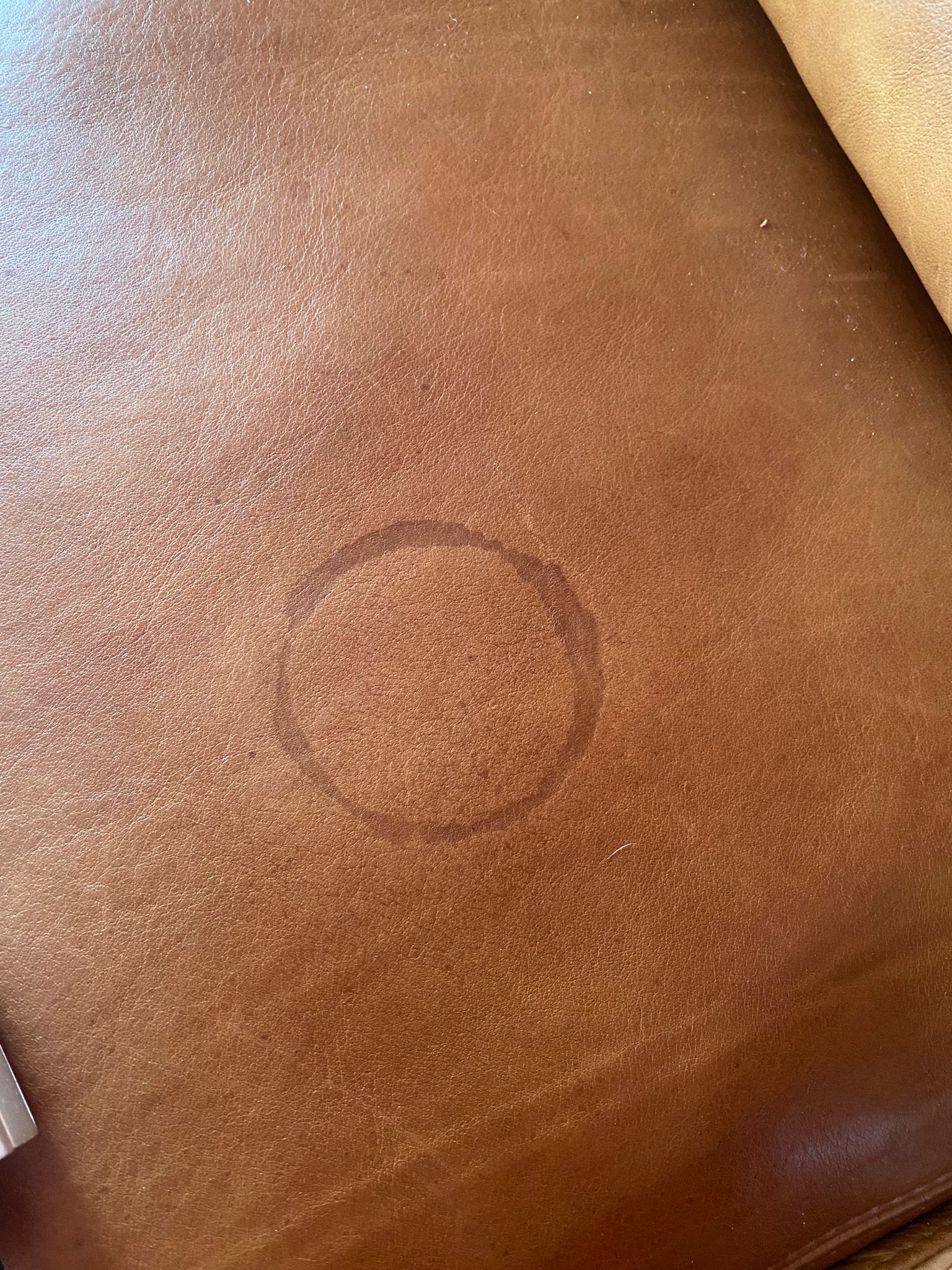
Short answer: for an old, set-in water ring, spot-cleaning just the stain itself often makes things look worse, because it creates a second ring around the edge of your cleaning area. The more reliable fix is to evenly dampen the entire leather panel (the whole cushion or seat back, not just the stained spot) with a barely damp cloth, let it dry evenly, then condition the leather once it’s fully dry. Even, whole-panel drying is what actually blends an old ring back into the surrounding leather.
Why Spot-Cleaning Often Makes a Water Stain Worse
Best Leather Cleaner & Conditioner Kit
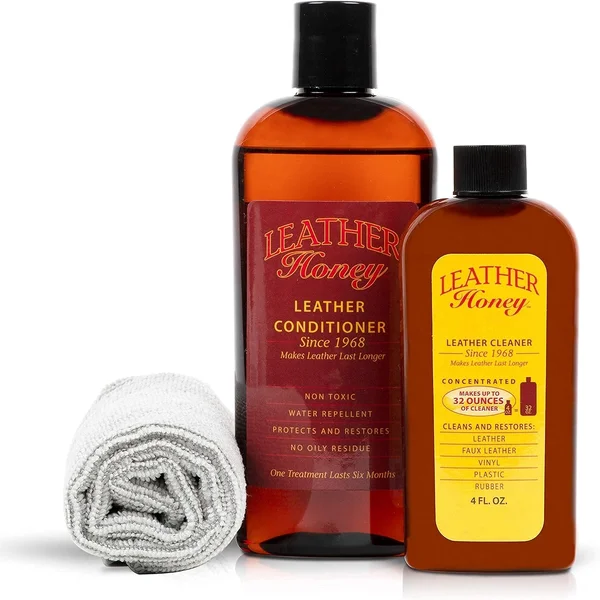 |
Leather Honey Complete Leather Care Kit – $24.95 After lifting a water stain, leather needs its natural oils replaced – this kit pairs a pH-balanced cleaner with a conditioner made for exactly that step.
|
A water stain on leather isn’t really “dirt” sitting on top – it’s caused by water carrying the leather’s natural oils and dyes toward the surface as it evaporates, then depositing them unevenly right at the edge of where the water sat. That’s why a water stain so often shows up as a ring: the edge of the wet area dries last and darkest. If you try to treat only that ring with a fresh damp cloth, you create a brand new boundary at the edge of your cleaning, and once that new patch dries, you can end up with two rings instead of one.
The more reliable approach for an old or stubborn stain is to dampen the whole panel – the entire cushion, armrest, or back panel the stain is on – evenly, with a soft cloth barely dampened with distilled water, so the whole surface dries at the same rate with no new boundary line. This is more effort than dabbing at just the stain, but it’s the technique leather restorers actually use for exactly this reason.
Step-by-Step: Treating an Old Water Stain
- Test a hidden spot first. The underside of a cushion or the back of the sofa is a safe place to confirm your cleaner and the re-wetting technique don’t affect the color or finish.
- Dust and wipe the whole panel with a dry, soft microfiber cloth to remove surface dust before adding any moisture.
- Lightly and evenly dampen the entire panel (not just the stain) with a cloth barely dampened in distilled water – tap water can leave its own mineral spots on some leather, so distilled is the safer choice.
- Let it air dry naturally, away from direct sun or any heat source like a vent, radiator, or hairdryer – fast, uneven drying from heat is what causes stiffening and can even crack the leather.
- Condition the leather once it’s fully dry. A quality leather conditioner replaces the oils that both the original stain and the re-wetting process pulled toward the surface, and restores flexibility and shine.
What to Avoid
- Heat sources to speed up drying. A hairdryer, heater vent, or direct sun can dry leather unevenly and cause stiffening or cracking – always air dry at room temperature.
- Saturating the leather. Leather is a hide, not fabric – oversoaking it can cause the fibers underneath to stiffen or warp as they dry, especially on bonded or bicast leather.
- Harsh household cleaners. Ammonia-based glass cleaners, bleach, and most all-purpose sprays can strip leather’s natural finish or dry it out.
- Skipping the conditioner step. Cleaning alone (with or without the re-wetting method) removes oils from the leather – conditioning afterward is what keeps it from looking dull or feeling stiff after treatment.
When to Call a Professional
Very old, deeply set stains, stains on an expensive or antique piece, or damage on aniline (undyed, unprotected) leather are all good reasons to consider a professional leather restorer instead of a DIY attempt. Aniline leather in particular shows every mark clearly since it has no protective pigment coating, and a restorer has color-matching and refinishing tools that go well beyond home cleaning methods.
Frequently Asked Questions
How do you get old water stains out of leather?
Evenly dampen the entire panel (not just the stained spot) with a cloth barely dampened in distilled water, let it air dry naturally away from heat, then condition the leather once it’s fully dry. Spot-cleaning only the stain often creates a second visible ring.
Are water stains on leather permanent?
Not usually, especially on finished/pigmented leather. Many water stains fade significantly or disappear with the even re-wetting and conditioning method. Very old stains or stains on unprotected aniline leather can be more stubborn and may need a professional.
Can I use a hairdryer to dry a leather sofa faster?
No – heat causes leather to dry unevenly and can lead to stiffening or cracking. Always let leather air dry at room temperature.
What’s the difference between cleaning and conditioning leather?
Cleaning removes dirt and surface residue but can also strip natural oils, including during a water-stain treatment. Conditioning replaces those oils afterward, which is what keeps the leather supple instead of feeling dry or stiff.
Conclusion
For an old water stain, resist the urge to just scrub the ring itself – evenly dampening the whole panel, air-drying away from heat, and conditioning afterward gives a much more even result. Skip harsh cleaners and heat sources, and call a professional for valuable pieces or unprotected aniline leather.
Sponsored / affiliate links. As an Amazon Associate I earn from qualifying purchases. I may earn additional commission from eligible campaigns.