Can You Stain a Charcuterie Board? Regular Stain Is Not Food-Safe
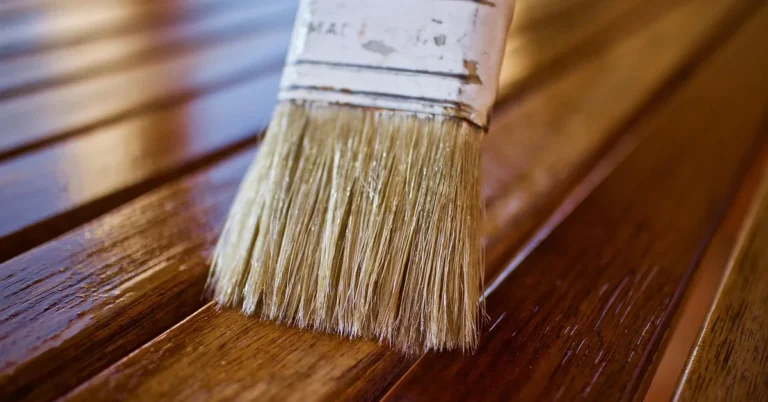
Regular wood stain is not food-safe for a charcuterie board, even after it fully cures — its solvents and pigments aren’t rated for food contact. A tinted butcher block oil, rated safe under FDA rule 21 CFR 175.300 once dry, gives you real color without that risk. This guide covers why stain and finish get confused, where plain stain is still fine to use, and how to add color safely.
Stain vs. Finish: Why Regular Wood Stain Fails the Food-Safe Test
Best Food-Safe Tinted Stain Pick
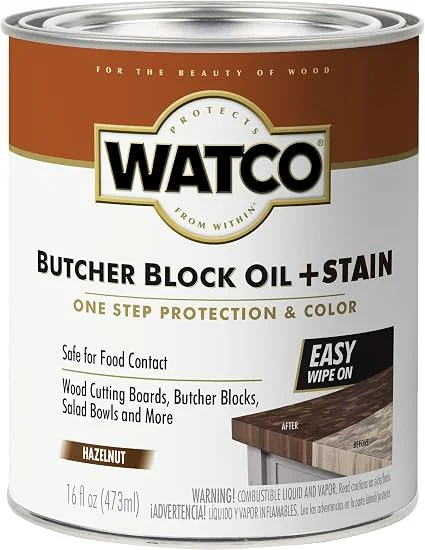 |
Watco Butcher Block Oil + Stain, Hazelnut – $14.98 This is the tinted alternative described above — a one-step oil and color product rated safe for food contact once fully dried, unlike a regular hardware-store wood stain.
|
“Stain” and “finish” get used interchangeably in a lot of charcuterie board advice, but they’re different products. A finish — mineral oil, beeswax, walnut oil — protects the wood and can be food-safe on its own. A stain is a pigment or dye designed to change the wood’s color, and most stains sold at hardware stores are built with solvents (mineral spirits, naphtha) and colorants that were never evaluated for food contact, cured or not.
That’s the source of most “is this stain food-safe” confusion: a board finished with mineral oil looks natural, not stained, because oil and wax don’t actually color the wood the way a stain does. If what you actually want is color, a plain food-safe finish won’t give you that — you need a product built to do both at once.
📊 A food-contact coating must meet FDA regulation 21 CFR 175.300 once fully cured — a standard ordinary wood stains are not formulated or tested against, which is why “food-safe wood stain” isn’t a real product category in the way many guides imply. Source: eCFR, Title 21, Resinous and Polymeric Coatings
A genuine option exists for adding color safely: a tinted butcher block oil, which combines a penetrating oil with a wood-tone colorant in one formula built and rated for food contact.
When Plain Wood Stain Is Actually Fine to Use
Regular stain isn’t automatically off-limits — it’s off-limits on any surface food will touch. The underside, the feet, and a handle that never contacts food can be stained with a standard product without a food-safety concern, since nothing there ever meets what you’re serving.
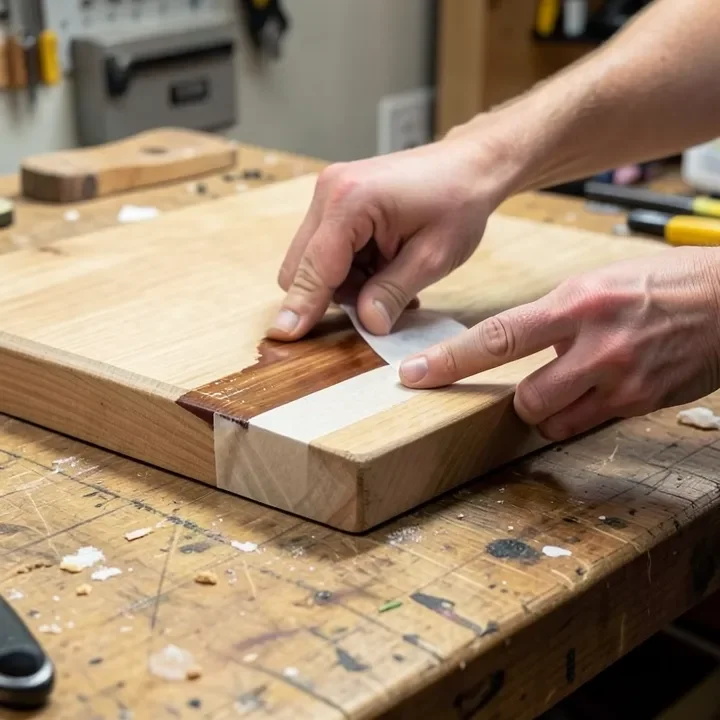
- Mask the top surface and edges with painter’s tape before staining the underside.
- Let the stained side cure fully per the product’s label before handling the board again.
- Never serve food directly on a stained face, even after it’s dry — keep the stained surface permanently as the underside.
How to Add Color Safely With a Food-Safe Tinted Oil
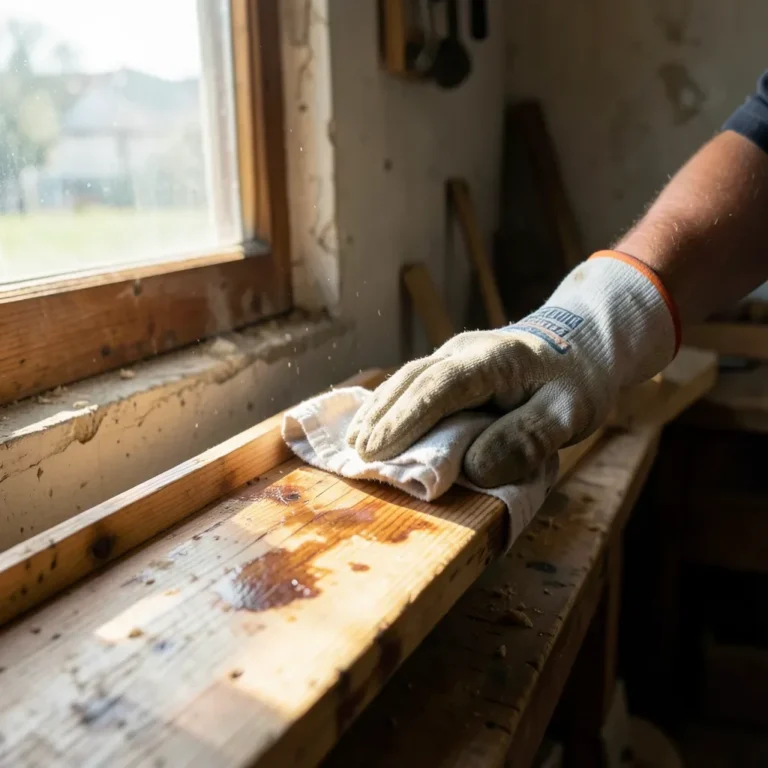
- Sand the board: Work through progressively finer grits, finishing around 220-grit, sanding with the grain.
- Wipe away dust: Use a tack cloth or slightly damp cloth and let the surface dry completely.
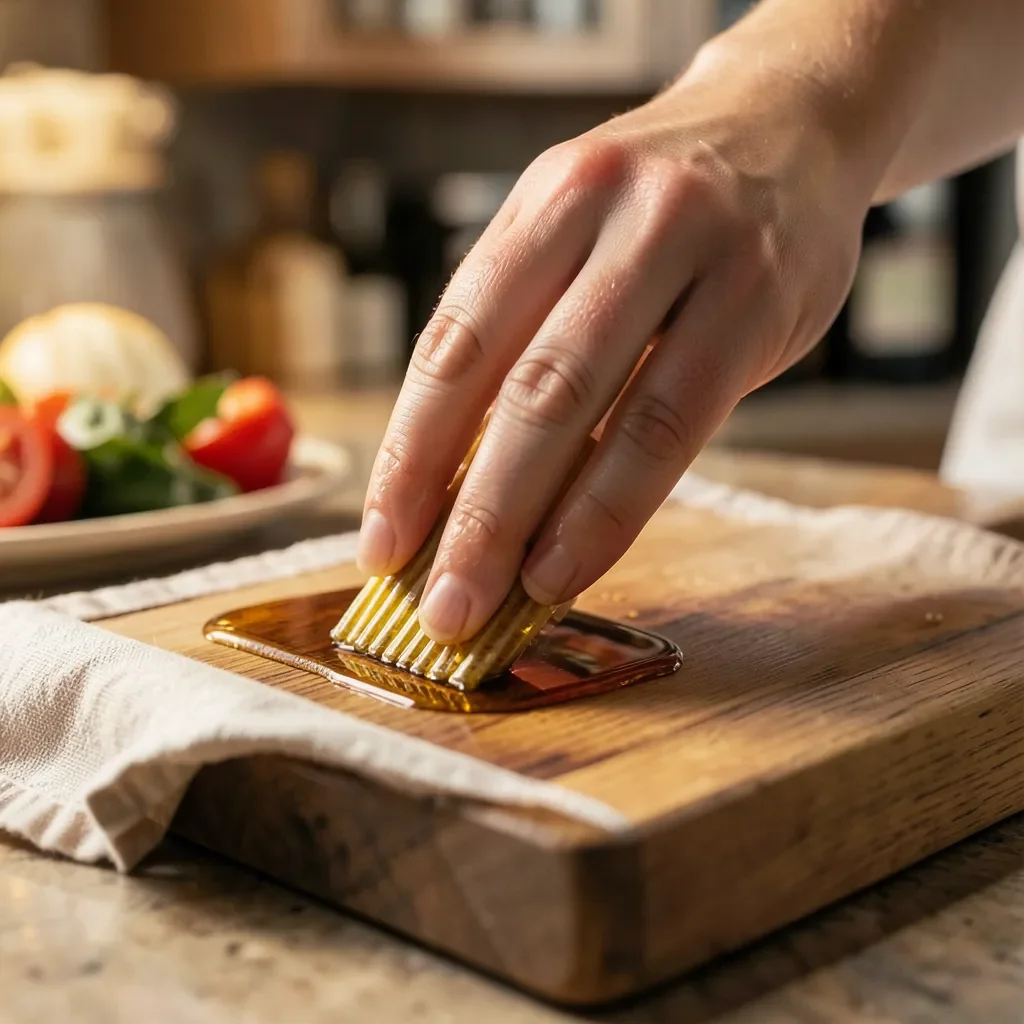
- Apply the tinted oil: Wipe on a generous, even coat with a clean cloth, working with the grain.
- Let it penetrate: Leave it on the surface for the time listed on the label (typically 5-10 minutes) so the wood absorbs the color evenly.
- Wipe off the excess: Buff away any oil that hasn’t soaked in — leftover surface oil stays tacky and collects dust.
- Repeat for a deeper tone: A second coat after the first has dried builds richer color; check the label for recoat time.
Curing Time Before First Use
Dry-to-the-touch and food-contact-ready are two different points in time. Follow the specific product’s label, since formulas vary, but most food-safe tinted oils need at least 72 hours — and some considerably longer — before the board should go into regular food service. Keep the board out of use and away from dust during this window.
Common Mistakes When Coloring a Charcuterie Board
- Assuming “food-safe once cured” applies to any stain: That claim only holds for products actually rated for food contact, not general-purpose wood stain.
- Treating mineral oil as a stain: It won’t add color — pick a tinted oil if color is the goal.
- Rushing the cure time: Using the board before the label’s cure window risks transferring uncured solvent or oil to food.
- Staining the top “just this once”: There’s no safe amount of regular stain on a food-contact surface, regardless of how thin the coat is.
For the full range of food-safe finish options beyond color — including how to choose between oils for durability, sheen, and reapplication schedule — see our best finish for a charcuterie board guide.
Frequently Asked Questions
Can you stain a charcuterie board?
You can put color on one, but a regular hardware-store wood stain is not food-safe, even after it fully cures — its solvents and dyes are not rated for food contact. Use a tinted butcher block oil instead, which is a food-safe oil and colorant combined into one product.
Is mineral oil or beeswax considered a stain?
No. Mineral oil and beeswax are finishes, not stains — they protect and nourish the wood but do not add color. A stain is a pigment or dye product. If you want a food-safe finish with color, look specifically for a tinted butcher block oil, not a clear finish.
Can I use regular wood stain on the underside of a charcuterie board?
Yes, as long as it stays fully sealed away from the food-contact top surface permanently, not just during application. Mask off the top and edges before staining the underside, and never flip a stained-underside board over to serve food directly on the stained face.
How long does a food-safe tinted oil need to cure before use?
Follow the specific product’s label instructions, since cure times vary by formula. As a general rule, most food-safe tinted oils are dry to the touch within a day but need at least 72 hours, and ideally longer, before the board goes into regular food service.
Conclusion
Regular wood stain is not food-safe for a charcuterie board’s serving surface, cured or not. If you want color, use a tinted butcher block oil rated for food contact instead of a hardware-store stain, and reserve plain stain for parts of the board that never touch food. Given proper cure time, a food-safe tinted oil delivers the warm color people usually want from “staining” a board without the risk.
Sponsored / affiliate links. As an Amazon Associate I earn from qualifying purchases. I may earn additional commission from eligible campaigns.
 Wood Butter Cutting Board Wax 3 oz - Food-Safe Butcher Block Cutting Board Utensil Conditioner - Food Grade Mineral Oil and Beeswax - Restore and Protect all Wood - Bamboo, Walnut, Maple
 Virginia Boys Kitchens Coconut Cutting Board Oil - NO Mineral Oil - Food Safe Wood Seasoning for Kitchen Countertops, Cutting Boards, and Butcher Blocks - Made in USA