Benjamin Moore Wood Stain Colors: ES Codes, Woodluxe & Arborcoat
Benjamin Moore stain colors for wood come mainly from two exterior lines, Woodluxe and Arborcoat, and the codes people ask about most are Natural ES-10, Redwood ES-20, Teak ES-30, Cedar ES-40 and Mahogany ES-60. Choose the opacity before the color, because translucent, semi-transparent, semi-solid and solid stains hide different amounts of grain. This guide gives the ES code chart, Benjamin Moore’s own opacity advice, and a Woodluxe vs Arborcoat comparison built from its data sheets.
Exploring Benjamin Moore Wood Stains Best Colors Guide
Best Deck Stain Brush Pick
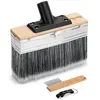 |
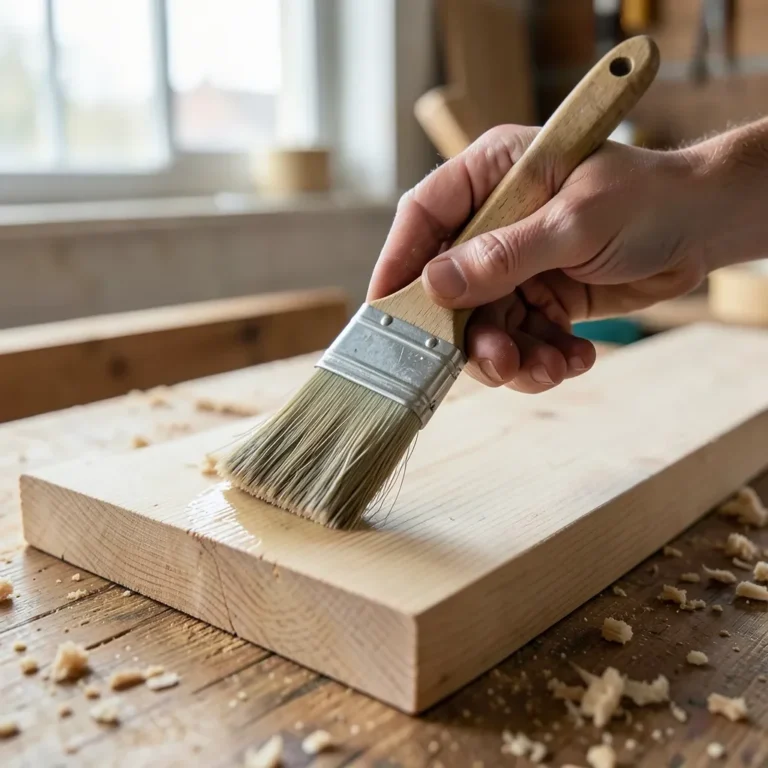
Bates 7.5 Inch Deck Stain Brush with Threaded Base – $15.98 Benjamin Moore stains are sold through its own retailers, not Amazon, so the tool is the Amazon pick here. Woodluxe lists brush or roll as its application methods, and a wide brush makes back-brushing deck boards quick.
|
As an Amazon Associate we earn from qualifying purchases.
Benjamin Moore’s exterior wood stain page describes four opacity levels, and the opacity decides how much of the color you will actually see on your boards.
- Translucent lets the full wood show through with a touch of color. Benjamin Moore points it at new wood decks in good condition and at hardwoods.
- Semi-transparent shows most of the grain and texture. It suggests it for decks a few years old and for softwoods such as cedar and pine.
- Semi-solid shows the texture and some grain. It suits older decks that need a refresh.
- Solid shows only the texture and works for weathered decks with flaws and for all wood types. Solid is the one opacity offered in 3,500+ colors.
Benjamin Moore Stain Color Chart: Woodluxe and Arborcoat
The chart below lists named colors and codes taken from Benjamin Moore’s own translucent and semi-solid color pages. It is a selection, not the full range: the Woodluxe product page lists 7 translucent colors and 75 semi-transparent and semi-solid colors.
| Color | Code | Listed under | Benjamin Moore’s wording |
|---|---|---|---|
| Natural | ES-10 | Translucent | First color in the translucent list |
| Redwood | ES-20 | Translucent, semi-solid | BM: the red-brown blend |
| Teak | ES-30 | Translucent | BM: warm and sophisticated |
| Cedar | ES-40 | Translucent | Named among BM’s popular Woodluxe colors |
| Mahogany | ES-60 | Translucent, semi-solid | BM: earthy brown |
| Chestnut Brown | ES-65 | Translucent | Seventh color in the translucent set |
| Bleached Gray | ES-78 | Translucent | BM: subtle silvery gray |
| Natural Cedartone | ES-45 | Semi-solid | BM: a warm, versatile neutral |
| Spanish Moss | ES-44 | Semi-solid | BM: a rich, earthy green-meets-brown hue |
| Chelsea Gray | HC-168 | Semi-solid | BM: a subtle hint of warmth |
| Cordovan Brown | ES-62 | Semi-solid | Named among BM’s popular Woodluxe colors |
| Oxford Brown | ES-67 | Semi-solid | Brown from the ES range |
| Georgetown Gray | ES-77 | Semi-solid | Gray from the ES range |
| Ferndale Green | ES-43 | Semi-solid | Green from the ES range |
Stat check: Woodluxe covers 300-400 square feet per gallon and dries in 1 hour, according to the Benjamin Moore Woodluxe semi-solid product page.
Two details in the chart are easy to miss. First, the translucent range is small, only 7 colors, and Cedar ES-40 and Natural ES-10 appear there but not on Benjamin Moore’s semi-solid list. If you want Cedar’s tone with more coverage on an older surface, ask your retailer what they can tint rather than assuming the code carries across opacities. Second, the Arborcoat translucent data sheet (623) lists its standard colors as Natural 10, Redwood 20, Teak 30, Cedar 40, Mahogany 60 and Silver Gray 70, so the warm translucent shades are shared across both lines.
If you are still deciding between brands, compare this palette with our Sherwin-Williams wood stain chart and the Minwax wood stain color chart.
Popular Benjamin Moore Wood Stain Colors and Their Uses
Warm Browns and Reds
Redwood ES-20, Teak ES-30 and Mahogany ES-60 are the warm translucent colors. Because translucent stain shows the wood itself, the result depends on the species underneath, which is why Benjamin Moore steers translucent toward new wood and hardwoods. On cedar or pine, the semi-transparent level is the one Benjamin Moore recommends for softwoods.
Grays and Greens
Bleached Gray ES-78 is the translucent gray, while Georgetown Gray ES-77 and Chelsea Gray HC-168 sit in the semi-solid list, which hides more of the grain. Spanish Moss ES-44 is a green-brown semi-solid for a wooded look. Because semi-solid still shows texture, it also hides small color differences between boards better than translucent.
Natural and Neutral Tones
Natural ES-10 is the neutral translucent option for new decks. Natural Cedartone ES-45 is a semi-solid neutral that adds more color than Natural but still shows texture.
Test the Color on Your Own Wood
Benjamin Moore states that the natural hue and condition of the wood affect how each stain looks, and it sells Woodluxe 8 oz. samples for testing in an inconspicuous spot. The semi-transparent sample is $5.99 and covers roughly 2 ft. by 2 ft., which is enough to compare two or three codes on the actual boards before buying gallons.
Applying Benjamin Moore Wood Stains for Best Results
Prep Comes First
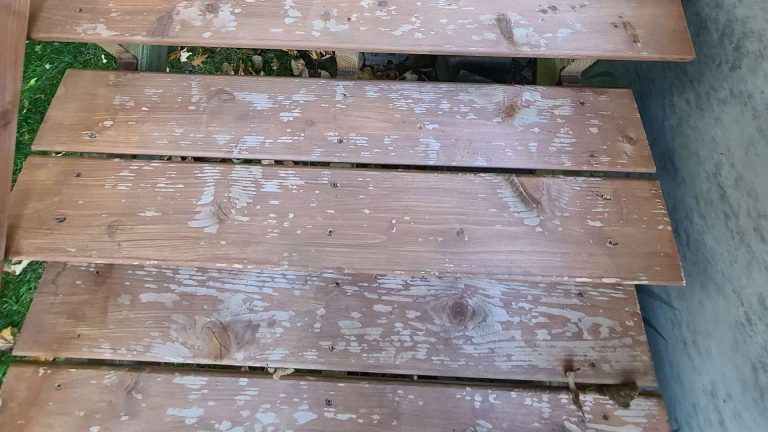
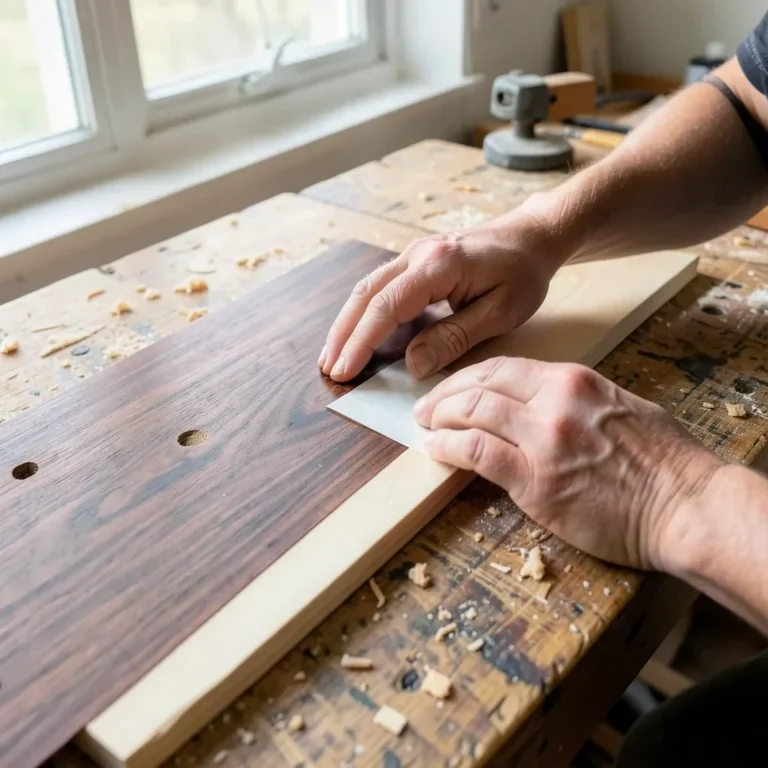
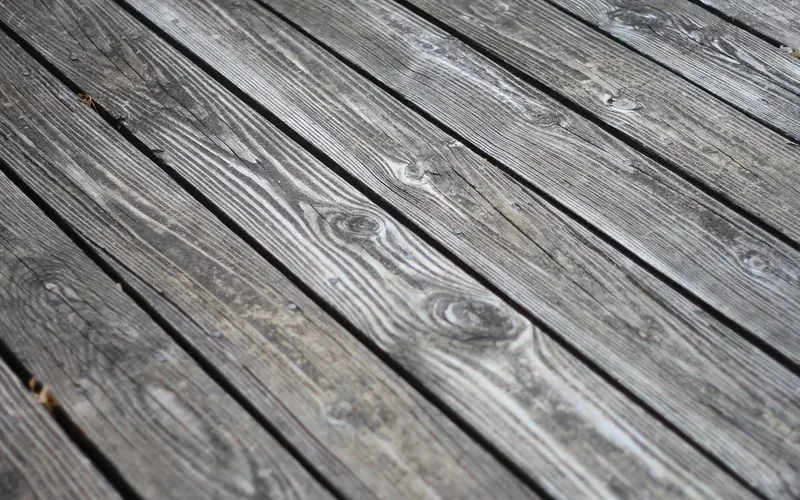
The Arborcoat data sheets ask for clean, dry, absorbent wood because the stain must be able to penetrate. Smooth planed new wood has to be sanded thoroughly or treated with Benjamin Moore Brighten, Brightener and Neutralizer (317) to break the mill glaze. Then the sheet says to test with a few drops of water: if the water does not quickly soak in, repeat the prep. Weathered gray wood is treated first with Benjamin Moore Restore (N316) until loose or damaged fibers are removed. New pressure-treated lumber must be allowed to dry out to below 15% moisture content before Arborcoat goes on.
Application and Conditions
Woodluxe lists brush or roll as application methods, a 40 to 90 degree F application range, one recommended coat and soap-and-water cleanup. The Arborcoat sheets give the same 40 F minimum surface temperature, a 90 F maximum, and a rule not to spread the stain thinner than 200 square feet per gallon. For the waterborne semi-transparent Arborcoat (N638), one coat is generally enough on properly prepared wood, and a second may be needed on some surfaces for color or uniformity.
Choosing the Right Benjamin Moore Wood Stain for Your Project Type
Everything in this guide is for Benjamin Moore’s exterior stains. Its Woodluxe page lists decks, fences, doors, siding, barns and garage doors as projects, and cedar, pine, pressure-treated southern yellow pine and redwood as recommended woods. I did not find interior stain colors on the Benjamin Moore pages used for this guide, so check with your retailer before using these on indoor furniture or floors.
- New deck, good condition: translucent (Natural ES-10 to Mahogany ES-60 range).
- Cedar or pine deck a few years old: semi-transparent, which Benjamin Moore recommends for softwoods.
- Older deck needing a refresh: semi-solid, such as Natural Cedartone ES-45.
- Weathered deck with flaws: solid, available in 3,500+ colors.
- Hardwoods such as mahogany, teak or ipe: the waterborne Arborcoat translucent sheet (623) names these as ideal, while the waterborne semi-transparent sheet (N638) says it is not recommended for hardwood.
Woodluxe vs. Arborcoat: Which Benjamin Moore Stain Is Right For You?
Arborcoat is not one product. Benjamin Moore’s technical data sheets describe waterborne and oil versions with very different dry times and VOC levels. Here are the figures from the sheets and Woodluxe product page.
| Spec | Woodluxe | Arborcoat waterborne semi-transparent | Arborcoat oil semi-transparent | Arborcoat waterborne translucent |
|---|---|---|---|---|
| Chemistry | Water-based acrylic latex | Waterborne alkyd/acrylic/urethane blend | Alkyd/linseed oil | Waterborne alkyd/acrylic/urethane blend |
| Opacity | Semi-solid page (5 opacities offered) | Semi-transparent (N638) | Semi-transparent (328/C328) | Translucent (623) |
| VOC | Under 100 g/L | 18.3 g/L | 503 g/L (328) or 229 g/L (C328) | 92 g/L |
| Coverage per gallon | 300-400 sq. ft. | 200-400 sq. ft. | 200-350 sq. ft. | 200-400 sq. ft. |
| Dry to touch | 1 hour (listed dry time) | 1/2 hour | 6 hours | 1/2 hour |
| Recoat | Not stated on page | 4 hours | 24-48 hours | Dry in 1-3 hours |
| Foot traffic / service | Not stated on page | 24 hours on decks | 5-7 days return to service | 24 hours on decks |
| Cleanup | Soap and water | Clean water | Mineral spirits | Clean water |
The most common mix-up is treating Arborcoat as a single 100% acrylic stain. The data sheets say otherwise: the waterborne versions are an alkyd, acrylic and urethane blend, and the 328/C328 version is an alkyd and linseed oil stain that dries by oxidation and cleans up with mineral spirits. The practical effect is time. The oil version needs 24 to 48 hours before recoating and 5 to 7 days before the deck is back in service, against 4 hours and 24 hours for the waterborne semi-transparent.
When to choose Woodluxe: you want a water-based stain with the widest color list (75 semi-transparent and semi-solid colors plus 7 translucent) and fast drying. When to choose Arborcoat: you are working with softwood or pressure-treated lumber and want a specific formulation, or you need the translucent waterborne version for hardwood. Because the sheets I read carry different revision dates, confirm current availability and formulations with your Benjamin Moore retailer before you buy.
Frequently Asked Questions
What is the most popular Benjamin Moore wood stain color?
Benjamin Moore names Natural ES-10, Cedar ES-40, Teak ES-30, Redwood ES-20, Mahogany ES-60 and Cordovan Brown ES-62 among its most popular Woodluxe stain colors. The best choice depends on the opacity and the wood: translucent shows the most grain, and semi-solid hides more.
Can I use Benjamin Moore wood stain on painted wood?
Not the penetrating types. The Arborcoat data sheets say the product must be able to penetrate, and the oil data sheet warns that applying over a sealed surface gives slow dry times and an uneven finish. Strip the old coating to bare wood first, or ask your retailer about a solid stain for coated surfaces.
How many coats of Benjamin Moore wood stain should I apply?
Woodluxe lists one recommended coat. The waterborne Arborcoat semi-transparent sheet says one coat is generally enough on properly prepared wood, and a second coat may be needed on some surfaces to reach the color or uniformity you want.
How long does Benjamin Moore wood stain take to dry?
Woodluxe is listed at 1 hour dry time. Waterborne Arborcoat semi-transparent is dry to touch in 1/2 hour and recoatable in 4 hours at 77 F and 50% humidity. The oil Arborcoat takes 6 hours to touch, 24 to 48 hours to recoat and 5 to 7 days to return to service.
Is Benjamin Moore Arborcoat the same as Woodluxe?
No. Woodluxe is a water-based acrylic latex stain with a VOC under 100 g/L. Arborcoat is a separate line with waterborne alkyd, acrylic and urethane versions and an oil version, each with its own coverage, dry times and cleanup.
Conclusion
Start with the opacity, then pick from the ES codes that exist in that opacity, and test the color on your own boards with a Woodluxe sample before buying gallons. Choose Woodluxe for a water-based stain with a 1-hour dry time, and read the Arborcoat sheet for the exact version you are buying, since the oil and waterborne products behave very differently. Prep the wood as the data sheets describe, because a stain that cannot penetrate will not last. Redoing an old finish instead? See how to restain wood.
Sponsored / affiliate links. As an Amazon Associate I earn from qualifying purchases. I may earn additional commission from eligible campaigns.