Can Benjamin Moore Paint Be Color Matched A Perfect Secret
Yes, Benjamin Moore paint can be color matched by other brands, but it’s rarely a perfect 100% match. For the absolute best results, especially for touch-ups, take your sample to an official Benjamin Moore retailer. For painting a full room, a competitor’s match can be very close and often good enough.
Hello, fellow makers! It’s Md Meraj, your guide in the workshop. Have you ever found a Benjamin Moore color you absolutely love, only to wonder if you can get it matched somewhere else? Or maybe you need to touch up a wall painted years ago and the original can is long gone. It’s a common puzzle many of us face. You worry if the new paint will stick out like a sore thumb. Don’t fret! Getting a great color match is totally possible. I’m here to walk you through the secrets of color matching, step-by-step, so you can tackle your next project with total confidence. Let’s get painting!
What Does “Color Matching” Really Mean?
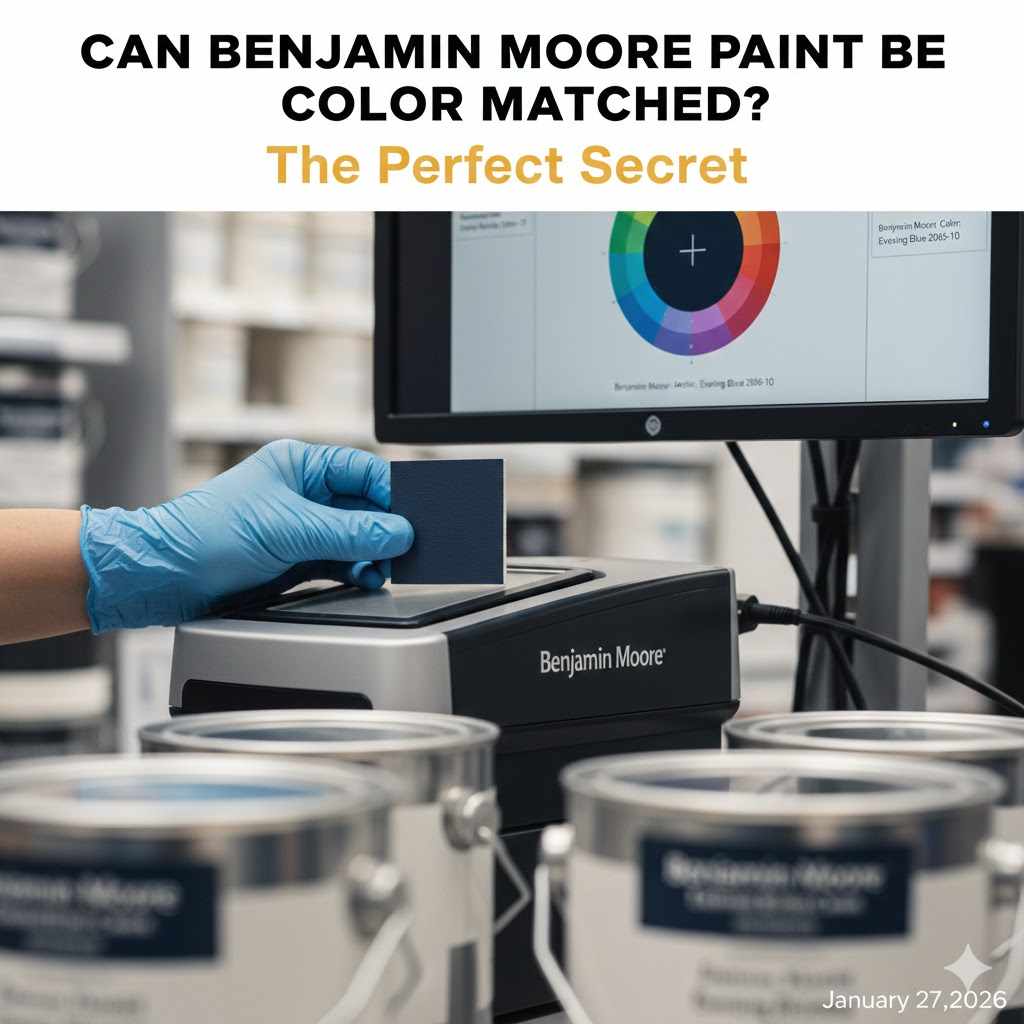
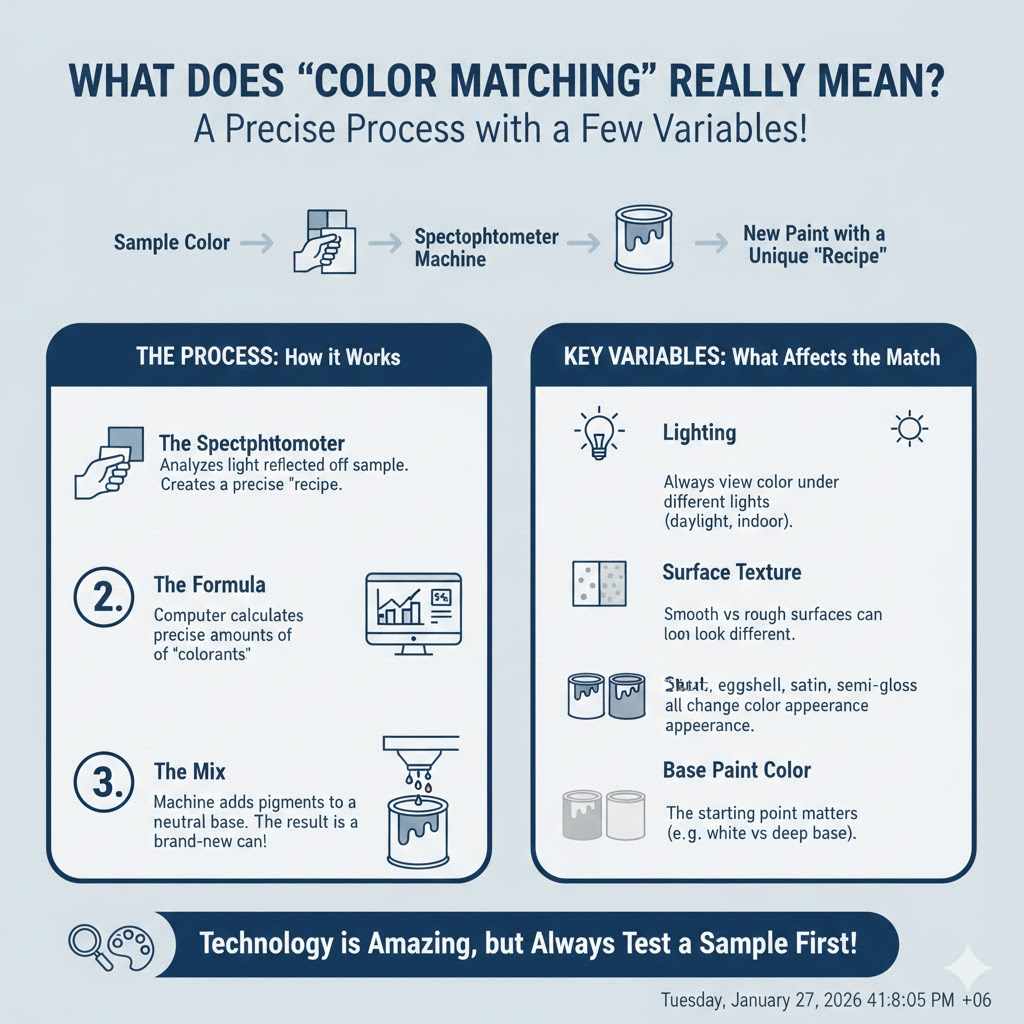
Before we grab our paintbrushes, let’s quickly talk about what color matching is. It sounds simple, right? You bring in a color, and a machine makes new paint that looks just like it. That’s the basic idea, but there’s a little more to it. Most paint stores use a special tool called a spectrophotometer. Think of it as a super-powered camera that can see color far more accurately than our eyes can. It analyzes the light reflected off your sample and creates a unique “recipe” or formula. The store’s computer then tells a machine to add very precise amounts of different colorants (tiny drops of pigment) to a neutral paint base. The result is a brand-new can of paint that should look just like your sample. While the technology is amazing, the final result depends on a few important things, which we’ll explore together.
Why Is Matching Benjamin Moore Paint Tricky?
You might hear whispers in the DIY community that Benjamin Moore colors are especially tough to match. There’s some truth to that, and it’s not just a marketing trick. The challenge comes down to their unique ingredients.
The Secret Ingredient: Gennex® Colorants
Benjamin Moore uses its own special, patented colorants called Gennex®. Most other paint brands use more universal colorants that can be shared across different systems. Here’s why that matters:
- Different Chemistry: Gennex® colorants are engineered to work perfectly with Benjamin Moore’s specific paint bases. A competitor’s system will try to create the color using its own set of universal colorants. It’s like trying to bake a cake using a slightly different set of ingredients—the result might be close, but it won’t be identical.
- No Fillers: These colorants have zero VOCs (Volatile Organic Compounds) and are designed for superior durability and color retention. This unique formula is hard for other systems to replicate exactly.
The Importance of the Paint Base
Every can of paint starts as a neutral “base” before color is added. The base itself has a slight color, and brands formulate them differently. A competitor’s base might be a tiny bit brighter or have a slightly different undertone than a Benjamin Moore base. When the colorants are added, this tiny difference can affect the final shade, making a perfect match just out of reach.
Don’t Forget About Sheen!
Sheen, or the finish of the paint, plays a huge role in how we see color. Sheen refers to how much light the paint reflects. A glossy paint reflects a lot of light, making a color appear brighter and more intense. A flat or matte paint absorbs light, making the same color look softer and a bit darker. If you try to match a Benjamin Moore eggshell paint with a competitor’s satin paint, the colors will look different on the wall even if the formula is nearly identical. Always match the sheen as closely as possible!
Your Step-by-Step Guide to Getting the Best Color Match
Ready to get that color matched? Follow these steps carefully, and you’ll have the best shot at a beautiful result. The secret to success is all in the preparation.
Step 1: Get a High-Quality Paint Sample
This is the most important step of all. The color matching machine is only as good as the sample you give it. A poor sample will lead to a poor match, every time. Here’s how to get a great one:
- Find a Good Spot: Look for an area on the wall that won’t be noticeable. Behind a large piece of furniture, inside a closet, or behind a light switch plate are all excellent choices.
- Carefully Cut a Chip: Using a sharp utility knife, score a square on the wall about 1-inch by 1-inch. Make the cuts clean and deep enough to go through the paint layer and a bit of the drywall paper behind it. Then, gently use the corner of your knife to pry the chip off the wall.
- Keep it Clean and Flat: Make sure the chip is free of dust, dirt, or grease. Don’t bend or crumple it. A flat, clean surface allows the spectrophotometer to get the most accurate reading. If your sample is textured, it can throw off the machine, so try to find the flattest area possible.
Step 2: Decide Where to Go for the Match
You have two main options, and each has its pros and cons. Choosing the right one depends on your specific project needs.
Option A: A Benjamin Moore Store (The Best Bet)
For the most accurate match possible, your first stop should always be an authorized Benjamin Moore retailer. They have a massive advantage because they have access to the exact ingredients—the official bases and Gennex® colorants—that created the original color.
- If you know the color name/number: This is the easiest scenario! Just tell the paint expert the name (e.g., “Chantilly Lace” or “Revere Pewter”) and the number (e.g., OC-65 or HC-172). They can pull up the exact formula in their system and mix a fresh can that is a perfect match.
- If you only have a sample: Even if you don’t know the color name, they can still use their spectrophotometer to analyze your chip. Since they are matching it to their own color system, the result will be incredibly accurate.
Option B: A Competitor Store (Like Sherwin-Williams, Home Depot, or Lowe’s)
Sometimes, going to a competitor is more convenient or budget-friendly. They can get very, very close to the original color, which is often perfect if you’re painting an entire room or a separate wall. However, it’s not ideal for small touch-ups on an existing wall.
A Word of Caution on Touch-Ups: If you are just touching up a small scuff or nail hole, a competitor’s match will likely be noticeable. The slight difference in color, combined with the difference in sheen, will create a “flashing” effect where the touch-up spot looks different from the rest of the wall when viewed from an angle. For touch-ups, stick with the original Benjamin Moore paint whenever possible.
Step 3: Talk to the Paint Pro
When you get to the paint counter, have a quick chat with the person mixing your paint. Don’t just hand over the chip and walk away. Give them helpful information:
- “I’m trying to match this Benjamin Moore color for a whole new room.”
- “Can you match the sheen as closely as possible? I believe the original was eggshell.”
- “This is a sample from my living room. Can you do your best to get as close as you can?”
A little context helps them adjust the formula and give you the best possible result.
Step 4: Always, Always Test the Match First!
I can’t stress this enough. Never go straight from the store to painting your entire wall. Buy a small sample pot of the newly mixed color first. It’s the best dollar you’ll ever spend on a painting project.
- Paint a Test Swatch: Take your sample pot home and paint a small test patch (at least 2×2 feet) on the wall you plan to paint. If you don’t want to paint directly on the wall, use a large piece of poster board or a scrap of drywall.
- Let it Dry Completely: Wet paint looks very different from dry paint. You must wait at least a few hours for it to dry fully before making a judgment. Some colors can take up to 24 hours to “cure” to their final shade.
- Check it in Different Lights: Look at your test swatch throughout the day. How does it look in the bright morning sun? How about in the evening under your warm lamplight? As the U.S. Department of Energy explains, different types of light bulbs (like LED, incandescent, or fluorescent) can dramatically change a color’s appearance. Your goal is a color that looks great in all the lighting conditions of your room.
If you’re happy with the test swatch, you can go back and buy the full gallons with confidence!
Matching Benjamin Moore vs. a Competitor: What to Expect
To help you decide where to go, here’s a simple breakdown of what you can expect when getting a color match at a Benjamin Moore store versus a competitor.
| Factor | Benjamin Moore Store | Competitor Store (e.g., Sherwin-Williams) |
|---|---|---|
| Accuracy for Touch-Ups | Excellent. Can often be a perfect or near-perfect match. | Poor to Fair. The patch will likely be noticeable (“flashing”). |
| Accuracy for a Full Room | Perfect (if using the original formula). | Very Good to Excellent. Often indistinguishable to the naked eye. |
| Ingredients Used | Official Benjamin Moore bases and proprietary Gennex® colorants. | Competitor’s own bases and universal colorant system. |
| Sheen Matching | Exact match to their own sheen levels (e.g., their Eggshell). | Close match. One brand’s “Satin” might be slightly different than another’s. |
| Best For… | Touch-up jobs, continuing a project, or when you need a 100% perfect result. | Painting a new, separate room where a 99% close match is great. |
Tips for Color Matching Success
Here are a few extra pro tips to keep in your back pocket. Think of them as my workshop secrets for foolproof paint matching.
Understand the Undertones
Every color has undertones—subtle hints of other colors that give it warmth or coolness. A gray might have a blue, green, or even purple undertone. The fancy spectrophotometer is good at detecting these, but sometimes a competitor’s match can get the main color right but miss the subtle undertone. This is why testing is so important!
Old Paint vs. New Paint
Remember that the paint on your walls has been aging. It’s been exposed to sunlight, dirt, and air for months or even years. This can cause the color to fade or change ever so slightly. Even a brand-new can of the original Benjamin Moore paint might look a little brighter or fresher than the 5-year-old paint on your wall. For a truly seamless look on an older wall, your best bet is often to repaint the entire wall from corner to corner.
A Comparison of Paint Systems
Curious about the technical differences? Here’s a quick table that shows how Benjamin Moore’s system compares to a typical competitor brand that uses a universal system.
| Feature | Benjamin Moore (Gennex® Platform) | Typical Competitor (Universal Tint System) |
|---|---|---|
| Colorant Type | Proprietary, water-based acrylic colorants. | Universal colorants (glycol-based), designed to work in many paint brands. |
| VOC Content | Zero-VOC. Colorants don’t add VOCs to the paint. | Can add a small amount of VOCs to the final paint product. |
| Durability | Excellent. The colorants are also a durable resin, which strengthens the paint. | Good. The colorants are primarily for pigment and can sometimes slightly weaken the paint film. |
| Color Fade Resistance | Engineered to be highly resistant to fading over time. | Varies by brand and quality, but universal tints can be more prone to fading. |
Frequently Asked Questions (FAQ)
1. Can Home Depot or Lowe’s match Benjamin Moore colors?
Yes, they absolutely can. Their paint departments have sophisticated color-matching computers with thousands of competitor formulas, including many from Benjamin Moore, already in their system. For colors not in the system, they can scan your physical paint chip. The match will be very close but likely not perfect for touch-ups due to differences in paint base and colorants.
2. Do I need the original paint can or just the color name?
If you are going to a Benjamin Moore store, the color name and number (e.g., “Gray Owl OC-52”) is perfect. They can look up the exact formula. If you are going to a competitor, the name is still very helpful as they might have the formula on file. However, for any true custom match, a physical sample (a dry paint chip) is always the best way to ensure accuracy.
3. Will the matched paint look exactly the same on the wall?
It will be extremely close, but an expert eye might spot a tiny difference. Factors like sheen, lighting, and the paint’s base chemistry create minuscule variations. For painting an entire room, you will likely never notice the difference. For a small touch-up on an existing wall, the difference is often visible.
4. Why does my touch-up spot look different even with a good match?
This is often due to a phenomenon called “flashing.” It happens when the sheen of the new paint doesn’t perfectly match the sheen of the old paint. The old paint on the wall has also aged and faded slightly from sunlight and cleaning. Even with the original paint, a touch-up on a years-old paint job can sometimes be noticeable.
5. What is the best size for a paint chip to get a good match?
Bigger is always better! The absolute minimum is about the size of a quarter. However, for the best results, you should provide a flat, clean chip that is at least 1-inch by 1-inch square. This gives the machine’s optical eye a large, clear area to read, resulting in a more accurate formula.
6. Can a store match a color from a photo on my phone?
Unfortunately, no. Phone screens, computer monitors, and printers all display color differently and are not calibrated for accuracy. The lighting in the photo also drastically changes the color’s appearance. You must always use a real, physical object or a paint chip for an accurate color match.
7. What is paint “sheen” and why is it so important for matching?
Sheen is the level of glossiness in the paint’s finish. It ranges from “Flat” (no shine) to “High-Gloss” (very shiny). Common sheens include Matte, Eggshell, Satin, and Semi-Gloss. Sheen affects how light reflects off the surface, which changes how we perceive the color. A satin finish will look lighter and richer than the exact same color in a flat finish. For a good match, you must match the color and the sheen.
Conclusion: Paint with Confidence!
So, can Benjamin Moore paint be color matched? The answer is a resounding yes! While a 100% perfect, identical match can be elusive—especially at a competitor’s store—you can get incredibly close. The key to a successful project lies in understanding the process and preparing properly.
Remember the golden rules we discussed: always start with a large, clean, flat sample. For flawless touch-ups, head to a Benjamin Moore store. For painting a full room, a competitor’s match can work beautifully. And no matter what, always buy a sample pot and test your color in your own home’s unique lighting before you commit to gallons. By following these simple steps, you’re no longer guessing; you’re in control. Now you have the knowledge and the confidence to get the beautiful color you want for your next woodworking project or room refresh. Happy painting!