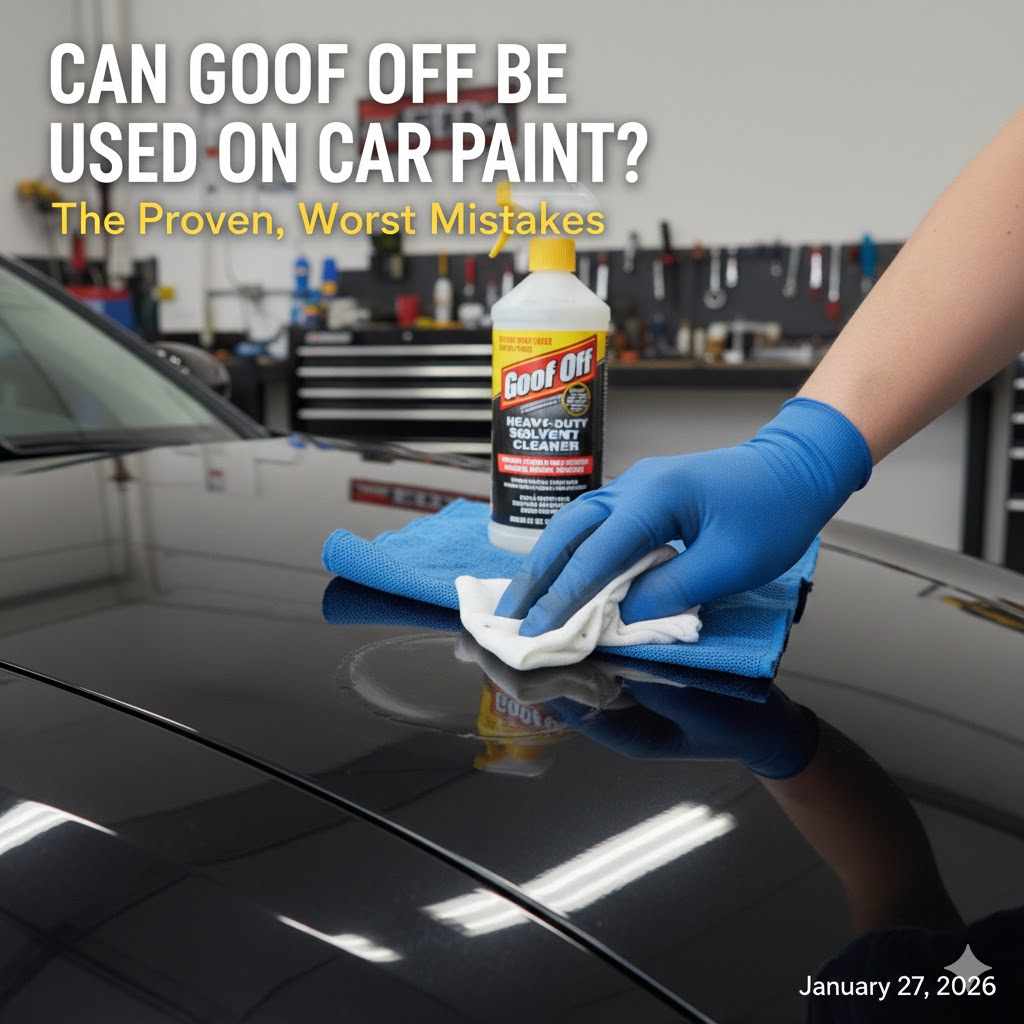
Can Goof Off Be Used On Car Paint? The Proven, Worst Mistakes
Using Goof Off on car paint is extremely risky and not recommended. The powerful solvents in most Goof Off formulas can quickly dissolve your car’s clear coat, dull the finish, and cause permanent damage. Always choose a product specifically designed for automotive paint to safely remove tar, sap, or adhesive residue.
Hello there, fellow DIYers! Md Meraj here. In our workshops, we learn to reach for the right tool for the job. When you see sticky tree sap or stubborn sticker residue on your car, it’s tempting to grab a powerful cleaner from the garage shelf. Goof Off seems like the perfect solution, right? It cuts through tough messes in an instant. But when it comes to your car’s paint, this can be a costly mistake.
I’ve seen many well-meaning folks accidentally damage their car’s finish this way. Your car’s paint is more delicate than you might think. Don’t worry, though. Today, we’re going to walk through why this happens and, more importantly, learn the proven, safe methods to get your car looking spotless without any regrets. Let’s get it done the right way.
Why Goof Off Is So Tempting (and So Dangerous) for Cars
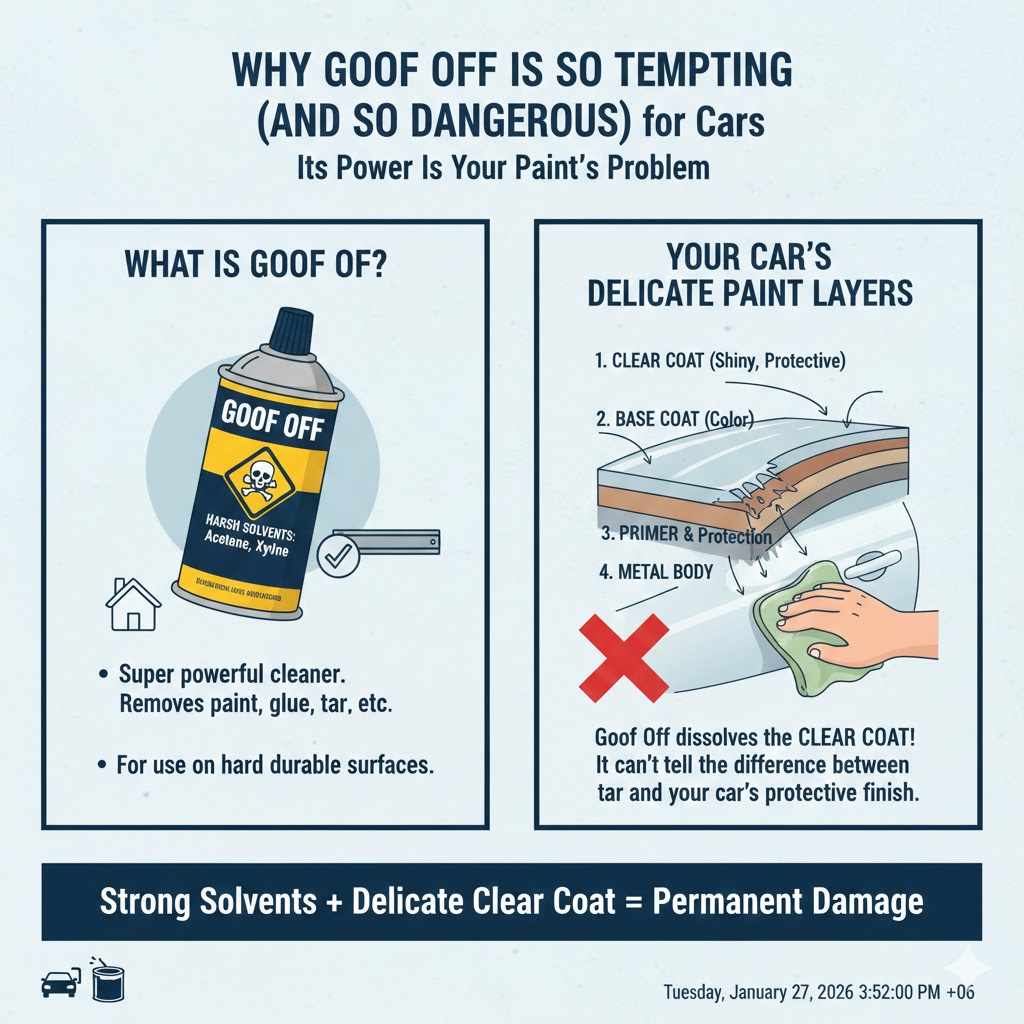
Goof Off is a fantastic product for tough jobs around the house. It’s designed to remove things like dried paint, glue, and tar from hard, durable surfaces like concrete, metal, or unfinished wood. Its power comes from very strong solvents, such as acetone and xylene. These chemicals are incredible at dissolving sticky, greasy, and dried-on messes.
However, that same power is exactly what makes it so dangerous for your car. Think of your car’s paint not as one thick layer, but as several thin, delicate layers working together:
- Clear Coat: This is the topmost, protective layer. It’s what gives your car its shine and protects the color from UV rays, bird droppings, and minor scratches. It’s the most vulnerable layer.
- Base Coat (Color): This layer sits beneath the clear coat and holds the actual color of your vehicle.
- Primer: This is the first coat that goes onto the car’s metal body. It helps the paint adhere properly and provides another layer of corrosion protection.
When you apply a harsh solvent like Goof Off, you’re not just attacking the sap or tar on the surface. You’re applying a chemical designed to dissolve complex polymers, which is exactly what your car’s clear coat is. It can’t tell the difference between sticky tar and your protective finish.
The Worst Mistakes We See: Real-World Damage from Goof Off
Over the years, I’ve heard from many DIYers who learned this lesson the hard way. These are the most common mistakes that lead to irreversible damage. By understanding them, you can avoid them completely.
Mistake #1: Using the Original, Professional-Grade Formula
The original Goof Off in the yellow and black metal can is the most powerful version. It’s formulated for contractors dealing with heavy-duty messes. This version can melt the clear coat on a car in mere seconds. Many people grab this one, thinking “stronger is better,” without realizing it will cause the most harm.
Mistake #2: Leaving It On for “Just a Minute”
The chemical reaction starts instantly. Many people apply the product and wait for it to “work its magic.” Unfortunately, that magic is also working on your clear coat. Even 30 seconds can be enough time to create a dull, hazy spot that won’t wipe away. The paint feels soft or sticky to the touch because the solvent has started breaking it down.
Mistake #3: Scrubbing the Spot Vigorously
When you see the gunk isn’t coming off right away, the natural instinct is to apply some pressure and scrub. This is a disastrous combination. The Goof Off has already softened the clear coat, making it extremely fragile. Scrubbing it with a paper towel or a rough cloth at this point is like rubbing sandpaper on wet paint. You will create deep scratches and swirls that are very difficult and expensive to fix.
Mistake #4: Applying It in Direct Sunlight or on a Hot Panel
Heat acts as a catalyst for chemical reactions. If your car has been sitting in the sun, the surface of the paint is hot. Applying a solvent to a hot panel dramatically speeds up the dissolving process. What might take a minute to cause damage on a cool day could take less than 10 seconds on a hot one. You often won’t have time to wipe it off before the damage is done.
Understanding the Damage: What Goof Off Actually Does to Paint
To see why choosing the right product is so important, let’s compare the effects of a harsh solvent with a product made specifically for cars. The difference is night and day.
| Car Component | Effect of Goof Off (Harsh Solvent) | Effect of a Safe Automotive Product |
|---|---|---|
| Clear Coat | Dissolves, etches, and creates a permanent dull or hazy spot. The finish becomes soft and sticky. | Gently lubricates and lifts the contaminant from the surface without affecting the clear coat. |
| Base Coat (Color) | If the clear coat is breached, it can cause the color coat to fade, discolor, or bleed. | Does not reach or affect the base coat. The color remains safe and vibrant. |
| Plastic Trim & Headlights | Can cause immediate and permanent clouding, yellowing, or even melt the plastic. | Formulated to be safe on most automotive plastics, rubber, and trim pieces. |
| Overall Result | A damaged spot that requires professional correction, often repainting the entire panel. | The stubborn residue is gone, and the paint underneath is clean, shiny, and undamaged. |
The Safe and Proven Way to Remove Stubborn Gunk from Your Car
Now that you know what not to do, let’s focus on the correct, safe, and effective way to handle these common problems. The key principle in auto detailing is to always start with the least aggressive method possible.
Step 1: Gather the Right Tools (Not Goof Off!)
Having the right supplies on hand makes the job easy and safe. You don’t need a lot of expensive gear, just the correct items:
- High-quality car wash soap and a bucket of clean water
- A dedicated bug and tar remover (available at any auto parts store)
- Automotive adhesive remover (for sticker residue)
- A detailing clay bar kit
- At least two or three clean, soft microfiber towels
- A bottle of spray wax or quick detailer
Step 2: Wash the Area First
Never try to remove a tough spot from a dirty car. Dirt and grit particles on the surface will act like sandpaper when you start rubbing. Before you do anything else, thoroughly wash and rinse the area with car wash soap and water. This removes loose dirt and allows you to see exactly what you’re dealing with.
Step 3: How to Safely Remove Tree Sap or Tar
For organic, sticky messes like tree sap and road tar, a dedicated bug and tar remover is your best friend. These products use specialized, oil-based solvents that are formulated to break down sap and tar without being aggressive toward paint.
- Spray a small amount of the bug and tar remover directly onto the spot.
- Let the product dwell for 30-60 seconds. You might even see the tar start to “bleed” or run, which shows it’s working.
- Take a clean microfiber towel, fold it into a square, and gently wipe the spot. The residue should lift off with minimal pressure.
- For very stubborn spots, you can reapply the product, but avoid aggressive rubbing.
- Once the spot is gone, rinse the area and re-wash it with car soap to neutralize the cleaner.
Step 4: Tackling Sticker Residue and Adhesives
Sticker glue can be tough, but it’s no match for the right method. Heat is your best tool here.
- Gently warm the area with a hairdryer on a low setting. This will soften the adhesive. Don’t use a powerful heat gun, as that can damage the paint.
- Peel off any remaining parts of the sticker slowly.
- Apply a dedicated automotive adhesive remover to a microfiber towel (not directly to the paint).
- Gently blot and wipe the remaining glue. The remover will dissolve it, allowing you to wipe it away easily.
- Again, once the residue is gone, wash the area with car soap and rinse thoroughly.
Step 5: Always Wash and Protect the Area Afterward
This is a critical step that many people skip. Any cleaner you use, even an automotive-safe one, can strip away wax or sealant protection. After you’ve removed the gunk and cleaned the area with car soap, you must re-protect the paint. The easiest way is to use a spray wax or a quick detailer. Just spray it on, wipe it off with a fresh microfiber towel, and your paint will be shiny and protected again.
A Quick Guide to Safe Alternatives
Here is a simple table to help you choose the right product for the right problem. Keeping one or two of these in your garage will prepare you for nearly any sticky situation.
| The Problem | The Safe Product | Why It Works Safely | Best For |
|---|---|---|---|
| Tree Sap / Road Tar | Bug & Tar Remover | Uses refined mineral spirits or oils that dissolve tar and sap but evaporate before harming paint. | Fresh or hardened tree sap, road tar, bird droppings, and bug residue. |
| Sticker or Badge Glue | Automotive Adhesive Remover | Formulated to break down the specific adhesives used on cars without affecting the clear coat. | Residue from bumper stickers, old badges, or dealer decals. |
| Paint Overspray / Rough Feel | Detailing Clay Bar | Gently shears off contaminants bonded to the top of the clear coat without using chemicals. | Light paint overspray, industrial fallout, or making the paint feel perfectly smooth. |
| Light Scuffs / Paint Transfer | Polishing Compound | Uses micro-abrasives to carefully remove a microscopic layer of the clear coat, leveling the surface. | Removing paint that transferred from another object (like a garage wall or another car). |
For anyone looking to make more informed choices about the chemicals they use, it’s always a good idea to look for products recognized for their safety. Resources like the EPA’s Safer Choice program can help you identify products that are safer for you and the environment, though you should always cross-reference that they are also rated for automotive use.
What If I Already Used Goof Off On My Car? A Damage Control Guide
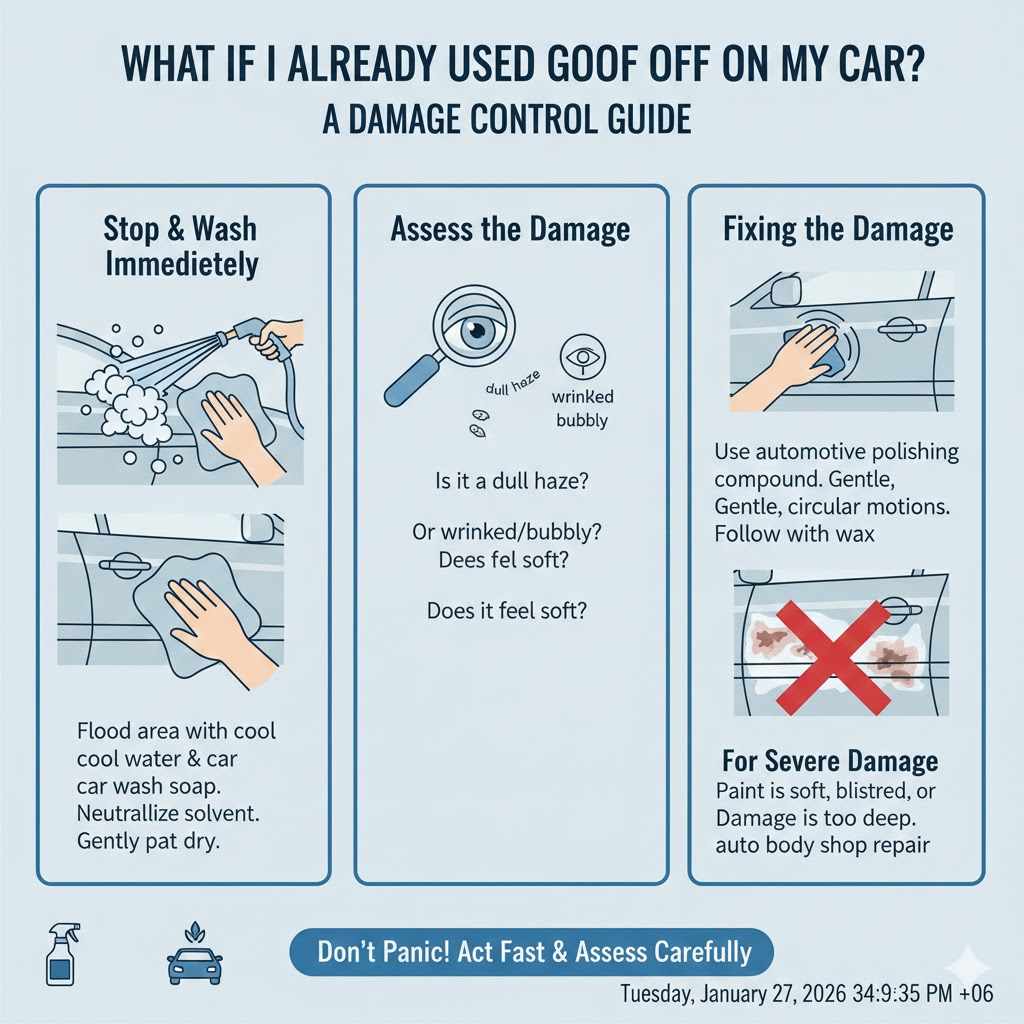
If you’re reading this article because you already applied Goof Off and now have a dull spot on your paint, don’t panic. Let’s see if we can fix it.
- Stop and Wash Immediately: The first thing to do is remove any remaining Goof Off. Flood the area with plenty of cool water and wash it with a generous amount of car wash soap. This will neutralize and rinse away any active solvent. Gently pat the area dry with a clean microfiber towel.
- Assess the Damage: Look at the area in good light. Is it just a slightly dull haze? Or is the paint wrinkled, bubbly, or discolored? If you run your fingernail over it very lightly, does it feel soft?
- For Minor Haze or Dulling: If the clear coat is just lightly etched, you may be able to fix it with polishing. A good quality automotive polishing compound and a microfiber applicator pad can sometimes remove the very top, damaged layer of the clear coat, restoring shine. This will take patience and a lot of gentle, circular motions. Follow up with wax to protect the area.
- For Severe Damage: If the paint is soft, blistered, wrinkled, or you can see the color or primer coat underneath, the damage is unfortunately too deep to fix by hand. The solvent has eaten through the clear coat entirely. At this point, the only solution is to take it to a professional auto body shop. They will likely need to sand down, re-prime, and repaint the entire panel to get a perfect match.
Frequently Asked Questions (FAQ)
Is any version of Goof Off safe for cars?
Generally, no. Even though some formulas are labeled as “Automotive,” they still contain solvents that can be risky if used improperly (left on too long, used on a hot surface, or on certain types of plastic). It’s always safer to use a product specifically designed as a bug and tar remover or adhesive remover for paint.
Can Goof Off remove scratches from my car?
No, absolutely not. Goof Off will do the opposite. It will damage the clear coat around the scratch, making the area look much worse. Scratches are removed by carefully leveling the clear coat with a polish or compound, not by dissolving the paint.
What’s the difference between Goof Off and Goo Gone? Can I use Goo Gone?
This is a great question. Goof Off is a harsh, xylene- or acetone-based solvent. Goo Gone is a much gentler, citrus-oil-based cleaner. Goo Gone is significantly safer for car paint, but you should still use the “Automotive” version of their product. As always, test it on a small, hidden spot first before using it on a visible area.
How do I remove spray paint from my car safely?
Do not use Goof Off, paint thinner, or lacquer thinner, as these will destroy your car’s finish. For light spray paint overspray, a detailing clay bar is surprisingly effective. For thicker spray paint, use a specialized automotive graffiti or spray paint remover, and follow the directions extremely carefully.
Will Goof Off damage my car’s plastic trim or headlights?
Yes, almost certainly. The strong solvents will cause unpainted black plastic trim to discolor and fade, creating a chalky, white appearance. On headlights, it can cause immediate clouding and hazing by melting the protective outer layer of the plastic, leading to permanent damage.
Why is a microfiber towel so important for this job?
Microfiber towels are made of thousands of tiny, soft fibers that trap dirt and lift liquids away from the surface safely. A regular bath towel, paper towel, or shop rag is far more abrasive and will create tiny scratches and swirls in your car’s clear coat as you wipe. Always use high-quality microfiber for touching your paint.
Your Workshop Wisdom: Know When Not to Use a Tool
In woodworking and every other DIY craft, a huge part of becoming skilled is learning not just how to use your tools, but also when not to use them. Goof Off is a powerful tool, like a belt sander or a reciprocating saw. It’s incredibly effective in the right situation, but disastrous in the wrong one.
Your car’s paint is one of the most delicate surfaces you’ll work on as a DIYer. It requires a gentle touch and products that were created with its specific chemistry in mind. By reaching for a dedicated bug and tar remover or an automotive adhesive remover, you are choosing the right tool for the job.
It protects your investment, gives you a professional result, and continues to build the smart, patient habits that make for a truly great craftsperson. Take pride in doing it the right way—your car will thank you with a long-lasting, beautiful shine.