How to Remove Paint From Hands Without Paint Thinner (Safe Methods)
To remove paint from your hands without paint thinner, match the remover to the paint. Latex and acrylic come off with soap and warm water, with a little rubbing alcohol for dried spots, and oil-based paint is loosened with olive oil, baby oil or mayonnaise and then washed away with soap. Thinner is not needed, and the safety sources below explain why it is a poor choice for skin.
Quick Answer
Water-based paint: soap, warm water and a few minutes of scrubbing. Dried water-based paint: add rubbing alcohol. Oil-based paint: work in a cooking oil first, then wash with soap. Never use gasoline, lighter fluid or kerosene on skin, and treat paint thinner as a last resort you can usually skip.
How to Remove Paint From Hands Without Paint Thinner
Best Solvent-Free Painter Hand Cleaner
 |
Zenex Painters Punch Industrial Hand Cleaner, 400 ml, about $16.99 A paint-removing hand soap that the listing describes as solvent-free, with no petroleum distillates and walnut shell grit.
|
As an Amazon Associate we earn from qualifying purchases.
Paint on skin is a small problem until a quick fix makes it bigger. The first question is which paint it is, because the can decides the method. Check the label for the words latex, acrylic, water-based, oil-based or alkyd. If the paint is still wet, wash it off right away: Healthline notes wet paint is much easier to remove than dry paint.
| Paint on your hands | Start with | Backup step | Do not use |
|---|---|---|---|
| Wet latex, acrylic or craft paint | Soap and water, scrubbed for a few minutes | Repeat the wash | Thinner, mineral spirits |
| Dried latex or acrylic | Warm water and soap | Rubbing alcohol on a cotton ball or cloth, then wash | Thinner, scraping with a blade |
| Spray paint (water-based) | Soap and water | Cooking oil or baby oil rubbed in first, then wash | Gasoline, lighter fluid |
| Oil-based paint or enamel | Olive oil, baby oil or mayonnaise worked in, then soap | A solvent-free painter hand cleaner | Gasoline, kerosene, paint stripper |
| Stain, varnish or polyurethane | Read the can: the cleanup instructions name the right product | Solvent-free painter hand cleaner | Anything not named on the can |
Methods for latex, acrylic and oil-based paint follow Healthline’s skin-paint guide. The do-not-use column follows the CPSC and safety data sheet material cited below. The last row is our own cautious reading, not a tested method.
The table is built from one idea: start with the gentlest option that works for the paint in question, and only move to the backup step if the first one fails. That order matters more than any single trick, because it keeps harsher products off your skin.
Water-Based Paint: Latex, Acrylic and Craft Paint
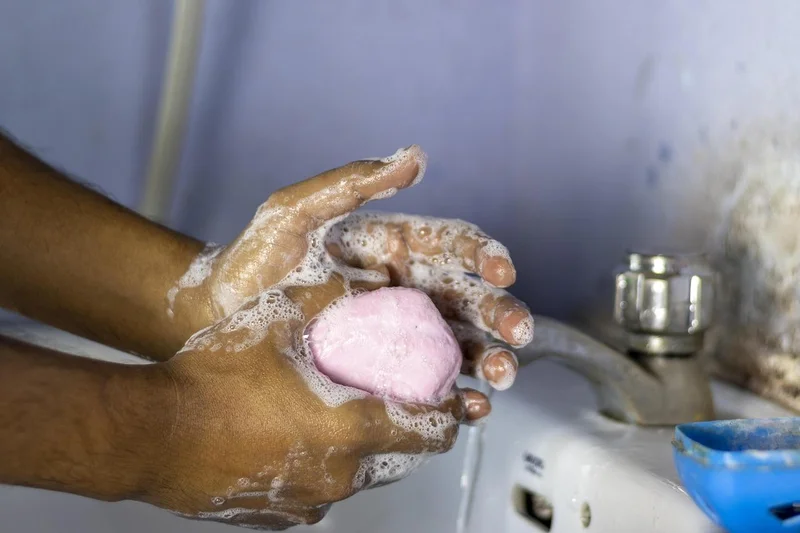
Wet your hands, lather with soap and scrub for several minutes, then rinse and repeat until the paint is gone. That is the routine Healthline gives for water-based paint, and it works for latex, acrylic, fabric paint and water-based spray paint.
If the paint has dried, dab a cotton ball or cloth with rubbing alcohol and rub the stuck areas, then wash again with soap. Rubbing alcohol is a latex paint solvent in Healthline’s guide, which is why it helps with dried spots.
Oil-Based Paint and Enamel
Oil-based paint is not water-soluble, so soap and water alone is unlikely to shift it. Healthline’s solvent-free option is to rub in an oil-based household product such as olive oil, baby oil or mayonnaise, let it work, wipe with paper towels, then rinse. After the oil has lifted the paint, wash with soap and warm water to clear the oily film.
- Wipe off what you can: blot wet paint with a paper towel first so you are not spreading it.
- Work in the oil: rub olive oil, baby oil or mayonnaise over the paint and let it sit so it can loosen the paint.
- Wipe, then wash: remove the loosened paint with a paper towel, then wash with soap and warm water.
- Repeat if needed: thick or dried oil paint may take a second round instead of a harsher product.
Old paint can contain ingredients you do not want on your hands: Healthline points out that some paints contain harmful toxins such as lead. If the paint is from an older can or an old surface you are stripping, check the label and wash thoroughly.
What About a Painter Hand Cleaner?
A store-bought painter hand cleaner is the tidy answer when you paint often. The one we picked above is described in its Amazon listing as solvent-free, with walnut shell grit and no petroleum distillates, and the bottle’s directions we read on the product photo are to apply it to dry hands, rub until the paint begins to dissolve, add a small amount of water, then rinse and dry. We have not hands-on tested it, so treat the label as the manufacturer’s claim and follow the directions on the bottle you buy.
Gritty cleaners are also the closest sourced answer to the popular pumice stone question. We found no source that tests a solid pumice stone on skin, so we are not recommending one: scrub gently with soap-softened paint and a cleaner made for hands, and stop if your skin turns red or sore.
Why Thinner, Gasoline and Strippers Are Poor Choices for Skin
Paint thinner works on paint because it is a solvent, and solvents do not stop at the paint. The safety data sheet for Jasco Paint Thinner (W.M. Barr, 2015) lists skin contact effects of irritation, numbness in the fingers and arms, drying and dermatitis, and gives the first aid as washing with soap and large quantities of water, with medical attention if irritation continues. Healthline likewise cautions against regular use of turpentine and paint thinner on skin.
Gasoline is worse because it adds fire to the problem. The U.S. Consumer Product Safety Commission paint stripper publication says never to use gasoline, lighter fluid or kerosene to strip paint, and it warns that many chemicals in paint strippers are absorbed readily through the skin, with some able to irritate or burn it and some effects delayed. Our guide to mineral spirits vs paint thinner vs lacquer thinner covers what each of those products is for, which is cleaning brushes and surfaces rather than hands.
| Product | What the source says about skin | Source |
|---|---|---|
| Paint thinner | Skin contact may cause irritation, numbness in the fingers and arms, drying of skin and dermatitis; classified as a skin irritant (Category 2) | Safety data sheet, Jasco Paint Thinner (W.M. Barr, 2015) |
| Gasoline, lighter fluid, kerosene | “Never use gasoline, lighter fluid, or kerosene to strip paint” | CPSC paint stripper publication |
| Chemical paint strippers | Many ingredients are readily absorbed through skin, and some irritate or burn it; the effects can be delayed | CPSC paint stripper publication |
| Solvents in general | Can damage organs if they get through skin; absorption depends on how long the contact lasts, how much is on the skin and the area covered | CDC NIOSH skin exposures page |
Findings are from the sources named in the table. We are not giving medical advice: for burns, blisters, swelling or any worry, contact a clinician or poison control.
The CDC NIOSH skin exposures page adds the general rule: some solvents can damage organs if they get through the skin, and how much gets in depends on how long the skin is exposed, how much is on it and how much skin is covered. It also lists skin integrity among the factors, so damaged skin should be treated as more vulnerable, which is one more reason not to scrub your hands raw.
If thinner or a stripper does get on your skin: wash with soap and plenty of water right away, take off soiled clothing and discard contaminated gloves, and seek medical attention if irritation continues. In the United States you can reach poison control at 1-800-222-1222. This page is general information, not medical advice.
Protect Your Hands Next Time
- Wear gloves: the thinner data sheet recommends impermeable gloves and says gloves contaminated with product should be discarded. The CPSC notes that strippers can dissolve the latex or rubber of common household gloves, so check the label of whatever product you use for the right glove material.
- Keep a damp rag nearby: wiping wet latex or acrylic off at once is the easiest fix there is.
- Read the can: the label names the cleanup product, the paint type and any warnings, which tells you which row of the table above applies.
- Never reach for the shop solvent: keep thinner, mineral spirits and gasoline for brushes, tools and surfaces.
Common Mistakes to Avoid
- Using the wrong remover for the paint type: soap will not shift oil-based paint, and oil will not help much on dried latex.
- Skipping straight to thinner: it is the riskiest option and usually unnecessary.
- Using gasoline, lighter fluid or kerosene: the CPSC says never to use them to strip paint.
- Scrubbing until the skin is raw: damaged skin is more vulnerable to chemicals, so a gentler second round beats a harder first one.
- Leaving the oil on: after an oil rub, finish with soap and water.
Frequently Asked Questions on Removing Paint From Hands
What takes paint off skin without paint thinner?
It depends on the paint. Soap and water, with rubbing alcohol for dried spots, handles latex and acrylic. Oil-based paint is loosened with a cooking oil, baby oil or mayonnaise, then washed off with soap, according to Healthline. A solvent-free painter hand cleaner is a store-bought option.
How do I remove oil-based paint from my hands?
Soap and water alone is unlikely to touch it. Work olive oil, baby oil or mayonnaise into the paint, let it loosen, wipe with a paper towel, then wash with soap and warm water to remove the oil. Healthline describes this as the solvent-free route.
Is paint thinner safe to use on skin?
No. The safety data sheet for a common paint thinner lists skin irritation, drying, dermatitis and numbness in the fingers and arms, and Healthline cautions against regular use on skin. If thinner does get on you, the data sheet says to wash with soap and plenty of water and get medical attention if irritation continues.
Can I use gasoline to get paint off my hands?
No. The U.S. Consumer Product Safety Commission says never to use gasoline, lighter fluid or kerosene to strip paint. Gasoline is also flammable, so there is a fire risk as well as a skin risk.
How do I get dried paint or spray paint off my hands?
For dried latex or acrylic, soften with warm soapy water and dab rubbing alcohol on what is left. For spray paint, start with soap and water, and use cooking oil first if the paint is oil-based. Wash with soap afterward.
Can I use a pumice stone to remove paint from skin?
We did not find a tested method for it. The sources we checked recommend soap, rubbing alcohol, cooking oil or a gritty painter hand cleaner instead. A hard stone on skin is abrasive, so if you try one, keep it gentle and stop if the skin turns red or sore.
When should I call poison control about paint on skin?
If skin is burning, blistering, swelling or the irritation is not going away after washing, or if any product was swallowed, call poison control at 1-800-222-1222 in the United States. poison.org advises washing skin thoroughly with soap and water first.
Conclusion
Most paint on skin comes off without thinner: soap and warm water for water-based paint, alcohol for the dried spots, and a cooking oil followed by soap for oil-based paint. A painter hand cleaner is a fine upgrade if you paint often. Keep gasoline, lighter fluid and thinner away from your skin, and call poison control or a clinician if skin burns, blisters or stays irritated.
Sources: Healthline (How to Get Paint Off Skin, medical review by Bukky Aremu, APRN, January 2021); poison.org (America’s Poison Centers) (paint, varnish and lacquer toxicity); U.S. Consumer Product Safety Commission paint stripper publication; safety data sheet for Jasco Paint Thinner (W.M. Barr, 2015); CDC NIOSH skin exposures page.
Sponsored / affiliate links. As an Amazon Associate I earn from qualifying purchases. I may earn additional commission from eligible campaigns.