Can I Mix Acrylic Paint With Latex Paint: Proven Best Tip
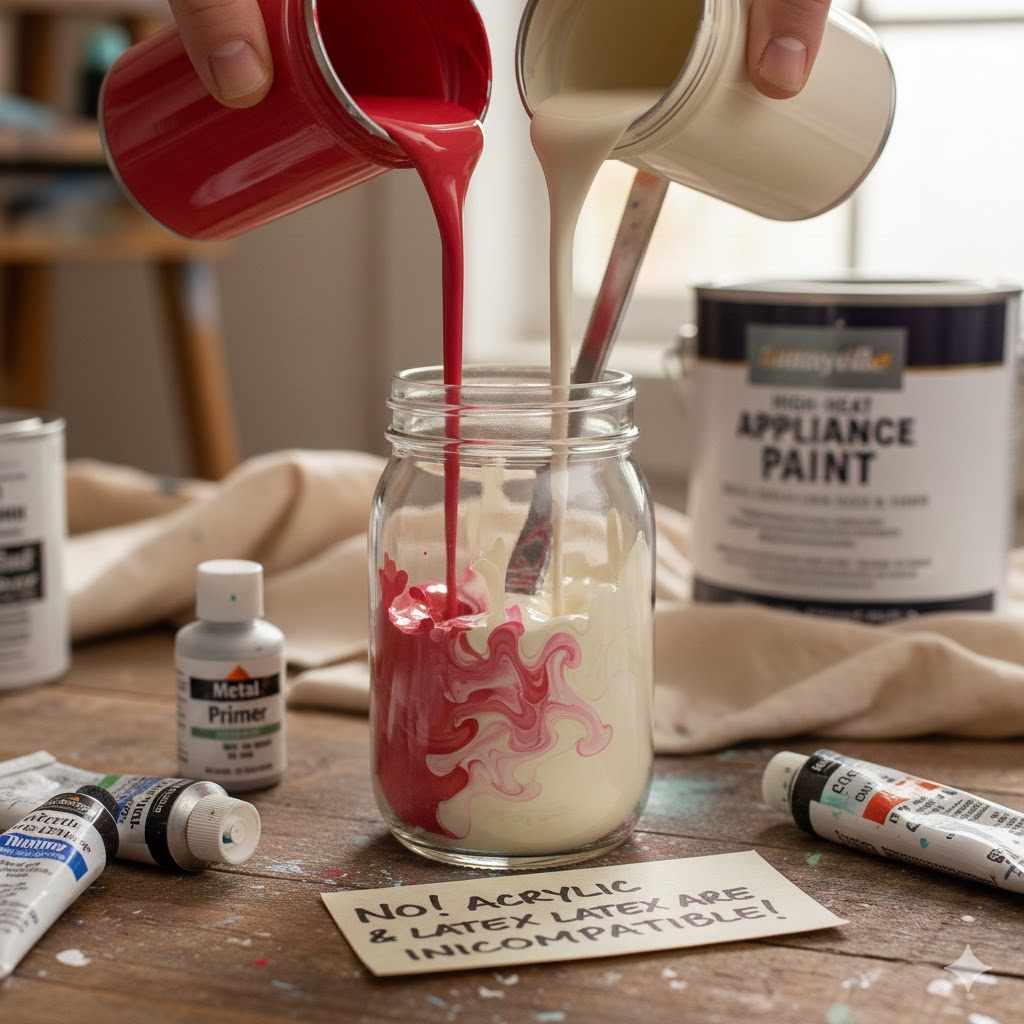
Yes, you can absolutely mix acrylic paint with latex paint. Since both are water-based, they combine well without separating or clumping. My proven best tip is the “10% Rule”: only add a small amount of acrylic craft paint (no more than 10%) to tint a larger volume of latex paint. Always test a small batch first.
Hello, fellow makers! Md Meraj here, your friendly guide in the workshop. Have you ever found yourself with leftover latex wall paint and a small tube of the perfect acrylic color, wondering if you could bring them together? It’s a common question, and one that can save you time, money, and a trip to the store.
You might worry that mixing them will create a lumpy, unusable mess. I get it! Nobody wants to ruin good paint. But I’m here to tell you that with a little know-how, you can do this successfully. In this guide, I’ll walk you through why this works, the one simple rule you must follow, and the exact steps to get a smooth, reliable finish. Let’s get mixing!
Why Mixing Acrylic and Latex Paint Actually Works
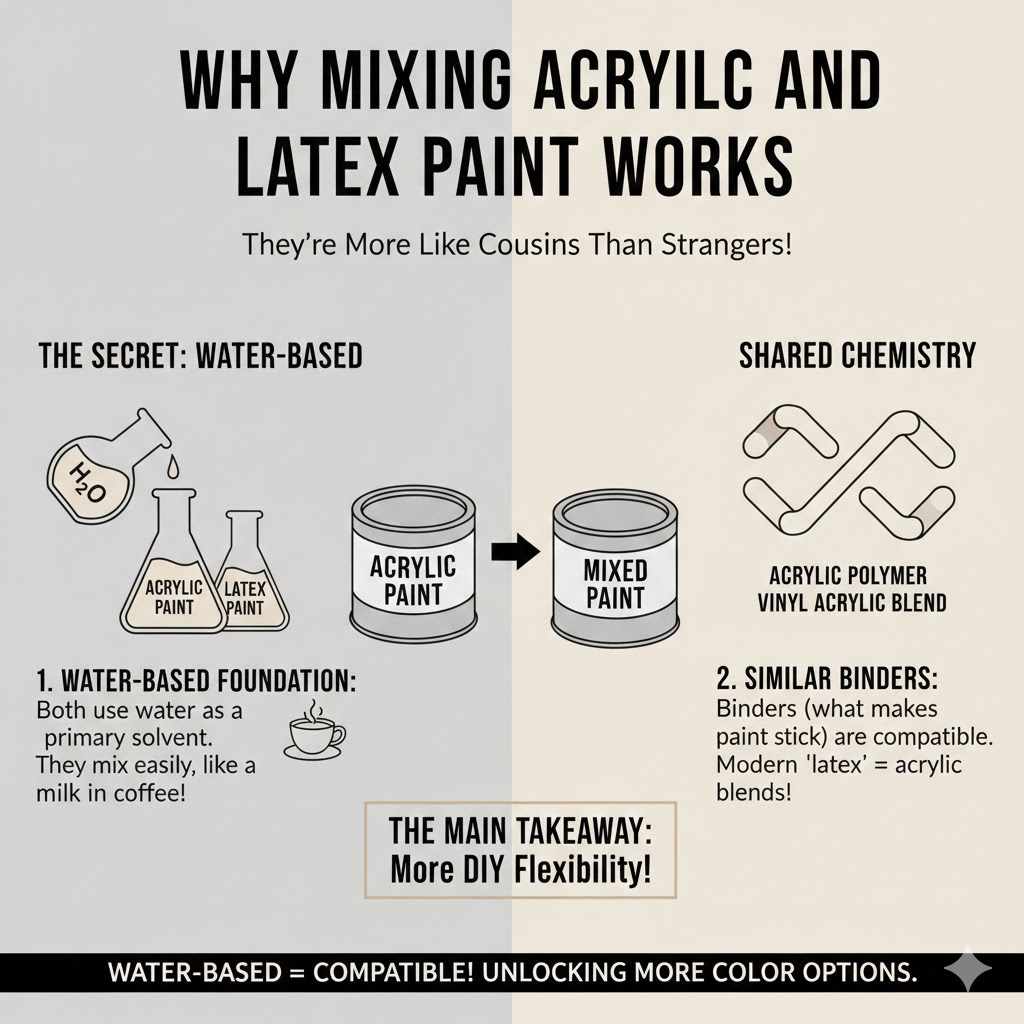
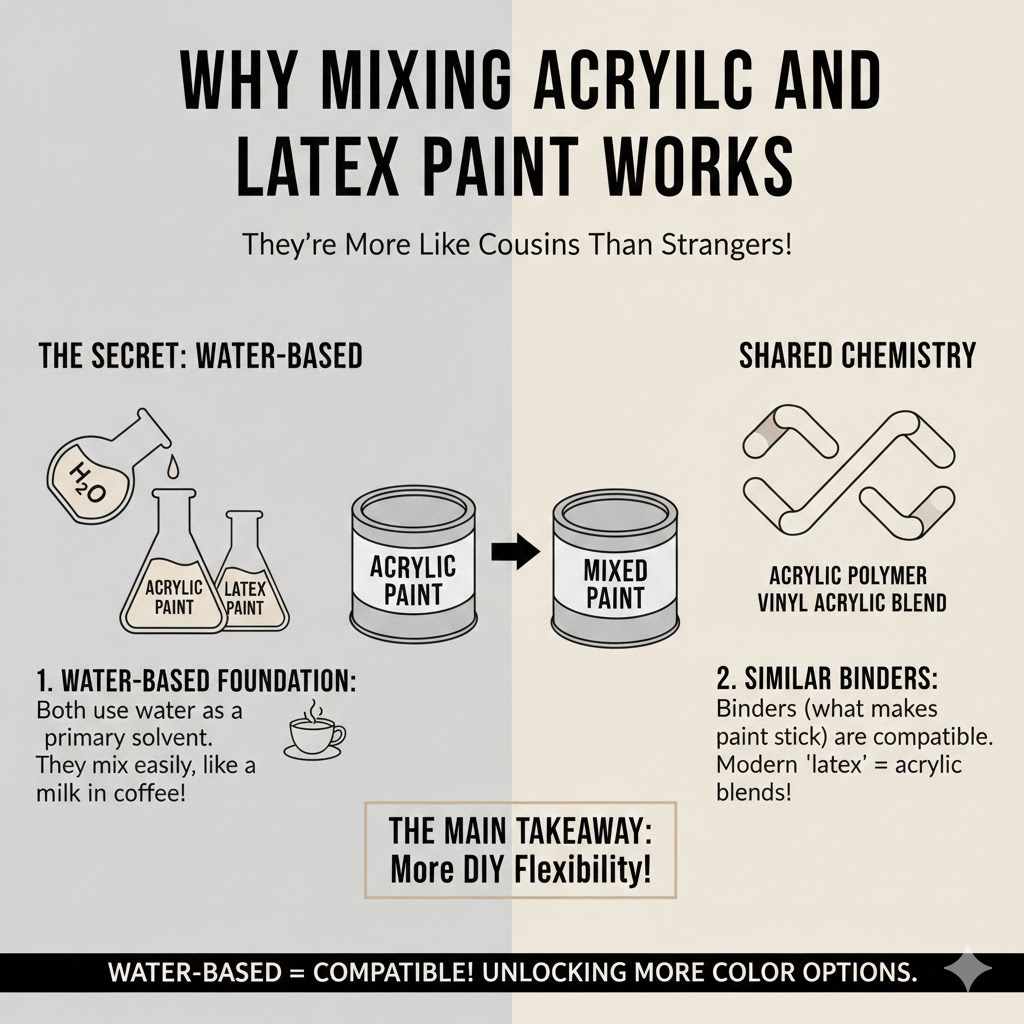
You might be surprised to learn that acrylic and latex paints are more like cousins than strangers. The secret to their compatibility lies in their shared foundation: they are both water-based paints. Think of it like adding milk to coffee—since both are liquids, they mix together easily. The same principle applies here.
Let’s break it down simply:
- Water-Based Foundation: Both paints use water as the primary solvent. This means that as the paint dries, the water evaporates, leaving the pigment and binders behind. This shared base is the number one reason they don’t fight each other.
- Similar Binders: The “binder” is what makes the paint stick to a surface and form a durable film. In acrylic paint, the binder is an acrylic polymer. In most modern “latex” paints, the binder is also a type of acrylic polymer or a vinyl acrylic blend. This overlap in their core chemistry allows them to bond together seamlessly when mixed.
So, when someone refers to “latex” paint for walls, they’re typically talking about a water-based acrylic paint. The term “latex” is an older name that stuck around from when paints used rubber latex, but today’s formulas are quite different. This is great news for us DIYers because it means we have more flexibility than we thought!
When to Mix (and When to Avoid It)
Knowing that you can mix these paints is one thing, but knowing when you should is the key to a successful project. Mixing is a fantastic trick for some jobs, but it isn’t the right solution for every situation. Getting this right will save you a lot of headaches.
The Green Lights: Perfect Times to Mix
Mixing is a great idea for:
- Creating Custom Colors: This is the most popular reason! If you have a gallon of white latex paint and a tube of blue acrylic, you can create a beautiful custom pastel blue for a small feature wall, a piece of furniture, or a craft project.
- Using Up Leftover Paint: Don’t let those nearly empty cans go to waste. Mixing leftover paints is a budget-friendly way to get a unique color for interior doors, trim, or workshop projects. It’s smart, sustainable, and saves you money.
- Small Touch-Ups: Need to patch a small area and don’t have the exact color? You can often get very close by tinting a similar base color with acrylics. It’s perfect for low-visibility spots.
- Artistic and Craft Projects: Painting a wooden sign, a birdhouse, or a decorative box? Mixed paint works wonderfully for these applications where ultimate durability isn’t the top priority.
The Red Flags: When You Should Think Twice
I strongly advise against mixing paints for:
- Large, High-Traffic Areas: For your main living room walls or floors, stick to a professionally tinted, high-quality paint. A homemade mix may not have the consistent color or durability needed for such a large, important surface.
- Exterior Projects: Outdoor surfaces face sun, rain, and temperature changes. Exterior paints contain special additives for UV resistance and mildew prevention. Mixing in standard craft acrylics can compromise this protection.
- Kitchens and Bathrooms: These rooms need paint that can withstand moisture and scrubbing. Specific kitchen and bath paints have additives for this purpose. Don’t risk it with a custom mix here.
- When a Perfect Sheen Is Critical: Mixing paints with different sheens (e.g., matte latex with gloss acrylic) will result in an unpredictable finish. It might be a satin, an eggshell, or something in between.
Here’s a simple table to help you decide:
| Good Scenarios for Mixing | Bad Scenarios for Mixing |
|---|---|
| Small accent walls or closets | Entire rooms or house exteriors |
| Refinishing a dresser or bookshelf | Kitchen cabinets or bathroom walls |
| Wooden craft projects and signs | High-traffic floors or stairways |
| Using up leftover paint on trim | Projects requiring maximum weather-resistance |
My Proven Best Tip: The 10% Rule
Over the years, I’ve tried all sorts of combinations. The one rule that has never failed me is what I call the “10% Rule.” It’s simple, safe, and gives predictable results every time.
The Rule: The paint you are adding (the tint) should not make up more than 10% of the total volume of the main paint (the base).
For example, if you have 10 cups of white latex paint, you should add no more than 1 cup of colored acrylic paint. Usually, you’ll need far less. This is especially true when you’re using highly pigmented artist’s acrylics—a little goes a long way!
Following this rule ensures you don’t significantly alter the properties of the base paint. The latex wall paint was engineered for durability, adhesion, and a specific finish. By keeping the acrylic additive to a minimum, you get the color you want without compromising the quality of the paint you paid for.
Step-by-Step Guide to Mixing Acrylic and Latex Paint
Ready to try it for yourself? Let’s walk through the process step-by-step. Don’t rush—take your time, and you’ll get a great result.
Step 1: Gather Your Supplies
First, get everything you need in one place. This makes the process smooth and clean.
- Your water-based latex paint (the base)
- Your water-based acrylic paint (the tint)
- A larger mixing container with a lid (an old paint can or plastic bucket works well)
- A sturdy stir stick (I prefer a wooden one)
- Measuring cups you don’t use for food
- Gloves and old clothes to protect yourself from spills
- A scrap piece of wood, cardboard, or drywall for testing
Step 2: Check Your Paints Are Water-Based
This is the most critical check. Look at the labels on your paint cans. You are looking for the words “Water-Based,” “Water Cleanup,” or “Acrylic Latex.” Do not, under any circumstances, mix an oil-based paint with a water-based one. They will not combine and will create a curdled mess. According to the Environmental Protection Agency (EPA), knowing your paint type is also important for safety and proper disposal.
Step 3: Always Do a Small Test Batch First
Trust me on this one. Before you mix your entire supply, test a small amount. This quick check will tell you if the colors mix well and how the final shade will look once it’s dry. Paint color often darkens as it dries.
- Measure a small, specific amount of your base latex paint, like 1/4 cup, and pour it into a small disposable cup.
- Add a very tiny, measured amount of your acrylic tint, like 1/2 teaspoon.
- Stir it thoroughly until the color is perfectly uniform.
- Paint a swatch onto your test material (scrap wood, etc.).
- Let it dry completely—this can take an hour or two. Check for a smooth finish with no cracks, clumps, or separation.
If the test batch looks great, you’re ready to mix the main batch!
Step 4: Measure Carefully (Apply the 10% Rule)
Now it’s time to mix the full amount. Pour the latex paint you plan to use into your large mixing container. Let’s say you poured 4 cups. Based on the 10% Rule, the maximum amount of acrylic paint you can add is 10% of 4 cups, which is about 0.4 cups (or a little less than half a cup).
Start with much less! You can always add more color, but you can’t take it away. Begin by adding about a quarter of your planned acrylic amount.
Step 5: Mix, Mix, and Mix Some More
Pour the measured acrylic paint into the latex paint. Now, stir thoroughly. And when you think you’re done stirring, stir for another two minutes! Scrape the sides and bottom of the container to ensure every last bit is incorporated. Your goal is a perfectly consistent color with no streaks. Using a drill with a mixer attachment can make this much easier for larger batches.
Step 6: Apply and Observe
Your custom paint is ready! Apply it with a brush or roller just as you would any other paint. As it dries, pay attention to the finish. As mentioned, the sheen might be slightly different from the original latex paint, but for most DIY projects, this slight change is barely noticeable.
Acrylic vs. Latex Paint: A Quick Comparison
To help you understand your materials better, here’s a simple breakdown of the two paints. Remember, modern “latex” paint is a type of acrylic paint, but there are still some general differences, especially when comparing wall paint to artist’s paint.
| Feature | Acrylic Paint (Craft/Artist) | Latex Paint (Wall Paint) |
|---|---|---|
| Primary Use | Art, crafts, detail work | Interior/exterior walls, ceilings, trim |
| Binder | 100% acrylic polymer | Acrylic polymer or vinyl-acrylic blend |
| Flexibility | Very flexible, great for canvas | Flexible, but designed for rigid surfaces |
| Durability | Good, but can be less scuff-resistant | Excellent, formulated for scrubbing and wear |
| Drying Time | Very fast (minutes) | Fast (touch-dry in about an hour) |
| Cost | Higher per ounce | Lower per gallon |
Frequently Asked Questions (FAQ)
What happens if I mix too much acrylic into latex paint?
If you add more than 10-15% acrylic, you risk compromising the durability and adhesion of the latex paint. The mix might become weaker, less scrubbable, and could even crack or peel over time because you’ve diluted the specialized binders and additives in the wall paint.
Will mixing acrylic and latex paint change the sheen?
Yes, it most likely will. If you mix a glossy acrylic into a matte latex paint, you will probably end up with an eggshell or satin finish. This is another reason why testing a small batch first is so important—it lets you see the final sheen before you commit to painting a whole project.
Can I use this mixed paint on furniture?
Absolutely! A custom-tinted latex paint is excellent for furniture projects. Latex paint is durable enough for most furniture, and tinting it with acrylics lets you create the exact color you want. Just be sure to properly prep and prime the furniture first and consider adding a clear topcoat for extra protection on high-use surfaces like tabletops.
How long will the mixed paint last in the can?
Once mixed, you should use the paint within a few weeks to a few months. Store it in a tightly sealed, airtight container. Over time, homemade mixtures can sometimes separate or thicken more than factory-made paint, so it’s best to mix only what you need for your project.
What is the real difference between 100% acrylic and latex paint?
While both are water-based, “100% acrylic” paints typically have higher-quality acrylic polymers as a binder. This often makes them more durable, flexible, and better at resisting UV light and weather. “Latex” paints, especially cheaper ones, might use less-expensive vinyl-acrylic binders. For most interior projects, a good-quality latex paint is more than sufficient.
Can I mix oil-based paint with latex or acrylic?
No, never. This is the most important rule in painting. Oil and water do not mix. Trying to combine an oil-based paint with a water-based paint will result in a separated, lumpy mess that is completely unusable and difficult to clean up.
Conclusion: Go Ahead and Mix with Confidence
So there you have it! The answer to “Can I mix acrylic paint with latex paint?” is a confident yes, as long as you do it thoughtfully. By understanding that both are water-based and by following the simple 10% Rule, you unlock a whole new world of custom colors. This is a practical skill that saves money, reduces waste, and puts your creativity in the driver’s seat.
Remember to always do a small test batch first. It’s a tiny step that guarantees a great outcome. Now you can look at those half-used cans of paint not as clutter, but as potential for your next beautiful project. You’ve got this! Happy making, and I’ll see you in the workshop.