Can You Paint Wood With Nail Polish? Yes, With Limits
Nail polish works on wood — it is a fast, glossy stand-in for paint on small unfinished-wood crafts, but it will not outlast a real wood finish and it can strip an existing lacquer or varnish coat if you use acetone remover on it. Skipping ventilation matters too: acetone vapor from polish and remover is capped by OSHA at 1,000 ppm over an 8-hour shift. This guide covers safe application on bare wood, why finished pieces need a different approach, and how to fix mistakes without ruining the wood underneath.
What You Will Need
Best Topcoat Pick for Nail Polish Wood Crafts
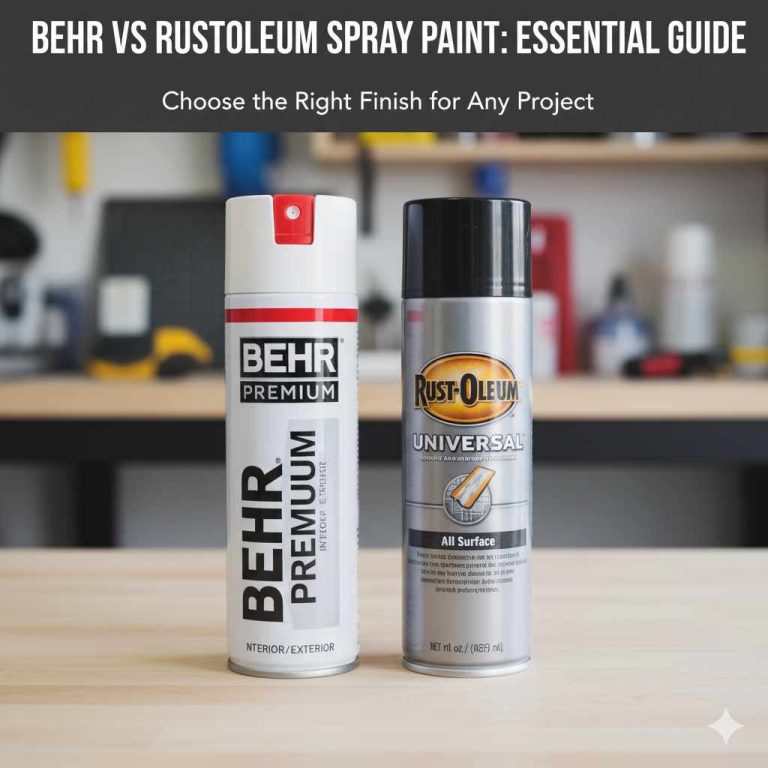
Rust-Oleum Universal All Surface Clear Topcoat Spray
A durable clear coat that seals nail polish onto wood so color does not chip, scratch, or dull with handling.
- Best for: sealing finished nail polish projects so they hold up to handling
- Why we picked it: a spray topcoat covers a small painted item evenly without brush marks, and it dries fast between coats
- Main drawback: aerosol sprays need outdoor or well-ventilated use, same as the nail polish itself
Compare more nail polish wood-craft supplies
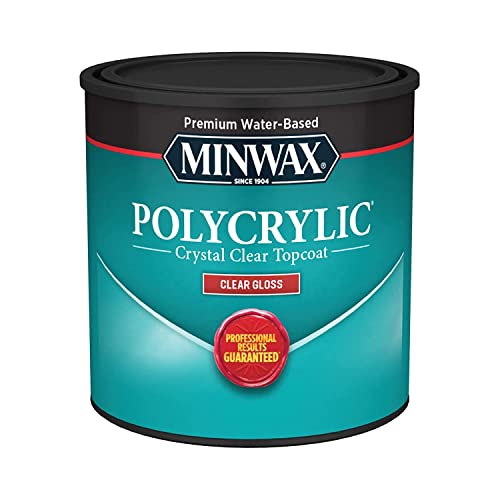
 Option 1 Minwax Polycrylic Protective Finish Spray, Satin
|
 Option 2 Liquitex Professional Wide Paint Marker
|
 Option 3 4-Pack Hand Sanding Sponge Set, 120-400 Grit
|
As an Amazon Associate we earn from qualifying purchases.
- Unfinished or bare wood item (keychain blank, ornament, small box)
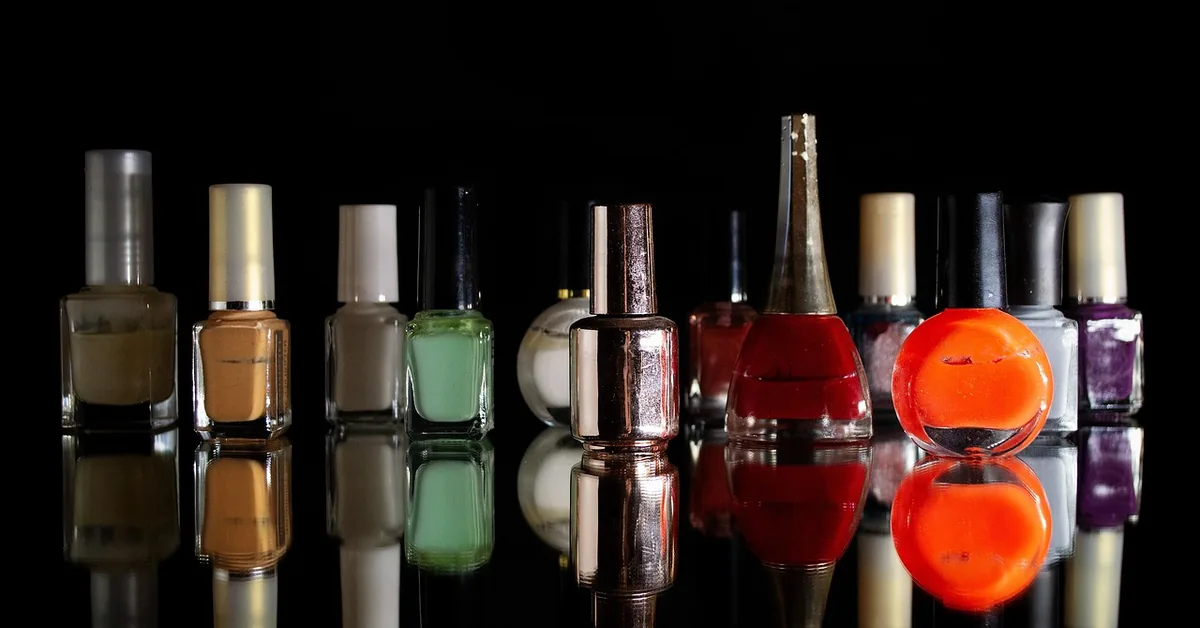
- Nail polish in your chosen colors
- Fine-grit sandpaper or a sanding sponge (220-400 grit)
- Wood primer (optional, but it makes colors more opaque)
- Clear topcoat spray for sealing the finished piece
- A small paintbrush if you are not using the polish’s own brush
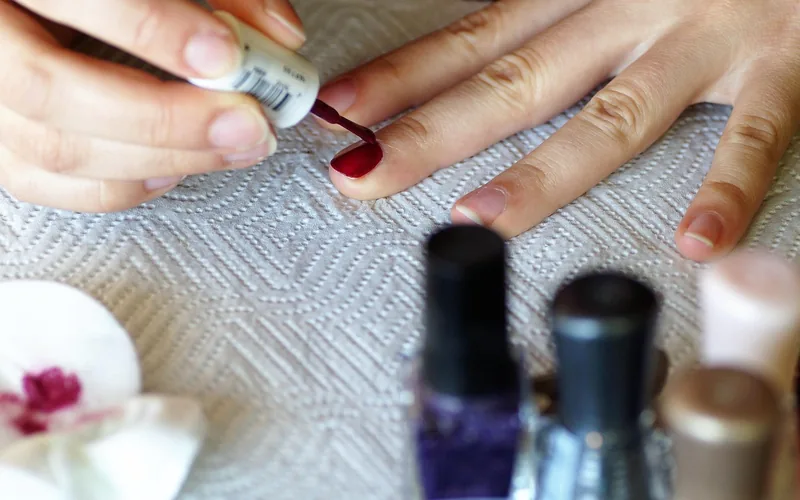
How to Paint Wood With Nail Polish
This method works best on bare, sanded wood. If your piece already has a finish on it, see the section below before you start.
- Sand the wood: Sand with 220-grit (or finer) sandpaper until the surface feels smooth. This gives the polish something to grip.
- Wipe off dust: Wipe the piece with a dry or barely damp cloth so leftover dust does not get trapped under the polish.
- Apply primer (optional): A thin coat of primer makes polish colors look brighter and more opaque. Let it dry fully before moving on.
- Paint thin coats: Use the polish brush or a small paintbrush and apply thin, even coats. Let each coat dry 10-15 minutes before adding the next.
- Seal with a topcoat: Once you are happy with the color, spray on a clear topcoat. This is what actually makes the color last under handling — nail polish alone chips quickly.
Does Nail Polish Damage an Existing Wood Finish?
Acetone-based nail polish remover is a solvent strong enough to dull, cloud, or strip lacquer, varnish, shellac, and polyurethane. The nail polish itself will not hurt a finished surface just by sitting on top of it, but cleaning up a mistake with remover can take the existing finish with it. This risk only applies to wood that already has a protective coating — bare wood has nothing for the remover to strip.
Before you start on a finished piece, test remover on a hidden spot — the underside of a shelf, the inside of a drawer — and wait a minute to see if the finish softens or clouds. If it does, switch to rubbing or denatured alcohol instead, which cleans up nail polish mistakes without attacking most cured finishes. This is also the safer method covered in our wood finishing guide for removing stray marks from finished furniture.
Ventilation and Fumes: Using Nail Polish Safely on Wood
Nail polish and polish remover both release acetone vapor as they dry, and acetone is flammable as well as an irritant at high concentrations. Work with a window or door open, or in a garage with the door up, and avoid painting right next to a running space heater, gas stove, or pilot light.
Acetone-based nail polish and polish remover carry an OSHA permissible exposure limit (PEL) of 1,000 ppm as an 8-hour time-weighted average (29 CFR 1910.1000, Table Z-1). NIOSH recommends a more conservative 250 ppm limit. Acetone also has a flash point around -4 F, so it ignites easily near open flame, pilot lights, or sparks — work near an open window or door, and never near a lit stove or space heater.
Nail Polish vs. Acrylic Paint vs. Wood Stain
Nail polish is not the only fast option for small wood projects. Here is how it stacks up against the two most common alternatives if durability or grain visibility matters more than what you already have in a drawer.
| Option | Durability | Dry Time | Best For |
|---|---|---|---|
| Nail polish | Low — chips under handling | 10-15 min per coat | Small unfinished-wood crafts, quick color tests |
| Acrylic craft paint | Medium — needs a topcoat for handling | 20-30 min per coat | Larger craft surfaces, layered designs |
| Wood stain | High — soaks into the grain | 2-6 hours per coat | Furniture and surfaces meant to show wood grain |
Tips for Painting Wood With Nail Polish
- Work in a well-ventilated area: see the ventilation section above for exposure limits and flammability.
- Use thin layers: thin coats dry faster and are less likely to crack or peel once cured.
- Mix colors sparingly: nail polish colors can be blended while wet, but test the mix on scrap wood first since colors dry differently than they look in the bottle.
- Let each coat cure fully: rushing between coats is the most common cause of a tacky, uneven finish.
Projects You Can Try
Nail polish works best on small items you can finish in one sitting. A few starting points:
| Project | Description |
|---|---|
| Wooden keychains | Decorate small wooden shapes and turn them into keychains. |
| Wooden ornaments | Paint small wooden ornaments for holidays or special occasions. |
| Picture frames | Give an old, unfinished picture frame a bright new look. |
| Wooden jewelry | Create colorful wooden earrings, bracelets, or necklaces. |
FAQs About Painting Wood With Nail Polish
Can you paint wood with nail polish?
Yes. Nail polish adheres well to sanded, bare wood and works fine for small crafts like keychains, ornaments, and jewelry blanks. It is not a substitute for real wood paint or stain on furniture or anything that gets handled often, since the finish chips faster than acrylic paint or varnish.
Will nail polish or nail polish remover damage an existing wood finish?
It can. Acetone-based nail polish remover is a strong solvent that dulls, clouds, or strips lacquer, varnish, shellac, and polyurethane. If the wood already has a finish, test remover on a hidden spot first, or use rubbing alcohol instead of acetone to clean up mistakes. This risk does not apply to bare, unfinished wood.
Is nail polish safe to use on wood indoors?
Use it in a well-ventilated area. Nail polish and remover release acetone vapor, and OSHA sets a permissible exposure limit of 1,000 ppm TWA for acetone. Open a window, run an exhaust fan, and keep it away from open flame since acetone is highly flammable.
How long does nail polish take to dry on wood?
Each thin coat dries in about 10 to 15 minutes. Thicker coats or gel polish can take longer and gel formulas may need a UV or LED light to cure fully, the same as they would on nails.
How do you remove nail polish from wood without damaging the finish?
For bare wood, acetone-based remover works but can raise the grain slightly, so a light re-sand may be needed after. For finished wood, skip acetone and use rubbing alcohol on a soft cloth, working from the outside of the spot inward so you do not spread it.
What is a more durable alternative to nail polish for wood crafts?
Acrylic craft paint sealed with a clear topcoat lasts longer under handling than nail polish, and wood stain is the better choice when you want the grain to still show through the color.
Conclusion
Painting wood with nail polish is a fun, low-cost way to color small unfinished crafts, and it is genuinely fine to use for that. Just sand first, work with good ventilation, seal the color with a real topcoat, and check any existing finish before reaching for acetone remover nearby. For anything bigger than a keychain or ornament, an acrylic paint or wood stain will hold up longer.
Sponsored / affiliate links. As an Amazon Associate I earn from qualifying purchases. I may earn additional commission from eligible campaigns.