Can Paint Thinner Go Down The Drain? Read This First
That question about paint thinner and drains pops up a lot. It’s a common thought when you’re cleaning up a painting project. You just want to get rid of the mess.
But is it really okay to pour it down the sink or toilet? Let’s dive into that. We’ll look at what happens and what you should do instead.
It’s about keeping things safe and clean.
The short answer is no, you absolutely should not pour paint thinner down the drain. Doing so can cause significant damage to your plumbing, your septic system or local water treatment facilities, and harm the environment. Proper disposal is key.
Understanding Paint Thinner and Your Plumbing
Paint thinner is a strong chemical. It’s designed to dissolve paint. This means it’s also good at dissolving other things.
Think about grease and oil. Your pipes have a protective lining. Paint thinner can eat away at this.
This can lead to leaks and clogs over time. It’s not like washing dishes with soap and water.
When you pour it down the drain, it goes on a journey. First, it hits your home’s pipes. These are often made of metal or plastic.
Paint thinner can weaken or even melt certain types of plastic pipes. If you have older homes, the metal pipes might corrode faster. This is because of the harsh chemicals.
It’s a slow process, but it causes big problems.
After it leaves your home, it heads to a sewer line. These lines carry waste from many homes. If enough paint thinner enters the system, it can damage the main sewer lines too.
These repairs are very expensive. They affect whole neighborhoods. So, what seems like a small act can have a large ripple effect.
Why It’s a Big Deal for the Environment
Water treatment plants are amazing. They clean water before it goes back into rivers or lakes. But they aren’t built to handle strong chemicals like paint thinner.
These chemicals can overwhelm the treatment process. They can kill the helpful bacteria that do the cleaning. This means harmful stuff can end up in our water sources.
Paint thinner contains volatile organic compounds, or VOCs. When you pour it down the drain, some of these VOCs can evaporate into the air. This adds to air pollution.
Other parts of the thinner might sink to the bottom of waterways. They can harm fish and other aquatic life. They can also poison plants that grow in the water.
In rural areas, many homes use septic systems. These are tanks buried underground. They use natural processes to break down waste.
Paint thinner is too harsh for these systems. It can kill the bacteria needed for the system to work. This leads to a failing septic system.
That means sewage can back up into your yard or even your house. Fixing a septic system is a costly and messy job.
My Own Close Call With Paint Thinner
I remember one weekend. I was helping my dad clear out his garage. He’d been painting a shed a few months before.
There were a few old cans of paint thinner left. He also had some rags with dried paint on them. We were trying to be tidy.
He asked me to rinse out the empty thinner cans in the yard hose. Then he said, “Just pour the little bit left in the rags down the utility sink.”
My gut told me that wasn’t right. But he was the boss, so I did it. I poured maybe a cup of thinner down the sink.
It smelled awful. I noticed a weird, oily sheen on the water. I felt a little uneasy.
A few weeks later, his kitchen sink started to drain really slowly. He called a plumber. The plumber took one look and said, “Someone’s been pouring nasty stuff down here.
It’s gunked up the trap and the main line.”
My dad looked at me. I confessed what I’d done. He was pretty annoyed.
The plumber had to use a powerful snake and some special drain cleaner. It cost a good chunk of money. He learned his lesson that day.
And so did I. It was a simple mistake, but it showed me how fast these chemicals can cause trouble. It wasn’t worth the few seconds it took to pour it away.
Paint Thinner Disposal: Quick Guide
Do Not Pour Down Drain: This is the most important rule.
Check Local Regulations: Your town or county likely has specific rules.
Hazardous Waste Sites: Many areas have drop-off locations for chemicals.
Dry Rags: Let rags dry completely outside away from flames. Then you can throw them away.
What Is Paint Thinner, Really?
Paint thinner is a catch-all term. It refers to several types of solvents. They are used to thin oil-based paints.
They also clean brushes, rollers, and sprayers. Some common types include mineral spirits, turpentine, and acetone. Each has its own properties.
But they all share one thing: they are flammable and can be harmful.
Mineral spirits are a petroleum distillate. They are less harsh than some other thinners. But they still have a strong smell and can damage plastics.
Turpentine comes from pine trees. It’s natural but can be a strong irritant. Acetone is a very strong solvent.
It’s often used in nail polish remover. It can dissolve many plastics quickly.
The key thing to remember is that these are designed to break down tough substances. Paint is tough. So, imagine what they can do to your plumbing.
It’s like using a strong cleaner on a delicate fabric. You wouldn’t do that, right? Your pipes are more delicate than you think, especially when exposed to harsh chemicals.
Real-World Scenarios: Where Things Go Wrong
You’ve just finished painting a beautiful piece of furniture. Your brushes are covered in latex paint. You think, “A little bit of paint thinner will clean these up fast.” You grab a small can of thinner.
You pour some into a bucket. You swish the brushes around. Then you look at the dirty thinner in the bucket.
The easiest thing seems to be dumping it down the nearest sink.
Another common situation is cleaning spray paint cans. You might have a little bit of paint left. Or maybe you’re cleaning the spray nozzle.
Again, paint thinner is the go-to. You might rinse the nozzle under the tap with some thinner. Or you might pour the leftover paint/thinner mix into the toilet.
It seems like it will just get flushed away. But it doesn’t work like that.
What about old paint? If you have oil-based paint that’s gone bad, you might be tempted to thin it to make it easier to dispose of. Or you might just have a small amount of dried paint.
It seems harmless. But even dried paint can contain chemicals that are bad for the environment. Paint thinner used to clean it just makes it worse.
Paint Thinner Myths vs. Reality
| Myth | Reality |
| A little bit won’t hurt the drain. | Even small amounts can build up and cause damage over time. |
| Flushing it down the toilet is fine. | It can still damage your pipes and septic system or overwhelm treatment plants. |
| Pouring it on the ground is okay. | It can contaminate soil and groundwater, harming plants and animals. |
| Letting it evaporate is safe. | VOCs can still be released into the air, contributing to pollution. |
What This Means for Your Home
So, what happens if you have poured paint thinner down the drain? Don’t panic, but do pay attention. If you notice any changes, it’s time to investigate.
Is your sink draining slower than usual? Are there strange smells coming from your pipes? Do you hear gurgling sounds when water goes down?
These could be early signs of a problem.
It’s a good idea to be proactive. If you use paint thinner regularly, consider how you clean your tools. You might want to set up a separate bucket for rinsing.
Let the thinner in the bucket settle. Then, carefully pour the cleaner thinner off the top into a sealable container. The sludge at the bottom needs special disposal.
For homeowners with septic systems, this is especially critical. You want to protect that system at all costs. It’s a costly repair if it fails.
Never pour any chemicals, solvents, or strong cleaners down your drains or toilets. Think of your septic tank as a living ecosystem. You wouldn’t throw harsh chemicals at your own body, right?
Safety First: Handling Paint Thinner Residue
Label Clearly: If you collect old paint thinner or contaminated rags, put them in a sturdy container. Label it clearly “Hazardous Waste – Paint Thinner.”
Seal Tightly: Make sure the container is sealed shut. This prevents spills and fumes.
Store Safely: Keep the container away from heat, sparks, and open flames. Also, keep it out of reach of children and pets.
Ventilate: When working with paint thinner, always do so in a well-ventilated area. Open windows and doors.
Proper Disposal Methods: The Right Way
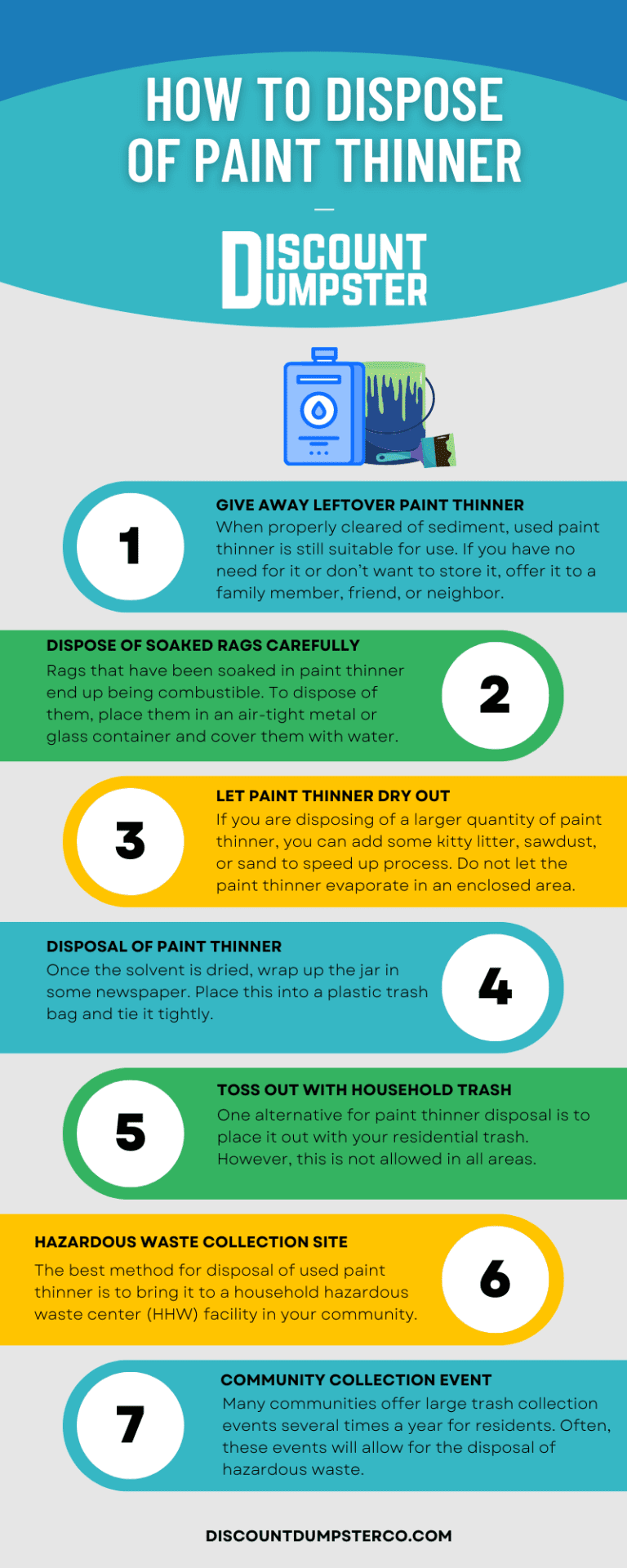
The best way to get rid of paint thinner is to find a local hazardous waste collection site. Many cities and counties have these. They are set up specifically to handle chemicals like paint thinner.
You can usually drop off small amounts of these materials for free or a small fee.
Check your local government’s website or call your waste management department. They will have information on where and when you can drop off these items. They might also have specific instructions on how to package them for transport.
This ensures safety for everyone.
What about rags and brushes? For oil-based paint brushes, you can often clean them with a small amount of thinner. But then you are left with dirty thinner.
A good practice is to use a large jar or bucket. Pour some thinner in it. Clean your brushes.
Then let the thinner settle. Pour the cleaner liquid off into a separate container for disposal. The sludge at the bottom can be allowed to dry out.
Once completely dry, it can often be thrown in the regular trash. Always check local rules first.
Rags soaked in paint thinner need special care. They are highly flammable. Do not wad them up and throw them in the trash.
Instead, spread them out flat in a well-ventilated area, away from any heat sources or open flames. Let them dry completely. Once they are dry and no longer damp with thinner, they can usually be disposed of in your regular household trash.
Again, local regulations are your best guide.
Paint Thinner Disposal Steps
Step 1: Identify Need – You have leftover paint thinner or contaminated materials.
Step 2: Find Local Site – Search for “household hazardous waste disposal” + your city/county.
Step 3: Prepare Materials – Store thinner in a sealed, labeled container. Dry rags thoroughly outside.
Step 4: Transport Safely – Secure containers in your vehicle. Drive directly to the site.
Step 5: Follow Instructions – Staff at the site will guide you on where to place items.
Alternatives to Paint Thinner
The good news is that there are often safer alternatives. For water-based paints (latex or acrylic), you don’t need paint thinner at all. Soap and water are usually enough to clean brushes and tools.
This is a huge advantage for cleanup.
If you are working with oil-based paints, there are still some options. Many brands now offer “low-odor” or “eco-friendly” thinners. These might still require proper disposal, but they can be less harmful to breathe.
Also, some modern oil-based paints are designed to clean up with soap and water, making the whole process much simpler.
Consider the type of project. For small touch-ups, you might be able to get by with less solvent. Or, you might be able to use a less harsh product.
Always read the paint can and the thinner bottle. They often have cleaning instructions. Following those instructions is key to avoiding problems.
What If It’s Just a Tiny Amount?
It’s tempting to think that a tiny amount won’t matter. Maybe you just rinsed a tiny brush. Or you wiped a small spill with a paper towel.
Even a small amount can be problematic when it adds up. Think about all the other people who might think the same thing. All those small amounts add up quickly in the sewer system.
If you have a paper towel with a tiny bit of thinner on it, it’s still best to let it dry out completely. Then throw it in the trash. If you have a small amount of thinner in a jar, let it settle.
Pour off the clear stuff into a disposable container. Let the rest dry. Then dispose of the dried residue.
The key is to prevent it from entering the water system. It’s better to be safe than sorry. The cost of dealing with a clogged pipe or a damaged septic system is far greater than the small effort it takes to dispose of paint thinner correctly.
It’s about responsible homeownership and caring for our environment.
Paint Thinner Disposal FAQs
- What is paint thinner?
Paint thinner is a solvent used to clean oil-based paint from brushes and tools, and to thin oil-based paints. Common types include mineral spirits and turpentine. - Why can’t I pour paint thinner down the drain?
Paint thinner is a harsh chemical that can damage your home’s pipes, weaken plumbing materials, and harm the bacteria in septic systems. It can also pollute waterways and overwhelm water treatment facilities. - How should I dispose of leftover paint thinner?
The best method is to take it to a local household hazardous waste collection site. Check with your local waste management services for drop-off locations and times. - What do I do with paint-soaked rags?
Allow paint-soaked rags to dry completely in a well-ventilated area away from heat or flames. Once dry, they can usually be thrown in your regular trash. - Are there safer alternatives to paint thinner?
For latex or water-based paints, soap and water are usually sufficient. Some newer oil-based paints are also designed for easier cleanup with water or have low-odor thinner options. - What if I only have a tiny bit of paint thinner left?
Even small amounts should not be poured down the drain. Let it evaporate or dry out in a safe place, then dispose of the residue properly, often in regular trash after it’s fully dry.
Conclusion: A Small Step for You, A Big Win for All
So, to answer that initial question: can paint thinner go down the drain? The answer is a resounding no. It’s a simple rule that makes a big difference.
By taking a few extra steps to dispose of paint thinner correctly, you protect your home, your community’s infrastructure, and our precious environment. It’s a small act of responsibility that pays off in many ways.