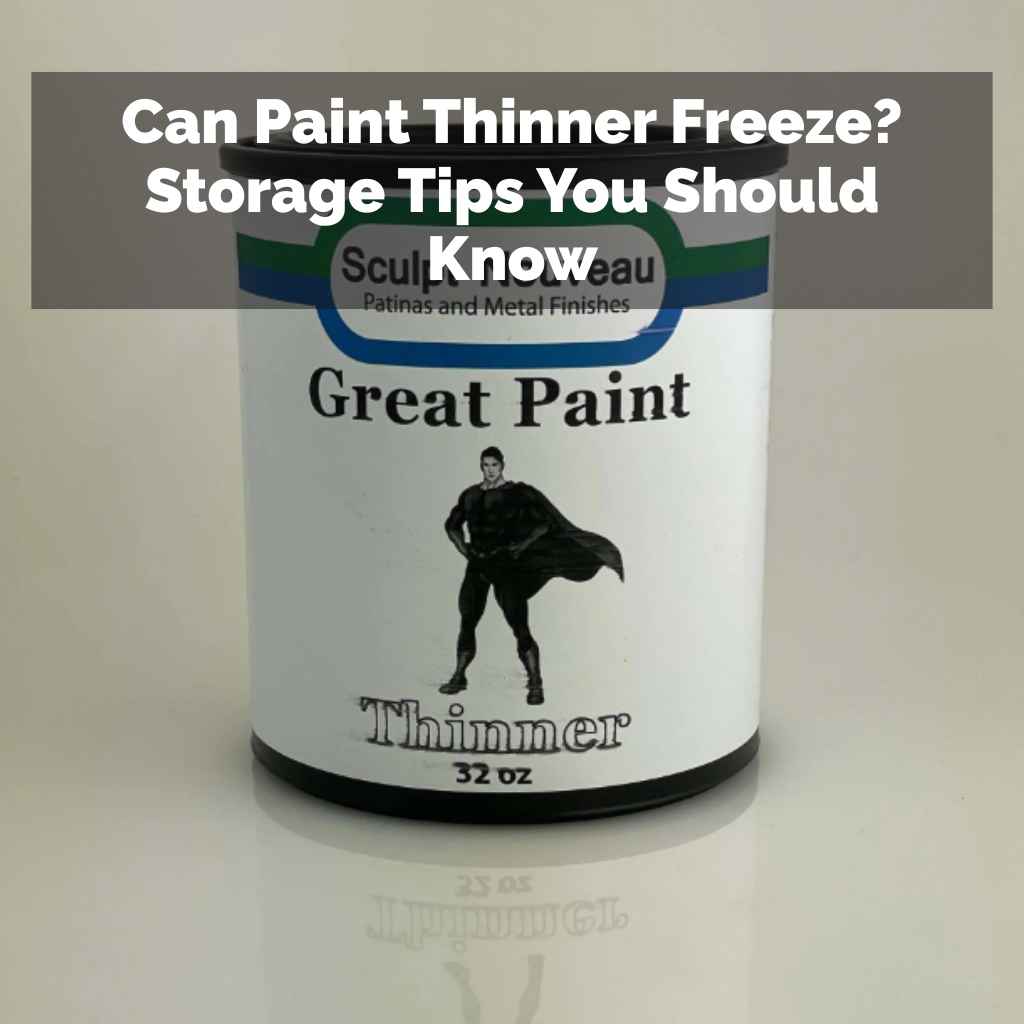
Can Paint Thinner Freeze? Storage Tips You Should Know
Dealing with paint and its supplies can be a real puzzle sometimes. You buy something, you use it, and then you wonder about the best way to keep it. One question that pops up, especially when the weather changes, is about paint thinner.
Does it freeze? It sounds like a simple question, but the answer affects how you store it. This article will walk you through everything you need to know about paint thinner and freezing.
We’ll cover what happens, why it matters, and how to keep your thinner safe, no matter the season.
Paint thinner can freeze, but it depends on its type. Water-based thinners, like latex paint additives, freeze easily. Mineral spirits and other oil-based thinners have much lower freezing points and are less likely to freeze in typical cold weather. Proper storage is key to preventing damage.
What Happens When Paint Thinner Gets Cold
Paint thinner is a liquid used to clean brushes or thin out oil-based paints. Different kinds of thinners exist. Some are made from petroleum products. Others are just soapy water. What happens to them in the cold depends on what they are made of.
Freezing Point Basics
Every liquid has a freezing point. This is the temperature where it turns from a liquid to a solid. Water freezes at 32 degrees Fahrenheit (0 degrees Celsius). Many things freeze at different temperatures. Some freeze at very cold temps. Others freeze at warmer temps.
Water-Based Thinners and Freezing
If you use thinners for latex or water-based paints, these are often mostly water. Think of them like water. They will freeze if the temperature drops below 32°F. When water freezes, it expands. This expansion can cause problems.
It can break apart containers. It can ruin the thinner itself. It might not mix right when you use it later. It can become lumpy or separated. This makes it useless for painting.
Oil-Based Thinners and Freezing
Thinners made from petroleum are different. These include things like mineral spirits, turpentine, or paint thinner brands. They are made from oils. Oils do not freeze at the same temperature as water.
Their freezing points are much, much lower. Mineral spirits, for example, freeze around -50°F (-45°C). Other types might be similar. This means they can handle very cold weather without turning into ice.
However, extreme cold can still affect them. They might get thicker. They can become like syrup. This is called “congealing.” It’s not true freezing. But it makes them hard to pour and use.
Why Storing Paint Thinner Correctly Matters
How you store your paint thinner is important. It keeps the thinner working well. It also keeps you and your home safe. Storing it right helps avoid waste and potential hazards.
Protecting the Product
When thinners freeze, they can change. Water-based ones can split. They might not blend back together. This means you can’t use them for painting. You would have to buy new thinner. That’s money wasted.
Oil-based thinners might not freeze solid. But they can get very thick in the cold. This makes them hard to pour. It’s like trying to pour honey on a cold day. You might have to wait for it to warm up. Or you might struggle to get it out of the can.
Safety Concerns
Paint thinner fumes can be harmful. Storing it poorly can let these fumes escape. This is bad for air quality inside your home. It can also be a fire risk. Thinners are often flammable. Keeping them in proper containers stops spills and fires.
Keeping them away from heat sources is vital. Extreme heat can also cause problems. It can increase fumes or damage plastic containers.
Real-Life Experiences with Cold Thinner
I remember one winter a few years back. I was living in a small cabin. It got really cold fast. I had a can of mineral spirits I used for cleanup. I left it in my unheated shed. I needed it one morning to clean some brushes.
I went to the shed, and the can felt heavy. I tried to pour some out. Nothing came. It was thick, like molasses. I could barely tilt the can. It was so frustrating. I had to wait all day for the sun to warm the shed up. It took hours for the thinner to get thin enough to use. I learned then that even oil-based thinners don’t like extreme cold. They don’t freeze like water, but they sure do get sluggish.
Another time, I had a half-empty can of a water-based cleaner. It looked like water. I left it in a garage that got below freezing. When I opened it later, it had ice crystals in it. The lid was bulging. It was a mess. I had to throw it away. It was a lesson learned about water-based products in winter.
Understanding Different Types of Paint Thinner
There are many kinds of paint thinners. Knowing what’s in yours helps you know how it acts in the cold.
Mineral Spirits
This is a very common type. It’s made from petroleum. It’s used for oil-based paints. It smells strong. It’s flammable. As we said, its freezing point is very low. So, it’s unlikely to freeze in most homes. It might get thick, though.
Turpentine
Turpentine comes from pine trees. It’s a natural product. It also works with oil paints. It has a strong pine smell. Turpentine also has a very low freezing point. It also congeals when it gets very cold. It becomes syrupy.
Acetone
Acetone is a strong solvent. It’s used for tough cleaning jobs. It can remove things like nail polish. It works fast. It evaporates quickly. Acetone’s freezing point is also very low. It’s around -138°F (-94°C). It’s hard to get it to freeze.
Lacquer Thinner
This is a mix of strong solvents. It’s used for lacquers and certain paints. It’s very strong and evaporates fast. It’s also highly flammable. Lacquer thinner has a very low freezing point. It can withstand extreme cold.
Water-Based Cleaners and Thinners
These are often called latex paint conditioners or cleaners. They are mostly water with some additives. They are not flammable like petroleum products. But they are prone to freezing. They freeze just like plain water. So, they need careful storage in cold weather.
Quick Look: Thinner Types and Cold
Type: Mineral Spirits
Base: Petroleum
Freezing Point: Very Low (-50°F / -45°C)
Cold Effect: Thickens, doesn’t usually freeze solid.
Type: Turpentine
Base: Pine Resin
Freezing Point: Very Low (-50°F / -45°C)
Cold Effect: Thickens, becomes syrupy.
Type: Acetone
Base: Chemical Solvent
Freezing Point: Extremely Low (-138°F / -94°C)
Cold Effect: Unlikely to freeze in normal conditions.
Type: Water-Based Thinner
Base: Water
Freezing Point: 32°F / 0°C
Cold Effect: Freezes solid, can damage container and product.
How Temperature Affects Paint Thinner
Temperature is the main thing that affects paint thinner. But there are other things to think about too.
The Role of Ambient Temperature
The air around the thinner matters most. If the air is below the thinner’s freezing point, it will start to get cold. If it stays cold long enough, it can freeze. For oil-based thinners, this means truly cold places. Garages, sheds, and unheated basements in winter can get cold enough.
For water-based thinners, any place that dips below 32°F is a risk. This includes many outdoor sheds, unheated garages, and even some poorly insulated utility rooms.
Humidity and Freezing
Humidity doesn’t directly cause paint thinner to freeze. Freezing is about temperature. However, high humidity can make things feel colder. It can also affect how quickly things cool down. But for true freezing, temperature is the key factor.
Container Material Matters
The container holding the thinner can also play a part.
Plastic Containers: Plastic can be brittle when very cold. If a plastic container with water-based thinner freezes, the expanding ice can crack or burst the plastic. Even if it doesn’t break, it can warp the container.
Metal Cans: Metal cans are more durable. They are less likely to break if the contents freeze. However, if a water-based thinner freezes in a metal can, the expansion can still deform the lid or seams. For oil-based thinners, the cold might make the metal itself feel very cold, but the can usually holds up.
Where You Should Store Paint Thinner
The best place to store paint thinner depends on your climate and the type of thinner.
Ideal Indoor Storage
For most home users, the best place is inside your house. A utility room, a basement (if it doesn’t get too cold), or a closet works well.
Stable Temperature: Indoor rooms usually have more stable temperatures. They stay warmer in winter and cooler in summer. This helps prevent the extreme fluctuations that can harm your thinner.
Away from Heat: Make sure the storage spot is not near a furnace, water heater, or direct sunlight. Heat can increase fumes and is a fire risk.
Well-Ventilated: Even indoors, a little airflow is good. This helps disperse any fumes.
Outdoor Storage Risks
Storing paint thinner outside is risky in many places.
Unheated Garages and Sheds: These places can reach freezing temperatures in winter. Water-based thinners will freeze here. Oil-based thinners might get too thick to use easily.
Extreme Heat: In summer, these places can get very hot. This can be dangerous with flammable thinners. High heat can also degrade the product over time.
Storage Smart: Quick Tips
- Indoors is Best: Keep paint thinner inside your home if possible.
- Cool and Dry: Find a spot that stays cool but not freezing.
- Away from Flames: Never store near heat sources or open flames.
- Tightly Closed: Always keep lids on tight.
- Original Containers: Store in the original can.
What to Do If Your Paint Thinner Freezes
If you find your paint thinner has frozen or become very thick, don’t panic right away. The fix depends on the type of thinner.
For Water-Based Thinners
If a water-based thinner has frozen, it’s often ruined.
1. Inspect the Container: Is it cracked or bulging? If so, it’s unsafe to use and should be disposed of properly.
2. Check for Separation: If the container is intact, let it thaw slowly at room temperature. Do not use heat. Look for signs of separation. If it looks milky, lumpy, or has layers, it’s likely damaged.
3. Test Carefully: If it seems okay, try a small test. Pour a little out. Does it mix easily? Does it look normal? If you’re unsure, it’s better to replace it. Freezing can break down the chemicals that help it work.
For Oil-Based Thinners
Oil-based thinners are more forgiving.
1. Thaw Slowly: Move the container to a warmer spot indoors. Let it thaw naturally. Do not try to speed it up with heat.
2. Allow to Settle: Once it’s liquid again, let it sit for a while. This helps any thick parts mix back in.
3. Test Consistency: Pour a small amount. Does it flow easily? Is it still syrupy? If it flows normally, it’s likely good to go. If it’s still very thick, it might take longer to warm up.
Preventing Paint Thinner Freezing: Proactive Steps
The best way to deal with frozen paint thinner is to stop it from happening.
Choose the Right Thinner for Your Climate
If you live in a very cold area and store supplies in a shed, stick to oil-based thinners. They are much less likely to freeze. Avoid water-based cleaners or thinners if they will be exposed to freezing temperatures.
Use Proper Storage Containers
Always keep thinner in its original container. These are designed to be chemical-resistant. They also have secure lids to prevent spills and fumes. If a lid is damaged, transfer it to a new, compatible container.
Insulate Storage Areas
If you must store thinner in an unheated space like a garage or shed, consider insulation. You can use foam boards to line the walls and door. This helps keep the temperature more stable. It won’t make it a heated space, but it can prevent extreme lows.
Bring Supplies Inside
The simplest solution is often the best. If you know it’s going to get very cold, bring your paint and thinners inside your home. Store them in a safe place like a basement or utility room.
Monitor Weather Forecasts
Pay attention to the weather. Before a cold snap, check your supplies. If you have water-based thinners that might be at risk, move them. It only takes a few minutes to prevent a costly mistake.
Real-World Scenario: The Unheated Garage
Situation: A painter lives in Michigan. They have a small collection of oil-based paints and mineral spirits in their unheated garage. Winter temperatures regularly drop below 0°F.
Problem: While mineral spirits have a very low freezing point, extreme cold can still make them thick and hard to use. Water-based cleaners left in the garage would freeze solid and likely be ruined.
Solution: The painter now brings all their thinners and paints into their basement workshop during the winter months. This ensures consistent temperature and prevents issues with freezing or extreme thickening. They only store empty cans or less sensitive items in the garage year-round.
When Is Cold Paint Thinner a Problem?
Most of the time, a little cold doesn’t mean the end of your paint thinner. But there are times when it’s a real problem.
Water-Based Thinners Below 32°F
Any time a water-based thinner goes below 32°F (0°C), it’s a problem. It will freeze. This can change its structure and make it unusable. This is the most common type of paint thinner that freezes and causes issues.
Oil-Based Thinner Below -50°F
For oil-based thinners like mineral spirits, you need extremely cold temperatures to freeze them solid. However, even if they don’t freeze, they can become very thick and hard to pour. If you are in a region that experiences temperatures well below zero, even these can become problematic.
Damaged Containers
If a container is damaged or leaking, it’s always a problem, especially in the cold. Leaks can spread fumes or create fire hazards. If freezing causes a container to split or leak, it needs to be handled with care.
What You Can Do With Thawed or Thick Thinner
If your thinner has thawed or is still a bit thick, you can often still use it.
Use it for Heavy Cleaning
Sometimes, thinner that has been through cold might not be perfect for fine painting. But it can still be great for cleaning tough messes. Use it to scrape paint off tools, clean up spills, or degrease surfaces.
Test on Scrap Material
Before you use it on your project, do a test. Dip a brush in it and try painting on a scrap piece of wood or cardboard. See how it flows and how it affects the paint. This ensures it’s still working as it should.
Mix with New Thinner
If you have a partially frozen or thickened batch of oil-based thinner, you can often mix it with a fresh, liquid batch. This will dilute the thickened stuff. It helps bring the whole container back to a usable consistency.
Safety First When Handling Paint Thinner
Paint thinner is a chemical. It needs to be handled with care, especially when it’s been exposed to cold.
Ventilation is Key
Always use paint thinner in a well-ventilated area. Open windows and doors. If you’re working in a garage, open the main door. Fumes can be strong and unhealthy. Cold air can trap fumes.
Wear Protective Gear
Always wear gloves when handling paint thinner. Nitrile gloves are best. They protect your skin from the chemicals. You might also want eye protection, like safety glasses, to prevent splashes.
Keep Away from Ignition Sources
Paint thinners are often flammable. Keep them away from sparks, open flames, pilot lights, and heat sources. This includes static electricity. If a thinner has frozen and then thawed, ensure it’s fully mixed before using near any potential ignition source.
Safety Checklist
- Ventilation: Always work in a well-aired space.
- Gloves: Wear chemical-resistant gloves (nitrile).
- Eyes: Protect your eyes with safety glasses.
- No Flames: Keep away from heat, sparks, and flames.
- Kids & Pets: Store out of reach.
Frequently Asked Questions About Paint Thinner Freezing
Can paint thinner freeze in a car overnight?
Yes, depending on the type of thinner and the temperature. Water-based thinners will freeze if the temperature drops below 32°F. Oil-based thinners have much lower freezing points but can become very thick.
What happens if paint thinner freezes and expands?
If a water-based thinner freezes, the expanding ice can crack or burst plastic containers. It can also deform metal cans and ruin the thinner’s consistency, making it unusable.
Is it safe to use paint thinner that has thawed?
For oil-based thinners, yes, if it thaws completely and returns to its normal consistency. For water-based thinners, if they have frozen, they are often damaged and may not be safe or effective to use.
Can I heat frozen paint thinner to make it usable?
It’s best not to heat paint thinner directly. For oil-based types, let them thaw slowly at room temperature. Using direct heat can be a fire hazard and can damage the product.
Does humidity affect if paint thinner freezes?
Humidity doesn’t directly cause freezing, but temperature does. Freezing occurs when the liquid reaches its specific freezing point, regardless of humidity levels.
Where is the best place to store paint thinner in winter?
The best place is indoors, in a cool, dry spot away from heat sources and out of reach of children and pets. A basement or utility room is often ideal.
Final Thoughts on Cold Weather and Thinner
Keeping your paint supplies in good shape means understanding them. Paint thinner is no different. For most of us, the main concern is water-based thinners freezing. These act like water. They need protection when it gets cold.
Oil-based thinners are tough. They can handle much colder temperatures. But even they can get thick and hard to use. The best advice is always to store your paint thinner inside your home. A stable, moderate temperature is what it needs. This way, it’s ready when you are. You save money and avoid frustration. And you keep your workspace safe.
Sponsored / affiliate links. As an Amazon Associate I earn from qualifying purchases. I may earn additional commission from eligible campaigns.