Can Rubbing Alcohol Stain Clothes? A Shocking Risk
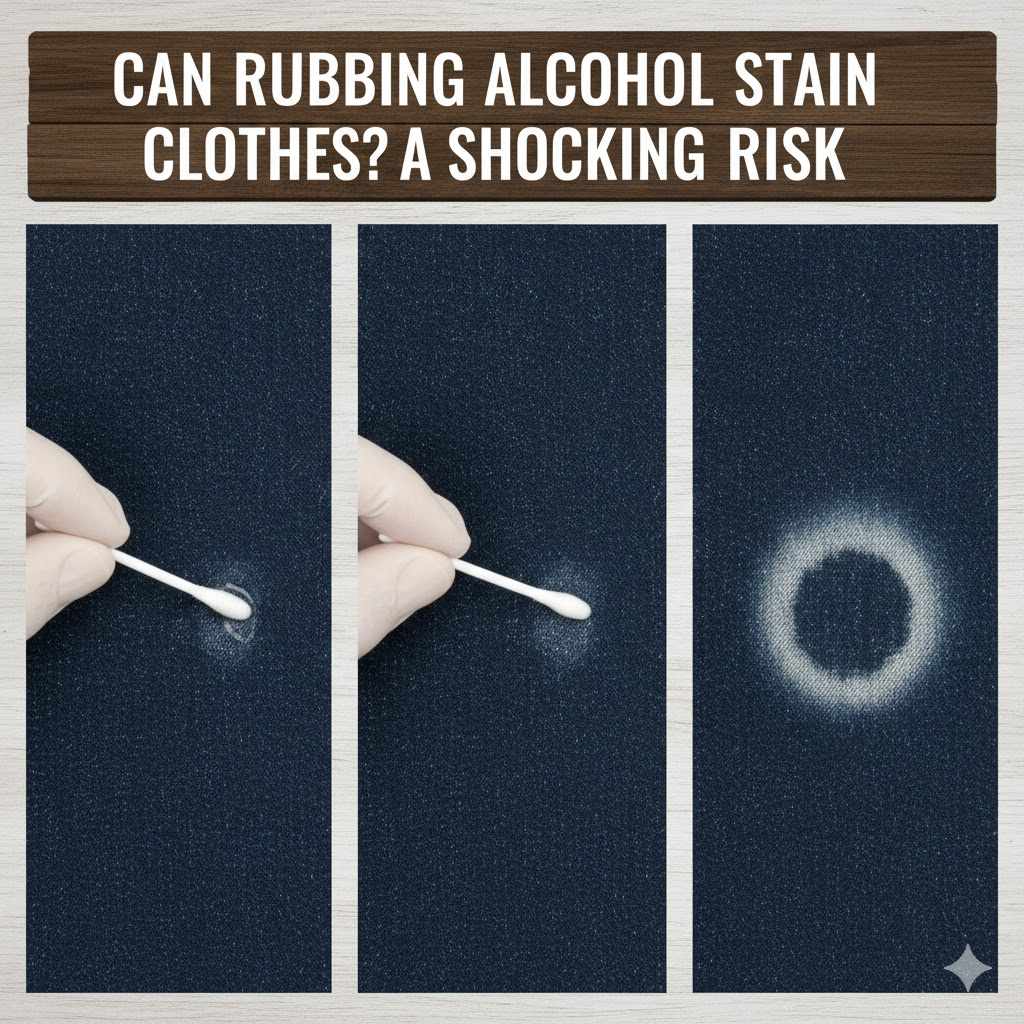
Yes, rubbing alcohol can permanently stain or damage clothes. While it doesn’t leave a traditional colored stain, it acts as a solvent that can strip dye, causing irreversible color loss and fading. It can also damage delicate synthetic fabrics like rayon or acetate, altering their texture and appearance. Always test on a hidden spot first.
Hello there! Md Meraj here, your guide in the world of DIY. In my workshop, I handle all sorts of solvents and cleaners, and I’ve learned one big lesson: not all cleaners are created equal. You might have heard that rubbing alcohol is a miracle worker for tough stains like ink or grass. And while that can be true, there’s a hidden risk many people don’t know about.
You grab the bottle of isopropyl alcohol, ready to tackle a stubborn mark on your favorite shirt. But you pause, wondering, “Will this actually make things worse?” It’s a great question to ask. Many people reach for rubbing alcohol without a second thought, only to find a new, faded spot where the old stain used to be. Don’t worry, I’m here to clear things up. We’ll look at when it’s safe to use and, more importantly, when to avoid it. Let’s explore how to use this powerful tool the right way, so you save your clothes, not ruin them.
The Truth: How Rubbing Alcohol Really Affects Fabric
First, let’s get one thing straight. Rubbing alcohol isn’t a dye. It won’t leave a brown or yellow “stain” in the way that coffee or rust would. The problem with rubbing alcohol is what it removes. Think of it less like a stain and more like a chemical bleach or a color stripper.
Rubbing alcohol, or isopropyl alcohol, is a powerful solvent. In the workshop, we use solvents to dissolve things like oils, resins, and even some finishes. When you apply it to your clothes, it does the exact same thing: it starts breaking down and dissolving whatever it touches. If that’s an ink stain, fantastic! The alcohol dissolves the ink, allowing you to blot it away.
But what if it also dissolves the dye that gives your shirt its beautiful color? That’s where the trouble starts. The “stain” you see is actually a lack of color—a permanent faded or bleached spot where the alcohol has stripped the dye right out of the fabric fibers. Unfortunately, once that color is gone, there’s no getting it back.
Three Ways Alcohol Can Damage Your Clothes
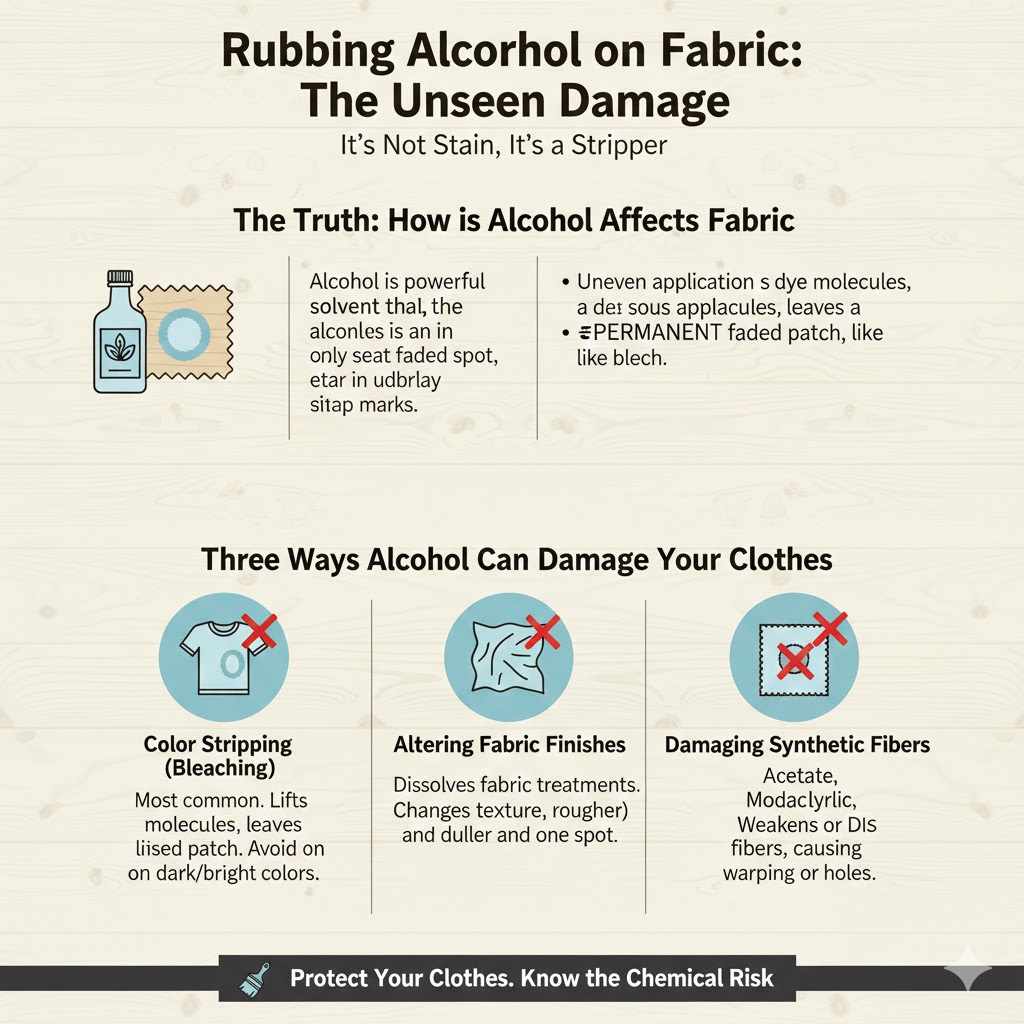
The damage from rubbing alcohol usually falls into one of three categories. Understanding them helps you know what to watch out for.
- Color Stripping (Bleaching): This is the most common issue. Rubbing alcohol can be very aggressive on certain types of dyes, especially those used in bright or dark-colored garments. It lifts the dye molecules away from the fabric, leaving a faded patch. The effect looks just like a bleach spot.
- Altering Fabric Finishes: Many modern clothes have special finishes applied to them. These can be treatments to make them feel softer, look shinier, or resist wrinkles. A strong solvent like rubbing alcohol can dissolve these finishes, changing the texture and appearance of the fabric in that one spot. The area might feel rougher or look duller than the surrounding material.
- Damaging Synthetic Fibers: This is the most severe risk. While durable fabrics like cotton and polyester are generally resilient, some synthetic fibers can have a bad reaction to alcohol. Fabrics like acetate, rayon, triacetate, and modacrylic can be permanently damaged or even dissolved by isopropyl alcohol. It can weaken the fibers, causing them to warp or even create a hole.
A Fabric-by-Fabric Guide to Using Rubbing Alcohol Safely
So, how do you know if your clothes are safe? It all comes down to the material. A good rule of thumb is to treat delicate and synthetic fabrics with extra caution. Before you do anything, always check the care label inside your garment! It’s your best instruction manual.
Here is a handy table to guide you. Remember, even with “Low Risk” fabrics, you should always do a spot test on a hidden seam or inside hem first.
| Fabric Type | Risk Level | Notes & Tips |
|---|---|---|
| Cotton (White) | Low | Generally safe. White cotton has no dye to remove. It’s a great candidate for using alcohol on ink or grass stains. |
| Cotton (Colored/Dark) | Medium | The risk here is dye removal. Bright reds, deep blues, and blacks are especially prone to fading. A spot test is absolutely essential. |
| Polyester | Low-Medium | Polyester holds dye well, so it’s less likely to bleed. However, some polyester blends or special finishes can be affected. Test first. |
| Denim | Medium | Denim is rugged cotton, but the indigo dye used to color it can be stripped by alcohol. This can leave a noticeably faded spot on your favorite jeans. |
| Wool | High | Avoid using rubbing alcohol on wool. It can strip the natural lanolin oils from the fibers, causing them to become dry, brittle, and damaged. |
| Silk | High | Never use rubbing alcohol on silk. It can easily cause severe, permanent discoloration and can weaken the delicate fibers. |
| Rayon / Viscose | High | Rayon is very sensitive to alcohol. It can cause major color bleeding and may even permanently change the texture of the fabric, making it stiff or puckered. |
| Acetate / Triacetate | Extreme / DO NOT USE | Isopropyl alcohol can literally dissolve acetate fibers. Applying it will cause irreversible damage and can create a hole in the garment. |
The Correct Way to Use Rubbing Alcohol for Stain Removal
Let’s say you’ve checked the label, identified the fabric as low-risk (like a white cotton shirt), and you’re ready to tackle an ink stain. There’s a right way to do it that minimizes risk and maximizes your chances of success. Think of it like a delicate project in the workshop—preparation is key.
Step 1: Check the Garment’s Care Label
Before anything else, read the tag. If it says “Dry Clean Only,” do not attempt to treat the stain at home with any liquid, including rubbing alcohol. Take it to a professional. The label also confirms the fabric type, which is crucial information.
Step 2: Perform a Spot Test (The Most Important Step!)
I can’t say this enough: test, test, test! Find an inconspicuous area on the garment, like an inside seam, the hem, or a part that gets tucked in.
- Dampen a cotton swab or the corner of a white cloth with rubbing alcohol.
- Gently dab it onto the hidden spot.
- Wait a few minutes and let it dry.
- Check for any color change on the fabric or any color transfer onto your swab. If you see any, stop immediately. Do not use rubbing alcohol on that garment.
Step 3: Prepare Your Workspace
Work on a flat, stable surface. Place a clean, white towel or a thick layer of paper towels under the stained area of the fabric. This prevents the stain (and the alcohol) from bleeding through to the other side of the garment or onto your work surface.
Step 4: Apply the Alcohol Carefully
Dampen a clean white cloth, cotton ball, or cotton swab with isopropyl alcohol. You don’t need to soak it—just get it damp. Using a white cloth is important so no dye from the cloth transfers to your clothing.
Step 5: Blot, Don’t Rub
Gently blot the stain from the outside in. Working from the outer edge of the stain toward the center helps prevent it from spreading. Do not rub or scrub! Scrubbing can damage the fabric fibers and push the stain deeper into the weave. You should see the stain starting to lift and transfer onto your cloth or cotton ball. Switch to a clean section of the cloth as it picks up the stain.
Step 6: Rinse the Area Thoroughly
Once the stain is gone, you need to remove all the rubbing alcohol. Rinse the treated area under cool, running water. This flushes out any remaining alcohol and dissolved stain particles. If you skip this step, the alcohol could continue to affect the dye as it dries.
Step 7: Wash the Garment as Usual
After rinsing, launder the entire garment according to its care label instructions. Check the stained area before putting the item in the dryer. Heat from a dryer can set any faint remnants of the stain, making them permanent. If you still see a shadow of the stain, you can repeat the process or try a different stain remover.
What To Do If Rubbing Alcohol Has Damaged Your Clothes
Okay, so maybe you’re reading this article a little too late, and you’re now staring at a faded spot on your clothing. It’s a frustrating moment, but don’t panic. While some damage is irreversible, you may have a few options.
If you’ve experienced color loss, the first thing to accept is that the dye is gone for good. A solvent-based reaction isn’t something that can be “washed out.” However, here’s what you can consider:
- For Minor Fading on Dark Clothes: Sometimes, a very small, slightly faded spot can be hidden. You can try using a fabric marker of a matching color. These are available at craft stores. It’s not a perfect solution, but for a tiny spot on a black or navy garment, it can make the damage much less noticeable.
- Re-dye the Entire Garment: If you love the piece of clothing and can’t live without it, consider re-dyeing it. Using a commercial fabric dye (like Rit) can give it a new life. Dyeing it the same color or a darker shade will usually cover the faded spot completely. Just be sure to follow the dye instructions carefully and know that the final color can vary based on the original fabric.
- Get Creative with Embellishments: Think like a true DIYer! Could the spot be covered with a decorative patch, some embroidery, or a strategically placed appliqué? This turns a mistake into a custom design feature.
- For Texture Damage: If the fabric’s texture has become stiff or rough, unfortunately, this damage to the fibers is usually permanent, especially with materials like rayon. You can try soaking the garment in a solution of water and a small amount of fabric softener to see if it helps, but it may not reverse the change.
For more detailed information on specific stain types and fabric care, I often refer people to resources from university extension programs. They offer research-backed, unbiased advice. For example, the University of Georgia’s guide on stain removal is a fantastic resource for all kinds of household laundry challenges.
Safer and Better Alternatives for Stain Removal
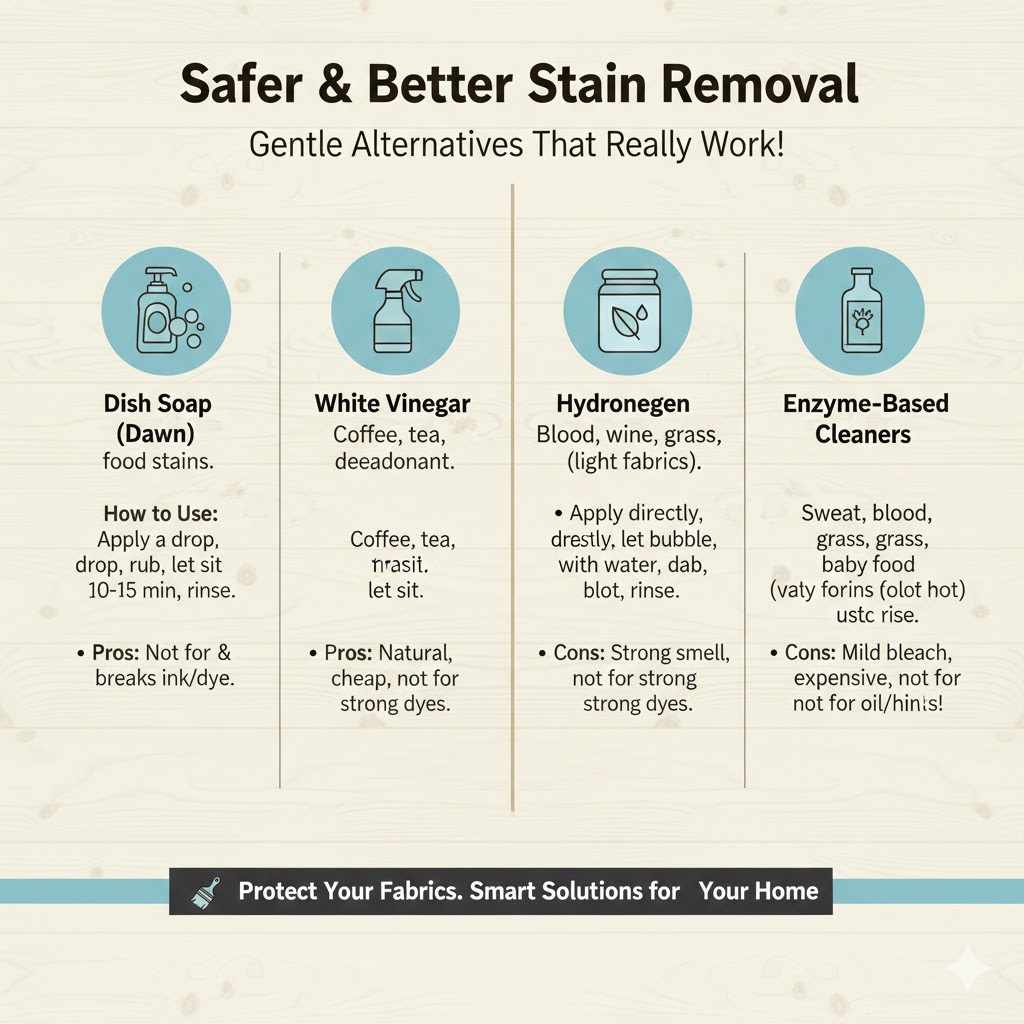
Rubbing alcohol is a high-risk, high-reward option. For most common household stains, there are safer and often more effective alternatives you can try first. Before reaching for the isopropyl alcohol, consider one of these gentler approaches.
| Stain Remover | Best For | How to Use | Pros | Cons |
|---|---|---|---|---|
| Dish Soap (Dawn) | Grease, oil, food stains | Apply a small drop directly to the stain, gently rub it in, let it sit for 10-15 minutes, then rinse and launder. | Very gentle on most fabrics; excellent at breaking down oils. | Not effective on ink or dye-based stains. |
| White Vinegar | Coffee, tea, grass, mild deodorants stains | Mix a solution of one part vinegar to one part water. Dab onto the stain and let it sit before washing. | Natural, cheap, and effective at breaking down tannins. Acts as a mild odor remover. | Has a strong smell (which washes out); not for strong dyes. |
| Hydrogen Peroxide (3%) | Blood, wine, color-rich food stains | Apply directly to the stain (on light or white fabrics only!), let it bubble, then blot and rinse. | Excellent for protein and pigment stains. Disinfects as it cleans. | Can act as a mild bleach; never use on dark or colored fabrics without extensive testing. |
| Enzyme-Based Cleaners | Sweat, blood, grass, baby food (protein stains) | Follow the product’s directions, usually involves pre-soaking or applying directly to the stain. | Specifically designed to break down organic stains effectively and safely. | Can be more expensive; may not work on oil or ink stains. |
Frequently Asked Questions (FAQ)
1. Does rubbing alcohol remove ink stains from clothes?
Yes, it often works very well on ink stains, especially from ballpoint pens. The alcohol acts as a solvent that dissolves the ink. However, the risk of it also dissolving the fabric’s dye is very high, so you must do a spot test on a hidden area first, especially on colored clothing.
2. Can I use hand sanitizer instead of rubbing alcohol on a stain?
You can in a pinch, but it’s not ideal. Most hand sanitizers are 60-70% alcohol, but they also contain gels, moisturizers, and fragrances. These extra ingredients can leave their own residue or stain on the fabric. Pure isopropyl alcohol is a better choice if you decide to use a solvent.
3. Does it matter if I use 70% or 91% isopropyl alcohol?
Yes, it can make a difference. The 91% solution is a stronger solvent and is more aggressive. While it might work faster on a stain, it also has a much higher risk of stripping color from your clothes. The 70% solution is a bit gentler and is generally the safer choice for fabric. Always dilute any alcohol with a bit of water for delicate items.
4. How long can I leave rubbing alcohol on a stain?
You should not leave it on for very long. Apply the alcohol, blot the stain immediately, and then rinse the area thoroughly with cool water as soon as the stain is removed. Letting alcohol sit and dry on fabric increases the risk of it damaging the fibers or permanently removing the dye.
5. Will rubbing alcohol get grease stains out of clothes?
It can work on some lighter oil stains, but it’s not the best tool for the job. A better and safer choice for grease or oil is a simple dish soap (like blue Dawn). Its grease-cutting formula is designed to break down oils without harming most fabrics.
6. Can rubbing alcohol damage leather or suede?
Absolutely. You should never use rubbing alcohol on leather or suede. It will dry out the material, stripping its natural oils and causing it to become brittle, discolored, and cracked. It can create a permanent, light-colored spot that cannot be repaired.
7. What is the biggest mistake people make when using alcohol on clothes?
The single biggest mistake is not doing a spot test first. People get impatient and apply it directly to a visible stain, only to find they’ve traded an ink spot for a permanent bleached splotch. Always take the extra two minutes to test on an inside seam—it can save your favorite garment.
Your Final Takeaway on Rubbing Alcohol and Clothes
So, we’ve learned that the relationship between rubbing alcohol and your clothes is complicated. It isn’t a stain-causer in the traditional sense, but it poses a very real risk as a color remover and fabric damager. It has its place as a powerful tool for very specific stains—like ink on a sturdy, white cotton shirt—but it should never be your go-to, everyday stain fighter.
The most important piece of wisdom I can share, whether we’re in the workshop or the laundry room, is this: know your materials and always test your method first. Your clothing’s care label is your best friend, and a simple spot test on a hidden seam is the ultimate safety check. By treating rubbing alcohol with the respect a powerful solvent deserves, you can avoid that sinking feeling of a DIY disaster and keep your clothes looking their best.
Happy fixing!
– Md Meraj