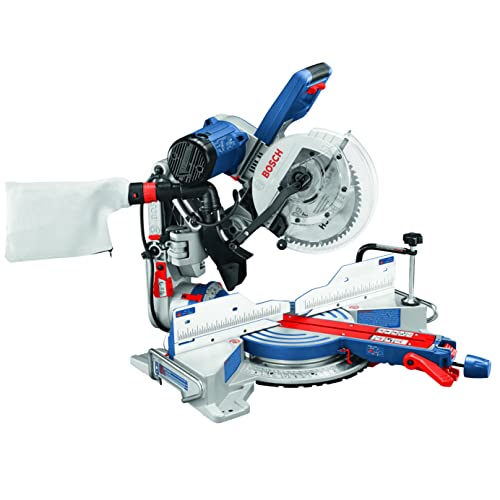
Can You Put a Smaller Blade on a Miter Saw? (Check Arbor First)
A smaller blade fits a miter saw only when its bore matches the arbor — 5/8 inch on most 8- and 10-inch saws, a full 1 inch on most 12-inch models. A mismatched bore needs a reducer bushing, and a blade that doesn’t meet OSHA’s guard-coverage rule (1910.243) can leave teeth exposed. This guide covers arbor compatibility, the safe 6-step swap, and how tooth count and cutting depth actually change.
What Arbor Size Does a Smaller Miter Saw Blade Need?
Best Miter Saw Blade Pick
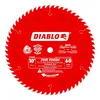
Diablo D1060X 10-Inch 60-Tooth Fine Finish Blade
A 5/8-inch bore, general-purpose 10-inch blade — the size most miter saws with a 5/8-inch arbor can drop in without a bushing.
- Best for: Trim, molding, and general crosscuts on 10- or 12-inch saws (with a bushing on 12-inch)
- Why we picked it: 5/8-inch bore matches the standard arbor on most 8- and 10-inch miter saws
- Main drawback: Still needs a reducer bushing to run on a 1-inch arbor 12-inch saw
Compare more downsizing options
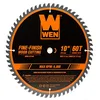 Budget Pick WEN BL1060 10-Inch 60-Tooth Blade
|
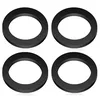 Arbor Fix 1-Inch to 5/8-Inch Arbor Adapter Ring
|
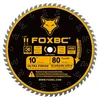 Fine-Finish Option FOXBC 10-Inch 80-Tooth Blade
|
As an Amazon Associate we earn from qualifying purchases.
The blade’s bore — the hole in the center — has to match the saw’s arbor shaft, not just look close enough. Most 8-inch and 10-inch miter saws use a 5/8-inch arbor, while most 12-inch saws (including the DeWalt DW3128 and Freud Diablo D1244X 12-inch blade lines) ship with a full 1-inch arbor.
That means a common 10-inch blade with a 5/8-inch bore will not simply drop onto a 12-inch saw’s 1-inch arbor — you need a bore-reducer bushing rated for that exact combination. Never force an oversized bore onto a smaller arbor, and never file or drill out a blade’s bore to make it fit — both distort the hole and throw the blade off-center, which shows up as vibration and chatter marks in the cut. For a broader look at how miter saws compare to the rest of your shop lineup, see our woodworking saws guide.
| Miter Saw Size | Typical Arbor Bore | Smaller Blade Bore Needed | Bushing Required? |
|---|---|---|---|
| 12-inch saw | 1 inch | Most 10-inch blades: 5/8 inch | Yes, in almost every case |
| 10-inch saw | 5/8 inch | Most 7-1/4-inch blades: 5/8 inch | Usually no |
| 8-inch saw | 5/8 inch | Compact blades: 1/2 to 5/8 inch | Check the box — varies by brand |
Bore sizes are the market norm for each diameter class, not a universal law — always confirm the exact bore stamped on the blade and the arbor spec in your saw’s manual before buying.
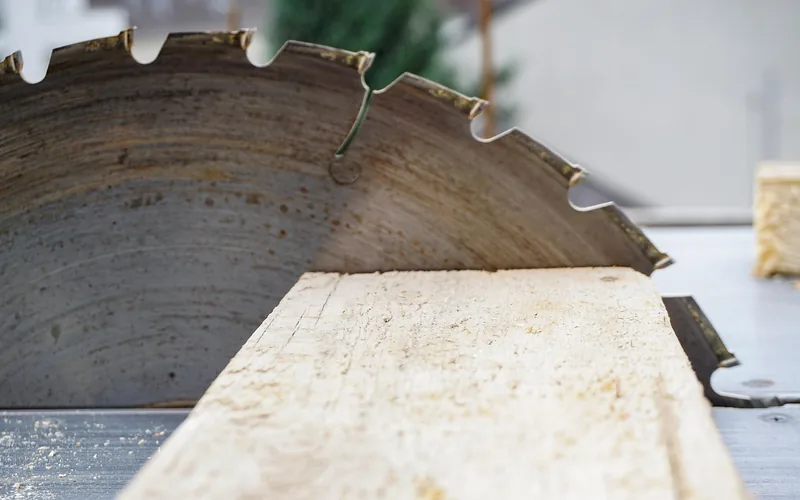
4 Things to Check Before Putting a Smaller Blade on a Miter Saw
Swapping blades is routine maintenance, but a few checks up front save a ruined cut or a trip back to the hardware store. Confirm these four things before you touch a wrench:
1. Confirm the Bore Matches the Arbor
Check the bore size stamped on the new blade against your saw’s arbor spec (see the table above). If they don’t match, buy a rated bushing before you start — don’t improvise one.
2. Decide What You’re Actually Cutting
A smaller blade cuts a shallower depth, so it’s the right call for thin trim, veneer, and finish work — not for 2x material or anything near your saw’s rated capacity. Settle on the material and thickness first, then size the blade to it.
3. Pick the Diameter and Tooth Count for That Cut
Once you know the cut, pick the diameter and tooth count to match — see “Do Smaller Blades Really Cut Faster?” below for how tooth count actually works. A small circular saw blade with a 7-1/4-inch to 8-1/2-inch diameter is a common downsizing choice for trim work.
4. Disconnect the Power First
Unplug the saw before loosening anything. OSHA’s guard-coverage rule for portable power saws (29 CFR 1910.243(a)(1)(i)) exists because a blade guard that isn’t fully seated or a saw that’s still live is how blade-swap injuries happen — not the cut itself.
How to Put a Smaller Blade on a Miter Saw: 6-Step Guide
Once the bore is confirmed and the power is off, the swap itself takes about ten minutes. Follow these six steps in order:
- Step 1: Unplug the Saw: Disconnect the miter saw from power completely before loosening any screws — never work on a plugged-in saw.
- Step 2: Open the Spindle Cover: Remove the screws holding the blade guard housing, then rotate it up and out of the way to expose the blade and arbor bolt.
- Step 3: Loosen the Arbor Bolt: Press the spindle lock and turn the arbor bolt with the wrench that came with the saw — most miter saw arbor bolts are reverse-threaded, so check your manual before forcing it.
- Step 4: Remove the Old Blade: With the spindle locked and the bolt out, lift the old blade off the arbor along with its outer washer.
- Step 5: Mount the New Blade: Check the rotation arrow on the new blade matches the saw’s direction, seat it against the inner washer and any needed bore bushing, then replace the outer washer.
- Step 6: Torque the Bolt and Reinstall the Guard: Tighten the arbor bolt with the spindle locked, then close and re-secure the spindle cover before plugging the saw back in.
3 Real Advantages of Running a Smaller Blade
1. Cleaner, Shallower Cuts for Trim Work
Less blade below the arbor means less flex at the rim, which is why smaller blades are the go-to for baseboard and molding work — see our guide on cutting baseboards with a miter saw for the technique.
2. Lighter and More Portable
A smaller blade weighs less and takes up less case space, which matters if you’re hauling a miter saw between jobsites rather than running it in a fixed shop.
3. Wider Availability at a Lower Price
Common diameters like 7-1/4 and 8-1/4 inches are stocked at nearly every hardware store and cost less than a full-size 10- or 12-inch blade — useful if you only need it occasionally.
Do Smaller Blades Really Spin Faster? The RPM Myth
No — a miter saw’s motor spins at a fixed no-load RPM built into the motor itself (commonly 4,000–5,000 RPM), and that number doesn’t change based on which blade is mounted. What actually changes with blade diameter is surface speed (also called rim speed), calculated as SFM = π × diameter × RPM. At the same fixed RPM, a smaller-diameter blade has a slower tooth-tip surface speed than a larger one — the opposite of what a faster-spinning motor would suggest.
📊 The Freud Diablo D1244X 12-inch blade is rated for a maximum 5,000 RPM — the same ceiling that applies whether it’s the largest blade a saw takes or a downsized swap. Match the blade’s max-RPM rating to the saw’s arbor speed, not the other way around. — Source: Diablo/Freud blade listing, 2026
How Many Teeth Do You Actually Need?
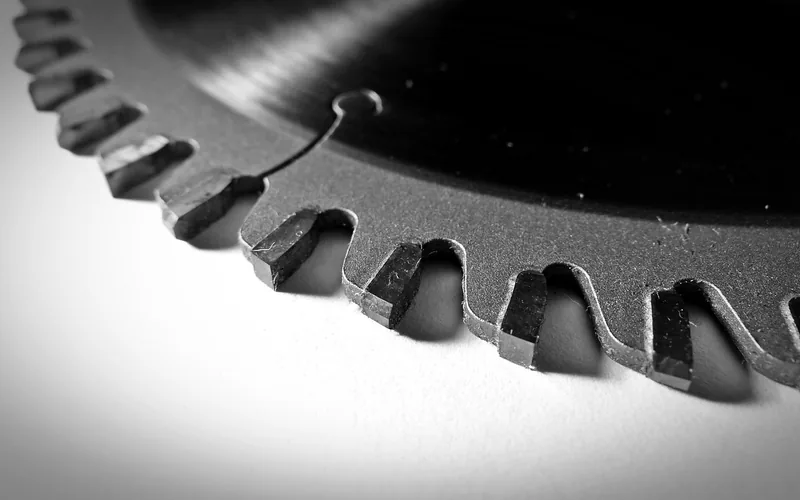
Tooth count tracks the type of cut you’re making, not the blade’s diameter — an 8-inch blade and a 12-inch blade built for the same job land in the same rough range. As a working reference: 40–60 teeth for rough framing and fast crosscuts, 60–80 teeth for general-purpose trim, and 80–100 teeth for fine finish work like crown molding. More teeth cut smoother but slower; fewer teeth cut faster but rougher.
Does Blade Size Matter on a Miter Saw?
Yes — blade diameter sets your maximum cutting depth, and it must be equal to or smaller than the diameter your saw is rated for. A blade larger than the saw’s rated size won’t seat correctly and can leave teeth exposed past the guard’s coverage, which is the OSHA concern noted above, not just a matter of it “not fitting.”
Is a Smaller Blade Actually Safe? What OSHA’s Guard Rule Requires
Federal OSHA standard 29 CFR 1910.243(a)(1)(i) requires that portable power-driven circular saws have upper and lower guards that cover the blade to the depth of the teeth, with the lower guard automatically returning to covering position once the saw is pulled back from the work. A correctly bore-matched smaller blade doesn’t change this — the guard geometry is built around your saw’s original blade size, so it’s worth a visual check that the lower guard still fully closes over the new blade before you make your first cut.
“The bore fitting is only half the check. I run the guard through a full open-and-close cycle by hand on every blade swap, smaller or not — if it doesn’t snap fully back over the teeth, that blade doesn’t go near a workpiece.”
Can You Put a 10-Inch Blade on a 12-Inch Miter Saw?
Diameter-wise, yes — a 10-inch blade is smaller than the 12-inch capacity your saw is rated for, so it clears the guard and the arbor height without issue. Bore-wise, usually not without a bushing: most 12-inch saws use a 1-inch arbor, while most 10-inch blades (including the 10-inch saws we cover here) come with a 5/8-inch bore. Confirm both numbers before you buy, not just the diameter.
Going the other direction — a 12-inch blade on a 10-inch or 8-inch saw — isn’t an option regardless of bore, since the larger diameter won’t clear the guard or the saw’s rated cutting height.
Can You Use a 7-Inch Blade on a 10-Inch Saw?
Yes — a 7-1/4-inch blade is a common downsize for a 10-inch miter saw and typically shares the same 5/8-inch bore, so no bushing is usually needed. See our beginner guide to sliding compound miter saws if you’re still learning the saw’s other settings. You’ll give up cutting depth for it, so save it for thin stock and trim, not framing lumber.
Frequently Asked Questions
Can you put a bigger blade on a miter saw than it came with?
No. A blade larger than your saw’s rated diameter won’t clear the guard housing or the arbor height it’s built around, and the exposed, unguarded portion of the blade is exactly what OSHA’s guard-coverage rule is meant to prevent. Stay at or below your saw’s rated size in both directions.
What happens if the blade’s bore doesn’t match the saw’s arbor?
The blade either won’t seat on the shaft at all, or it seats loosely and spins off-center, showing up as vibration, burn marks, or an inaccurate cut. Use a bore reducer bushing rated for that specific size combination — never force a mismatched bore onto the arbor.
Do smaller miter saw blades cut faster than larger ones?
No, not because of RPM — the motor’s no-load RPM is fixed regardless of blade size. What actually drops with a smaller diameter is surface (rim) speed at the tooth tips, which can change cut quality but doesn’t make the motor spin faster.
Is it safe to run an 8-inch blade on a 10-inch miter saw?
Yes, as long as the bore matches your arbor and the lower guard still fully closes over the smaller blade. Expect noticeably less cutting depth than the saw’s full 10-inch capacity, so it’s best reserved for thin trim rather than dimensional lumber.
Final Word
Blade size on a miter saw comes down to two numbers, not one: the diameter your saw is rated for, and the bore your arbor actually takes. Match both, keep the guard doing its job, and a smaller blade is a legitimate, useful swap for trim and finish work — not a compromise. For more on keeping your blade in good working order, see our guide on how long a circular saw blade should last.
Sponsored / affiliate links. As an Amazon Associate I earn from qualifying purchases. I may earn additional commission from eligible campaigns.


![Chicago Electric vs Admiral Miter Saw: [Know Before You Choose]](https://cdn.woodworkingadvisor.com/2022/11/Chicago-Electric-vs-Admiral-Miter-Saw-_Know-Before-You-Choose_-768x384.webp)