Can You Use Caulking as Glue? What Works
It’s common for DIYers to wonder, “Can you use caulking as glue?” This question pops up because caulking tubes look a lot like glue tubes. Plus, both are sticky and help things stick together. But what works and what doesn’t?
This guide makes it simple. We will walk you through exactly what caulking can do when you need to stick things, and when you should reach for real glue. Get ready to learn how to choose the right product for your project.
Can You Use Caulking as Glue What Works
Caulking is a material used to fill gaps and seal joints. It is flexible and waterproof. Many people think of it for bathrooms and kitchens to stop leaks.
But its sticky nature makes us ask if it can act like glue. Understanding the difference between caulking and glue is key. This section explores when caulking might do the job of a strong adhesive and what makes it suitable or not.
We will look at the types of caulking and their bonding properties.
What Is Caulking And Its Purpose
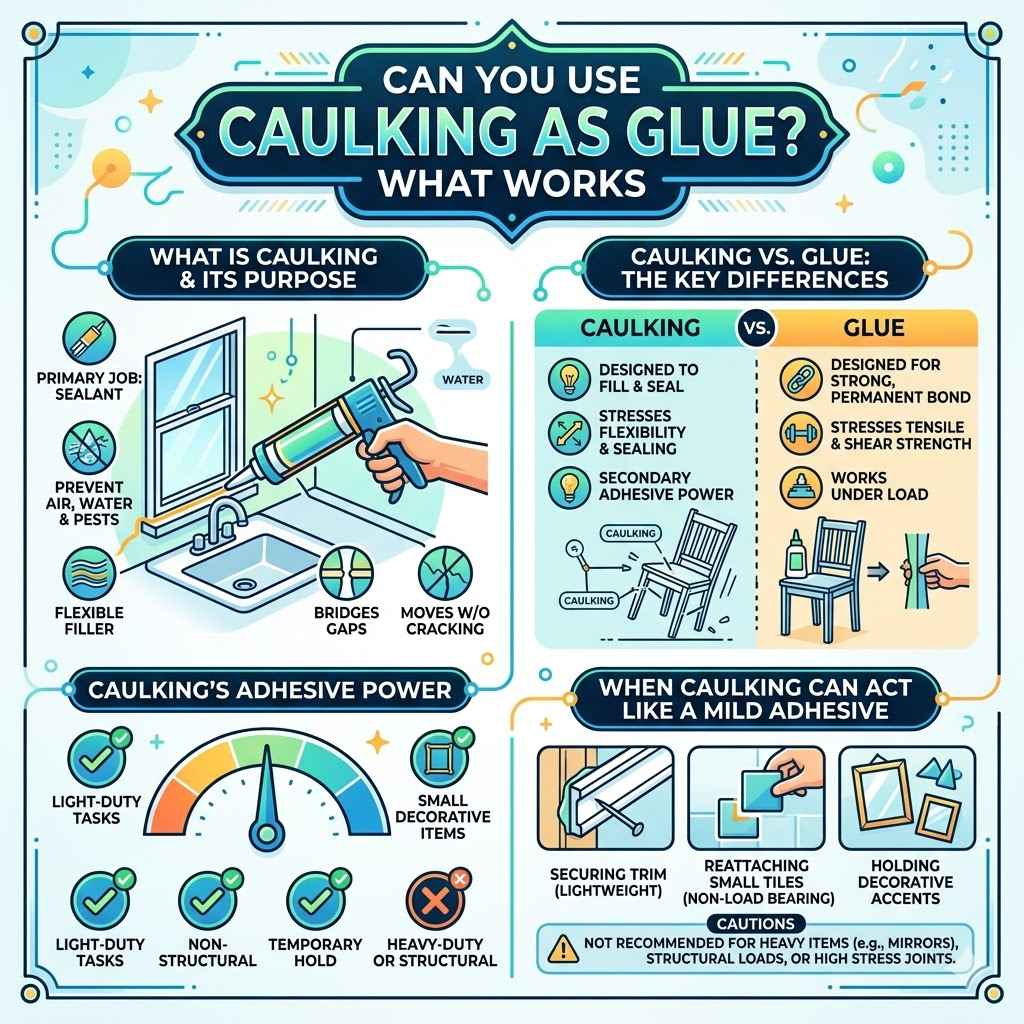
Caulking is primarily a sealant. Its main job is to prevent air, water, and pests from getting into or out of a space. Think of it as a flexible filler.
It’s used around windows, doors, sinks, and tubs. It bridges the small gaps that often form where different materials meet. The flexibility allows it to move a little as buildings settle or temperatures change, without cracking.
Different types of caulking exist, each with its own set of properties. Some are water-based, like acrylic latex caulks, which are easy to clean up. Others are silicone-based, offering excellent water resistance and flexibility, but can be trickier to clean.
There are also hybrid caulks that try to combine the best features of both. The “stickiness” of caulking comes from its adhesive properties, which are designed to hold it in place as a seal, not necessarily to bond two surfaces permanently and strongly.
Caulking versus Glue The Key Differences
Glue is designed to create a strong, permanent bond between two surfaces. It’s meant to hold things together under stress. Adhesives come in many forms, from wood glue to super glue to construction adhesive.
Each is formulated for specific materials and applications, focusing on tensile strength and shear strength.
Caulking, on the other hand, is made to fill and seal. While it does stick to surfaces, its adhesive power is usually secondary to its sealing ability. It’s more about creating a barrier.
Imagine trying to build a chair with caulking. It would seal the joints, but the structure would likely fall apart under any weight. Glue would hold the chair together.
So, while there’s some overlap, their primary functions are quite distinct.
When Caulking Can Act Like A Mild Adhesive
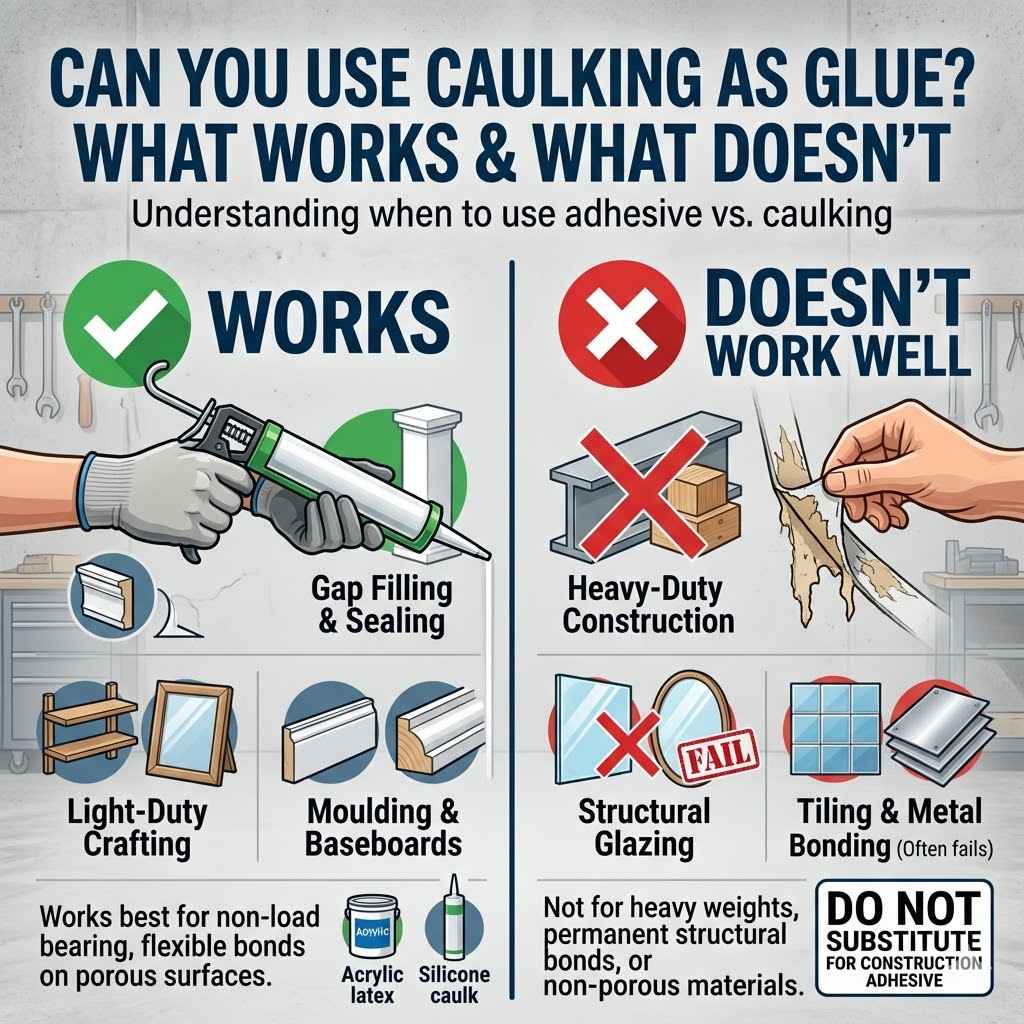
Caulking can sometimes work as a mild adhesive for light-duty tasks. This is especially true for projects where the bond doesn’t need to be super strong. For example, if you need to temporarily hold a lightweight trim piece in place while you nail it, some caulks can offer a bit of tackiness.
They can also help secure small decorative items that won’t bear any load.
The success depends on the type of caulking and the surfaces involved. Silicone caulks are often quite sticky and flexible, which can help them adhere to a variety of materials. However, they are not ideal for surfaces that will experience tension or movement.
For instance, using caulking to stick a mirror to a wall is generally not recommended, as the weight of the mirror and the potential for vibration could cause it to fail. It’s best for non-structural, light bonding needs.
What Types Of Caulking Work Best For Bonding
Not all caulks are created equal when it comes to holding things together. Some are formulated with better adhesive qualities than others. Understanding these differences helps you pick the right product for your needs.
The goal here is to find a caulk that offers more than just sealing; it needs a decent grip.
Silicone Caulks For Temporary Bonds
Silicone caulks are known for their excellent flexibility, water resistance, and durability. They also have a good amount of tackiness, which means they can stick well to many surfaces. This makes them a candidate for light-duty bonding tasks.
They create a seal that can withstand a good deal of expansion and contraction.
For instance, if you are attaching a small plastic border around a sink or bathtub and want it to stay put without nails, a bead of silicone caulk can often do the job. It will adhere to both the fixture and the border. However, it’s important to remember that silicone is not a structural adhesive.
It’s best used where there’s no significant pull or weight involved. Also, painting over silicone caulk can be difficult, as many paints don’t adhere well to it.
Acrylic Latex Caulks With Advanced Bonding
Acrylic latex caulks are easier to work with and clean up than silicone. Many modern acrylic latex caulks are formulated with enhanced adhesive properties. These are often called “paintable caulks” and can be found with labels indicating they are good for “adhesion” or “bonding.” They offer a decent grip on surfaces like wood, drywall, and plaster.
If you need to stick a piece of lightweight trim or a decorative molding where it won’t be stressed, an acrylic latex caulk can be a good option. It holds well enough for these purposes and can be painted over once dry, blending seamlessly into your decor. However, like silicone, they are not meant for heavy-duty applications.
They provide a temporary hold rather than a permanent, strong bond.
Hybrid Advanced Polymer Caulks As Adhesives
For those looking for something that bridges the gap between caulking and strong adhesives, hybrid advanced polymer caulks are a great choice. These products often blend the best qualities of silicone and polyurethane. They offer exceptional adhesion, flexibility, and water resistance.
Many are designed to be used as both sealants and mild adhesives.
These types of caulks are excellent for bonding various materials. You might use them to attach a backsplash tile, secure a vanity top, or even bond different types of plastics. They provide a much stronger hold than traditional caulks and often dry harder.
If your project involves something that needs a reliable stick but also needs to be weatherproof or flexible, a hybrid polymer caulk is likely your best bet.
When Caulking Is Not The Right Choice For Bonding
While caulking can help with light-duty sticking, there are many situations where it simply won’t cut it. Relying on caulking for these tasks can lead to failure, damage, and frustration. It’s crucial to know when to put down the caulk gun and pick up a proper adhesive.
Structural Applications And Heavy Loads
Caulking is never appropriate for structural applications. This means it should not be used where items need to support weight or withstand significant force. Think about building furniture, attaching shelves, or any situation where the bond needs to hold under stress.
Caulking will simply not provide the necessary strength.
For instance, trying to glue the legs of a table with caulking would be a disaster. The table would likely collapse. Similarly, using caulking to hang heavy items on a wall is risky.
A strong construction adhesive or appropriate mounting hardware is required for anything load-bearing. The flexibility of caulk is a weakness when a rigid, strong bond is needed.
High-Stress Joints And Moving Parts
If the items you are joining will experience movement, vibration, or significant stress, caulking is not the answer. Glue is designed to handle these forces. Caulking, while flexible, is not engineered for continuous movement or high tension.
Consider trying to bond two pieces of wood that will be part of a door that opens and closes frequently. The constant flexing will break a caulking bond. Or, imagine trying to stick two parts of a machine that vibrate together.
Caulking would not withstand this. For such applications, you need a specialized adhesive that can handle shear forces and fatigue.
Bonding Porous Or Difficult Surfaces
Some materials are simply too porous or have surfaces that are too smooth or oily for caulking to adhere to effectively. While caulks can stick to many things, they might not create a lasting bond on certain plastics, treated woods, or very rough textures without proper preparation.
For example, certain types of plastics have a slick surface that resists most adhesives. If you need to bond these, you’d look for a specific plastic adhesive. Likewise, very oily wood might require cleaning and priming before any adhesive will stick.
Caulking’s general-purpose nature means it might not have the specialized grip needed for these challenging materials.
How To Use Caulking Effectively For Light Bonding
If you’ve decided caulking is the right tool for your light-duty bonding task, there are ways to ensure it works as well as possible. Proper application and preparation make a big difference. It’s not just about squeezing out a bead; it’s about doing it right.
Surface Preparation Is Key
Before applying any caulking for bonding, make sure the surfaces are clean and dry. Dirt, dust, grease, or old caulk can prevent the new caulk from sticking properly. For best results, clean the surfaces with a mild soap and water or an appropriate cleaner.
Ensure they are completely dry before proceeding.
If you are bonding to a smooth surface like plastic or metal, a light scuffing with fine-grit sandpaper can sometimes improve adhesion. This creates a tiny bit of roughness for the caulk to grip. Always test in an inconspicuous area first, though, to ensure you don’t damage the surface.
Proper Application Techniques
Apply caulking in a steady, continuous bead. Don’t over-apply, as too much caulk can squeeze out and create a mess. Aim for a bead size that is sufficient to make contact with both surfaces you are joining.
After applying, you often need to smooth the bead.
For light bonding, you might want to press the two items together firmly immediately after applying the caulk. Then, use a wet finger, a caulking tool, or a damp cloth to smooth the bead. This not only makes it look neater but also ensures good contact between the caulk and both surfaces.
This is sometimes called “tooling” the caulk.
Curing Times And Expectations
Caulking needs time to cure, which is the process of it hardening and developing its full adhesive strength. This curing time can vary greatly depending on the type of caulk and the humidity and temperature. Always check the product label for specific instructions.
For bonding purposes, it’s especially important to let the caulk cure fully before putting any stress on the joint. This might mean leaving the items undisturbed for 24 hours or even longer. While it might feel firm to the touch sooner, its internal bonding strength is still developing.
Be patient to ensure the best possible hold.
Real-Life Examples Where Caulking Works For Bonding
Sometimes, seeing how others have used caulking successfully makes it clearer. These examples show practical, everyday uses where caulking’s sticking power is just enough. They highlight the types of projects where it’s a smart choice.
Securing Lightweight Decorative Items
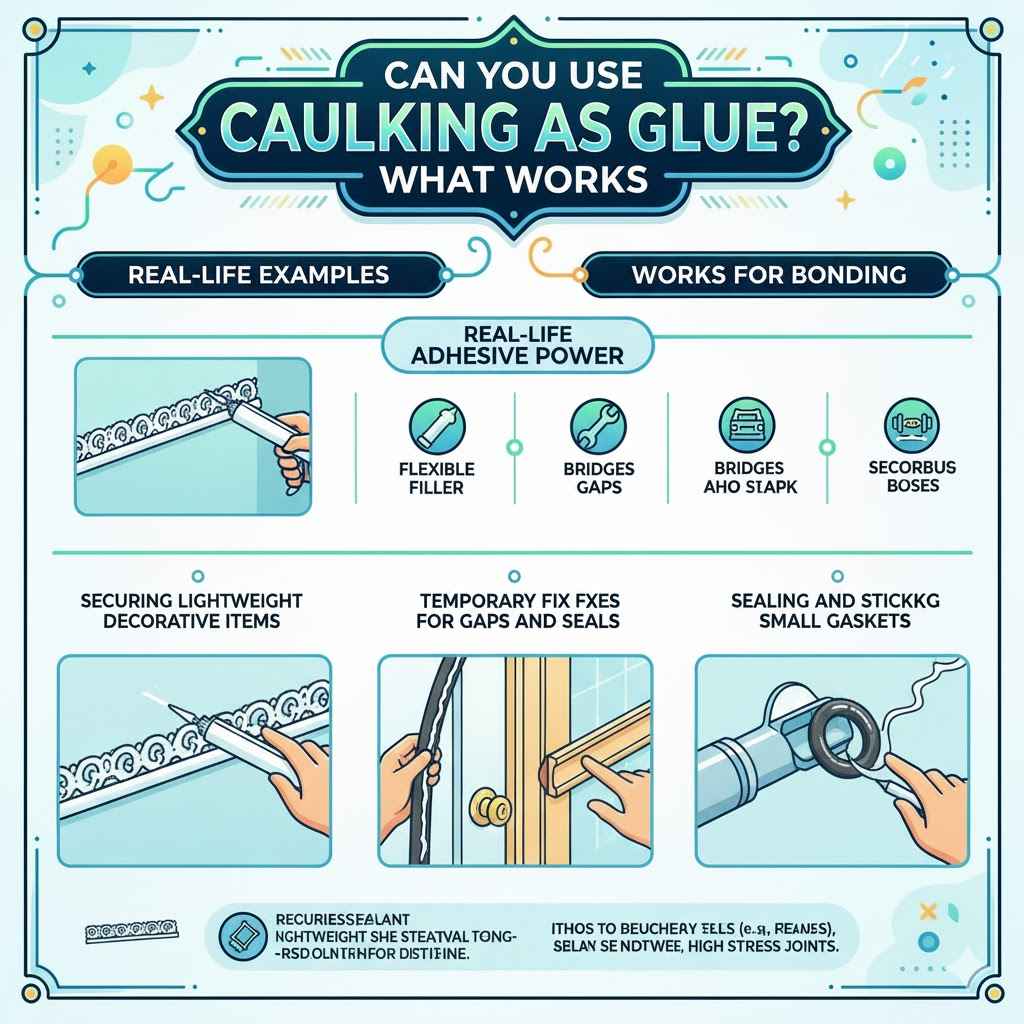
Imagine you want to add some lightweight plastic or foam decorative trim pieces to a wall or a piece of furniture. Nailing might damage the surface, and a strong adhesive might be overkill. In this case, a bead of acrylic latex caulk applied to the back of the trim can hold it securely.
The caulk provides just enough grip to keep the trim in place. Since the items are light, they won’t exert much pull on the caulk. Once the caulk cures, the trim stays put.
This is a common method for home decorators looking for a subtle way to add flair without visible fasteners.
Temporary Fixes For Gaps And Seals
A common scenario is needing to temporarily hold a piece of weather stripping in place while you get the right adhesive or screws. A thin bead of caulk can provide enough tackiness to keep the strip from falling off. It acts as a temporary glue.
Another example is when a small piece of trim has come slightly loose. Instead of immediately using wood glue or nails, a bit of caulk can hold it in position. This gives you time to plan a more permanent fix or simply provides a good enough hold for a minor issue.
Sealing And Sticking Small Gaskets
In some DIY repairs, you might need to seal a small gasket or O-ring into place before assembling a component. Certain flexible caulks, like silicone, can help hold these in position. They create a seal and also provide a light adhesive to keep the gasket from shifting during assembly.
This is useful in plumbing or automotive applications where a small rubber seal needs to stay put. It’s not meant to be the primary sealing agent but rather to aid in keeping the actual gasket in its correct place during the initial assembly stages.
Frequently Asked Questions
Question: Can I use caulking to fix a broken ceramic mug handle
Answer: It is not recommended to use caulking to fix a broken ceramic mug handle. Caulking is not designed for food contact and may not provide a strong enough bond for something that will be handled frequently and experience temperature changes from hot liquids.
Question: What is the best type of caulk to use if I need some bonding
Answer: For light bonding needs, hybrid advanced polymer caulks or high-quality acrylic latex caulks designed for good adhesion are often the best choices. Silicone caulks can also work for very light-duty temporary bonds.
Question: Will caulking hold up if I use it to stick two pieces of wood together
Answer: Caulking is generally not strong enough for bonding wood, especially if the wood pieces will experience any stress or movement. Wood glue or construction adhesive is much more appropriate for this purpose.
Question: Can I paint over caulking once it has bonded items
Answer: Many acrylic latex caulks are paintable once cured. However, silicone caulks are typically not paintable, so it’s important to check the product specifications before assuming you can paint over it.
Question: How long does caulking take to cure enough to hold items
Answer: Caulking cure times vary. Some may feel dry to the touch in a few hours, but full bonding strength can take 24 hours or longer. Always check the product label for specific curing instructions.
Summary
So, can you use caulking as glue? Yes, but with important limits. It works for light decorative items and temporary fixes where strength isn’t key.
Always prepare surfaces, apply carefully, and let it cure fully. For anything structural or needing a strong hold, reach for actual glue.