CA Glue and Activator for Wood: How to Use Them Right
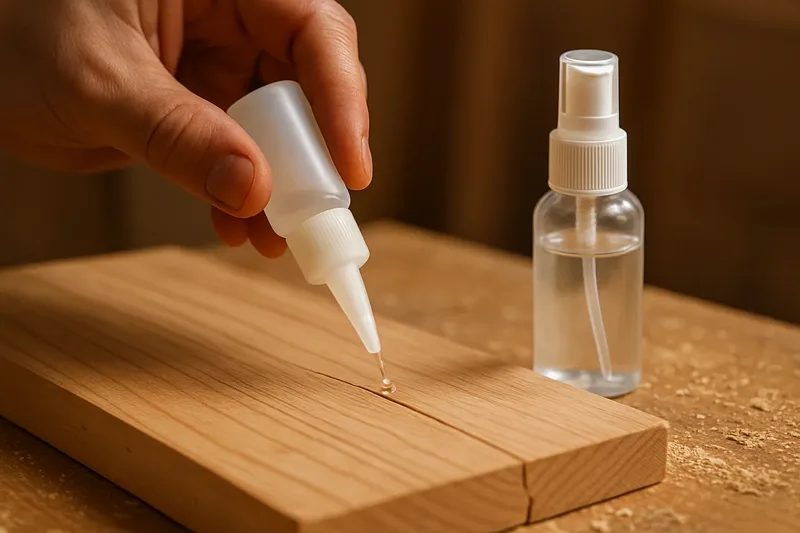
CA glue and activator is cyanoacrylate (super glue) paired with an accelerant spray. The activator triggers the glue to set in 5–15 seconds instead of the 30–60 seconds it takes on its own, so two wood parts bond instantly with no clamps.
If you searched “wood glue and activator,” you almost certainly mean this CA-glue-and-accelerant combo, not standard PVA wood glue like Titebond II or Elmer’s. PVA wood glue has no activator system at all — it cures on its own over 20–30 minutes of clamp time. This guide covers the CA glue and activator combo specifically: how it works, the exact technique for a clean bond, when it’s the right tool in a woodworking shop, and when reaching for regular wood glue instead will actually serve the joint better.
What Is CA Glue and Activator?
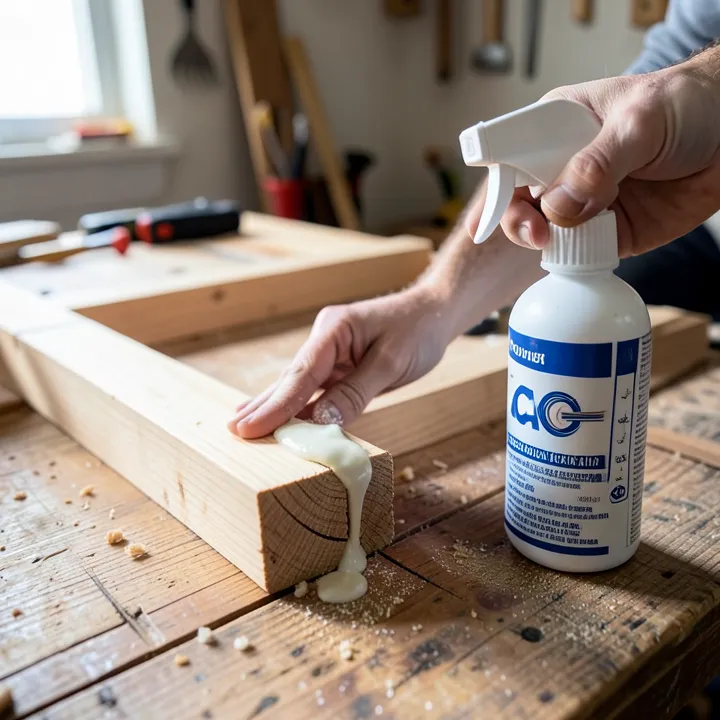
CA glue is cyanoacrylate, a liquid monomer that hardens through anionic polymerization when it contacts a weak base — normally the trace moisture in wood and air. An activator is a sprayed or brushed-on accelerant, usually built around an amine compound, that supplies that trigger directly instead of making the glue wait for ambient humidity.
Apply CA glue to one surface and mist the activator onto the other, or spray it directly onto the wet glue line. The reaction is visible: the clear liquid turns solid almost on contact. Woodworkers reach for this pair specifically because it removes the one weakness of plain CA glue — unpredictable cure time on dense or resinous woods where moisture is inconsistent.
Is “Wood Glue and Activator” the Same Thing as CA Glue and Activator?
Yes, in almost every real-world search — “wood glue and activator” refers to CA glue with an accelerant, not PVA wood glue. PVA (polyvinyl acetate) glue, the Titebond/Elmer’s type most woodworkers mean by “wood glue,” has no activator product on the market at all.
The confusion happens because CA glue is also literally a wood glue — it bonds wood as well as plastic, metal, and ceramic. But the two products behave nothing alike once clamped in a real glue-up. Here is the direct comparison:
| Property | CA Glue + Activator | PVA Wood Glue (Titebond/Elmer’s) |
|---|---|---|
| Set time | 5–15 seconds | 20–30 minutes (clamped) |
| Full cure | Under 1 minute | 24 hours |
| Clamping needed | No | Yes |
| Gap-filling | Poor to moderate | Poor (needs tight joints) |
| Flexibility once cured | Rigid, can be brittle | Slightly flexible |
| Best for | Small repairs, turning, jigs, tack-and-glue | Structural joints, panel glue-ups, furniture |
For a full breakdown of when each adhesive wins on strength and durability, see our CA glue vs. wood glue comparison. If your project is a furniture joint, panel, or anything under sustained load, standard PVA wood glue is almost always the correct choice, not CA glue and activator.
How Do You Use CA Glue and Activator on Wood?
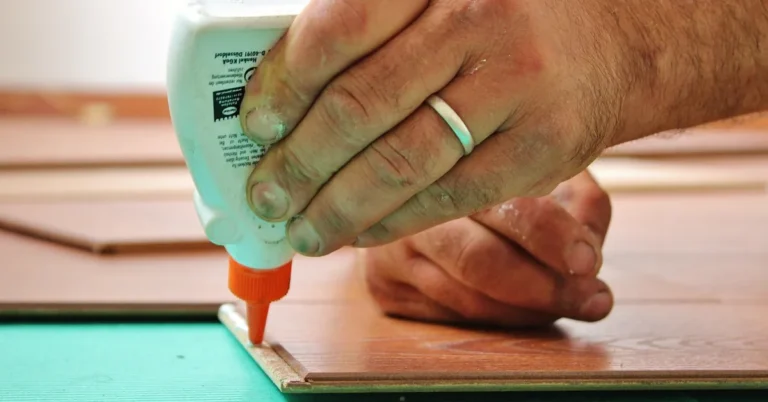
Apply a thin bead of CA glue to one surface, join the pieces, then spray activator directly onto the glue line from about 6 inches away. The bond sets in 5–15 seconds and reaches initial cure in 30–60 seconds, according to Titebond’s technical data sheet for its Instant Bond Activator.
There are two valid sequences, and which one you use depends on the joint:
- Pre-spray method: Spray activator on one surface, apply CA glue to the other, then join immediately. Best for parts you can position accurately in one motion — small trim pieces, mitered corners, decorative inlay.
- Post-spray method: Join the parts dry-fit first, apply glue into the seam by capillary action, then spray activator over the joint. Best when you need a few extra seconds to check alignment before the bond locks — box corners, fragile repairs, anything with a visible seam.
Match glue viscosity to the job. Thin CA glue wicks into hairline cracks and tight-grain woods; medium viscosity is the default for general bonding; thick (gel) CA glue stays put on vertical surfaces and fills small gaps up to about 1/16 inch. Using thin glue on a gap wider than that just means the glue runs out before the activator can lock it in place.
What Causes Brittle Joints or White Haze With CA Glue Activator?
Overspraying activator causes both problems: it flash-cures the glue’s outer layer before the inner layer sets, leaving a brittle shell over a soft core, and the excess vapor condenses as a white haze (called blooming or fogging) on the surrounding wood. Both are application errors, not a flaw in the product itself.
Three habits prevent it. First, mist from 6 inches away in one light pass — never soak the joint. Second, treat activator as a timing tool, not a rescue spray for a joint you already glued badly; adding more activator to a misaligned joint locks in the mistake instead of fixing it. Third, mask or shield any finished surface near the joint, since blooming shows up worst on dark woods and glossy topcoats. Woodturners on forums like the American Association of Woodturners consistently report the same fix: less activator, applied further back, produces a cleaner and stronger joint than a heavier spray up close.
When Should You Use CA Glue and Activator in Woodworking?
CA glue and activator earns its place on four jobs: pen and small-object turning, hairline crack and void repair, fragile assemblies that can’t be clamped, and quick tacking during a larger glue-up. In each case, the reason is the same — an instant bond beats a slow one.
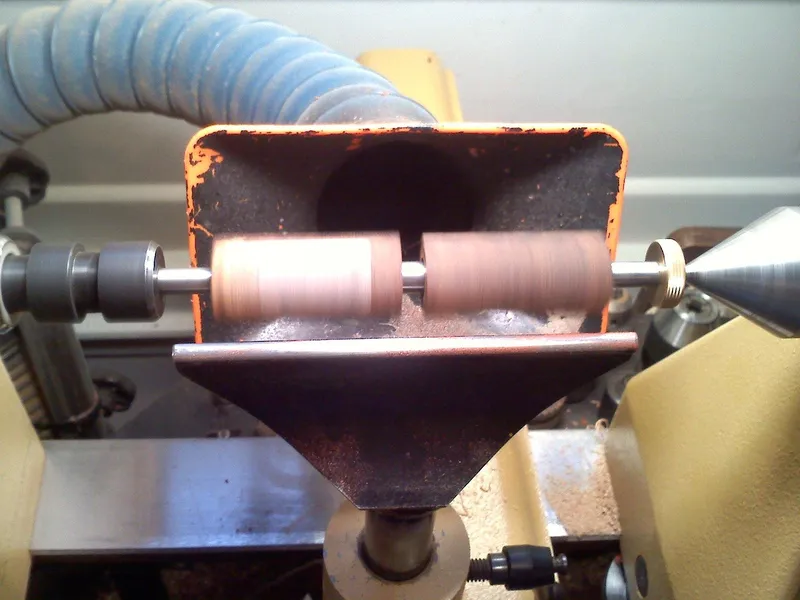
Pen and spindle turning. Pen turners keep the lathe at roughly 200 RPM while wiping thin CA glue onto a spinning blank with a small piece of paper towel or the pen kit’s own plastic bag, then spray activator once the coat is even. The working window is about 3–5 seconds before the glue starts to grab the applicator — faster lathe speeds cure the glue before it spreads evenly, which is why turners run slower here than for the actual cutting passes.
Crack and void repair. Thin CA glue wicks into hairline cracks in slabs and live-edge boards by capillary action alone, then activator locks it before it can weep out the far side. This is faster and less messy than epoxy for a crack under about 1/16 inch wide.
Fragile or awkward assemblies. Small box parts, chipped corners, and thin trim pieces are exactly where clamps do more harm than good — a clamp can crack a piece thin enough to need CA glue in the first place. Holding the joint by hand for the 5–15 second set time replaces the clamp entirely.
Tacking during assembly. A drop of CA glue and a spray of activator at one corner of a larger PVA glue-up holds parts in position while the main wood glue cures, without adding a clamp to an already crowded joint.
When Should You Avoid CA Glue and Activator?
Skip CA glue and activator on any structural, load-bearing joint — table legs, chair joints, panel glue-ups, and anything that will flex under weight. The cured bond is rigid and can shatter under repeated stress in a way PVA wood glue’s slightly flexible bond line does not.
It also loses on cost and coverage at scale. A full panel glue-up in CA glue costs several times more than the same joint in PVA wood glue, and CA glue’s working time is too short to reposition large clamped panels. For anything wider than a repair or a small assembly, standard wood glue remains the better tool.
Is CA Glue and Activator Safe to Use?
CA glue activator is flammable and irritating to eyes and airways in an enclosed space. Titebond’s own safety data for its Instant Bond Activator labels it an extremely flammable liquid and instructs users to work only with positive cross ventilation and avoid breathing the vapor.
Wear safety glasses and nitrile gloves; CA glue bonds skin in the same seconds it bonds wood. Work near an open window or fan, keep both products away from open flame, and store them below 50–70°F out of direct sunlight — heat shortens shelf life and can trigger the glue to cure inside a sealed, unopened bottle.
How Do You Remove CA Glue or Fix a Mistake?
Acetone dissolves cured CA glue on skin, tools, and most finished wood — soak a cloth, hold it on the spot for a minute, then scrape gently with a plastic scraper or your fingernail. Test acetone on an inconspicuous spot first, since it can also soften some lacquer and shellac finishes.
There’s also a lesser-known trick for slowing a joint down instead of speeding it up: brushing a mix of 1/2 teaspoon baking soda in 1/4 cup water onto the dry half of a joint neutralizes the acid stabilizer manufacturers add to CA glue to keep it liquid in the bottle. That’s the opposite chemistry from an activator, which adds a base to trigger curing — the baking soda solution removes the very thing holding the cure back, buying a few extra seconds of open time on a joint you’re not ready to activate yet.
CA Glue and Activator vs. Wood Glue vs. Epoxy
Three adhesives compete for the same shop drawer, and each one wins a different job. The table below lines them up on the factors that actually decide which one to reach for.
| Adhesive | Set Time | Gap-Filling | Best Use in Woodworking |
|---|---|---|---|
| CA glue + activator | 5–15 seconds | Poor to moderate | Turning, small repairs, tacking, fragile assemblies |
| PVA wood glue | 20–30 min (clamped) | Poor | Furniture joints, panel glue-ups, structural work |
| Epoxy | 5 min–several hours | Excellent | Large voids, live-edge slabs, waterproof or load-bearing gap fills |
Looking for the full head-to-head on strength, water resistance, and cost? See our guide to choosing the best woodworking glue, and read how super glue is made for the chemistry behind why CA glue behaves so differently from PVA in the first place.
Frequently Asked Questions
Do you have to use activator with CA glue?
No. CA glue cures on its own from ambient moisture in 30–60 seconds for thin viscosity and up to a few minutes for thick, gel-type CA glue. Activator only removes that wait — it does not change how strong the final bond is once fully cured.
Can you use wood glue and CA glue together on the same joint?
Yes, but only in the tacking role — a small dot of CA glue and activator at one point of a joint to hold parts still while the main PVA wood glue clamps and cures around it. Do not substitute CA glue for the full glue line on a joint meant to carry structural load.
Is CA glue with activator waterproof?
CA glue is water-resistant, not fully waterproof. It holds up to occasional moisture and humidity but degrades under prolonged submersion or repeated wet-dry cycling, so outdoor furniture and cutting boards need a dedicated waterproof glue instead.
Why is my CA glue joint turning white?
White haze, or blooming, happens when excess activator vapor condenses on the wood surrounding the joint instead of only reacting with the glue. Spraying a lighter mist from farther back, and masking nearby finished surfaces, prevents it.
How do you make a homemade CA glue accelerator?
A baking-soda-and-water paste (roughly 1/2 teaspoon baking soda per teaspoon of water) brushed onto one surface will trigger a fast, if less controlled, cure — the alkaline paste supplies the same base reaction a commercial activator does. It works in a pinch but sets less evenly than a manufactured spray.
The Bottom Line
CA glue and activator is the right tool for instant, clamp-free bonds on turning projects, hairline repairs, and fragile small parts — not a replacement for PVA wood glue on structural joints. Match the viscosity to the gap, spray activator lightly from a distance, and keep it out of your everyday glue-up routine for anything that needs to carry real load. For the joints where a slower, stronger bond is what the project actually needs, our PVA wood glue guide covers which formula to reach for instead.
Sponsored / affiliate links. As an Amazon Associate I earn from qualifying purchases. I may earn additional commission from eligible campaigns.