Table Legs for a Live Edge Table: Height, Weight & Fit Guide
Hairpin steel legs suit most live edge tables under 40 inches wide — each leg holds about 220 lbs, 880 lbs per set of four — but slabs over 40 inches or tables past 6 feet need a heavier steel base or center leg to stop sagging. Undersized legs bolted into end grain crack a slab within months as wood moves seasonally. This guide covers leg height, real weight-capacity numbers, and safe attachment methods.
How Much Weight Can Table Legs for a Live Edge Table Hold?
Best Live Edge Table Leg Pick
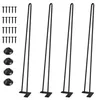
SmartStandard 28-Inch Hairpin Table Legs, Set of 4
Classic 3-rod hairpin design in 28-inch height, sized for coffee and dining-height live edge slabs up to about 40 inches wide.
- Best for: slabs under 40 inches wide at coffee or dining height
- Why we picked it: 220 lbs per leg (880 lbs per set) with a 3-rod design, which is stronger than cheaper 2-rod hairpin sets
- Main drawback: not rated for slabs over 40 inches wide without a center support leg
Compare more live edge table leg options
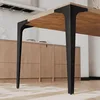 Option 1 AllForWood Spade 30-Inch Heavy-Duty Steel Table Legs
|
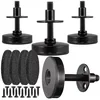 Option 2 NEWBYTEK Heavy-Duty Adjustable Leveling Feet, 1600 lb (4-Pack)
|
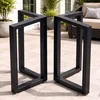 Option 3 TIEOU 28-Inch V-Shape Metal Table Legs, Set of 4
|
As an Amazon Associate we earn from qualifying purchases.
A standard 3-rod hairpin leg made from 10mm (3/8-inch) steel holds about 220 lbs per leg, or 880 lbs across a set of four — enough for most coffee and dining-height live edge slabs. Heavy-duty hairpin legs use thicker 12mm steel and can rate up to 500 lbs per leg. The number that matters is per-leg capacity, not the set total, since an off-center load (someone leaning on one corner) puts most of the weight on one or two legs at a time.
| Leg Type | Steel Thickness | Load per Leg | Load per Set of 4 |
|---|---|---|---|
| Classic 3-rod hairpin | 10mm (3/8 in.) | ~220 lbs | ~880 lbs |
| Heavy-duty hairpin | 12mm | up to 500 lbs | up to 2,000 lbs |
| Welded steel angle/box base | varies by gauge | 600 lbs+ | 2,400 lbs+ |
| Solid wood trestle base | N/A (dimensional) | load spread across base | highest, if built correctly |
These numbers are the leg manufacturer’s rating, not the slab’s. A thin or already-cracked live edge slab can fail before the legs do — see the slab-thickness section below before assuming leg capacity is the only limit, or run the numbers through our wood load capacity calculator if you plan to stack heavy items on top.
What Height Should Table Legs Be for a Live Edge Table?
Leg height is measured from the floor to the underside of the tabletop, not the finished table height — you have to subtract the slab’s thickness from your target height to get the leg length to order or cut.
| Table Type | Standard Finished Height | Typical Leg Height (2 in. slab) |
|---|---|---|
| Dining table | 28-30 in. | 26-28 in. |
| Console / entry table | 34-36 in. | 32-34 in. |
| Coffee table | 16-18 in. | 14-16 in. |
| Bar-height table | 40-42 in. | 38-40 in. |
For dining tables, measure your chairs first — you want 11-13 inches of clearance between the underside of the tabletop and the seat of the chair. A live edge slab that is thicker than 2 inches eats into that clearance fast, so order legs sized to your actual slab, not the table type average.
Choosing the Right Table Leg Style
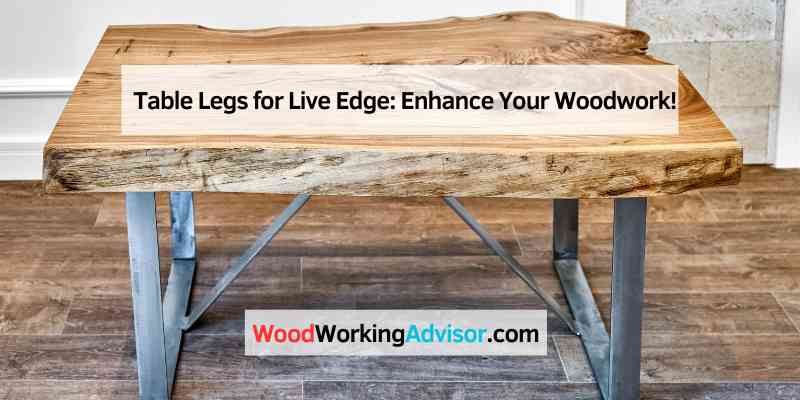
The three styles that show up most often on live edge tables are hairpin, welded steel base, and solid wood trestle. Each trades off differently on cost, load capacity, and how much it visually competes with the slab’s grain.
- Hairpin legs: lightest visual footprint, cheapest option, best for slabs under 40 inches wide at coffee or dining height.
- Welded steel base (angle iron or box frame): higher load rating, often includes cross-bracing, better for wide or long slabs and bar-height tables.
- Solid wood trestle base: matches or contrasts the slab’s wood tone, best load distribution for very long tables, but the most expensive to build or buy.
Metal legs (hairpin or welded steel) resist wobble better than wood over time because they do not shrink or expand with humidity the way the tabletop does — see where to place table legs for stability for the placement math once you have picked a style. For a real-world example of a trestle-style base on a live edge slab, see our breakdown of the Corson 89 Live Edge Table.
Do You Need a Center Support Leg?
Add a center leg or a center stretcher on any live edge table longer than 72 inches if you are using metal legs at the ends only — without it, the slab bows under its own weight over time, and the sag gets worse once you add place settings or a laptop’s worth of weight in the middle.
To find the center span: take your total table length, subtract 20 to 32 inches (for the two end-leg insets), then divide by two. On a 72-inch table with legs set 18 inches from each end, that leaves a 36-inch center span — short enough that most 2-inch-thick slabs will not need extra support. Past 84-90 inches, plan on a center leg or a steel stretcher bar running underneath, even with a thick slab.
Long tabletop spans are more likely to sag under their own weight over time than to break outright — which is why center-support spacing matters more than raw leg strength once a table passes about six feet.
Based on solid-wood tabletop span engineering discussion, WOODWEB
How to Attach Table Legs to a Live Edge Slab Without Cracking It
A live edge slab moves across its width as humidity changes through the year — often 1/8 to 1/4 inch on a 24-inch-wide slab between summer and winter. Screwing a rigid steel mounting plate straight into the wood in four fixed spots fights that movement, and something gives: usually a crack running out from one of the screw holes.
| Attachment Method | How It Works | Best For |
|---|---|---|
| Threaded inserts + bolts | Shallow pilot holes take threaded inserts; legs bolt on and off | Hairpin and most steel base plates |
| Slotted screw cleats | Screws pass through slots, not fixed holes, so the plate can slide slightly | Wide slabs (30 in.+) with more expected movement |
| Sliding dovetail | A dovetail-shaped cleat lets the top expand and contract along one axis | Thicker slabs (1.5 in.+), higher-end builds |
Whichever method you use, fasten one end (or the center) solidly and let the rest float in slots or a sliding joint — that is what actually prevents cracking, not the fastener type by itself.
How Thick Does a Live Edge Slab Need to Be to Support Table Legs?
Most hairpin and steel-base legs are rated for slabs 1.5 inches thick or more — thinner than that, and the mounting screws do not have enough wood depth to hold under lateral stress (someone leaning on the table, or a chair bumping a leg). For tables longer than 6 feet, 2 inches of thickness gives noticeably less flex at the center span than 1.5 inches, even with a center leg.
Matching Leg Finish to Slab and Decor
A leg finish is a category that visually anchors the tabletop to the room — matte black powder coat reads industrial and modern, raw or waxed steel reads more rustic, and a wood trestle in the same species as the top reads as one continuous piece of furniture. Whatever finish you pick on the legs, it should complement, not fight, the slab’s own finish — see our guide to woodworking oil finishes and, if the slab still has bark on the edge, how to debark live edge wood before you finish it.
| Decor Style | Recommended Leg Finish |
|---|---|
| Rustic / farmhouse | raw or wire-brushed steel, or a wood trestle in a matching species |
| Modern / minimalist | matte black or white powder-coated hairpin legs |
| Industrial | unfinished welded steel with visible weld seams |
Common Mistakes to Avoid
- Undersized legs on a wide slab: basic hairpin legs rated for 220 lbs each are fine at 28-30 inches wide, but a 45-inch slab needs a heavier steel base or a center leg, not just more hairpin legs.
- Fixed screws with no room for movement: four rigid screw points across a wide mounting plate crack the slab as it expands and contracts seasonally — use slotted holes or threaded inserts instead.
- Ignoring center support on long tables: anything over 72 inches with end-only metal legs will sag over time without a center leg or stretcher.
- Wrong height for the chairs you already own: measure seat height first; a leg height chosen from a generic chart can leave too little or too much knee clearance.
Frequently Asked Questions
What Types of Table Legs Suit Live Edge Tables?
Hairpin legs, welded steel bases, and solid wood trestle bases all work well. Hairpin legs suit slabs under 40 inches wide at coffee or dining height; steel bases handle wider or longer slabs; wood trestle bases give the best load distribution on tables over 6 feet long.
How Do I Choose the Right Table Leg Height?
Subtract your slab’s thickness from the finished height you want, since leg height is measured to the underside of the tabletop. Standard finished heights are 28-30 inches for dining, 16-18 inches for coffee tables, 34-36 inches for console tables, and 40-42 inches for bar-height tables.
Can I DIY Table Legs for a Live Edge Table?
Yes. Threaded inserts and bolts are the easiest DIY attachment method and only need shallow pilot holes, which avoids the risk of splitting a live edge slab. Measure leg height, mounting plate size, and screw depth against your specific slab’s thickness before drilling.
Are Metal Legs Better Than Wood Legs?
Metal legs (hairpin or welded steel) generally hold a higher rated load and do not shrink or swell with humidity the way a wood leg does, so they resist wobble better over time. Wood trestle bases still outperform metal on very long tables because the load is spread across a wider base rather than four point-contacts.
How Much Weight Can Hairpin Legs Hold?
A standard 3-rod, 10mm-steel hairpin leg holds about 220 lbs, or 880 lbs across a set of four. Heavy-duty hairpin legs made from thicker 12mm steel can rate up to 500 lbs per leg. Always check the per-leg rating, since uneven loads put most of the weight on one or two legs at a time.
Do I Need a Center Support Leg for a Long Live Edge Table?
Yes, on any table longer than 72 inches if you are using metal legs only at the ends. Find the center span by subtracting 20-32 inches from the total table length and dividing by two; past about 84-90 inches, add a center leg or steel stretcher even with a thick slab.
Conclusion
Match the leg to the slab, not the other way around: hairpin legs for slabs under 40 inches wide, a steel base or center leg past that, and an attachment method that leaves room for seasonal wood movement. Get those three right and the legs will outlast the finish. If this is your first slab build, our complete woodworking projects and tips guide covers the rest of the build from milling to finish.
Sponsored / affiliate links. As an Amazon Associate I earn from qualifying purchases. I may earn additional commission from eligible campaigns.