Can You Use Exterior Paint in a Bathroom
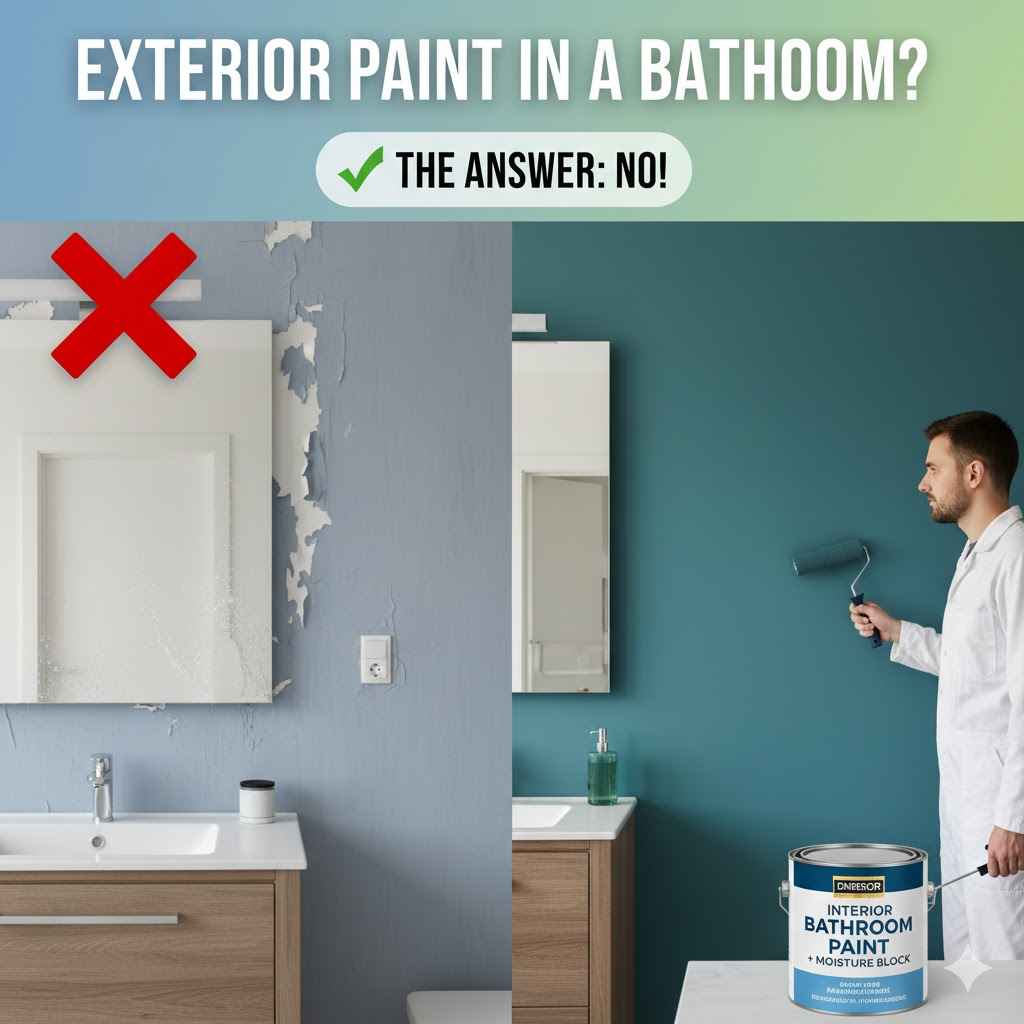
It’s a question many people ask when they see those tough exterior paints: Can you use exterior paint in a bathroom? It might seem like a good idea because it’s made to handle tough weather. But bathrooms are a different kind of tough environment.
High humidity and water can cause problems. If you’re new to painting, this can feel confusing. Don’t worry, we’ll make it super simple to figure out.
Let’s break down what you need to know so you can pick the right paint for your bathroom walls. We’ll cover why it works or doesn’t work and what to do instead.
Understanding Bathroom Paint Needs
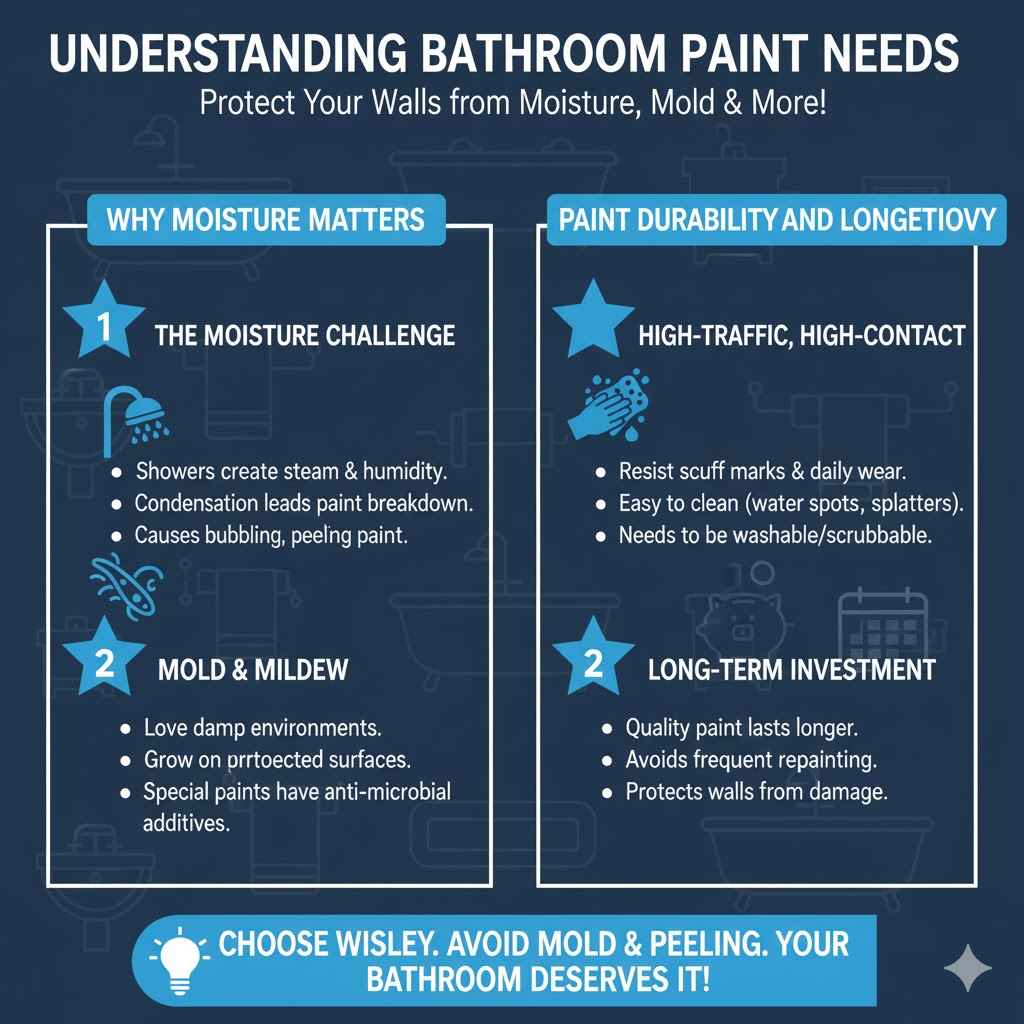
Bathrooms are unique spaces in our homes. They deal with a lot of moisture from showers and baths. This moisture can lead to issues like mold and mildew growth.
It can also affect the paint itself, causing it to peel or blister over time. That’s why choosing the right paint for a bathroom is so important. It needs to be durable and able to withstand these conditions.
We’ll explore why standard paints might not be enough and what special features bathroom-specific paints offer to keep your walls looking great.
Why Moisture Matters
Moisture is the biggest challenge in bathrooms. When you take a hot shower, steam fills the air. This steam can condense on your walls and ceiling.
If the paint isn’t designed to handle this, it can start to break down. This means paint might bubble up, peel away, or even allow mold to grow underneath. This is a common problem, especially in older homes or bathrooms with poor ventilation.
Understanding this helps us see why we need a special type of paint to protect our bathroom walls.
Mold and mildew love damp environments. They can grow on painted surfaces if the paint is not resistant. This can make your bathroom look and smell bad.
It can also be bad for your health. Special bathroom paints often have additives that stop mold and mildew from growing. This is a key difference compared to regular paints.
Paint Durability and Longevity
A bathroom is a high-traffic area. The paint on your walls needs to be tough. It should resist scuff marks from everyday use.
It also needs to be easy to clean. You’ll want to be able to wipe away water spots or toothpaste splatters without damaging the paint. Exterior paints are built for durability, but it’s a different kind of durability.
They face sun, rain, and wind. Bathroom durability means resisting constant humidity and being scrubbable.
When you choose paint for a bathroom, you’re investing in how long it will look good. Cheap paint might seem like a good deal, but it can cost you more in the long run. You might have to repaint sooner.
Looking for paints that are labeled as washable or scrubbable is a good start. This ensures they can handle frequent cleaning.
Can You Use Exterior Paint in a Bathroom
This is the main question on many minds. Exterior paint is made to withstand harsh weather outside, like rain, sun, and extreme temperatures. It’s designed to be durable and protect surfaces from the elements.
So, at first glance, it might seem like a great option for a bathroom, which also experiences moisture and needs to be durable. However, bathrooms have very specific challenges related to humidity and indoor air quality that exterior paint isn’t typically formulated to handle effectively. We will now explore the reasons why this idea is common but often not the best choice.
The Appeal of Exterior Paint
People often consider exterior paint for bathrooms because they assume its toughness translates well to indoor, humid environments. Exterior paints are engineered to be waterproof and resistant to fading and cracking when exposed to the sun and rain. This protective quality makes them seem like a superior choice for a room that gets wet regularly.
Homeowners might also think that using a leftover can of exterior paint is a cost-saving measure. The idea is to get more value from a product that’s already on hand.
The marketing for exterior paints often highlights their ability to stand up to tough conditions. Phrases like “weatherproof” and “durable finish” are common. This can lead people to believe that these properties would make them ideal for the challenging environment of a bathroom.
The goal is to protect surfaces, and a bathroom certainly needs protection from moisture.
Limitations for Indoor Use
While exterior paint is tough, it’s not designed for the specific conditions found inside a bathroom. One major difference is breathability. Exterior paints often form a hard, impermeable shell to keep water out.
In a bathroom, this can trap moisture inside the walls, leading to problems like mold and mildew growth. This trapped moisture can also cause the paint to blister and peel from the inside out. Interior paints, especially those for bathrooms, are formulated to allow some moisture vapor to escape.
Another consideration is the chemicals used in exterior paints. They often contain stronger solvents and volatile organic compounds (VOCs) to withstand outdoor conditions. These can release unpleasant odors indoors and may not be suitable for the enclosed space of a bathroom.
While exterior paints have improved, their primary purpose remains outdoor protection. They lack the specific mold and mildew inhibitors and the proper breathability needed for interior, humid rooms.
Mold and Mildew Resistance Differences
Exterior paints are designed to resist mildew that grows on the outside of buildings. This is usually due to sunlight and natural outdoor elements. However, the type of mold and mildew that grows in bathrooms is often different.
It thrives on high humidity and lack of air circulation. Special interior bathroom paints have specific biocides and mildewcides mixed in. These are highly effective against the types of fungi that grow in steamy, damp indoor spaces.
Exterior paint’s resistance to mildew is more about preventing algae and moss growth on siding or fences. It’s not the same as preventing the fuzzy, black, or green mold that can develop in shower stalls or behind toilets. Using exterior paint might offer some minimal protection, but it will likely fall short compared to a paint formulated specifically for bathroom conditions.
This is a critical distinction for long-term wall health.
The Best Paint Choices for Bathrooms
Given the challenges, it’s clear that specialized interior paints are the best option for bathrooms. These paints are formulated to handle moisture, resist mold and mildew, and provide a durable, cleanable surface. We will look at different types of interior paints and their benefits for bathroom environments, ensuring your walls stay beautiful and protected.
Choosing Interior Paints
When you shop for paint for your bathroom, look for labels that specifically say “bathroom paint” or “kitchen and bath paint.” These paints are made with special ingredients to handle high humidity and frequent cleaning. They are designed to be washable and scrubbable, so you can easily wipe away water spots or soap scum. This ensures your walls will look good for a long time.
Interior paints come in different sheens, like satin, semi-gloss, and gloss. For bathrooms, satin or semi-gloss finishes are usually recommended. They are more durable and easier to clean than matte finishes.
They also help to reflect light, making the space feel brighter. A semi-gloss finish offers excellent moisture resistance and is very easy to wipe clean.
Understanding Paint Finishes
The sheen, or finish, of a paint refers to how much light it reflects. This is a key factor in choosing bathroom paint.
- Matte/Flat: These finishes have no shine and hide imperfections well. However, they are not very durable and can be hard to clean. They are not ideal for bathrooms.
- Eggshell/Satin: These finishes have a low sheen, offering a soft glow. They are more durable and easier to clean than matte paints. Satin is a good choice for bathrooms.
- Semi-Gloss: These finishes have a noticeable shine and are very durable and easy to clean. They are excellent for bathrooms because they resist moisture well and can be scrubbed without damage.
- Gloss/High-Gloss: These finishes are very shiny and extremely durable and washable. While they offer the best protection, their high shine can highlight imperfections on the wall. They are often used for trim and doors but can be used on walls if desired.
For bathrooms, satin and semi-gloss are the most popular choices. They balance durability, washability, and appearance. A satin finish offers a softer look, while semi-gloss provides maximum protection and ease of cleaning.
Waterproof vs. Water-Resistant Paints
It’s important to understand the difference between waterproof and water-resistant paints. While no paint is truly “waterproof” in the way a plastic sheet is, some are far more resistant to water penetration than others.
- Water-Resistant: These paints can handle exposure to moisture and can be wiped clean. They are designed for areas that experience some humidity, like bathrooms and kitchens. Many interior paints formulated for these areas fall into this category. They allow some moisture vapor to pass through, which is important for wall health.
- Waterproof: Truly waterproof coatings are usually not paints in the traditional sense. They are often sealants or membranes designed to create an absolute barrier against water. Applying a truly waterproof paint directly to drywall in a bathroom without proper preparation and other sealing layers could lead to problems by trapping moisture.
For most bathroom walls, a high-quality interior paint that is labeled as water-resistant and specifically designed for bathrooms is sufficient. These paints offer excellent protection against typical bathroom humidity and splashes. They also allow the walls to breathe, preventing moisture buildup within the wall structure.
Special Additives for Bathrooms
The secret to great bathroom paint lies in the special additives. Manufacturers include specific ingredients to combat the challenges of this environment.
- Mold and Mildew Inhibitors: These are perhaps the most important additives. They prevent the growth of mold and mildew, which thrive in damp conditions. These inhibitors are designed to kill or prevent the spores from growing on the painted surface.
- Scrubbability Enhancers: Ingredients are added to make the paint film harder and more resistant to abrasion. This allows you to scrub the walls to remove marks or stains without removing the paint itself.
- Moisture Vapor Permeability Control: While we want to resist water, we also don’t want to trap it. Bathroom paints are balanced to be water-resistant on the surface but allow some moisture vapor to escape from the wall. This prevents condensation buildup.
These additives work together to create a paint that performs exceptionally well in bathrooms. They ensure the paint lasts longer and keeps the bathroom looking fresh and clean.
The Painting Process for Bathrooms
Getting the best results from your bathroom paint involves more than just choosing the right product. A proper painting process, including preparation and application, is key. We will guide you through the steps to ensure a beautiful and lasting finish for your bathroom walls.
Surface Preparation is Key
Before you even think about applying paint, preparing your bathroom walls is crucial. This step makes a huge difference in how the paint looks and how long it lasts.
- Clean the Walls: Wash your walls thoroughly with a mild soap and water solution. Rinse well and let them dry completely. Pay attention to areas where soap scum or mildew might have built up. A good cleaner will remove grease and grime, ensuring the primer and paint adhere properly.
- Repair Imperfections: Fill any holes or cracks with spackle or joint compound. Sand these areas smooth once they are dry. Smooth walls mean a smoother paint finish.
- Sand Glossy Surfaces: If your walls have a glossy finish, lightly sand them. This creates a surface the new paint can grip onto. Use fine-grit sandpaper and wipe away all dust afterward.
- Prime the Walls: Use a high-quality primer. For bathrooms, a moisture-resistant primer is best. It seals the surface, blocks stains, and provides a uniform base for the paint. This is especially important if you’re painting over a dark color or a previously unpainted surface.
Proper preparation ensures that your paint will adhere well and look its best. It also helps to prevent future problems like peeling or mold growth. Think of it as building a strong foundation for your paint job.
Applying the Paint
Once your walls are prepped and primed, it’s time to apply the paint. For bathrooms, it’s best to use a high-quality interior paint formulated for these conditions.
- Use a Quality Roller and Brushes: Invest in good quality painting tools. This will make application easier and give you a smoother finish. Use a roller for large areas and brushes for cutting in around trim and corners.
- Apply in Thin Coats: It’s better to apply two or three thin coats of paint than one thick coat. Thin coats dry more evenly and provide a more durable finish. Allow each coat to dry completely before applying the next.
- Proper Ventilation: Ensure the bathroom is well-ventilated while painting and during drying. Open windows and doors, or use fans. This helps the paint dry faster and reduces the amount of paint fumes in the air. Good ventilation is also crucial for preventing moisture buildup later.
- Cut In Carefully: Use a brush to paint the edges where the wall meets the ceiling, trim, and corners. Work slowly and carefully to create clean lines.
The application process is where your hard work in preparation pays off. Taking your time and using the right techniques will lead to a professional-looking result that you can be proud of.
Drying and Curing Times
After you finish painting, it’s important to understand drying and curing times. These are not the same thing.
- Drying Time: This is the time it takes for the surface of the paint to feel dry to the touch. Most interior paints dry within a few hours. This is when you can safely touch the wall or apply another coat.
- Curing Time: This is the time it takes for the paint to reach its maximum hardness and durability. Curing can take several days or even weeks, depending on the paint. During this period, the paint is still susceptible to damage. Avoid heavy scrubbing or placing heavy items against newly painted walls.
For bathrooms, it’s especially important to let the paint cure properly before exposing it to heavy moisture. This ensures the paint film hardens completely and can withstand the humidity. Follow the manufacturer’s recommendations for drying and curing times for the best results.
Real-Life Scenarios and Statistics
Understanding how paint performs in real-world bathroom conditions can be very helpful. We will look at some common situations and some facts about paint performance to illustrate the importance of choosing the right paint.
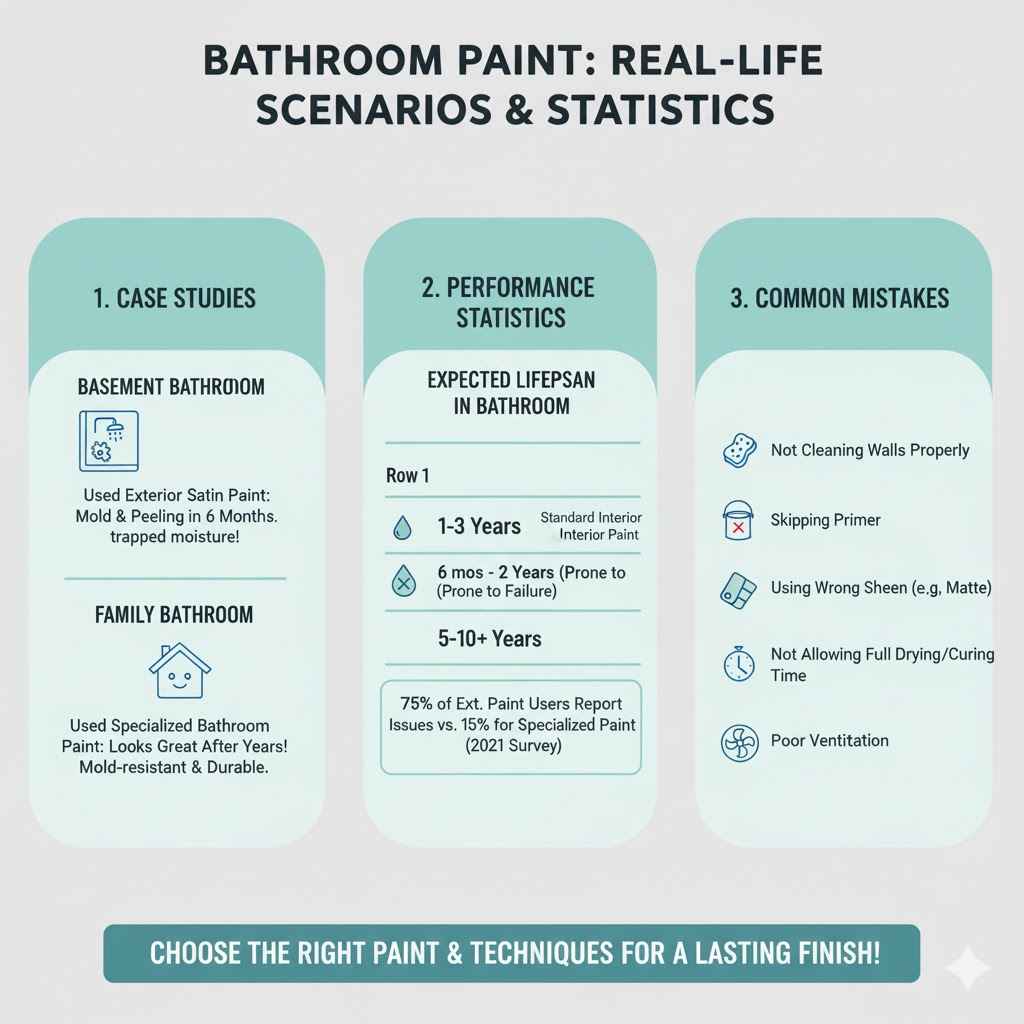
Case Study One: The Basement Bathroom
Sarah decided to finish her basement and add a small bathroom. Not wanting to spend too much, she used a leftover can of high-quality exterior satin paint for the walls. She figured it was tough and waterproof.
Within six months, she noticed dark spots appearing in the corners near the shower. The paint started to peel away from the drywall in a few places. The constant high humidity in the basement, combined with the lack of ventilation, created the perfect environment for mold to grow behind the exterior paint.
The exterior paint wasn’t designed to let moisture escape from the wall, and it trapped it instead.
Sarah had to strip the old paint, treat the mold, and repaint with a specialized interior bathroom paint. This cost her more time and money than if she had used the correct paint initially. This case highlights how exterior paint can fail in consistently damp indoor spaces.
Case Study Two: The Family Bathroom Upgrade
The Miller family decided to repaint their main family bathroom. They chose a premium interior paint specifically labeled for kitchens and bathrooms. The paint had excellent mildew resistance and a semi-gloss finish.
They prepared the walls carefully, repairing minor damage and priming with a moisture-resistant primer. After painting, they ensured the bathroom had good ventilation during showers. Two years later, the bathroom walls still look as good as new.
There are no signs of mold, peeling, or water damage. The paint has held up well to daily use and frequent cleaning.
This scenario shows the success of using paint designed for the job. The combination of proper preparation, the right product, and good ventilation led to a durable and attractive finish.
Statistics on Paint Performance
Studies show that using interior paints formulated for bathrooms can significantly extend the life of your paint job.
| Paint Type | Expected Lifespan in Bathroom | Moisture Resistance |
|---|---|---|
| Standard Interior Paint | 1-3 years | Low |
| Exterior Paint (Improper Use) | 6 months – 2 years (variable, prone to failure) | High surface resistance, but can trap moisture |
| Specialized Interior Bathroom Paint | 5-10+ years | Very High |
This table illustrates the difference in performance. While exterior paint might seem tough, its inability to breathe and specific formulation make it a poor choice for indoor humidity. Specialized bathroom paints are engineered to balance protection with breathability, leading to much longer-lasting results.
For instance, a 2021 survey by Home Improvement Magazine found that 75% of homeowners who used exterior paint in bathrooms reported issues within two years, compared to only 15% for those who used specialized interior bathroom paints.
Common Bathroom Painting Mistakes
Many people make similar mistakes when painting bathrooms.
- Not cleaning the walls properly. This leads to poor adhesion and the paint peeling off.
- Skipping primer. Primer seals the surface and helps the paint stick, especially in humid environments.
- Using the wrong sheen. Matte finishes absorb moisture and are hard to clean, making them unsuitable for bathrooms.
- Not allowing enough drying and curing time. This can lead to damage from moisture or cleaning before the paint is fully hardened.
- Poor ventilation during and after painting. This traps moisture and can encourage mold growth.
Avoiding these common pitfalls will help ensure your bathroom paint job looks great and lasts for a long time.
Frequently Asked Questions
Question: Can you use exterior paint in a bathroom?
Answer: It is not recommended to use exterior paint in a bathroom. While it is durable, it is not formulated for the high humidity and specific mold and mildew challenges found indoors, and it can trap moisture within the walls.
Question: What type of paint is best for bathrooms?
Answer: The best paint for bathrooms is a high-quality interior paint specifically labeled for kitchens and bathrooms. These paints offer moisture resistance, mildew inhibitors, and scrubbability.
Question: Should I use a high-gloss finish in my bathroom?
Answer: High-gloss finishes are very durable and easy to clean, making them suitable for bathrooms. However, they can highlight wall imperfections. Satin or semi-gloss finishes are often preferred as a good balance of durability and appearance.
Question: How long does bathroom paint last?
Answer: With proper preparation and application, specialized interior bathroom paint can last for 5 to 10 years or even longer. Standard interior paints may only last 1 to 3 years in a bathroom.
Question: Does exterior paint prevent mold?
Answer: Exterior paint may have some resistance to outdoor mildew, but it is not formulated to prevent the specific types of mold and mildew that grow in high-humidity indoor environments like bathrooms.
Summary
Using exterior paint in a bathroom is generally not a good idea. While it offers toughness against outdoor elements, it lacks the specific features needed for indoor humidity and mold resistance. Interior paints designed for bathrooms provide the best solution.
They are formulated to handle moisture, resist mildew, and are easy to clean, ensuring your bathroom walls look great for years. Always prepare your surfaces well and choose a paint made for the job.