Can You Use Masonry Paint on Woods?
Wondering if you can use that same paint you used on your brick house on your wooden fence or furniture? It’s a common question for many DIYers, especially when you have leftover paint or are looking for a tough finish. Figuring out paint types can feel a bit tricky when you’re just starting out.
Don’t worry, though! We’re going to break down Can You Use Masonry Paint on Wood? in a super simple way, step by step. Let’s get your project looking great!
Understanding Masonry Paint
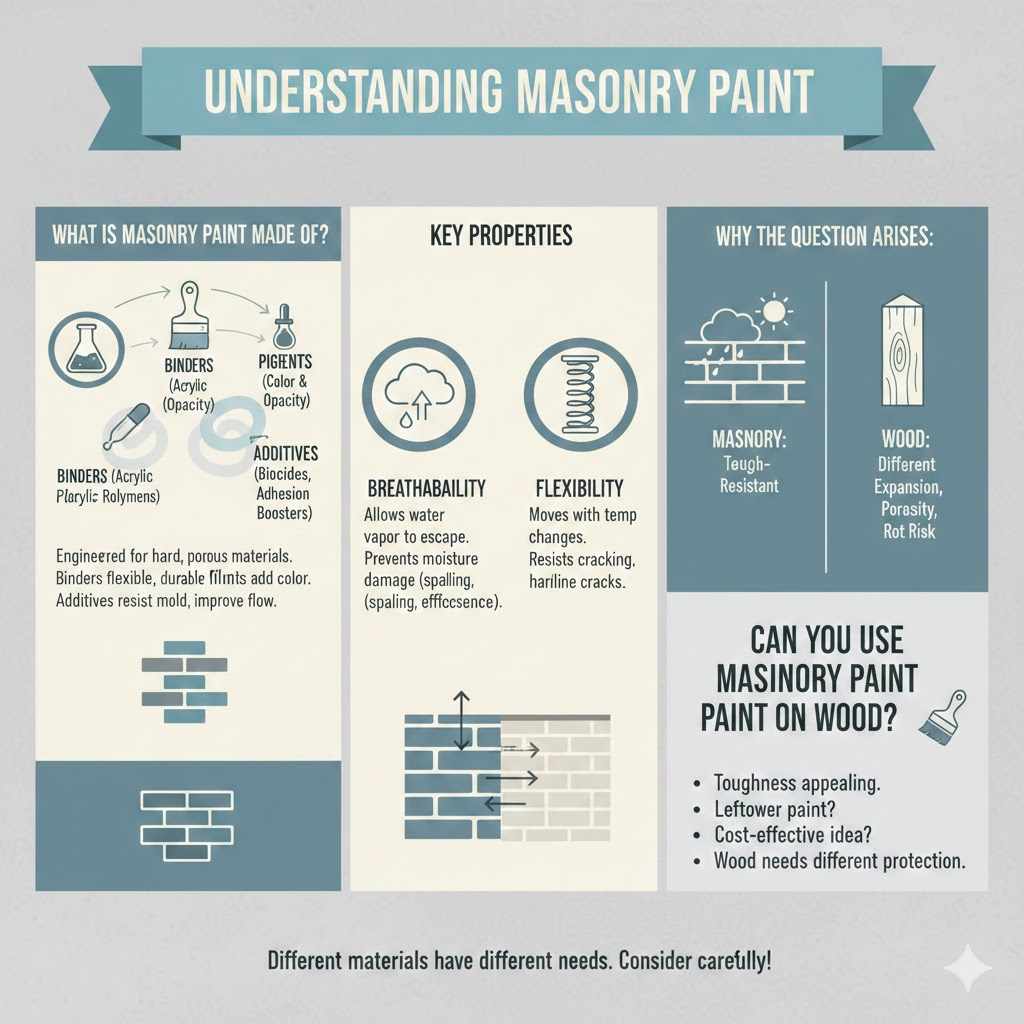
Masonry paint is specifically designed for surfaces like brick, stucco, concrete, and stone. It’s built to handle the tough conditions these materials face, like moisture, weather changes, and UV rays. Because masonry surfaces are often porous and alkaline, this paint needs to be breathable, flexible, and durable.
It usually has a thicker consistency than regular wall paint, helping it fill tiny cracks and pores for a solid finish. This special formulation is what makes people wonder if it can be used on other materials, like wood.
What is Masonry Paint Made Of?
Masonry paint is a special type of coating engineered for hard, porous building materials. Its primary ingredients include binders, pigments, and additives. The binders, often acrylic polymers, create a flexible yet durable film when the paint dries.
These binders are crucial for adhering to rough surfaces and resisting cracking caused by temperature fluctuations common with brick and stone. Pigments provide the color and opacity, just like in other paints.
Additives play a big role too. They can include things like biocides to prevent mold and mildew growth, which is important for exterior masonry exposed to dampness. Other additives might improve adhesion, flow, and leveling, ensuring the paint spreads evenly and sticks well.
The overall composition makes it tough enough to withstand wind, rain, and sun without peeling or fading quickly. This durability is what makes it attractive for projects beyond traditional masonry.
Key Properties of Masonry Paint
One of the most important properties of masonry paint is its breathability. This means it allows water vapor to escape from the surface it’s applied to. For materials like brick and concrete, this is vital because trapping moisture can lead to damage, such as spalling or efflorescence (white powdery deposits).
If moisture is trapped, it can freeze in winter and expand, cracking the material. Masonry paint’s breathable nature prevents this buildup of internal moisture.
Another key property is its flexibility. Masonry surfaces can expand and contract with temperature changes. A flexible paint can move with these changes without cracking.
This is especially true for acrylic-based masonry paints. They retain their elasticity over time, ensuring a long-lasting finish. This also helps them bridge hairline cracks that might form in the masonry, offering a smooth, uniform appearance.
Why the Question Arises
The main reason people ask Can You Use Masonry Paint on Wood? is because masonry paint is known for its toughness and weather resistance. Wood, especially exterior wood like fences, decks, or sheds, also needs protection from the elements. It needs to withstand rain, sun, and temperature swings.
Masonry paint’s advertised durability might seem like a perfect fit for these challenges. You might have leftover masonry paint from a previous job, or you might be looking for a cost-effective solution for your wooden structures.
However, wood has different properties than masonry. Wood expands and contracts differently, and it can rot if not properly protected from moisture. It also has a different surface texture and porosity.
Because of these differences, using a paint designed for one material on another often requires careful consideration. The goal is to ensure the paint will perform as expected and not cause problems for the wood over time.
Is Masonry Paint Suitable for Wood?
This is the core of the question: can this tough paint actually work on wood? The answer isn’t a simple yes or no, but rather, it depends on several factors and preparation steps. While masonry paint offers excellent durability and weatherproofing, wood is a living material that reacts differently to coatings than concrete or brick.
Understanding these differences is key to deciding if it’s the right choice for your project and how to apply it properly.
Comparing Wood and Masonry Surfaces
Masonry surfaces, like brick and concrete, are dense, often alkaline, and porous. They don’t expand and contract significantly with temperature changes compared to wood. Their primary needs are protection from moisture penetration and resistance to UV damage and general weathering.
Masonry paint is formulated to adhere well to these rough, porous surfaces and to “breathe” out any trapped moisture.
Wood, on the other hand, is organic and fibrous. It is significantly more prone to expansion and contraction with changes in humidity and temperature. It’s also susceptible to rot, insect damage, and UV degradation.
Wood is also more porous in a different way, absorbing and releasing moisture more readily. Therefore, a coating for wood needs to be flexible enough to handle its movement and provide a barrier against moisture while still allowing some degree of breathability. Some masonry paints are too rigid and can crack when wood moves.
The Role of Paint Formulation
Masonry paints are often formulated with binders that provide a hard, durable finish. This is great for concrete but can be too stiff for wood. When wood expands and contracts, a rigid paint film can crack, leading to premature failure of the coating.
Furthermore, the breathability of masonry paint, while good for masonry, might not be enough to prevent moisture issues in wood if not applied correctly or if the wood is already damp.
However, many modern masonry paints are acrylic-based, which means they have inherent flexibility. This flexibility can sometimes be sufficient for wood, especially if the wood isn’t experiencing extreme movement. The adhesion of masonry paint to wood can also be a concern.
While it might stick initially, long-term adhesion can be affected by wood’s natural oils and its movement. Proper priming is crucial here.
When It Might Work
You might have success using masonry paint on wood in certain situations. If you’re painting a very stable, interior wooden surface that doesn’t experience much movement or moisture exposure, it could work. For exterior applications, it’s best suited for situations where the wood is well-prepared, properly primed, and the masonry paint has good flexibility.
For instance, a sturdy wooden shed or a fence that isn’t directly exposed to constant dampness might be candidates.
If the masonry paint is a flexible, water-based acrylic formula, it has a better chance of working on wood than an old-school oil-based or rigid formula. The key is to treat the wood as you would before applying any exterior paint: proper cleaning, sanding, and priming. This preparation will help the masonry paint adhere better and perform more reliably, giving you a durable finish that can withstand the elements.
Preparation Is Key for Using Masonry Paint on Wood
Regardless of whether you’re using masonry paint or a dedicated wood paint, preparation is the most critical step. For masonry paint on wood, this step becomes even more important because you’re trying to make a less-than-ideal pairing work successfully. Skipping any part of the preparation process significantly increases the risk of the paint peeling, cracking, or not adhering properly, leading to a finish that fails much sooner than you’d hope.
Cleaning and Surface Preparation
Before any paint goes on, the wood surface must be thoroughly cleaned. This means removing all dirt, grime, mold, mildew, and any loose or flaking old paint. A stiff brush and a mild detergent or a dedicated wood cleaner can be used.
For stubborn mold or mildew, a solution of bleach and water (one part bleach to three parts water) can be effective, but ensure good ventilation and wear protective gear. After cleaning, rinse the wood thoroughly with clean water and allow it to dry completely.
After cleaning, inspect the wood for any damage. Fill any cracks, holes, or gouges with a suitable wood filler. Once the filler is dry, sand the entire surface.
Sanding creates a slightly rougher texture, which helps the primer and paint adhere better. Use medium-grit sandpaper (around 100-150 grit) for general sanding and finer grit (around 220 grit) for a smoother finish, especially on the filler. After sanding, wipe down the surface with a damp cloth or tack cloth to remove all dust.
Priming Wood for Masonry Paint
This is where the crucial step of priming comes in. You cannot just paint masonry paint directly onto wood. Wood needs a primer that will seal the surface, provide a good base for adhesion, and block any potential stains or tannins from bleeding through the topcoat.
For applying masonry paint on wood, a high-quality exterior wood primer is essential. Look for a primer specifically designed for exterior use and one that offers good adhesion and sealing properties.
Some primers are designed to be flexible, which is a bonus when painting over wood. They create a uniform surface that helps the topcoat adhere evenly. Ensure the primer is compatible with your chosen masonry paint.
Water-based primers usually work well with water-based acrylic masonry paints. Apply one or two coats of primer, allowing each coat to dry completely according to the manufacturer’s instructions. This extra layer of protection and adhesion is what will make the difference in how well the masonry paint performs on wood.
Testing the Paint on a Small Area
Before you commit to painting your entire project with masonry paint, it’s a very good idea to do a test patch. Find an inconspicuous area of the wood, or use a scrap piece of the same type of wood. Apply the masonry paint according to your planned method (after proper cleaning, sanding, and priming).
Observe how it dries and cures.
Check for any signs of cracking, peeling, or poor adhesion after a few days. You can also test its flexibility by gently bending a small piece of the painted wood (if possible) or by carefully scoring the painted surface with a utility knife to see how it responds. This test will give you a realistic preview of how the masonry paint will perform on your specific wood project and whether it’s a suitable choice.
It’s much better to discover a problem on a small test area than on your entire fence or deck.
Applying Masonry Paint to Wood
Once you’ve prepped your wood and tested the paint, it’s time for application. The way you apply the paint is just as important as the preparation for achieving a good, long-lasting finish, especially when using a product not primarily designed for wood. Following the right techniques will help ensure the paint adheres well and provides the desired protective qualities.
Application Methods
Masonry paint can typically be applied by brush, roller, or sprayer. For wood surfaces, a brush can be good for getting into any grain patterns or textured areas. A roller is efficient for larger, flatter surfaces like fences or sheds.
A sprayer can provide a very smooth, even finish, but it requires careful masking and is often best suited for skilled DIYers.
Regardless of the method, apply the paint in thin, even coats. Avoid applying it too thickly, as this can lead to sagging, cracking, and drying issues, particularly on wood which has different absorption rates than masonry. For exterior applications, ensure you apply it when the weather is favorable – not too hot, not too cold, and with no rain expected for at least 24-48 hours to allow proper drying and curing.
Number of Coats
Most painting projects require at least two coats for optimal coverage, durability, and color depth. Masonry paint on wood is no exception. The first coat, after primer, will likely be absorbed unevenly by the wood, providing a base layer of protection.
The second coat is what builds up the color and provides the primary protective barrier.
Allow adequate drying time between coats, as recommended by the paint manufacturer. Rushing this process can trap moisture or solvents, leading to adhesion problems and a weaker finish. Some very porous wood may even benefit from a third coat, especially for high-traffic areas or surfaces exposed to harsh weather.
Always check the paint can for specific instructions on the number of coats and drying times.
Drying and Curing Time
It’s important to distinguish between drying time and curing time. Drying time is when the paint feels dry to the touch, meaning the solvents or water have evaporated from the surface. Curing time is when the paint film reaches its maximum hardness and durability.
This can take several days or even weeks, depending on the paint type and environmental conditions.
Masonry paint, like most paints, needs time to cure fully. During the curing period, the paint film continues to harden and bond with the surface. It’s best to avoid heavy use or harsh cleaning of the painted surface until it has fully cured.
For exterior wood, this means protecting it from heavy rain or impacts for as long as possible. Be patient during this phase to ensure the paint lasts.
Potential Challenges and Solutions
While it’s possible to use masonry paint on wood, there are definite challenges. Being aware of these potential issues and knowing how to address them will save you time and frustration down the line. It helps to think of this as a way to give your wood extra tough protection, but with a few extra care steps.
Flexibility Issues and Cracking
As mentioned, wood expands and contracts. If the masonry paint you’re using is not flexible enough, this movement can cause the paint film to crack. This is a common failure point.
To combat this, always opt for a flexible, water-based acrylic masonry paint. If you’re unsure, check the product specifications or consult the manufacturer.
Another solution is to use a flexible primer specifically designed for exterior wood. Some primers can offer added flexibility to the entire coating system. Also, avoid painting in extreme temperatures.
Applying paint when it’s too hot or too cold can affect its flexibility and adhesion as it dries and cures. Painting during moderate temperatures allows the paint to flow and set properly, minimizing stress on the film.
Adhesion Problems
Masonry paint is designed to stick to porous, rough surfaces like concrete. Wood can be smoother, have natural oils, or be treated with preservatives that might interfere with adhesion. This is why thorough cleaning and proper priming are non-negotiable.
A good quality exterior wood primer is your best defense against adhesion failure.
If you’re painting over old paint, ensure it’s sound and well-adhered. If the old paint is peeling or blistering, it must be removed entirely before you start. For very smooth or glossy wood surfaces, a light sanding to create a profile for the primer to grip is also beneficial.
If you suspect the wood has a lot of natural oils, look for a stain-blocking primer that can seal those in.
Moisture Management
Wood can absorb and release moisture. While some masonry paints are breathable, they might not be designed to handle the moisture dynamics of wood as effectively as a dedicated wood coating. Trapped moisture can lead to rot, mildew, and paint failure.
Ensure the wood is completely dry before painting.
For exterior projects, ensure good ventilation around the wood to allow it to dry out after rain. Also, check for any ground contact or areas where water might pool, as these conditions are prime for rot and paint failure. If the wood is in a perpetually damp environment, you might need to consider more specialized sealants or coatings that are specifically designed for high-moisture wood applications.
Durability on Wood
While masonry paint is durable, its durability on wood might be less predictable than on its intended surface. The constant movement and potential for moisture in wood can lead to wear and tear over time. This means you might find yourself needing to repaint sooner than you would if you had used a paint specifically formulated for wood.
To maximize durability, apply multiple thin coats rather than one thick one. This builds a stronger, more resilient finish. Also, perform regular maintenance checks on the painted wood.
Clean off dirt and debris and touch up any minor chips or cracks as soon as they appear. This proactive approach will extend the life of the paint job significantly, no matter what type of paint you use.
Alternatives to Masonry Paint for Wood
Given the considerations, it’s good to know about products specifically made for wood. These often provide the best performance and longevity for wooden surfaces. They are formulated to work with wood’s natural properties.
Exterior Wood Paints
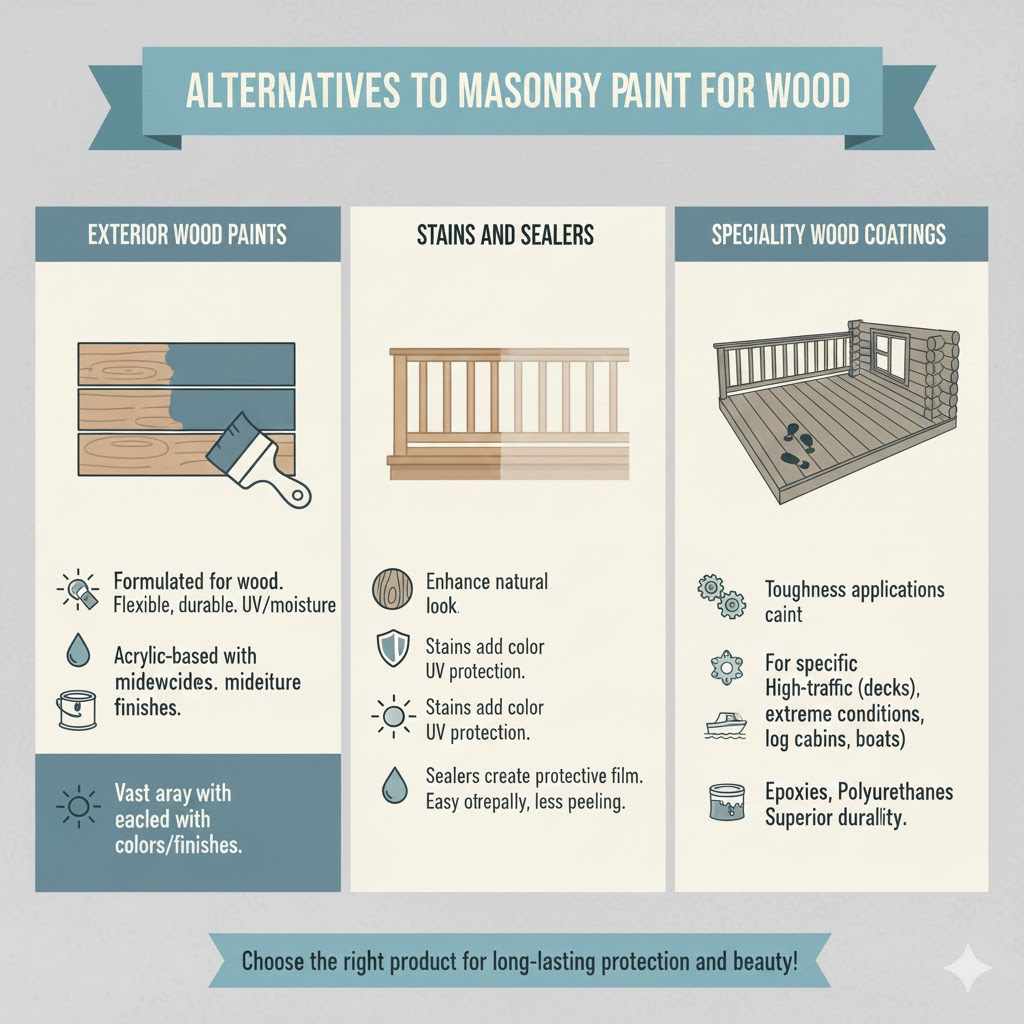
These are formulated to be flexible, durable, and resistant to UV radiation, moisture, and temperature changes, all while adhering well to wood. They are designed to allow wood to breathe to some extent, preventing moisture buildup. Exterior wood paints come in various finishes, from matte to high gloss, and are available in a vast array of colors.
They are typically acrylic-based, but are specifically engineered for wood. Many also contain mildewcides to prevent mold growth, which is common on outdoor wood structures. Choosing an exterior wood paint ensures you are using a product that will perform reliably and protect your wooden elements for years to come.
Stains and Sealers
For a more natural wood look, stains and sealers are excellent options. Stains penetrate the wood to add color while still allowing the wood grain to show through. They offer UV protection and some water repellency.
Sealers, on the other hand, create a protective film on the surface, offering more robust protection against moisture and wear.
Many products combine staining and sealing properties. These are particularly good for decks, fences, and furniture where you want the wood to look its best while being well-protected. They are generally easier to reapply than paints and are less prone to chipping or peeling.
For wooden surfaces where you want to showcase the natural beauty of the wood, stains and sealers are often the preferred choice over paint.
Specialty Wood Coatings
There are also specialty coatings available for specific wood applications. For example, some coatings are designed for high-traffic areas like decks, offering superior abrasion resistance. Others are formulated for log cabins or wooden boats, providing extreme protection against moisture and the elements.
These might include epoxies, polyurethanes, or specialized oil-based finishes. They often require specific application techniques and surface preparation, but they can offer unparalleled durability and protection for challenging environments. If your wooden project is subject to extreme conditions or wear, exploring these specialty options could be the most effective solution.
Frequently Asked Questions
Question: Can I use masonry paint on interior wooden trim?
Answer: Yes, you likely can use masonry paint on interior wooden trim, especially if it’s a flexible, water-based acrylic formula. Interior trim experiences less movement than exterior wood and less exposure to harsh weather. Ensure the trim is clean, dry, and properly primed before applying the masonry paint.
Test a small area first to be sure.
Question: Will masonry paint peel off wood?
Answer: Masonry paint can potentially peel off wood if the wood is not properly prepared, primed, or if the paint is not flexible enough to accommodate the wood’s movement. Skipping steps like cleaning, sanding, and priming significantly increases the risk of peeling. Using a flexible primer and a flexible masonry paint is key to preventing this.
Question: Is masonry paint good for wooden garden furniture?
Answer: It can be, but it’s not ideal. Masonry paint is tough, which is good for furniture outdoors. However, wood expands and contracts with weather, and some masonry paints can crack.
Make sure you thoroughly clean, sand, and prime the furniture first. Opt for a flexible, water-based acrylic masonry paint and test it on a hidden spot.
Question: How long does masonry paint last on wood?
Answer: The longevity of masonry paint on wood can vary greatly. If applied correctly with thorough preparation, it might last several years. However, it may not last as long as a paint specifically designed for wood, which is formulated to handle wood’s natural expansion and contraction better.
Expect to possibly repaint sooner than with dedicated wood coatings.
Question: Should I use masonry paint on a wooden fence?
Answer: While possible, it’s generally better to use paint specifically designed for exterior wood on a fence. Fences are exposed to significant weather changes, and wood’s movement can cause less flexible masonry paints to crack. If you do use it, ensure the fence is very clean, well-sanded, and primed with a high-quality exterior wood primer.
Choose a flexible acrylic masonry paint.
Final Thoughts
So, can you use masonry paint on wood? Yes, but with careful preparation and consideration. Always clean, sand, and prime your wood thoroughly.
Opt for a flexible, water-based acrylic masonry paint. Test it in a small, hidden area first. While it can offer durable protection, remember that specialized wood coatings are often the better choice for longevity and performance.