Can You Paint Over Wood Filler? (Wood Filler vs Putty)
Wood filler takes paint well once it fully cures — usually 2 to 6 hours for shallow repairs but up to 36 hours for deep fills — while true wood putty stays flexible and generally won’t hold paint the same way. Painting over filler before it cures causes blotchy, peeling patches, especially with water-based fillers like DAP Plastic Wood-X. This guide, part of our wood painting and prep hub, covers cure and sanding time, why putty behaves differently, which primer works best, and how to cover dark filler under light or white paint.
Is Wood Putty the Same as Wood Filler? (Why It Won’t Paint the Same)
Best Wood Filler Pick
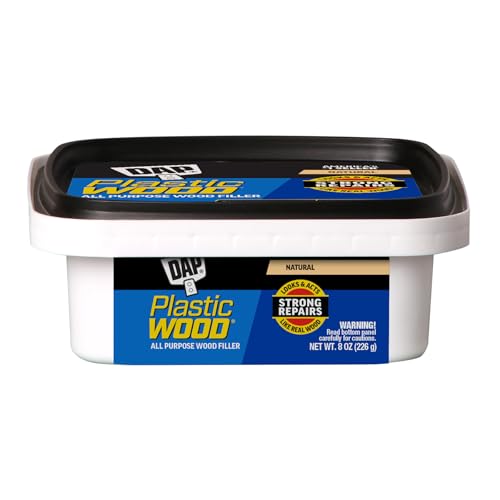
DAP Plastic Wood-X Wood Filler with DryDex (16 oz) – $9.93
This is the exact DAP filler this guide references for cure-and-paint timing — latex-based, so it sands smooth and takes latex paint once it changes from pink to natural.
- Best for: nail holes, gouges, and cracks in unfinished or bare wood before painting
- Why we picked it: matches the cure-time guidance in this guide and takes latex paint with no separate stain-blocking primer needed
- Main drawback: deep fills over 1/4 inch need the full 36-hour cure, not the fast 2-6 hour shallow-repair window
Compare more wood filler and prep options
 Option 1 Gorilla All Purpose Wood Filler Kit with Putty Knife – $11.97
|
 Option 2 Rust-Oleum Universal Bonding Primer Spray – $9.88
|
 Option 3 Paintable White Wood Putty (Stainable, Crack-Resistant) – $9.99
|
As an Amazon Associate we earn from qualifying purchases.
Wood filler is a compound that hardens completely as it dries, becoming a rigid solid you can sand, drill, and shape like real wood — that’s what makes it paintable. Wood putty stays flexible after it’s applied and never fully hardens, so it keeps moving with the wood as humidity changes, and most putty formulas won’t sand smooth or hold a paint film. If your search led you here asking whether a specific putty can be painted, check the label first — only putty marked “paintable” or “sandable” behaves like filler.
| Property | Wood Filler | Wood Putty |
|---|---|---|
| Hardens fully? | Yes — sands like wood | No — stays flexible |
| Best used on | Bare, unfinished wood | Finished/painted wood, small nail holes |
| Paintable? | Yes, once fully cured | Usually no, unless labeled "paintable" |
| Best for | Gouges, cracks, holes before finishing | Quick touch-ups on trim already painted |
📊 DAP Plastic Wood-X cures in 2–6 hours for shallow repairs but needs up to 36 hours for fills deeper than 1/4 inch, and it can be painted with latex immediately after sanding the cured repair (12 hours if using oil-based paint). — Source: DAP Plastic Wood-X Technical Data Sheet
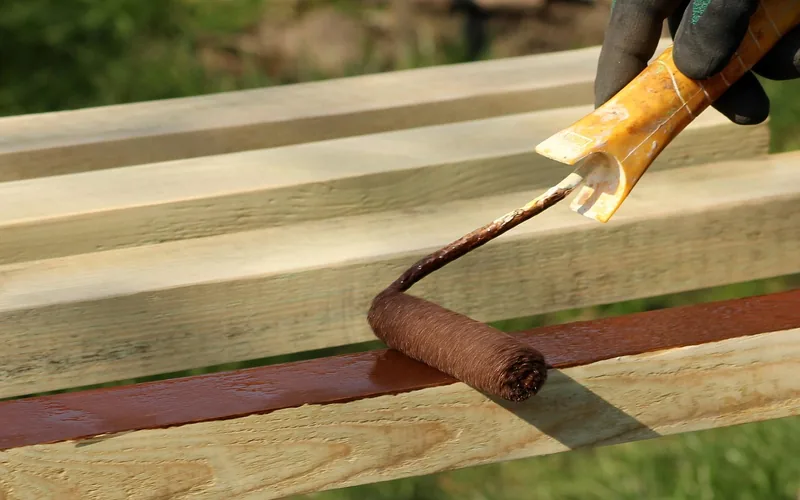
How to Prepare Wood Filler for Painting
Before painting over wood filler, follow these steps in order:
- Confirm full cure: wait for the color-change indicator (pink to natural on DAP fillers) or the manufacturer’s stated cure time — not just dry to the touch. For gaps wider than a nail hole, see our guide to using wood filler for large gaps first.
- Sand it flush: use 120–220 grit sandpaper to level the filler with the surrounding wood, feathering the edges so no ridge shows through the paint.
- Wipe away dust: a damp cloth or tack cloth removes sanding dust that would otherwise trap under the primer.
- Prime the patch: a bonding or stain-blocking primer keeps the filler from soaking up extra paint and looking blotchy or dull against the surrounding finish.
- Paint in thin coats: two to three light coats bond better and show fewer texture differences than one heavy coat.
Paintable Wood Fillers
Not every wood filler is built for paint. Brands like DAP Plastic Wood-X and 3M Bondo Wood Filler are formulated to sand smooth and accept both latex and oil-based paint once fully cured — check the label for "paintable" or "stainable" before you buy, since a handful of budget fillers are meant only for staining, not painting (we cover one budget option in our Harbor Freight wood filler review).
Bondo Wood Filler works on a different timeline than DAP — it’s a two-part epoxy-style filler that sets in as little as 15 minutes and can be painted in around 25 minutes once fully hardened, according to 3M’s official Bondo Wood Filler directions. That fast cure makes it a better choice than DAP when you can’t wait a full day for a deep repair to harden.
What Paint Covers White or Dark Wood Filler on Doors?
A tinted or dark-drying filler can telegraph through light paint as a visible shadow, especially on white trim and doors. A stain-blocking bonding primer — not the paint itself — is what actually hides the filler color; skipping primer and relying on two coats of white paint alone usually still shows a faint patch.
For doors specifically: sand the cured filler flush, wipe off dust, spot-prime just the patch (feathering the primer edge so it doesn’t leave its own ridge), then paint the whole door face in thin coats so the primed spot doesn’t sheen differently from the rest of the panel.
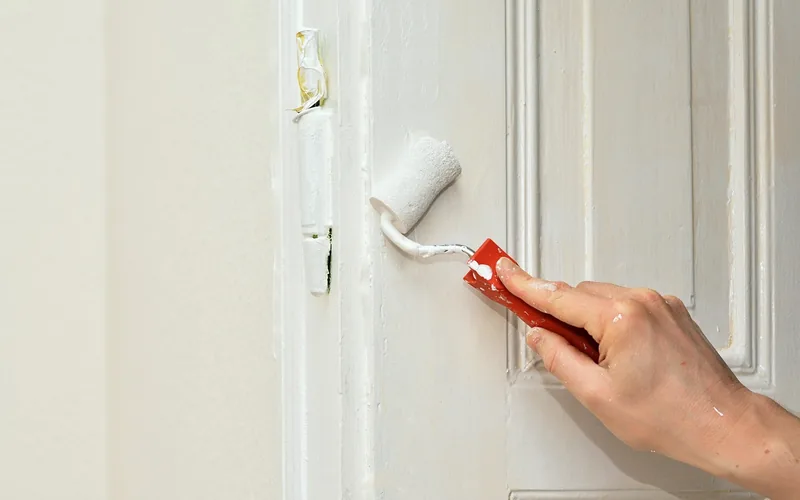
Best Practices for Painting Over Wood Filler
- Choose the right paint type — latex is the most common choice over water-based filler, while oil-based paint pairs better with oil-based or epoxy fillers like Bondo.
- Apply two to three thin coats rather than one thick coat, letting each dry fully before the next.
- Use a high-quality brush or foam roller for even coverage over the sanded patch.
Dealing with Cracks and Chips Before Painting
For cracks or chipped wood, pack the filler in slightly proud of the surface (it shrinks a little as it cures), let it reach full cure per the label, then sand it flush before priming and painting as described above. If the damage includes soft, rotted wood rather than just a clean crack, filler alone won’t hold — see our wood rot repair with epoxy guide for a consolidant-first approach, and our notes on painting over wood with masonry-style paint if you’re covering an exterior patch.
“The biggest mistake we see is painting a filler patch the same day it’s applied — it looks dry on the surface long before it’s actually cured underneath, and paint over an uncured patch cracks or peels within a season.”
Frequently Asked Questions About Painting Over Wood Filler
What wood filler can be painted?
Most wood fillers labeled paintable or sandable can be painted, including DAP Plastic Wood-X and 3M Bondo Wood Filler. Prime first for an even finish, since raw filler soaks up paint differently than surrounding wood.
How long should wood filler dry before painting?
Shallow repairs with DAP Plastic Wood-X cure in 2 to 6 hours; fills deeper than 1/4 inch need up to 36 hours. Two-part fillers like Bondo Wood Filler cure much faster, around 25 minutes. Always check your specific product’s label rather than assuming 24 hours across every brand.
Is there a wood putty you can paint over?
Yes, but only if it’s specifically labeled paintable or sandable. Standard wood putty stays flexible and never fully hardens, so ordinary paint won’t bond to it well or may crack as the putty shifts with humidity.
What paint will cover white wood filler on doors?
A stain-blocking bonding primer applied to the sanded patch first, followed by two thin coats of the door’s regular paint, hides tinted or white filler most reliably — paint alone over unprimed filler often still shows a faint patch.
What do you fill holes in wood with before painting?
A paintable wood filler such as DAP Plastic Wood-X or 3M Bondo Wood Filler is the standard choice for holes in bare wood before painting. Fill, let it fully cure, sand flush, then prime before the topcoat.
Are all wood fillers paintable?
No. Some fillers are made only for staining and don’t take paint evenly. Check the product label for "paintable" before buying if painting is the end goal, especially with colored or wood-tone fillers.
Conclusion
Most wood fillers can be painted once they’re fully cured — not just dry to the touch — while true wood putty generally can’t unless the label specifically says paintable. Sand the patch flush, prime it to block the filler color, and apply thin coats of a paint compatible with your filler type for a finish that won’t show the repair.
For more on prepping bare wood before you paint, see our guide to removing sanding dust before painting and our white wood primer picks.
Sponsored / affiliate links. As an Amazon Associate I earn from qualifying purchases. I may earn additional commission from eligible campaigns.