Colors of Wood Stain for Decks: A Comprehensive Guide to Choosing the Perfect Hue
Hey there! If you’re anything like me, you’ve probably stood in the aisle of a home improvement store, staring at rows of wood stain cans, feeling a mix of excitement and overwhelm. Choosing the right color for your deck is no small task—it’s like picking the perfect outfit for your outdoor space. The color you choose can transform your deck into a cozy retreat, a vibrant gathering spot, or a sleek, modern extension of your home. I’ve spent countless hours researching, testing, and applying wood stains to decks, and I’m here to share everything I’ve learned about the colors of wood stain for decks. Whether you’re a DIY newbie or a seasoned woodworker, this guide will help you pick a hue that’s both beautiful and practical. Let’s dive in!
Why Deck Stain Color Matters
When I first started working on my deck, I didn’t realize how much the stain color would affect the overall vibe of my backyard. It’s not just about aesthetics—though that’s a huge part! The right stain color can protect your wood, enhance your home’s curb appeal, and even influence how hot your deck feels underfoot. I’ve learned that a good stain does double duty: it shields the wood from sun, rain, and foot traffic while making your outdoor space look amazing.
The color you pick also sets the mood. A rich, dark brown can make your deck feel warm and inviting, perfect for cozy evenings. A cool gray might give it a modern, beachy feel. And a bold red? That’s for folks who want their deck to be the star of the show. I’ve tried a few colors over the years, and each one taught me something new about how stain interacts with wood and the environment.
Understanding Wood Stain Opacity
Before we get into specific colors, let’s talk about opacity. This was a game-changer for me when I first started staining. Opacity is how much of the wood’s natural grain shows through the stain. There are four main types, and each one affects the look and protection level differently. Here’s what I’ve learned:
- Clear: This is basically a sealant with no color. It protects the wood but lets all the natural grain and color shine through. I used a clear stain on my cedar deck once, and it looked gorgeous, but it didn’t hide any imperfections.
- Transparent: These have a slight tint but still show the wood’s grain. They’re great for newer decks where you want the wood’s beauty to stand out. I’ve used transparent stains in natural tones to highlight the reddish hues of my redwood deck.
- Semi-Transparent: These add more color while letting some grain show through. They’re a good middle ground for decks with a bit of wear. I tried a semi-transparent gray on an older deck, and it hid minor flaws while keeping the wood’s texture.
- Solid: These are like paint, covering the grain completely. They’re perfect for older, weathered decks that need extra protection. I used a solid brown stain on a friend’s deck, and it made the whole thing look brand new.
Here’s a quick table to break it down:
| Opacity Type | Color Intensity | Grain Visibility | Best For |
|---|---|---|---|
| Clear | None | Full | New, high-quality wood |
| Transparent | Light | High | New or slightly weathered wood |
| Semi-Transparent | Medium | Moderate | Moderately weathered wood |
| Solid | Full | None | Old, damaged, or weathered wood |
Choosing the right opacity depends on your deck’s condition and the look you’re going for. I always test a small patch first to see how the stain looks on my wood.
Popular Wood Stain Colors for Decks
Now, let’s get to the fun part—colors! Over the years, I’ve experimented with a bunch of shades, and I’ve seen how they can change the whole feel of a deck. Here are the most popular colors I’ve come across, along with my thoughts on each.
Brown Tones: Warm and Timeless
Brown is the go-to for most decks, and I get why. It’s versatile, natural, and blends beautifully with outdoor surroundings. I’ve used brown stains on everything from pine to cedar, and they always feel like home. Here are some shades I love:
- Cedar: This light, sunny brown has a touch of red and yellow. I used it on a pressure-treated pine deck, and it gave a warm, rustic vibe that paired perfectly with my backyard’s greenery.
- Mahogany: A rich, deep brown with red undertones. I tried this on a friend’s hardwood deck, and it screamed elegance. It’s great for a sophisticated look but needs regular maintenance to keep its depth.
- Dark Walnut: This is almost black, perfect for a modern, urban feel. I used it on a city deck, and it made the space feel sleek and stylish, though it did get hot in direct sun.
- Acorn: A medium brown with warm undertones. I found this shade forgiving—it hides dirt well and works with both traditional and contemporary homes.
Browns are my favorite for their ability to complement almost any outdoor setting. They’re also forgiving if your deck sees a lot of foot traffic or pet paws.
Gray Tones: Cool and Modern
Gray stains have become super popular, especially for coastal or minimalist homes. I was skeptical at first, but after staining my neighbor’s deck with a light gray, I was sold. Here’s what I’ve learned about gray stains:
- Driftwood Gray: This light, airy shade gives a weathered, beachy look. I used it on a deck near the coast, and it neutralized the wood’s yellow tones perfectly. It’s a great choice if you want a neutral, modern vibe.
- Stonehedge Gray: A medium gray that’s versatile and subtle. I tried this on a cedar deck, and it blended beautifully with the surrounding stone patio.
- Mountain Gray: A darker gray with a hint of blue. I used this on a shaded deck, and it gave a cool, calming effect. It’s great for hiding mildew in damp areas.
Gray stains are awesome for decks in sunny areas because they don’t absorb as much heat as darker colors. They also fade gracefully, which I appreciate since I don’t love frequent touch-ups.
Blue Tones: Unique and Coastal
Blue stains are less common but so striking. I was hesitant to try blue at first, but when I stained a small deck with a muted blue, it transformed the space into a coastal oasis. Here are my favorite blue shades:
- Blue Granite: A muted, almost gray-blue. I used this on a beach house deck, and it felt calm and soothing, like the ocean on a cloudy day.
- Cool Breeze: A brighter blue with a Mediterranean vibe. I tried this on a small deck, and it added so much energy. It pairs well with white furniture for a classic coastal look.
- Midnight Blue: A deep, bold blue. I used this on a modern deck with glass railings, and it was a showstopper. It’s not for everyone, but it’s perfect if you want something unique.
Blue stains work best with lighter woods like cedar or pine. They’re a bold choice, but I love how they stand out in a sea of brown decks.
Red Tones: Bold and Vibrant
Red stains are for those who want their deck to pop. I used a red stain on a deck for a client who loved hosting parties, and it set the perfect lively mood. Here are some reds I’ve worked with:
- Spiced Red: A rich, warm red with Italian flair. I used this on a pressure-treated deck, and it made the space feel festive and inviting.
- Redwood: A natural red that enhances the wood’s inherent tones. I tried this on a redwood deck, and it deepened the color without overpowering it.
- Fiery Red: A bright, orange-leaning red. I used this on a small deck section, and it was a bold focal point. It’s great for modern homes with a playful vibe.
Red stains are high-maintenance because they fade faster in sunlight, but they’re worth it if you want a deck that demands attention.
Green Tones: Earthy and Harmonious
Green stains are less common but so refreshing. I used a green stain on a deck surrounded by a lush lawn, and it blended seamlessly with the yard. Here’s what I’ve tried:
- Sage Green: A soft, gray-green that feels calming. I used this on a cedar deck, and it gave a natural, earthy vibe.
- Woodland Green: A rich, brown-toned green. I tried this on an older deck, and it hid imperfections while tying the deck to the forest nearby.
- Avocado Green: A vibrant green with yellow undertones. I used this on a small deck, and it felt fun and lively, perfect for a family space.
Green stains pair well with earthy tones like browns and yellows. They’re a great choice if you want your deck to feel like an extension of nature.
Factors to Consider When Choosing a Deck Stain Color
Picking a color isn’t just about what looks pretty in the can. I’ve learned the hard way that a few factors can make or break your choice. Here’s what I always consider:
Your Deck’s Wood Type
The type of wood matters a lot. I’ve worked with pressure-treated pine, cedar, redwood, and hardwoods like ipe, and each takes stain differently. Softer woods like pine soak up more stain, making colors look darker. Hardwoods like ipe are denser, so the color stays lighter. I always test stains on a scrap piece of the same wood to avoid surprises.
Climate and Sun Exposure
Where you live affects your stain choice. I learned this when I used a dark brown stain on a sunny deck, and it got scorching hot! Light colors like gray or cedar reflect heat, keeping the deck cooler. If your deck is shaded, darker colors like mahogany or dark walnut work well. In wet climates, I choose stains with mildew resistance, especially for greens or grays.
Home Style and Surroundings
Your home’s style should guide your color choice. My traditional home looks great with warm browns, while my friend’s modern beach house rocks a driftwood gray. I also consider the deck’s surroundings—browns blend with greenery, while blues and grays pop near water or stone.
Maintenance Needs
Some colors hide dirt better than others. I’ve found that medium browns and grays are great for high-traffic decks because they mask scuffs and stains. Bright colors like red or blue show wear faster, so I plan for more frequent touch-ups with those.
Opacity and Deck Condition
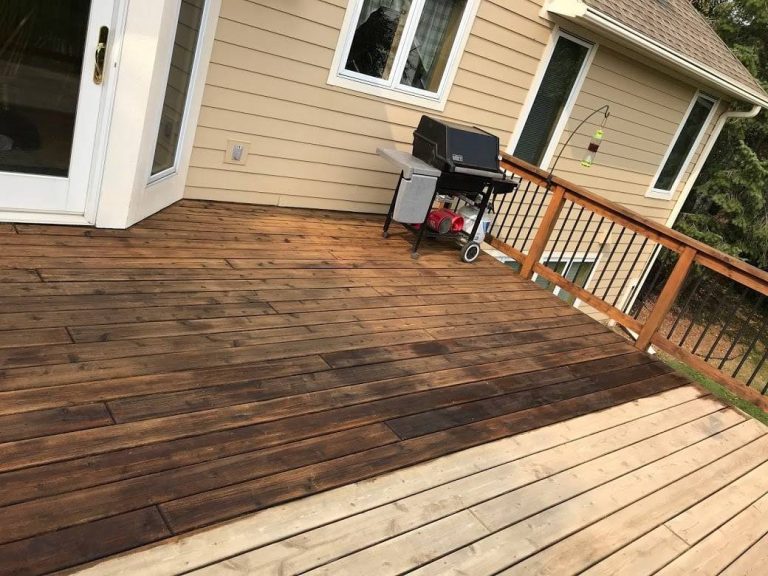
New decks look amazing with transparent or semi-transparent stains that show off the grain. Older decks, like the one I refinished last summer, need solid stains to hide weathering. I always check the deck’s condition before picking a color.
How to Test and Apply Deck Stain
I can’t stress this enough: test your stain! I made the mistake of skipping this once and ended up with a deck that looked too red. Here’s my process:
- Test on Scrap Wood: I grab a piece of the same wood as my deck and apply a small amount of stain. I check it in different lighting—sunny, shady, morning, evening—to see how it looks.
- Prep the Deck: I clean the deck with a deck cleaner and a stiff brush, then rinse it with a power washer. For older decks, I use a brightener to open up the wood’s surface.
- Apply Stain: I work in small sections, brushing along the grain to avoid drips. I use a roller for large areas and a brush for edges. I apply stain on cool, cloudy days to prevent it from drying too fast.
- Let It Dry: I wait at least 24 hours before walking on the deck. Most stains have built-in sealants, so I don’t need an extra coat.
Testing and proper application make a huge difference. I’ve had decks look completely different in sunlight versus shade, so don’t skip this step!
Trending Deck Stain Colors for 2025
I keep an eye on trends, and 2025 is all about natural and neutral tones. Here are the colors I’m seeing everywhere:
- Natural Tones: Transparent stains that let the wood’s grain shine are super popular. I used a natural cedar stain on my deck this year, and it feels timeless.
- Gray Tones: Driftwood and stonehedge grays are still trending, especially for coastal or modern homes. I love how they give a clean, minimalist look.
- Dark Browns: Shades like dark walnut and ebony are hot for urban decks. I tried a dark brown on a city deck, and it added such a sleek vibe.
- Muted Blues: Subtle blues like blue granite are gaining traction for their calming effect. I’m planning to try one on my next project.
These trends are a great starting point, but I always choose a color that feels right for my space.
Tips for Maintaining Your Stained Deck
Staining your deck is just the beginning. I’ve learned that maintenance is key to keeping it looking great. Here’s what I do:
- Clean Regularly: I sweep my deck weekly and wash it with a mild cleaner every six months to prevent dirt buildup.
- Reapply Stain: Most stains need a refresh every 2-3 years. I check for fading or peeling and reapply as needed.
- Protect from Elements: I use furniture pads under heavy items to prevent scratches and cover my deck during harsh winters.
- Inspect for Damage: I walk my deck every spring to check for splinters or cracks and fix them before they worsen.
A little care goes a long way. My deck still looks vibrant years after staining because I stay on top of maintenance.
Conclusion
Choosing the perfect wood stain color for your deck is like picking the right frame for a beautiful painting—it enhances everything. I’ve spent years experimenting with colors, from warm browns to cool grays to bold reds, and each project has taught me something new. Whether you want a natural look that lets your wood’s grain shine or a solid color that hides imperfections, there’s a stain out there for you. Take your time, test your colors, and consider your deck’s wood, climate, and style. I promise the effort is worth it when you step onto a deck that feels like an extension of your home. So grab a can of stain, a brush, and let’s make your deck the talk of the neighborhood!
FAQs
What is the best wood stain color for a new deck?
For a new deck, I recommend a transparent or semi-transparent stain in a natural tone like cedar or acorn. These let the wood’s grain show through while adding protection. Test the color on a scrap piece first to ensure it matches your vision.
How do I choose a deck stain color that matches my home?
Look at your home’s exterior colors—siding, trim, or roof. I like to pick a stain that complements or matches the trim for a cohesive look. For example, a gray stain pairs well with a modern home, while brown suits traditional styles.
Do darker stains protect better than lighter ones?
Not necessarily. Protection comes from the stain’s quality and opacity, not just color. Solid stains offer the most coverage, but I’ve found that high-quality semi-transparent stains can protect just as well while showing the wood’s grain.
How often should I restain my deck?
I restain my deck every 2-3 years, depending on the stain type and weather. Transparent stains may need more frequent touch-ups, while solid stains last longer. Check for fading or peeling to know when it’s time.
Can I use bold colors like blue or red on my deck?
Absolutely! I’ve used blue and red stains for clients who wanted a unique look. Just know they may fade faster in sunlight, so choose a high-quality stain and plan for regular maintenance.