Steel Deck Framing: Real Costs, Pros, and Cons vs. Wood
Steel deck framing typically runs $20–$40 per square foot installed, versus roughly $15–$25 for a pressure-treated wood deck — about 50-75% more upfront. The gap has narrowed in recent years as pressure-treated lumber prices climbed, but wood still costs less to install in most markets. Steel earns that premium back over time through rot and pest immunity and a longer structural lifespan with less maintenance.
What Steel Deck Framing Actually Is
Rated For Structural Steel-To-Steel Connections
 |
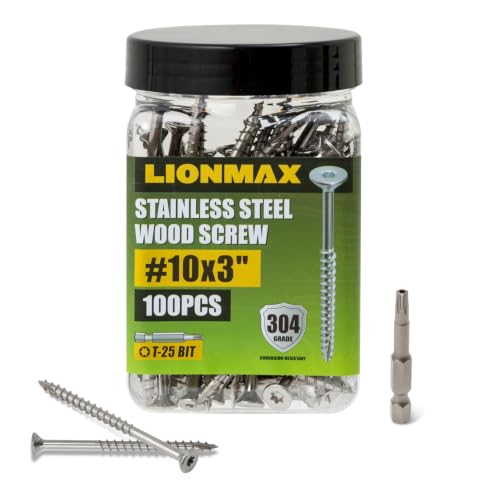
Hicarer 12-24 x 1-1/2″ Hex Washer Head Screws, 400-Pack – $27.99 Heavier-duty than a standard sheet-metal screw — built for connecting structural steel framing members, not just thin sheet.
|
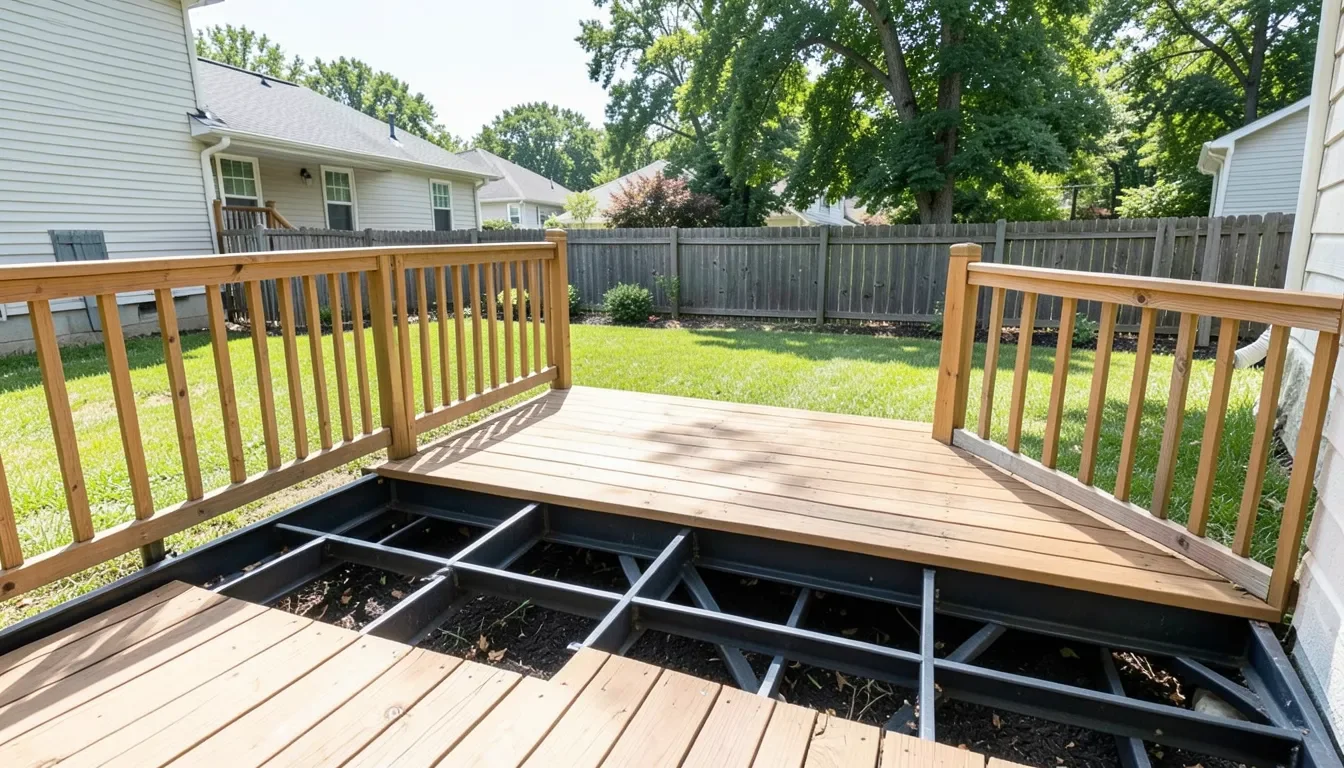
A steel-framed deck replaces the wood posts, beams, and joists of a conventional deck with galvanized or powder-coated steel components — typically steel posts bolted to concrete footings, steel beams, and either steel or engineered-wood joists, with the visible decking surface (wood, composite, or PVC) attached on top exactly as it would be on a wood frame. The steel only replaces the hidden structural skeleton; from the top, a steel-framed deck looks identical to any other deck.
Real Cost Breakdown
| Cost Factor | Steel Framing | Pressure-Treated Wood Framing |
|---|---|---|
| Typical installed cost | $20 – $40 per sq ft | $15 – $25 per sq ft |
| 300 sq ft deck, framing + basic build | Roughly $6,000 – $12,000 | Roughly $4,500 – $7,500 |
| Ongoing maintenance | Minimal — no re-sealing or rot repair needed | Periodic sealing/staining and occasional rot or pest repair |
| Typical structural lifespan | ~30+ years with no major structural work | 15–25 years before joist/beam replacement is often needed |
These figures are current 2026 market ranges and vary by region, steel gauge/coating, and site complexity — get an actual quote for your project rather than treating any published range as a guarantee. The honest takeaway: steel isn’t a way to save money upfront. It’s a way to spend more now to avoid structural maintenance and replacement costs later, which only pays off if you’re planning to own the structure long enough to see that payback, or you’re building somewhere wood’s real weaknesses (standing water, high termite pressure, coastal salt air) would shorten a wood frame’s life significantly.
Pros And Cons
- Pro — won’t rot or attract termites: the single biggest real advantage over wood in problem environments.
- Pro — dimensionally stable: steel doesn’t swell, shrink, warp, or cup with moisture changes the way wood can.
- Pro — strength-to-weight: steel beams can span farther between posts than an equivalent wood beam, which can mean fewer footings on some layouts.
- Con — higher upfront material and labor cost: not every crew has steel-framing experience, and that expertise gap can add to labor pricing.
- Con — harder to field-modify: adding a bracket or adjusting a beam position later requires metal-cutting tools and often welding or specialized fasteners, not just a saw and screws.
- Con — galvanic corrosion risk at connections: mixing incompatible metals or fasteners at a joint can cause accelerated corrosion right at the connection point — use fasteners rated for the specific metals involved.
Key Components Of A Steel-Framed Deck
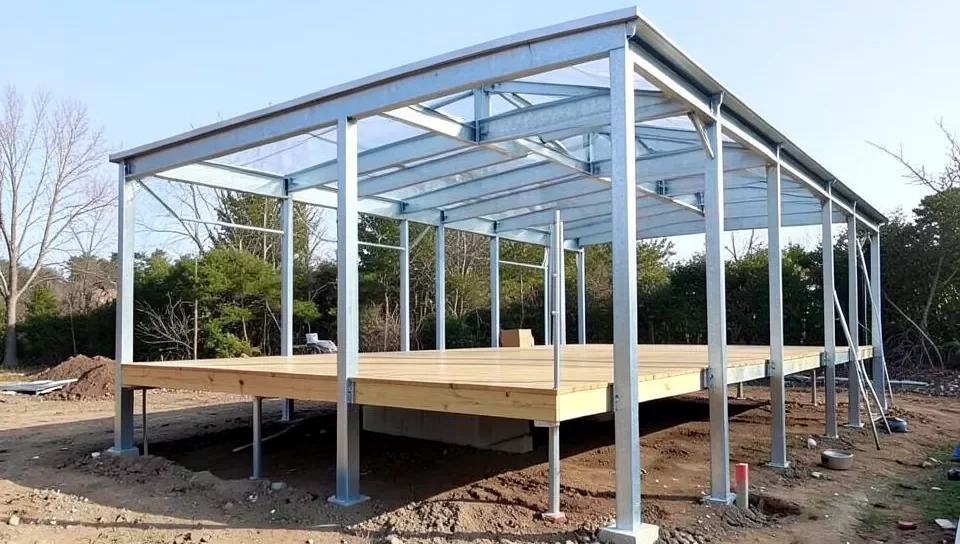
- Steel posts: usually square or round hollow steel section (HSS) tube, bolted to a concrete footing via a welded or bolted base plate rather than set directly in concrete the way a wood post sometimes is.
- Steel beams: typically C-channel or box-section steel spanning between posts, sized by an engineer’s load calculation rather than a prescriptive table.
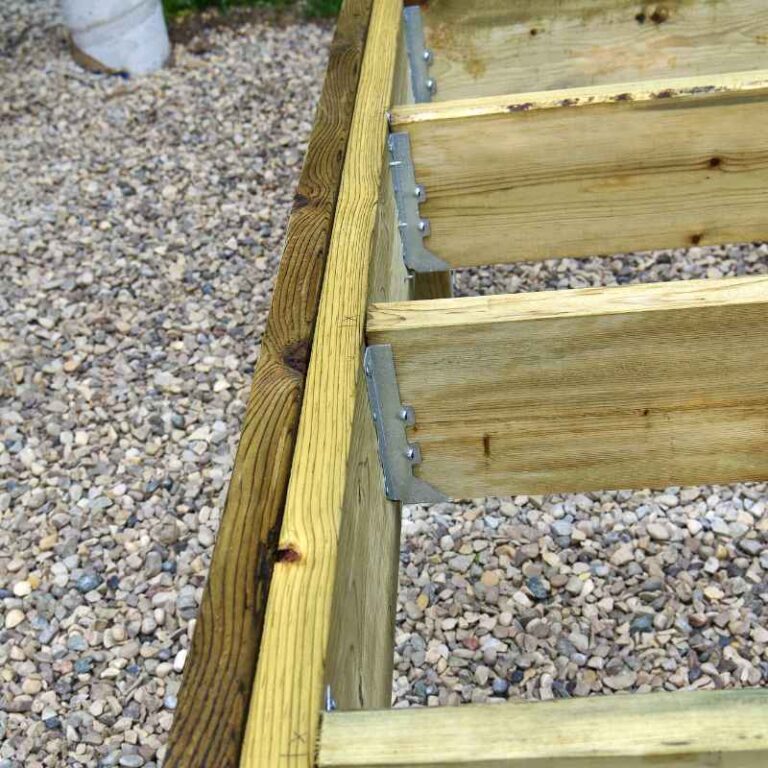
- Joists: either steel C-joists (see our metal deck joists guide below) or, on many hybrid builds, engineered-wood I-joists sitting on the steel beam — steel framing doesn’t require steel joists throughout, and mixing steel structure with wood joists is a common, code-accepted approach.
- Ledger connection: attaching a steel-framed deck to an existing wood-framed house still requires a properly flashed, structurally rated ledger connection — this detail doesn’t go away just because the deck’s own frame is steel.
- Decking surface: wood, composite, or PVC boards attach to the frame with standard deck-board fasteners regardless of what the frame underneath is made of.
Building Codes And Permits
A steel-framed deck still needs a permit and inspection in virtually every jurisdiction, the same as a wood deck — steel framing doesn’t exempt the project from local deck code. What changes is that plan review often requires engineered drawings specific to the steel components (post sizing, beam load tables, connection details) rather than the prescriptive span tables that let a simple wood deck sometimes skip a full engineering review. Budget for that engineering cost as part of the project, and confirm with your local building department before assuming a steel frame will be a faster permit process — it’s frequently the opposite, precisely because the reviewer can’t just check a standard span table.
Sustainability: The One Real Environmental Edge
Steel’s genuine environmental advantage is recyclability: structural steel is one of the most recycled materials by volume in North America, and most new structural steel already contains a significant percentage of recycled content, meaning an old steel frame at end-of-life gets remelted rather than landfilled. Wood framing has its own real sustainability case when sourced from certified sustainably-managed forests (FSC-certified lumber), and pressure-treated wood’s chemical treatment does complicate end-of-life disposal compared to untreated wood or steel. Neither material has a clean sweep on sustainability — steel wins on recyclability and lifespan, wood wins on embodied carbon from a lower-energy manufacturing process, and the honest answer depends on which factor matters more for a given project.
Is Steel Deck Framing Worth It For A Typical Home?
For most standard residential decks in a moderate climate with no major rot or termite history, pressure-treated wood framing remains the more practical choice on cost alone, and it’s what most local contractors already know how to build and permit efficiently. Steel earns its premium specifically in flood zones, high-termite regions, coastal areas with heavy salt exposure, or commercial/multi-family projects where a longer maintenance-free lifespan offsets the higher install cost over the building’s ownership period. If you’re weighing the framing material specifically at the joist level rather than the whole structure, see our metal deck joists guide for how steel C-joists are sized and fastened.
Frequently Asked Questions
Is steel deck framing more expensive than wood?
Yes, typically 50-75% more upfront: roughly $20-$40 per square foot installed for steel versus $15-$25 for pressure-treated wood. Steel can offset that gap over time through lower maintenance and a longer structural lifespan.
Does a steel-framed deck still need a permit?
Yes — steel framing doesn’t exempt a deck from local permitting and inspection. Plan review often actually takes longer, since steel components typically need engineered drawings rather than a standard prescriptive span table.
When does steel deck framing actually make sense?
It earns its higher cost in flood-prone areas, high-termite regions, coastal locations with salt exposure, or projects where a longer maintenance-free structural lifespan matters more than upfront cost. For a typical home in a moderate climate, pressure-treated wood usually remains the more practical choice.
Conclusion
Steel deck framing is a real, code-recognized structural option that costs more upfront ($20-$40/sq ft installed vs. $15-$25 for pressure-treated wood) in exchange for rot/pest immunity and a longer maintenance-free lifespan. It’s the right call in problem environments where wood’s real weaknesses would otherwise shorten the structure’s life — not a universal upgrade for every deck.
Sponsored / affiliate links. As an Amazon Associate I earn from qualifying purchases. I may earn additional commission from eligible campaigns.