Wood Deck Price Per Square Foot: 2026 Cost Breakdown by Material
Wood deck price per square foot typically runs $25 to $50 installed for pressure-treated pine or cedar, with composite and PVC decking often landing higher, $35 to $70+ per square foot. That range is wide because a per-square-foot decking price isn’t one number pulled from a chart — it moves with the wood species you choose, how much of the job is labor versus materials, and, a detail a lot of quotes skip explaining, whether that price covers the decking surface alone or the structure underneath it too.
This guide breaks down what actually drives that per-square-foot number: the real cost tiers by material, how much of the price is labor versus lumber, and why a quote priced “per square foot” often only covers what you walk on, not what holds it up. If you want a single total-project budget instead of a per-square-foot rate, see our average cost of a wood deck breakdown.
Wood Deck Price Per Square Foot by Material
Best Sealer to Protect Your Per-Square-Foot Investment
 |
Thompson’s WaterSeal Semi-Transparent Stain & Sealer – $28.98 Whatever you pay per square foot for decking, water damage is what erases that investment early — this seals and lightly tints the surface in one coat.
|
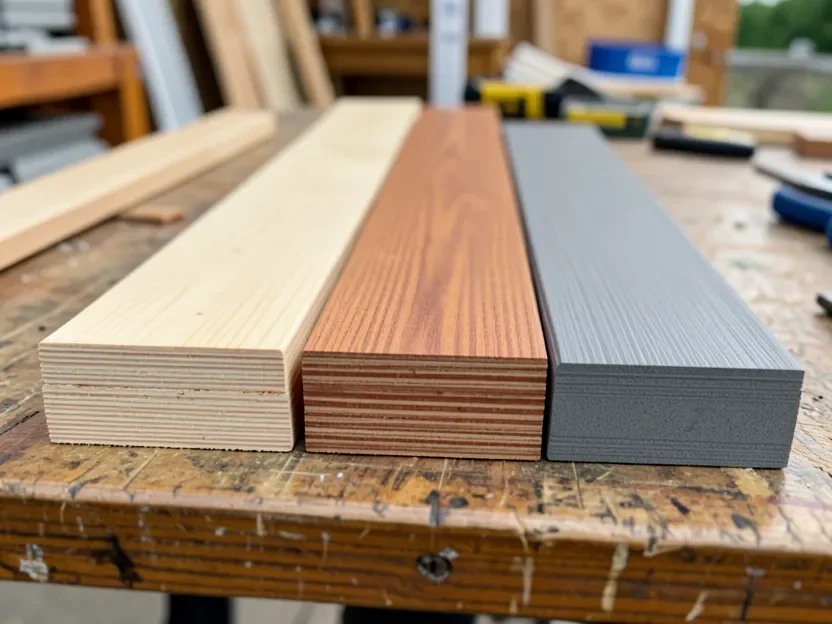
The single biggest driver of your per-square-foot price is the decking material itself. Here’s how the common tiers generally stack up, installed (materials plus labor):
| Material | Typical Installed Price (per sq ft) | Where It Fits |
|---|---|---|
| Pressure-treated pine | $25 – $40 | Cheapest common option; needs annual cleaning and re-staining |
| Cedar or redwood | $30 – $50 | Naturally rot-resistant, better look than pine, still needs sealing |
| Tropical hardwood (e.g. ipe) | $50 – $75+ | Very durable and dense, but pricier lumber and harder to work |
| Mid-grade composite | $35 – $55 | Low maintenance, no annual staining, moderate upfront cost |
| Premium composite or PVC | $50 – $70+ | Highest material cost, longest expected lifespan, least upkeep |
Notice the ranges overlap between tiers — a high-end pressure-treated install with extra labor can cost more per square foot than a basic composite job, and vice versa. Material choice sets a floor and ceiling, but the actual number for your project depends just as much on labor and local rates.
Labor Usually Costs as Much as the Wood, or More
A detail a lot of budgeting guides skip: on a professionally installed deck, labor is commonly 40% to 60% of the total per-square-foot price, not a minor add-on. Framing, cutting, fastening, and finishing a deck correctly takes real time, and that labor cost doesn’t scale down much just because you picked a cheaper board.
This is why comparing a DIY materials-only estimate to a contractor’s installed quote for the “same” deck can be misleading. If you’re supplying your own labor, your per-square-foot cost is close to the material price alone. If you’re hiring it out, budget for labor to roughly match or exceed what the decking boards themselves cost, especially on a deck with stairs, multiple levels, or custom railings that take extra time to build.
Why “Per Square Foot” Often Means the Surface Only
Here’s the clarifying distinction that explains why a quote’s total can come in higher than “square footage × per-square-foot price” would suggest: a per-square-foot decking price usually prices the decking surface, the boards you actually walk on, plus fasteners and finish. The substructure underneath, the posts, beams, joists, and concrete footings that hold the whole thing up, is frequently estimated and billed as its own line item.
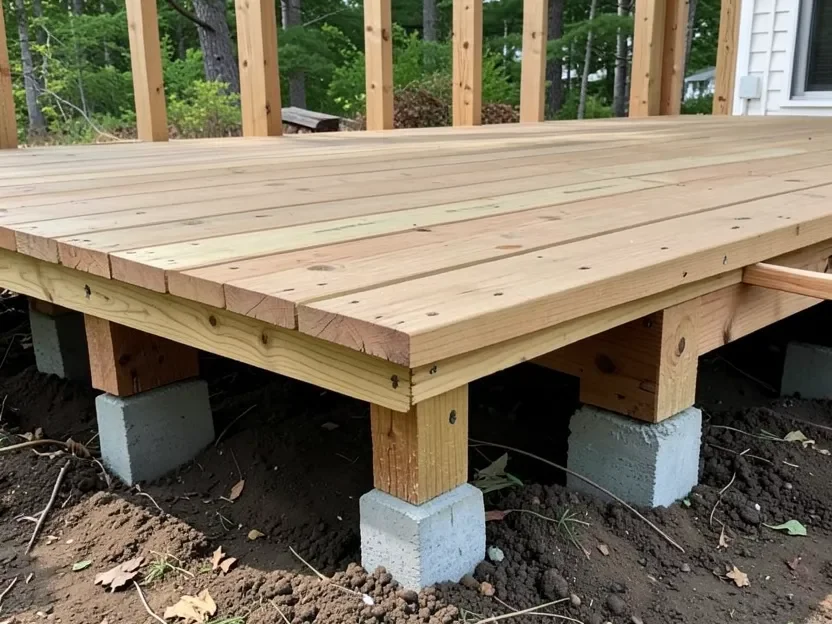
That substructure cost stays fairly consistent regardless of which decking material you pick on top of it, since the framing lumber and footings don’t change much whether you’re installing pressure-treated boards or premium composite. So if a quote’s per-square-foot rate looks unusually low, it’s worth asking directly whether it covers framing and footings or only the visible decking surface, before you compare it to another bid.
A Quick Budgeting Example
Say you’re planning a straightforward 12×16 deck, 192 square feet, in pressure-treated pine at a mid-range installed price of about $32 per square foot. That puts the decking surface itself around $6,100. If the framing and footings for that size and height add another $10 to $14 per square foot, you’re looking at roughly $1,900 to $2,700 more before railings, stairs, or permit fees enter the picture. The per-square-foot decking figure alone would have undershot the real total by close to a third.
None of these figures are exact quotes for your project, prices move with region, contractor, and site conditions, but the pattern holds: always ask what a per-square-foot number does and doesn’t include before you multiply it by your deck’s square footage and call it a budget.
Ways to Bring the Per-Square-Foot Price Down
- Stick to a simple rectangular footprint — every extra corner, level change, or curve adds cutting and framing labor
- Choose pressure-treated pine for the structural framing regardless of what decking material you pick on top, since the framing cost barely changes between tiers
- Handle demolition of an old deck yourself if you’re replacing one, since haul-away and teardown labor is billed separately from the new build
- Get at least three itemized quotes that separately break out decking, substructure, and labor, so you’re comparing the same scope, not just a bottom-line number
- Seal and maintain wood decking on schedule — a neglected wood deck that needs board replacement later costs far more per square foot than routine upkeep would have
Frequently Asked Questions
What Is the Average Wood Deck Price Per Square Foot?
Installed wood deck prices typically run about $25 to $50 per square foot for pressure-treated or cedar decking, and can climb higher for premium hardwoods. Composite and PVC decking usually cost more per square foot than wood, often $35 to $70+, even though they need less ongoing maintenance.
Does the Per-Square-Foot Price Include the Substructure?
Usually not the whole thing. A per-square-foot decking price commonly refers to the decking boards, fasteners, and finish on the surface. The substructure below it, posts, beams, joists, and footings, is often quoted and priced separately, and it doesn’t shrink much just because you picked a cheaper decking board.
It varies by project, but labor is commonly 40% to 60% of the total installed price per square foot. A DIY build that supplies only materials can cost significantly less per square foot than a fully installed quote from a contractor, which is why two prices for the same size deck can look so different.
Why Do Two Deck Quotes for the Same Size Come Out So Different?
Quotes vary because they aren’t always pricing the same scope. One number might cover the decking surface only, another might include the full substructure, railings, stairs, and permit fees. Before comparing quotes, confirm each one whether framing, footings, and railings are included or billed separately.
Is Composite Decking Worth the Higher Per-Square-Foot Price?
It depends on how long you plan to keep the deck and how much upkeep you want to do. Composite costs more upfront per square foot than pressure-treated wood, but it skips the annual sanding, staining, and sealing that a wood deck needs to hold up, which can close some of the cost gap over a decade or more.
Conclusion
Wood deck price per square foot is a useful starting number, but it’s not the whole budget. Know which material tier you’re in, expect labor to be a real share of the total rather than an afterthought, and confirm whether the rate you’re comparing covers the decking surface alone or the substructure underneath it too. Get that scope question answered up front and a per-square-foot estimate turns into an accurate budget instead of a surprise.
Sponsored / affiliate links. As an Amazon Associate I earn from qualifying purchases. I may earn additional commission from eligible campaigns.