Cut Off Tool Versus Circular Saw: Choosing the Right Tool
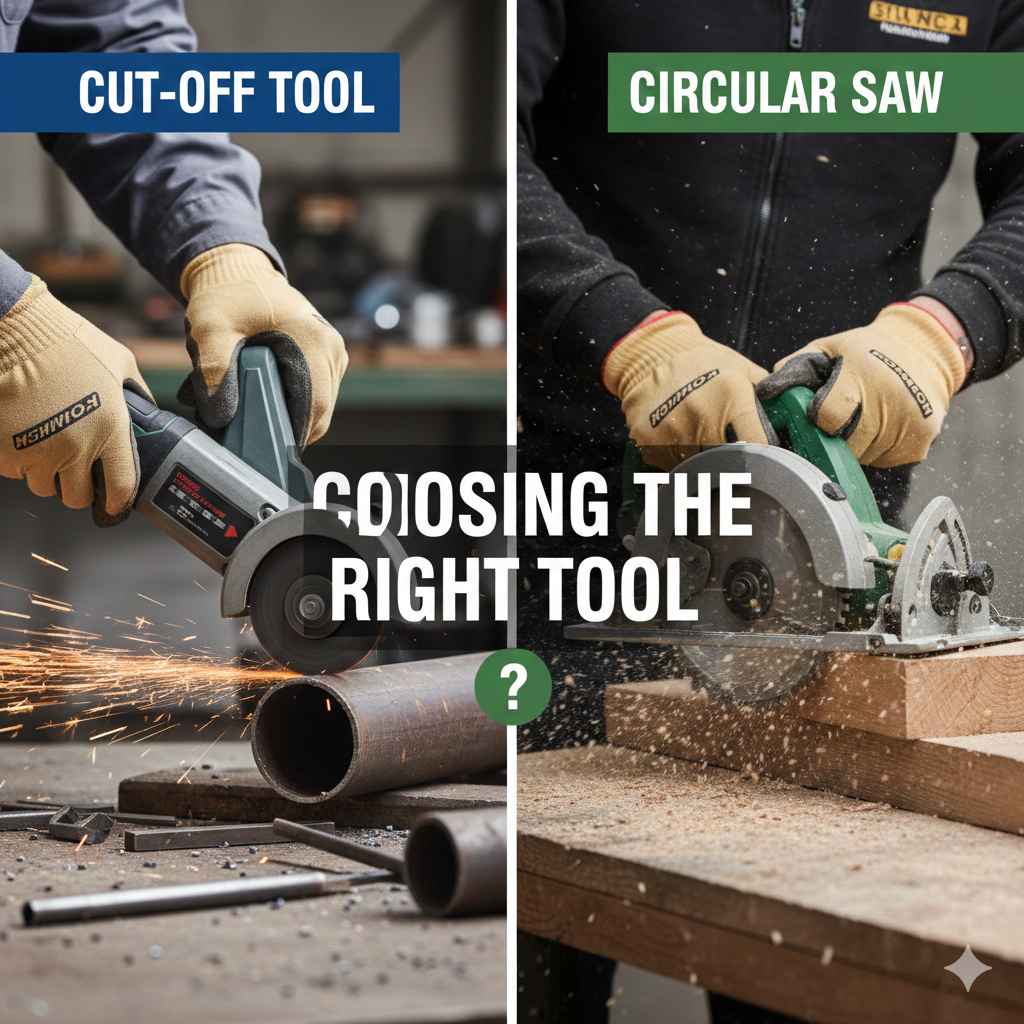
Choosing between a Cut Off Tool vs Circular Saw: Which Is Better? is a common question for anyone starting DIY projects or working with wood and metal. It can seem confusing at first, since both tools cut materials, but they’re made for different jobs. This article will help you sort through the differences, making your choice easier. Don’t worry, we’ll break it down step-by-step, making it super simple to understand. Let’s start with a look at what each tool is built for.
What is a Cut Off Tool?
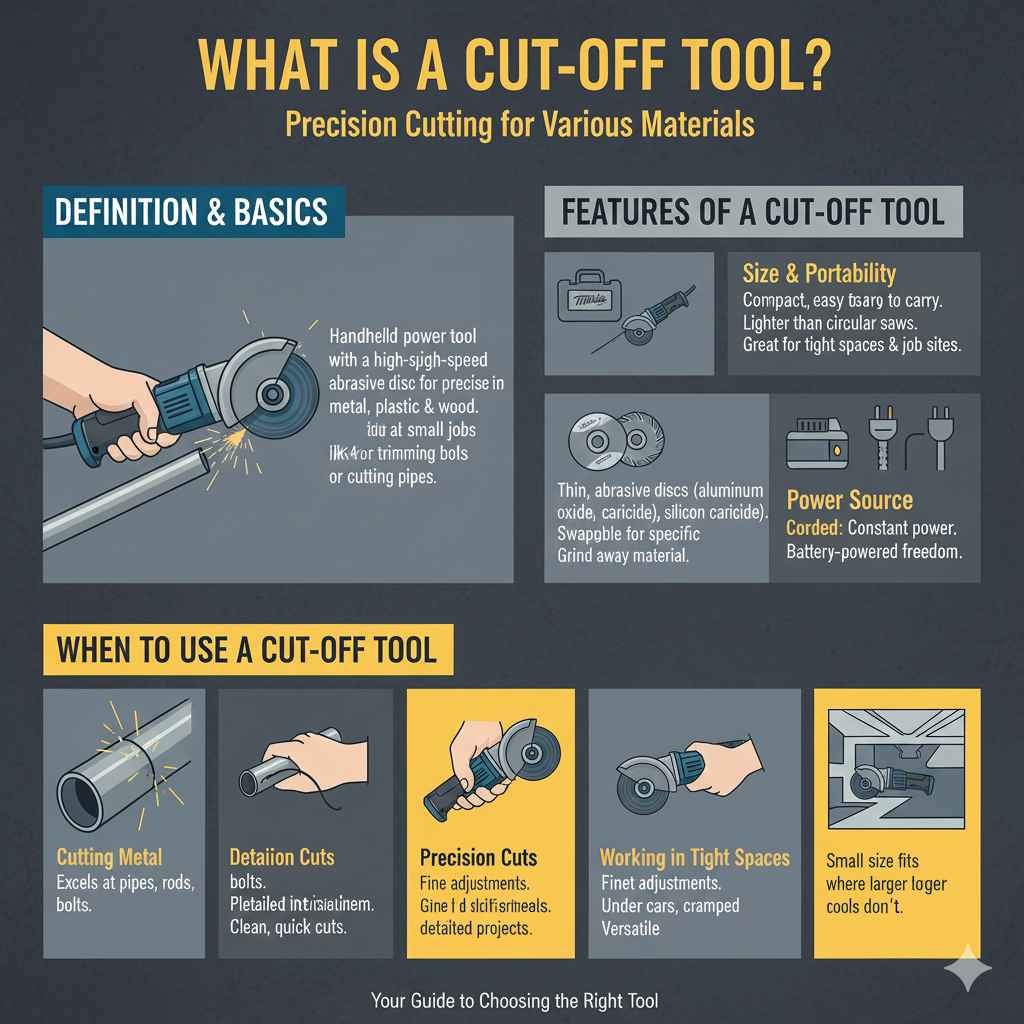
A cut off tool is a handheld power tool designed primarily for making precise cuts in various materials, including metal, plastic, and occasionally wood. They usually have a small, abrasive disc that spins at a high speed. This disc is what does the cutting. You move the tool across the material, and the spinning disc grinds away the material. Because of the way they work, cut off tools are great for smaller jobs, like trimming bolts or cutting through pipes.
Features of a Cut Off Tool
Size and Portability: Cut off tools are compact and easy to carry around. This makes them ideal for jobs where you need to move around a lot or work in tight spaces. You can easily take them to the job site or use them in your garage.
Their size also means they are usually lighter than circular saws.
Cutting Discs: These tools use thin, circular discs made of abrasive materials like aluminum oxide or silicon carbide. These discs are designed for specific materials. You would use a metal-cutting disc for metal and a wood-cutting disc for wood. Swapping discs is usually pretty easy.
The discs are the parts that actually do the cutting by grinding away at the material.
Power Source: Cut off tools can be powered in several ways. Corded models plug into a wall outlet, which gives them constant power. Cordless models run on batteries, offering more freedom of movement because you do not have to worry about a cord.
The choice between corded and cordless depends on your needs.
When to Use a Cut Off Tool
Cutting Metal: A cut off tool excels at cutting metal, such as pipes, rods, and bolts. The abrasive disc can quickly slice through metal. They are often used by plumbers and electricians.
The abrasive discs make clean cuts through metal.
Precision Cuts: If you need to make very precise cuts, a cut off tool can be a good choice. Their smaller size gives you more control, particularly for delicate work or intricate designs. You can make fine adjustments to your cuts.
They are great for detail-oriented projects.
Working in Tight Spaces: Since they’re small, cut off tools are perfect for jobs in tight spaces where larger tools won’t fit. This is handy for working under a car or in a cramped corner. They are able to reach places that bigger tools cannot.
Their small size makes them quite versatile.
Understanding the Circular Saw
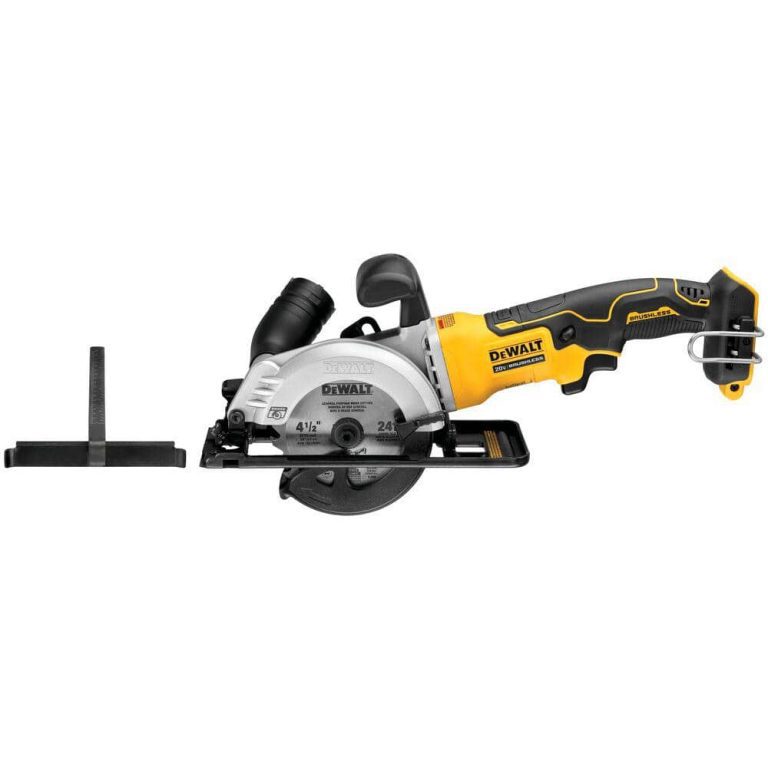
A circular saw is a versatile power tool that uses a rotating circular blade to cut materials, most often wood. The blade spins very fast, allowing it to cut through thick pieces of wood and other materials. Circular saws are a staple in construction and woodworking, useful for everything from simple projects to large-scale builds. They come in various sizes and styles, each suited for different types of work, and are commonly used by carpenters and DIY enthusiasts.
Key Parts of a Circular Saw
The Blade: The blade is the heart of the circular saw. It’s a circular disc with teeth that do the actual cutting. Blades come in different types, with each blade having a different number and shape of teeth, to cut through various materials, such as wood, metal, or plastic. The right blade makes all the difference.
Choosing the correct blade for the material is very important.
Motor and Power: Circular saws are powered by an electric motor, typically either corded or cordless. The motor drives the blade at high speeds, allowing it to cut quickly and efficiently. The motor’s power is measured in amps (for corded models) or volts (for cordless models).
Higher amperage or voltage means more power.
Base Plate: The base plate is the flat surface on the bottom of the saw that rests against the material being cut. It provides a stable surface for the saw to move along, ensuring straight and accurate cuts. It’s important for the saw’s stability.
A good base plate is essential for a clean cut.
Common Applications of the Circular Saw
Cutting Wood: Circular saws are widely used for cutting wood, from simple boards to large sheets of plywood. They can make straight cuts, angled cuts, and even more complex cuts like bevels. You can use them for framing, building decks, or creating furniture.
The ability to handle different wood thicknesses is one of its major strengths.
Framing and Construction: In construction, circular saws are essential for framing walls, cutting studs, and creating openings for doors and windows. They can make quick work of cutting through multiple layers of wood. Builders use them daily.
They are strong and able to handle heavy-duty tasks.
Cross-Cutting and Ripping: Circular saws excel at both cross-cutting (cutting across the grain of wood) and ripping (cutting along the grain). This versatility makes them useful for a variety of tasks, from simple cuts to breaking down large pieces of wood. You can make many types of cuts.
The ability to perform these different types of cuts makes it a versatile tool.
Cut Off Tool Versus Circular Saw: A Head-to-Head
When thinking about the Cut Off Tool vs Circular Saw: Which Is Better? there are key differences to consider. Cut off tools and circular saws each have their strengths. Deciding which is better depends on the type of projects you’ll be doing. They are made to perform different jobs. Let’s look at a side-by-side comparison.
Comparing Cutting Capabilities
| Feature | Cut Off Tool | Circular Saw |
|---|---|---|
| Cutting Materials | Primarily metal, plastic; some wood | Primarily wood; some plastic and metal |
| Cutting Action | Abrasive disc grinds through material | Rotating blade with teeth cuts through material |
| Cut Quality | Can be precise, good for smaller cuts | Generally straight, can be very accurate with proper technique |
| Depth of Cut | Limited; designed for thin materials | Variable, based on blade size, can handle thicker materials |
The Cut Off Tool is more suited to cut smaller pieces, while the Circular Saw is designed for larger projects. You can determine which is better based on the materials and cuts you need to make.
Safety Considerations
Both tools require safety precautions. Eye protection is a must for both, as they can generate flying debris. With a Cut Off Tool, the abrasive discs can shatter if used incorrectly. With a Circular Saw, you must be careful to keep your hands away from the blade. Always follow the manufacturer’s instructions. Proper use prevents injury.
Here are some examples of what can go wrong:
Kickback: A circular saw can kick back, throwing the saw back towards the operator. This happens if the blade gets pinched in the material. This is why you should always keep the guard in place.
Kickback can be dangerous.
Disc Breakage: Cut off tool discs can break, especially if you apply too much pressure or use them on the wrong material. Safety glasses are crucial.
Broken discs can cause injuries.
Improper Blade Selection: Using the wrong blade type can lead to poor cuts, damage the material, and be dangerous. Always match the blade to the material you are cutting.
Selecting the correct blade increases safety.
Cost and Maintenance
Cut off tools are usually less expensive than circular saws. The cost of blades for circular saws can add up. Maintenance is relatively simple for both: keep them clean and make sure the blades are sharp. Check the condition of the tools to ensure they work safely. Proper care means they will last.
According to data from Home Depot, the average cost of a basic corded cut off tool is around $50-$80, while a corded circular saw can range from $70-$150. Blade costs vary depending on the type and brand, but replacements for both tools are relatively affordable.
Choosing the Right Tool for the Job
The best choice depends on your project. If you are mainly working with metal or need to make small cuts, the Cut Off Tool is a good option. If you are working with wood and need to cut boards or sheets, choose the Circular Saw. Think about the specific tasks you need to complete. This is the simplest way to decide.
Types of Projects and Recommended Tools
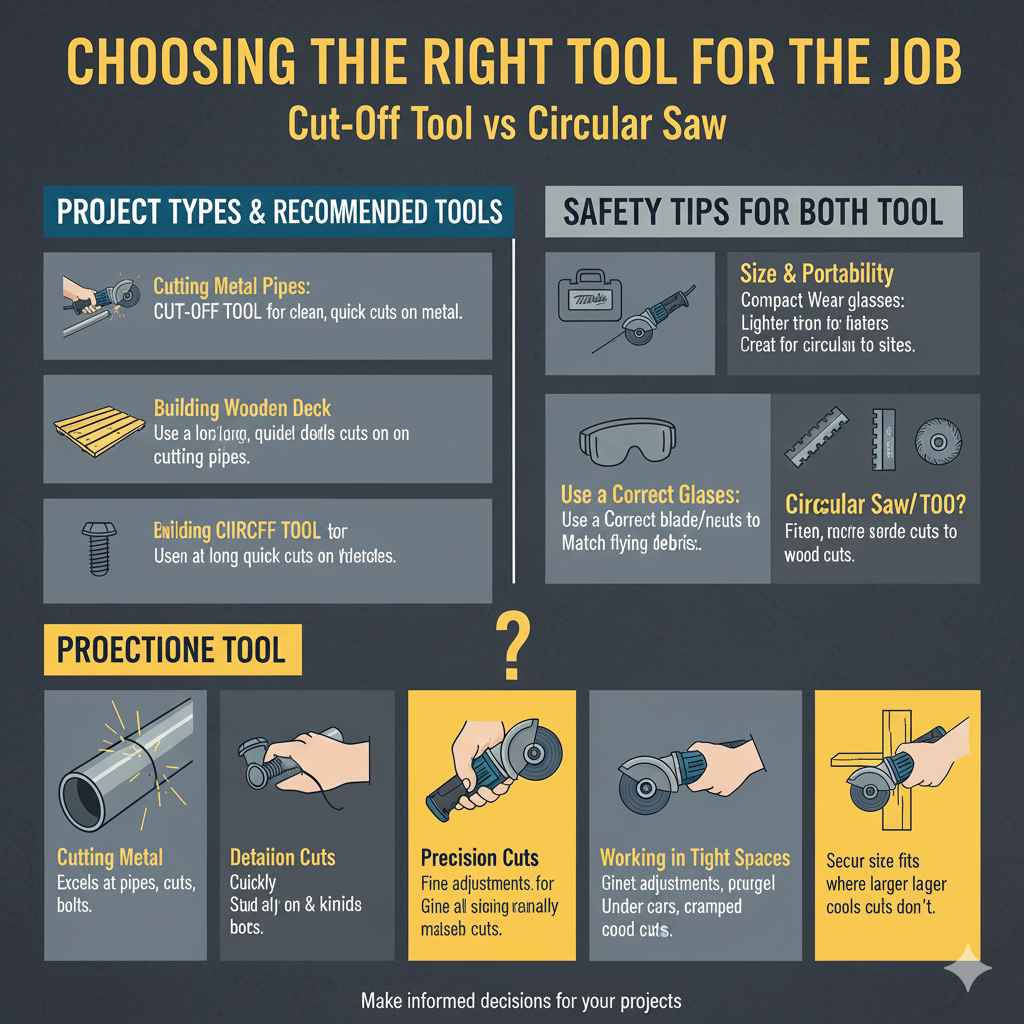
Cutting Metal Pipes: A Cut Off Tool is ideal because it is built to cut metal. The abrasive disc will quickly cut through the pipes.
The cut will be clean.
Building a Wooden Deck: Use a Circular Saw for this project. It will make the long, straight cuts you need.
The circular saw is a must-have tool.
Cutting Bolts: If you need to trim bolts, a Cut Off Tool is the best choice. It can quickly grind off the extra metal.
This is a fast and easy task.
Framing a Wall: A Circular Saw is perfect for framing a wall. It can cut the wood accurately and efficiently.
It is designed for construction projects.
Understanding your project will lead you to the right choice. Consider the materials and the cuts required.
Safety Tips for Both Tools
Always Wear Safety Glasses: This is crucial to protect your eyes from debris. Flying particles can cause serious harm. Wear them every time.
This is the first rule.
Use the Correct Blade or Disc: Ensure you are using the right blade or disc for the material you are cutting. Using the wrong one can be dangerous. Choose the right one.
A wrong choice can damage the tools.
Secure the Material: Clamp the material you are cutting to prevent it from moving. A stable workpiece will help you make a clean, safe cut. Use clamps.
Clamping is necessary.
Read the User Manual: Always read the user manual for your tool. It contains important safety instructions and operating procedures. It is helpful to follow the instructions.
Follow the instructions carefully.
Frequently Asked Questions
Question: Can I use a Cut Off Tool to cut wood?
Answer: Yes, you can use a Cut Off Tool to cut wood, but it’s not the best tool for the job. It works best on thin pieces, and the cuts might not be as clean as with a circular saw. You need to use the right type of disc.
Question: Is a circular saw dangerous?
Answer: Yes, a circular saw can be dangerous if you don’t use it correctly. You must always wear safety glasses and follow the safety guidelines. Always read the user manual before use.
Question: What’s the main difference between a cut off tool and a circular saw?
Answer: The main difference is what they’re designed to cut. A cut off tool is best for metal and precise cuts, while a circular saw is better for wood and larger projects. The saw uses a toothed blade, while the tool uses an abrasive disc.
Question: How do I change the blade on a circular saw?
Answer: Unplug the saw first! Then, consult your saw’s manual for specific instructions, but generally, you’ll need to remove the blade guard, loosen a bolt holding the blade, remove the old blade, and put the new one on, making sure it faces the right way. Make sure it is installed securely before using.
Question: Which tool is easier to use for a beginner?
Answer: Both tools require some practice. However, a cut off tool is often a bit easier to handle for small tasks. Always start slowly and practice with scrap materials before tackling your actual project.
Final Thoughts
When you’re trying to figure out Cut Off Tool vs Circular Saw: Which Is Better?, it’s about understanding what each tool does well. A cut off tool is great for smaller, more precise cuts, especially in metal, while a circular saw is better for bigger projects, especially in wood. Both tools have their uses, and knowing when to use each one will make your work much easier and more effective. Before beginning any project, make sure you’re aware of the safety precautions. Now you’re ready to pick the perfect tool for your job.