Cyanoacrylate Glue And Activator: Quick Fix Secrets Unveiled
Cyanoacrylate glue is a fast-acting adhesive that bonds quickly to various surfaces. An activator enhances its curing process, ensuring a stronger bond.
Cyanoacrylate glue, commonly known as super glue, is a popular adhesive choice for quick repairs and crafting. Its fast-drying nature allows for immediate bonding, making it ideal for everyday use. This glue works well on materials like plastic, metal, and wood, providing a strong hold.
The addition of an activator can significantly speed up the curing time, making the adhesive even more effective. Whether you’re fixing a broken item or embarking on a DIY project, understanding how cyanoacrylate glue and activators work can enhance your results. This combination ensures a reliable and durable bond for a wide range of applications.
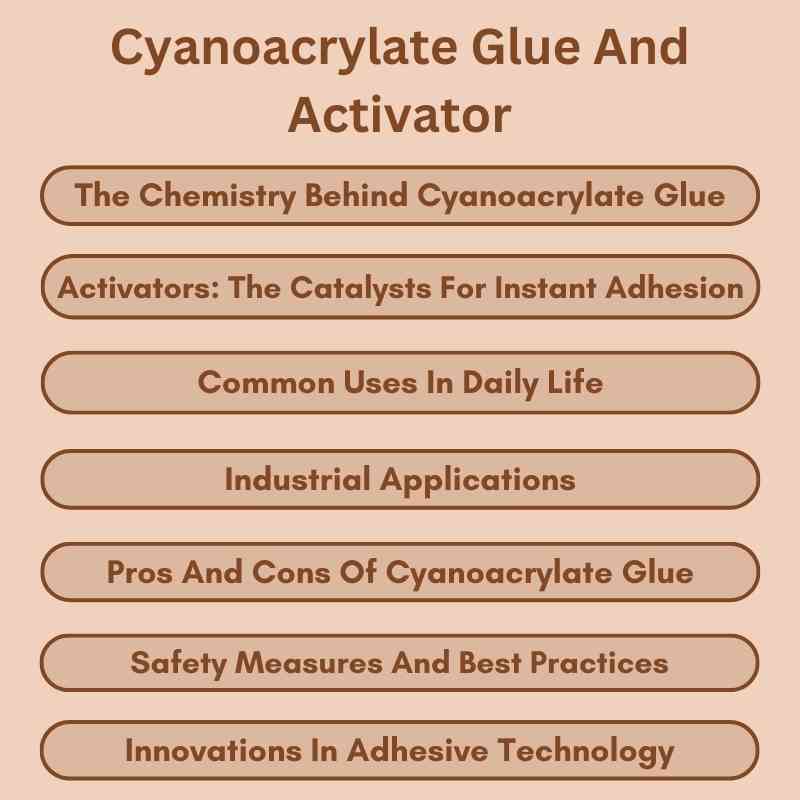
The Chemistry Behind Cyanoacrylate Glue
Cyanoacrylate glue works through a fast chemical reaction. This glue bonds materials by creating strong connections at the molecular level. When exposed to moisture, it sets quickly and firmly. The molecules link together rapidly, forming a durable bond.
Speed matters in many applications. Quick bonding saves time and effort. It allows users to complete projects faster. This is essential for repairs and crafts. The faster the glue sets, the sooner the job gets done.
Understanding this glue helps in choosing the right type. Different projects require different strengths and speeds. Knowing the chemistry makes the process easier and more efficient.
Activators: The Catalysts For Instant Adhesion
Activators are essential for enhancing the performance of cyanoacrylate glue. They work by speeding up the curing process. This allows the glue to bond instantly with surfaces.
Each activator has specific properties. Some are designed for plastic, while others work better on metal or wood. Choosing the right activator ensures a strong bond.
Consider the application and material type before making a choice. Testing on a small area helps determine the best fit. Always follow the manufacturer’s instructions for optimal results.
Common Uses In Daily Life
Cyanoacrylate glue is a fast-acting adhesive often used in DIY projects. It bonds quickly and works on many surfaces. Common materials include wood, plastic, and metal.
Repairs at home can be easy with cyanoacrylate glue. It fixes broken items like toys, shoes, and furniture. Just apply a small amount for a strong hold.
In professional settings, this glue is essential. It helps in electronics, automotive, and medical applications. Many technicians prefer it for its quick drying time.
Using an activator can speed up the curing process. This is useful for larger projects needing a fast bond.
Industrial Applications
Cyanoacrylate glue is widely used in industrial settings. It offers fast bonding, which increases manufacturing speed. This glue sets quickly, reducing production time.
In industries, durability is key. Cyanoacrylate glue provides strong bonds that withstand stress. It resists moisture, heat, and chemicals. This makes it ideal for various applications.
Businesses rely on this glue for efficient operations. It helps in assembling parts swiftly. The strong bond enhances product quality and lifespan.
Pros And Cons Of Cyanoacrylate Glue
Cyanoacrylate glue is known for its fast bonding capabilities. It can fix items quickly, saving time. This glue works on many materials like wood, plastic, and metal.
Some people like how easy it is to use. Just apply a small amount and press. The bond forms in seconds, making it perfect for quick repairs.
On the other hand, this glue has some drawbacks. It can be brittle, which means it may break under stress. Also, it does not work well in wet conditions.
Another limitation is that it can bond skin quickly. This can lead to accidents if not careful. Always use it in a safe manner.
Safety Measures And Best Practices
Always handle cyanoacrylate glue with care. Use protective gloves to avoid skin contact. Make sure to work in a well-ventilated area. Keep the glue away from children and pets. Store it in a cool, dry place to prevent it from hardening. Check the expiration date before use. Avoid exposing the glue to direct sunlight or heat sources.
For longevity, keep the glue tightly sealed. Use a small container if necessary. Label the storage to avoid confusion. Store the activator separately from the glue. This prevents any unwanted reactions. Remember to keep both products out of humidity. A refrigerator can be a great option for storage.
Innovations In Adhesive Technology
Recent innovations in adhesive technology focus on cyanoacrylate glue and its activators. These products bond quickly and effectively. The speed of adhesion makes them popular in various industries.
New developments include better formulas that enhance strength and durability. These advancements allow for more uses in everyday life. Fast-acting glues now work on a wider range of materials.
Future trends point towards eco-friendly options. Manufacturers aim to create non-toxic and biodegradable glues. This shift will benefit both consumers and the environment.
Investments in research and development are crucial for these advancements. Companies focus on improving the performance and safety of their products.
Tips For Mastering The Use Of Glue And Activator
Surface preparation is crucial for the best bond. Clean the surface well to remove dust and grease. Use isopropyl alcohol or soap and water for cleaning. Dry the surface completely before applying glue.
Application techniques can make a big difference. Apply a small amount of cyanoacrylate glue directly to one surface. Press the surfaces together firmly for a few seconds. Use an activator to speed up the curing process. Spray the activator on the other surface for a quick bond.
Always use gloves to prevent skin contact. Store glue in a cool, dry place for longer life. Follow the instructions on the package for best results.
Frequently Asked Questions
What Is Cyanoacrylate Glue Used For?
Cyanoacrylate glue, commonly known as super glue, is used for bonding various materials. It works well on plastic, metal, wood, and ceramics. This adhesive sets quickly and creates a strong bond. It’s ideal for quick repairs and crafting projects, making it a versatile choice for home and industrial use.
How Does Cyanoacrylate Activator Work?
A cyanoacrylate activator accelerates the curing process of the glue. It helps the adhesive bond faster, especially on porous surfaces. When sprayed or applied, the activator enhances the glue’s effectiveness. This is particularly useful in applications requiring immediate adhesion or when working with larger surfaces.
Is Cyanoacrylate Glue Waterproof?
Cyanoacrylate glue is not fully waterproof but offers some water resistance. It can withstand minor moisture exposure, making it suitable for indoor use. However, prolonged contact with water can weaken the bond. For outdoor or submerged applications, consider using a specialized waterproof adhesive for better durability.
Can Cyanoacrylate Glue Be Removed?
Yes, cyanoacrylate glue can be removed with acetone or nail polish remover. Soak a cotton ball in acetone and apply it to the bonded area. Let it sit for a few minutes to soften the glue. Gently scrape off the residue with a plastic scraper or your fingers.
Conclusion
Cyanoacrylate glue and activator are essential tools for various projects. They provide quick bonding and exceptional strength. Understanding their uses can enhance your crafting and repair skills. Always follow safety guidelines for the best results. Embrace the versatility of these adhesives to tackle your next DIY challenge effectively.