Does Wood Glue Work on Bamboo? Why It Depends on the Surface
Bamboo isn’t wood. Botanically it’s a grass, and that distinction matters the moment you try to glue it. The outer skin of a bamboo culm carries a natural wax layer and a heavy concentration of silica – the same mineral that gives sand its bite – so a joint that grabs oak or pine almost instantly can slide right past standard wood glue if you skip surface prep. Yes, wood glue can work on bamboo, but only under the right conditions, and for some joints an epoxy is the better tool from the start.
Short Answer: Yes, With the Right Prep and the Right Glue
Standard PVA wood glue bonds reliably to a freshly cut bamboo cross-section, where the fibers are open and absorbent just like regular wood. It bonds far less reliably to bamboo’s smooth outer skin unless that surface is scuffed up first. For joints that rely on the glossy exterior, or for outdoor and load-bearing pieces, wood glue is usually the more dependable choice, since it doesn’t depend on the wood soaking up moisture from the glue to cure.
Best Epoxy for Bamboo Joints
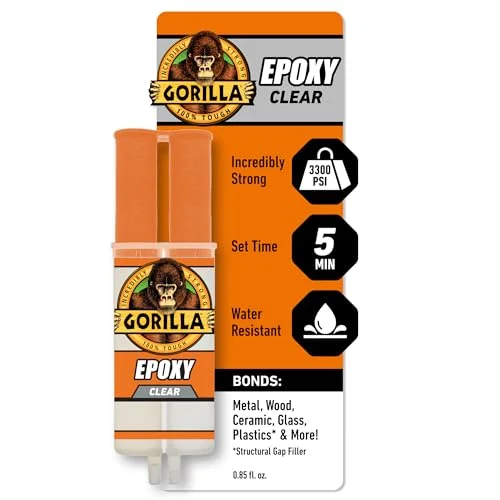 |
Gorilla 2 Part Epoxy, 0.85 oz – $5.97 This 5-minute epoxy cures by chemical reaction, not moisture absorption, so it bonds bamboo’s waxy exterior far more reliably than standard wood glue.
|
Why Bamboo Fights Back Against Glue
Bamboo is a grass stem, not a tree trunk, so it grows differently than the hardwoods and softwoods most wood glues are formulated for. Its outer rind develops a natural wax coating that sheds water and dust in the wild, and that same coating sheds glue in the workshop. Underneath the wax, bamboo’s cell walls contain a notably high concentration of silica, which makes the surface harder and less porous than typical wood grain.
Wood glue needs a surface it can grip mechanically and, in the case of PVA, one it can pull moisture into as it cures. A waxy, silica-rich surface gives it neither. That’s why a glue-up that looks fine right after clamping can fail weeks later – the bond never actually penetrated the surface, it just sat on top of it.
There’s also a moisture-content issue worth knowing about. Bamboo culms can hold onto more internal moisture than kiln-dried lumber, especially if the piece wasn’t fully seasoned before it reached the workshop. Gluing over a damp core traps that moisture at the joint, which slows curing and can leave the bond soft even after the recommended cure time has passed. If a piece feels noticeably heavier or cooler than a comparable dry hardwood offcut, let it acclimate in the shop for a few days before gluing.
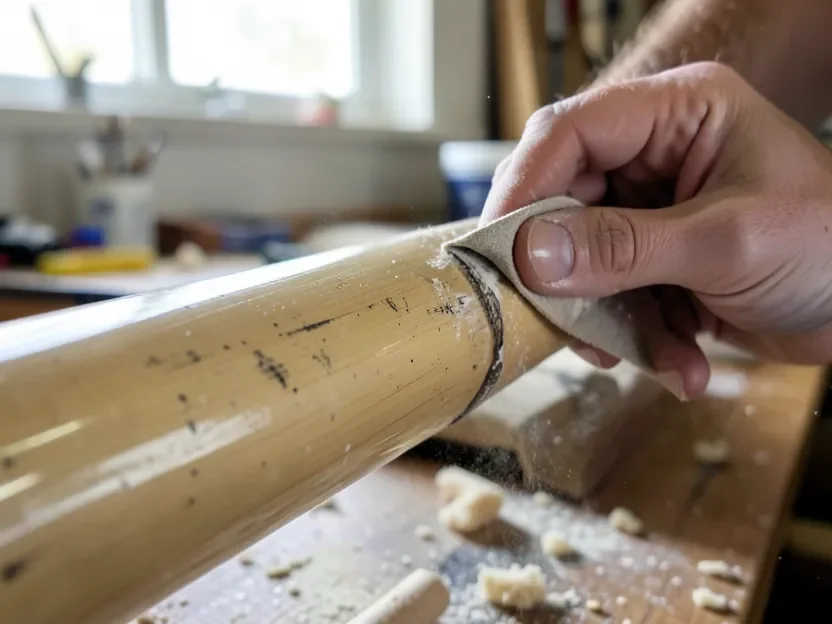
Interior vs. Exterior Surface: Where Glue Actually Sticks
Not all of a bamboo piece behaves the same way. A freshly cut end or a piece that’s been split or planed exposes the interior fibers, which are far more porous and behave much closer to ordinary wood. Glue applied there soaks in, grips the fiber structure, and cures the way it would on any hardwood.
The intact outer culm – the smooth, shiny skin you see on bamboo poles, flooring strips, and cutting boards – is the problem surface. If your joint only touches that exterior skin, treat it as a low-porosity, semi-sealed surface rather than as wood, and prep it accordingly before any glue goes on.
Grain orientation matters too. Bamboo’s fibers run almost entirely lengthwise along the culm, with very little cross-grain structure holding them together the way it does in a hardwood log. A long-grain-to-long-grain joint, like laminating two poles side by side, has plenty of surface for the glue to key into once it’s prepped. A joint that has to grab across the fiber direction, like gluing a cap onto the round end of a pole, has much less to hold onto and benefits even more from an epoxy’s gap-filling strength.
PVA Wood Glue on Bamboo: When It Works
PVA glue is still a perfectly good choice for bamboo in the right situation: gluing interior faces, end-grain joints, laminating strips for a cutting board, or any glue-up where the bonding surface is freshly cut rather than the original exterior skin. It’s inexpensive, dries with minimal odor, cleans up with water, and sands easily once cured.
Where PVA struggles is exactly where beginners tend to use it without thinking twice – gluing along the original rounded exterior of a bamboo pole, or attaching hardware to the glossy face of finished bamboo flooring. Skip the sanding step on that surface and even a name-brand PVA glue can peel away under load.
Why Epoxy Is Often the Better Choice
A two-part epoxy cures through a chemical reaction between resin and hardener, not by soaking into the wood and losing moisture the way PVA does. That makes it far less dependent on the bamboo’s porosity, which is exactly the property that trips up standard wood glue on bamboo’s exterior. Epoxy also gap-fills, so it tolerates the slightly uneven, curved surfaces you get on round bamboo poles better than a glue built for flat, tight wood-to-wood joints.
For outdoor bamboo projects, furniture joints that will see real stress, or any repair on the exterior skin, epoxy is the more forgiving and more durable option. It costs more per joint and takes longer to fully cure than PVA, but it isn’t relying on a surface that was specifically designed by the plant to repel moisture.
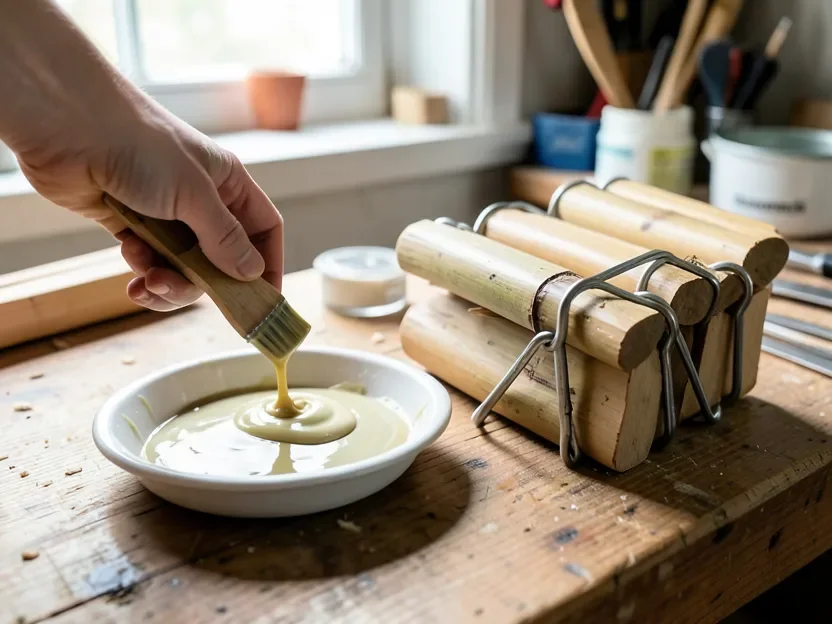
How to Prep Bamboo Before Gluing
Surface prep is the step that actually determines whether the glue-up holds, regardless of which adhesive you choose. Work through these steps on any exterior bamboo surface before applying glue or epoxy:
- Scuff the glossy skin. Sand the bonding area with 80 to 100-grit sandpaper until the shine is gone and the surface feels slightly rough, not smooth. This breaks through the wax layer and gives the glue something to grip mechanically.
- Wipe away dust and residue. Sanding dust left behind will weaken the bond just as much as the wax did. Wipe the surface with a dry cloth, then a lightly dampened one, and let it dry fully.
- Degrease stubborn spots. If the bamboo still feels slick after sanding, a quick wipe with denatured alcohol will lift any remaining wax or oil before it goes near the glue.
- Dry-fit the joint first. Bamboo poles are rarely perfectly round or uniform. Clamp the pieces together without glue to confirm they seat well, then take them apart for gluing.
Skipping the sanding step is the single most common reason a bamboo glue joint fails. The glue isn’t defective; it simply never touched real bamboo fiber, only the wax sitting on top of it.
Clamping and Curing Times
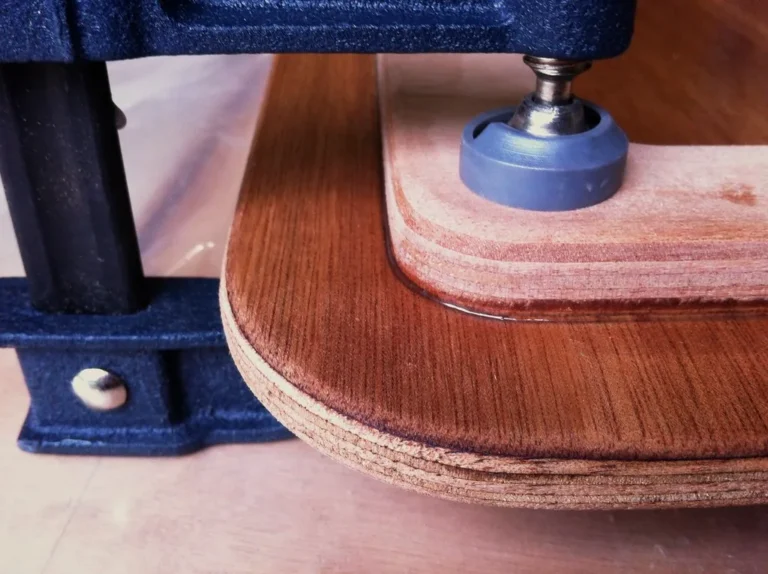
Once the surface is prepped, apply glue evenly and clamp the joint with steady, even pressure – spring clamps or a band clamp work well on bamboo’s rounded profile, since flat bar clamps can concentrate pressure on one spot and crack the culm wall.
| Adhesive | Clamp Time | Full Cure |
|---|---|---|
| PVA wood glue | 30–60 minutes | 24 hours |
| Two-part epoxy (5-minute) | 15–30 minutes | 24–72 hours |
| Polyurethane glue | 1–2 hours | 24 hours |
A joint can feel solid to the touch well before it’s actually done curing. Give it the full cure time listed on the product – not just the clamp time – before putting any real load on it, especially on a load-bearing piece like a chair leg or shelf bracket.
Common Mistakes That Ruin a Bamboo Glue Joint
- Gluing straight onto unsanded exterior skin. The single biggest cause of failed bamboo joints, covered above.
- Using too little glue on a gap-filling joint. Bamboo’s natural curve rarely produces a perfectly tight fit; a glue with poor gap-filling ability leaves voids that weaken under stress.
- Clamping too hard with a flat clamp. Bamboo’s wall is thin and hollow. Excess pressure from a bar clamp can crush or crack it rather than just squeezing out excess glue.
- Loading the joint before it’s fully cured. A joint that feels dry to the touch can still be well short of its full strength, particularly with epoxy.
Frequently Asked Questions
Does wood glue actually bond to bamboo?
Yes, but only reliably on freshly cut or sanded surfaces. Bamboo’s original exterior skin is coated in natural wax and high in silica, which blocks the glue from penetrating unless that surface is scuffed with sandpaper first.
Is epoxy or PVA glue better for bamboo?
PVA works well on interior, freshly cut bamboo surfaces. Epoxy is generally the better choice for the exterior skin, outdoor projects, and any joint that needs to fill small gaps, since it cures through a chemical reaction instead of depending on the wood absorbing moisture.
Do I need to sand bamboo before gluing it?
Yes, if you’re gluing the original exterior skin. Sanding with 80 to 100-grit sandpaper removes the waxy layer and gives the glue a surface it can actually grip. Interior or freshly cut faces don’t need this step since they’re already porous.
Can I use wood glue on bamboo for outdoor projects?
Standard PVA wood glue isn’t a great fit for outdoor bamboo since it isn’t fully waterproof. A waterproof polyurethane glue or, more reliably, a two-part epoxy will hold up much better against repeated moisture and temperature swings outdoors.
Bottom Line
Wood glue works on bamboo when the surface is prepped and the joint matches the glue’s strengths – interior faces and end grain for PVA, exterior skin and outdoor or gap-filled joints for epoxy. Treat bamboo like the grass it is, not like a hardwood, and the glue-up will hold the way you expect it to.
Sponsored / affiliate links. As an Amazon Associate I earn from qualifying purchases. I may earn additional commission from eligible campaigns.