Difference between 3 8 And 1 2 Drill: Key Facts You Must Know
When you pick up a drill, the size of the bit matters more than you might think. You’ve probably come across terms like 3/8 and 1/2 drill bits, but do you really know what sets them apart?
Choosing the right drill bit can make your work easier, faster, and more precise. You’ll discover the key differences between 3/8 and 1/2 drill bits, so you can make smarter decisions for your projects. Keep reading—you’ll learn exactly which one fits your needs and why it matters for your next job.
Drill Size Basics
Understanding drill sizes helps you pick the right tool for any job. Drill sizes vary in small steps, making it hard to choose. Knowing the basics saves time and prevents mistakes. It also improves your drilling results and safety.
Drills come in different sizes, often shown as fractions or metric numbers. The two common fractional sizes are 3/8 and 1/2 inch. These numbers tell you the drill bit’s diameter. This size affects the hole width you create.
Fractional Measurement Explained
Fractional drill sizes use fractions of an inch. For example, 3/8 means three parts out of eight. It equals 0.375 inches in decimal form. A 1/2 inch drill bit equals 0.5 inches. These sizes fit many wood and metal projects.
Fractional sizes are common in the United States and some other countries. They give an easy way to know drill diameters without decimals. Most drill sets include these sizes for general use.
Metric Vs Imperial Sizes
Metric sizes use millimeters instead of inches. For example, a 10 mm drill bit is about 0.39 inches. Imperial sizes use inches and fractions. Both systems measure the drill’s diameter.
Metric drill bits are popular worldwide. Imperial sizes remain common in the US and UK. Knowing both helps you work with different tools and plans. Some drill bits come marked with both measurements for easy use.
Comparing 3/8 And 1/2 Drills
Comparing 3/8 and 1/2 drills helps you pick the right tool for your task. Each drill size fits different needs and materials. Knowing their differences saves time and effort.
Both drills have strengths. Choosing the correct one improves your work quality and safety. Let’s explore what sets them apart.
Diameter Differences
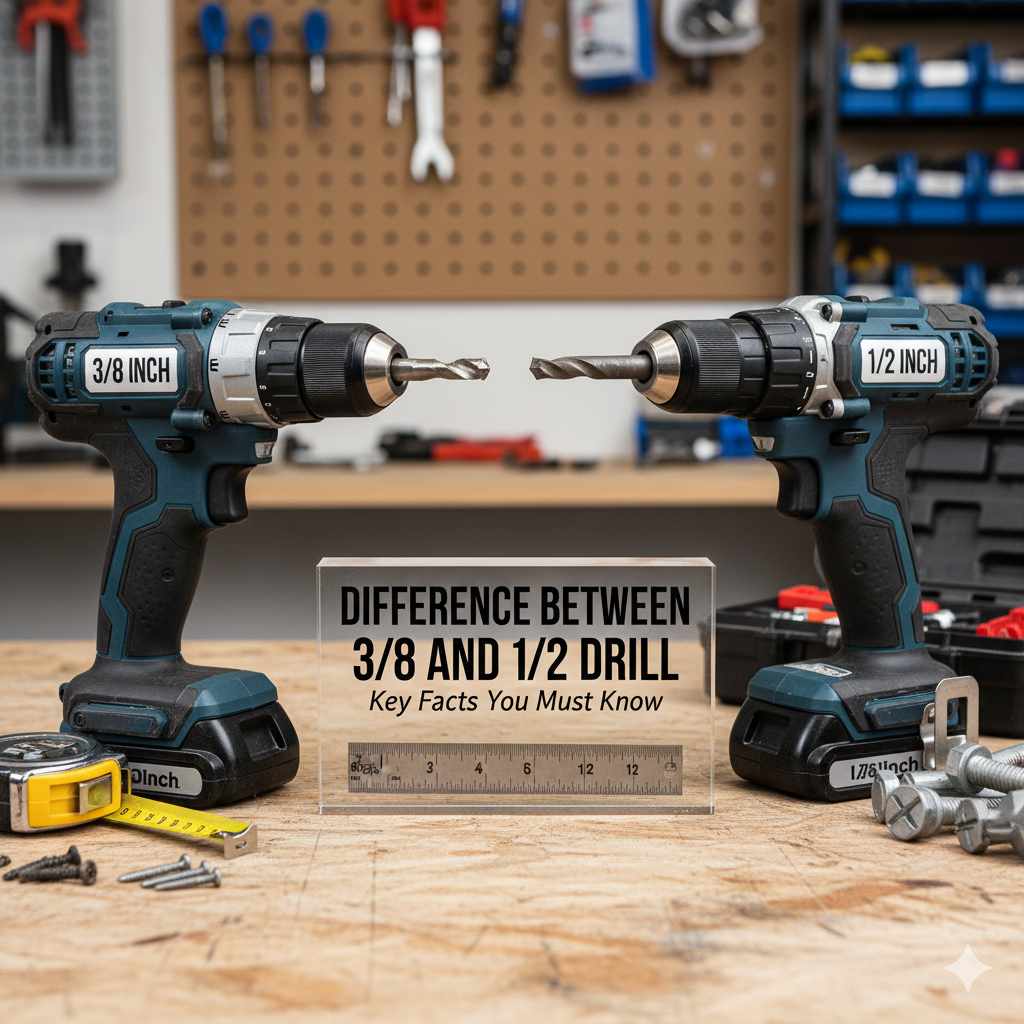
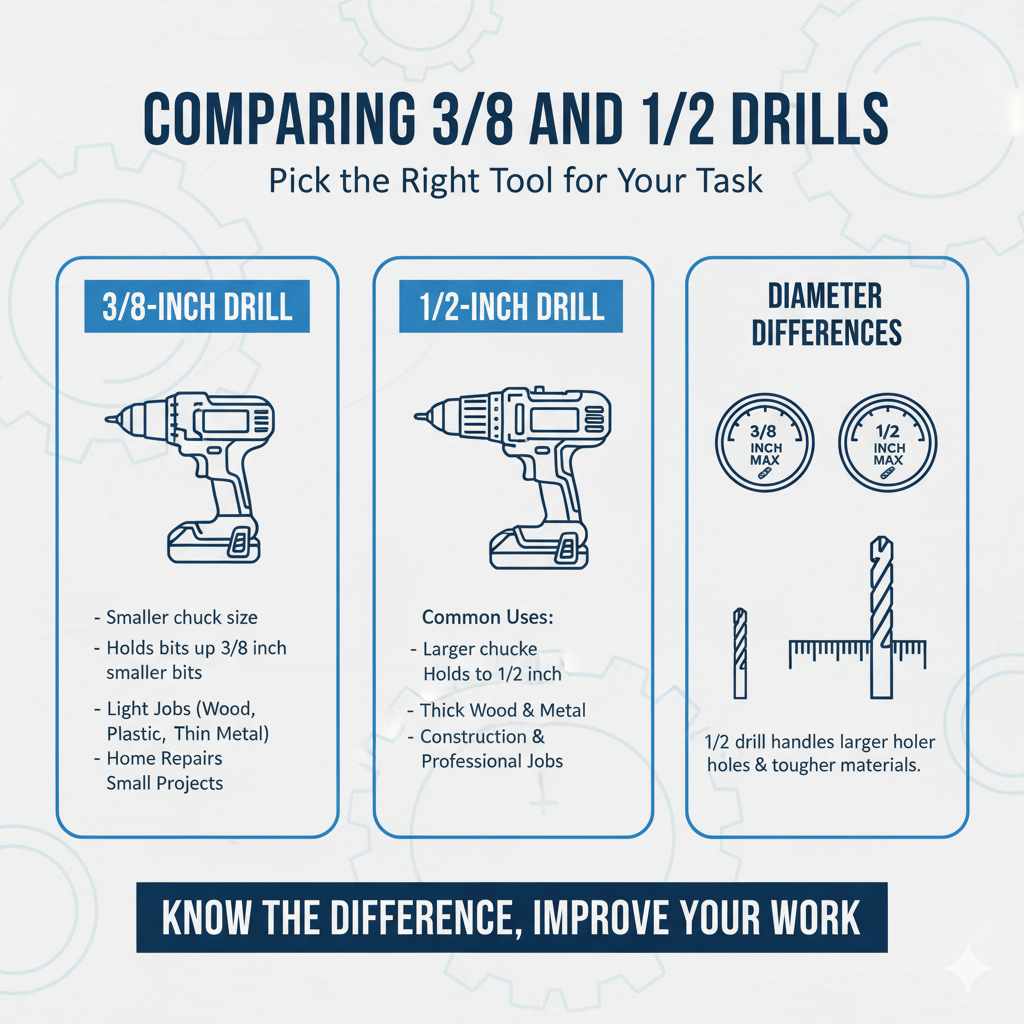
The 3/8 drill has a smaller chuck size. It holds drill bits up to 3/8 inch in diameter. The 1/2 drill can hold bits up to 1/2 inch. This means the 1/2 drill can handle larger holes.
Smaller drill bits are easier to control with a 3/8 drill. The 1/2 drill is heavier but more powerful. It works better with bigger bits and tougher materials.
Common Uses For Each Size
The 3/8 drill is popular for light jobs. It suits wood, metal, and plastic drilling. It is ideal for home repairs and small projects.
The 1/2 drill fits heavy-duty tasks. It works well with thick wood and metal. Construction and professional jobs often use this size. Its power helps drill large holes quickly.
Material Compatibility
Choosing the right drill size depends on the material you want to work with. Drill sizes like 3/8 inch and 1/2 inch offer different strengths. Each fits better with certain materials. Knowing which drill matches your material improves work quality and tool life.
Best Materials For 3/8 Drills
3/8 inch drills work well on softer and thinner materials. Wood, plastic, and soft metals like aluminum are ideal. These drills offer good control and reduce the risk of cracking.
They are perfect for tasks like making holes in furniture or light metal frames. The smaller size provides better precision and less strain on the drill motor.
Materials Suited For 1/2 Drills
1/2 inch drills handle tougher and thicker materials. Hardwoods, steel, and concrete require more power, which these drills provide. They can drill larger holes needed in heavy-duty projects.
Use 1/2 inch drills for construction, metalwork, and masonry jobs. Their strength helps prevent the drill bit from bending or breaking under pressure.
Power And Torque Requirements
Power and torque are key factors when choosing between a 3/8 and 1/2 drill. These elements affect how well a drill handles different tasks. Power is the energy the drill uses. Torque is the twisting force it applies. Both decide the drill’s strength and efficiency.
Understanding power and torque helps pick the right drill for your work. Smaller drills need less power and torque. Bigger drills demand more. This difference changes how drills perform on tough jobs.
3/8 Drill Power Needs
3/8 drills use moderate power. They suit light to medium tasks. These drills work well on wood, plastic, and soft metals. They usually have lower torque, around 30 to 50 Nm. This makes them easy to control.
They run on motors typically between 6 and 8 amps. This power level saves battery life in cordless models. 3/8 drills are lighter and less tiring to use. Perfect for home projects or small repairs.
1/2 Drill Power Needs
1/2 drills require higher power. They handle heavy-duty jobs better. These drills deliver torque from 50 up to 100 Nm. This strong force drives screws and bolts in tough materials.
The motors in 1/2 drills are usually 8 amps or more. They provide the strength needed for concrete and thick metal. These drills are heavier but offer more control on hard surfaces.
Cost And Availability
Cost and availability play a big role when choosing between 3/8 and 1/2 drills. These factors affect your budget and project planning. Understanding the price differences helps make better decisions. Also, knowing where to find these drill bits saves time and effort.
Price Range Comparison
3/8 drills usually cost less than 1/2 drills. This is because 3/8 drills are smaller and use less material. Prices for 3/8 drill bits start low, making them affordable for small jobs. 1/2 drills tend to be pricier. They are larger and designed for tougher tasks. The extra cost reflects their strength and durability.
Finding The Right Drill Bit
3/8 drill bits are widely available in most hardware stores. They suit light to medium work well. 1/2 drill bits might be harder to find in some places. They are common in stores that cater to professionals. Online shops offer a broad selection for both types. Checking availability before buying avoids delays in projects.
Choosing The Right Drill Size
Choosing the right drill size is very important for any project. The drill size affects how well the hole fits the screw or bolt. It also changes the strength of the hold. Using the wrong size can cause damage to the material or make the project weak. Understanding the difference between 3/8 and 1/2 inch drills helps you pick the best tool for the job.
Both 3/8 and 1/2 inch drills are common sizes. Each has its own uses and fits different needs. Knowing when to use each size saves time and effort. It also improves the quality of your work.
Project-based Selection Tips
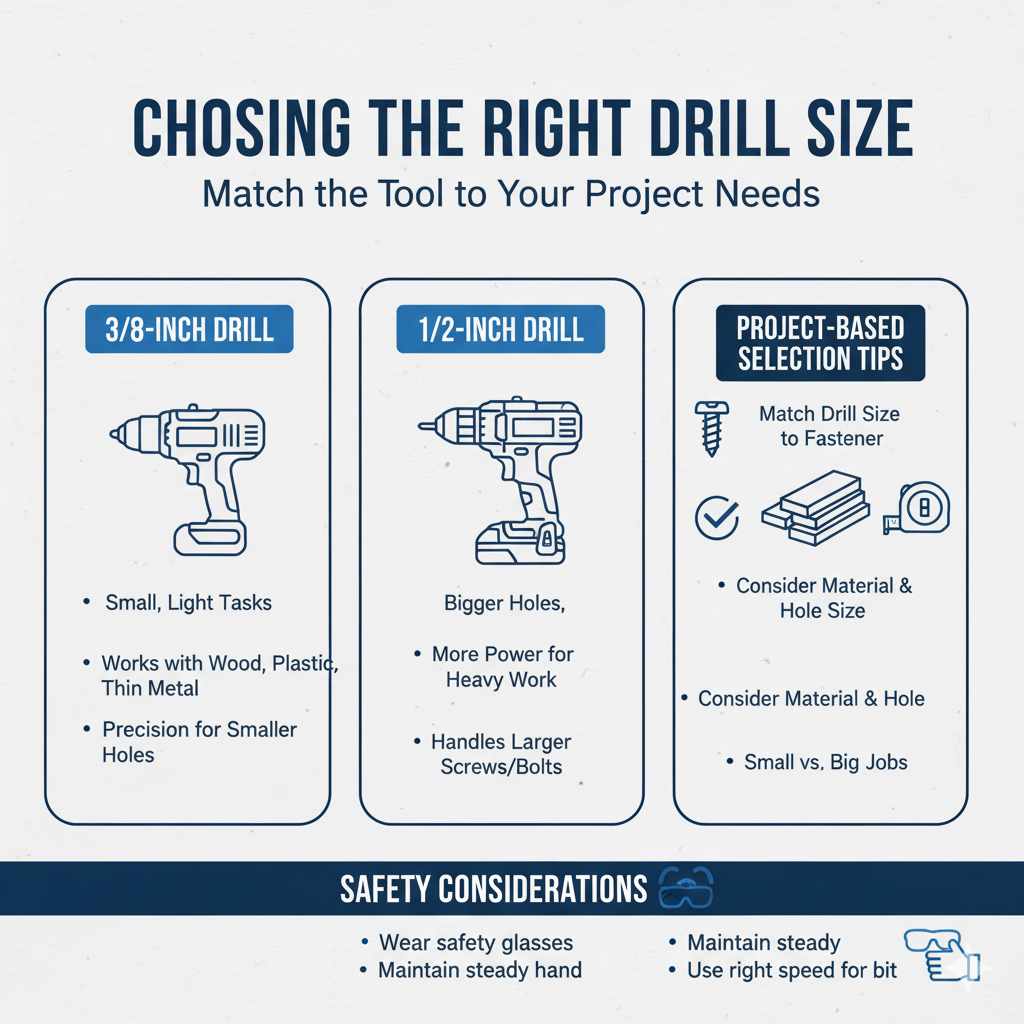
For small and light tasks, a 3/8 inch drill is a good choice. It works well for wood, plastic, and thin metals. For bigger holes or tougher materials, choose a 1/2 inch drill. It offers more power and can handle heavy work. Check the screw or bolt size first. Match the drill size to fit the fastener snugly. This prevents loosening or breaking later.
Safety Considerations
Using the right drill size helps keep you safe. A drill that is too big may cause the bit to slip. This can lead to injury or damage to the material. A drill that is too small may break or overheat. Always wear safety glasses to protect your eyes. Keep a steady hand and use the right speed for the drill bit. Proper use reduces risks and improves results.
Frequently Asked Questions
What Is The Size Difference Between 3/8 And 1/2 Drill Bits?
The 3/8 drill bit is 0. 375 inches in diameter, while the 1/2 drill bit is 0. 5 inches. The 1/2 bit is larger, making bigger holes.
When Should I Use A 3/8 Drill Bit Over 1/2?
Use a 3/8 bit for smaller holes or lighter materials. The 1/2 bit suits larger holes or tougher materials needing more strength.
Are 3/8 And 1/2 Drill Bits Interchangeable?
No, they are not interchangeable. Each size fits specific drill chuck sizes and hole requirements, ensuring precision and safety.
How Does Drill Bit Size Affect Drilling Speed?
Smaller bits like 3/8 drill faster and with less effort. Larger bits like 1/2 require more power and slower speed to avoid damage.
Conclusion
Choosing between a 3/8 and 1/2 drill depends on your task needs. A 3/8 drill suits light jobs and smaller bits. The 1/2 drill handles tougher jobs and bigger bits. Both have their place in your toolbox. Knowing their differences helps you pick the right tool fast.
Use the 3/8 drill for everyday tasks and the 1/2 drill for heavy work. Simple choice, better results.