Difference between Drill And Impact Drill: Key Features Explained
Are you confused about whether to choose a drill or an impact drill for your next project? You’re not alone.
Both tools look similar, but they work very differently and serve unique purposes. Knowing the key differences can save you time, effort, and money. You’ll discover exactly how a drill and an impact drill differ, so you can pick the right tool for your needs and get the job done like a pro.
Keep reading—you’ll soon feel confident making the best choice for your toolbox.
Drill Basics
Drills are basic tools found in many homes and workshops. They help create holes and drive screws with ease. Understanding drill basics is key to choosing the right tool for any job.
Drills come in different types, each designed for specific tasks. Some are simple and light, while others are powerful and heavy. Knowing the differences helps you pick the best drill for your needs.
Types Of Drills
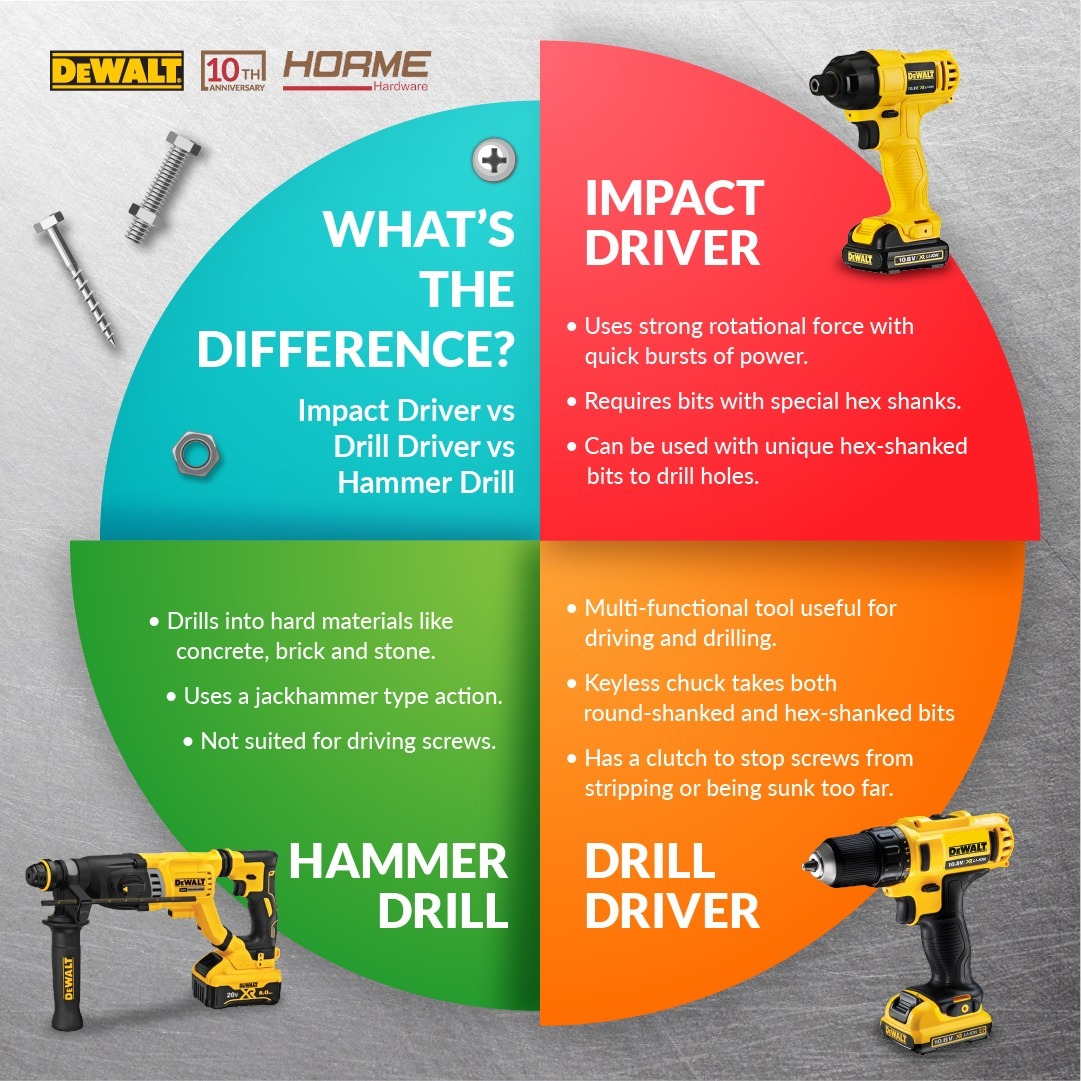
There are two main types: standard drills and impact drills. Standard drills rotate the bit to drill holes or drive screws. Impact drills add quick, strong bursts to help with tough materials. Corded and cordless options exist for both types. Cordless drills offer mobility, while corded ones provide constant power.
Common Uses
Standard drills work well for wood, metal, and plastic. They are great for simple drilling and light screw driving. Impact drills handle harder tasks like driving large screws or bolts. They perform better on tough surfaces like concrete or thick wood. Choosing the right drill depends on your project needs and material type.
Impact Drill Features
Drills spin to bore holes, while impact drills add quick bursts for tough materials. Impact drills handle harder tasks with less effort. They are best for driving screws and drilling into metal or concrete.
How Impact Drills Work
Impact drills combine rotation with quick bursts of force. They spin the drill bit like a regular drill. At the same time, they deliver rapid impacts forward. This action helps drive screws or drill into hard materials. The impact reduces the chance of the bit slipping. It also lowers user fatigue during tough jobs.
The bursts happen many times per second. This makes drilling faster and easier. Impact drills excel in tasks needing extra power. They perform well on wood, metal, and masonry.
Key Components
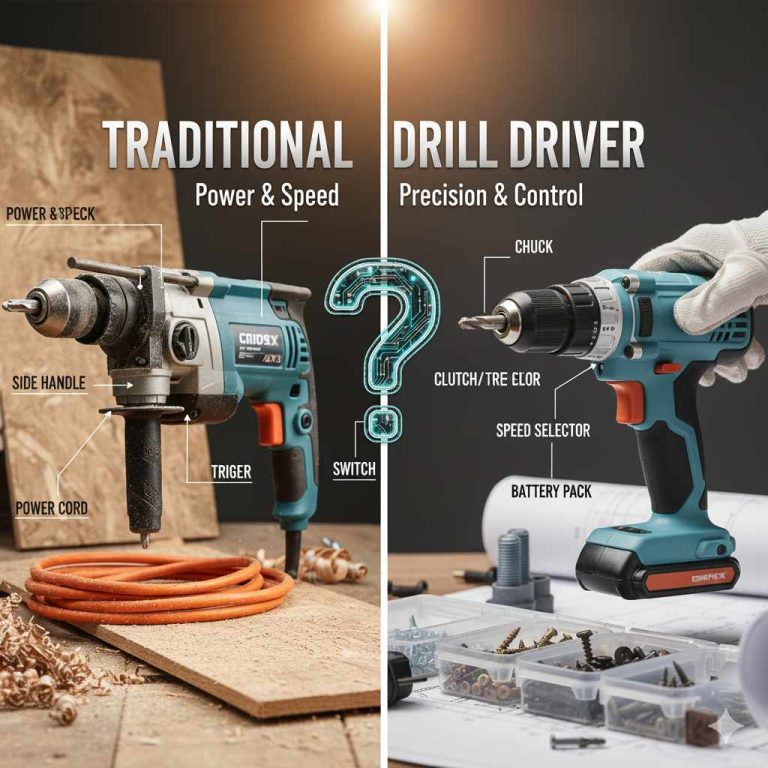
Impact drills have unique parts that set them apart. A special hammer and anvil mechanism create the impact force. This mechanism hits the drill bit repeatedly as it spins. The motor powers both the rotation and the impact.
The chuck holds the drill bit tightly. It must withstand the hitting action without loosening. The trigger controls speed and power. Many impact drills also have adjustable settings to control torque.
Some models include a clutch to prevent overdriving screws. The body is built to absorb vibration and improve grip. These parts work together for efficient and controlled drilling.
Drill Vs Impact Drill
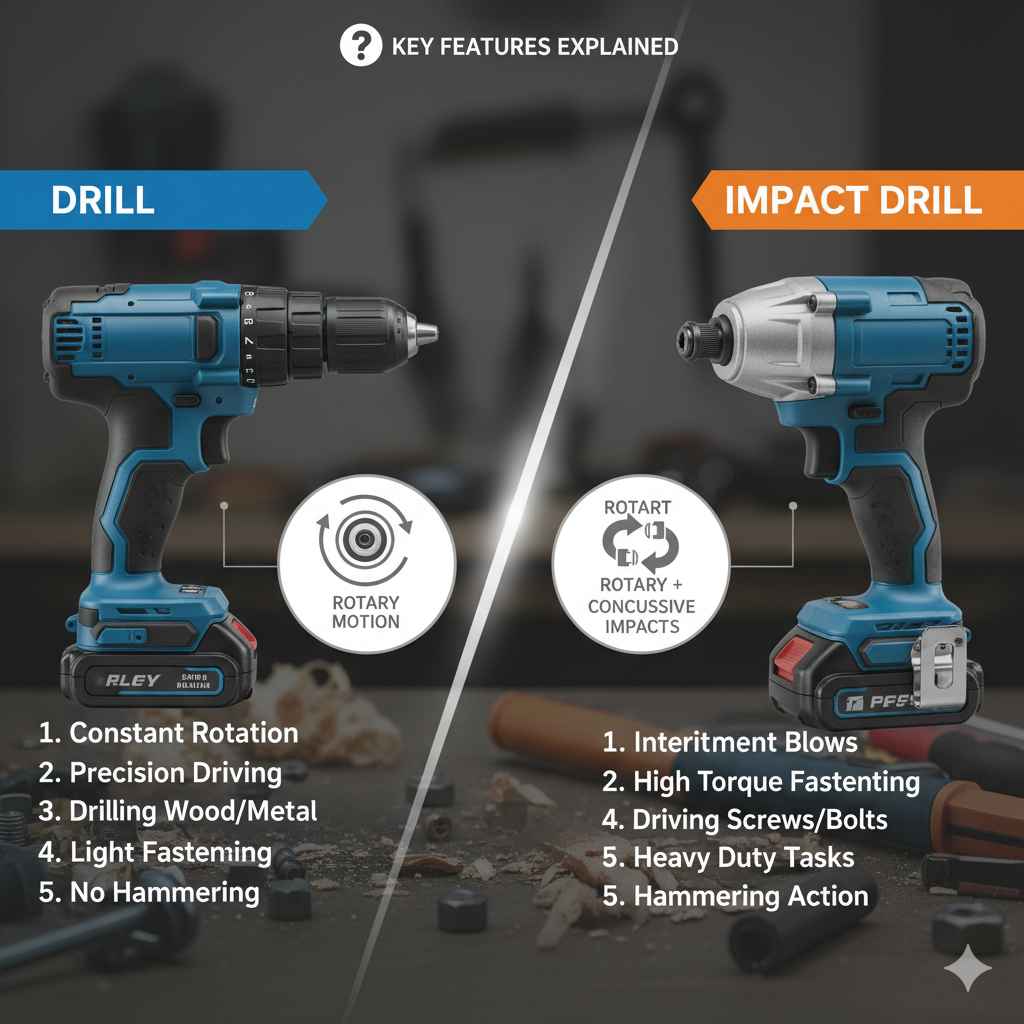
Drill and impact drill are tools used for making holes and driving screws. Both look similar but work differently. Knowing their differences helps choose the right tool for your job. Each tool suits different tasks and materials.
Power And Torque
A drill uses steady power to turn the bit. It drills holes in wood, metal, and plastic. An impact drill adds strong bursts of torque. These bursts help drive screws into tough materials like hard wood or metal. Impact drills are better for heavy tasks that need extra force.
Speed And Control
Drills offer smooth speed control. You can adjust the speed for delicate or fast work. This control helps prevent damage to materials. Impact drills spin fast but deliver short, quick impacts. This action makes driving screws easier but less smooth. Drills give more precision, while impact drills focus on power.
Noise And Vibration
Drills run quietly with low vibration. This makes them comfortable for long use. Impact drills create more noise and vibration. The hammering action causes shaking and louder sounds. Using an impact drill for a long time may feel tiring. Noise and vibration levels affect comfort during work.
Choosing The Right Tool
Choosing the right tool for your work saves time and effort. Both drills and impact drills look similar but serve different purposes. Picking the correct one depends on what you want to achieve and the materials you work with. Consider your project needs, the materials involved, and your budget to make the best choice.
Project Requirements
Think about what you want to do. For simple tasks like hanging pictures or assembling furniture, a standard drill works well. It drills holes and drives screws with steady power. For tougher jobs like driving large screws or working on hard surfaces, an impact drill gives extra force. It uses quick bursts of power for better control and less effort.
Material Types
Soft materials like wood or plastic suit a regular drill. It creates clean holes without damage. Hard materials like concrete, brick, or metal need more force. Impact drills handle these better by combining rotation and hammering action. This helps drill through tough surfaces faster and easier.
Budget Considerations
Standard drills usually cost less and are good for everyday tasks. Impact drills are more expensive but offer more power and versatility. Consider how often you will use the tool. For occasional light work, a basic drill saves money. For frequent heavy-duty jobs, investing in an impact drill pays off.
Maintenance Tips
Proper maintenance keeps your drill and impact drill working well. It extends the tool’s life and saves money. Simple care steps prevent damage and ensure safety. Follow these tips to keep your tools ready for any job.
Cleaning And Storage
Remove dust and debris after each use. Use a dry cloth or soft brush. Avoid water or harsh cleaners that can harm the tool. Store in a dry place away from moisture. Keep tools in their case or on a shelf. This prevents rust and mechanical problems.
Battery Care
Charge batteries fully before first use. Avoid letting batteries drain completely. Store batteries in a cool, dry place. Remove batteries from the tool if not used for a long time. Use the charger recommended by the manufacturer. This helps keep battery life longer and safer.
Troubleshooting Common Issues
Check the battery if the drill won’t start. Clean or replace worn drill bits for better performance. Tighten loose parts to avoid damage. Listen for unusual sounds that may mean a problem. Follow the user manual for specific fixes. Regular checks prevent small issues from becoming big ones.

Frequently Asked Questions
What Is The Main Difference Between Drill And Impact Drill?
A drill rotates continuously for boring holes. An impact drill combines rotation with rapid concussive blows for tougher materials. This makes impact drills better for heavy-duty tasks like driving screws into hard surfaces.
When Should I Use An Impact Drill Instead Of A Drill?
Use an impact drill for dense materials or driving long screws. Regular drills are best for light drilling and simple tasks. Impact drills provide more torque and prevent bit slipping on tough jobs.
Can I Use A Drill Instead Of An Impact Drill?
You can, but a drill lacks the hammering action of an impact drill. This makes drilling into hard materials slower and less efficient. For heavy tasks, an impact drill is more effective and durable.
Are Impact Drills Suitable For Diy Beginners?
Yes, impact drills are user-friendly and versatile. Beginners benefit from their power and ease in driving screws. However, learning proper technique prevents overdriving and protects materials from damage.
Conclusion
A drill and an impact drill serve different purposes. A drill is best for simple drilling tasks. An impact drill adds extra force for tough jobs. Choose the tool based on your project needs. Knowing their differences helps avoid mistakes.
This saves time and effort. Both tools have their place in a toolbox. Use them wisely for better results every time.