How to Make Thick Wood Shelves That Won’t Sag
Thick wood shelves resist sagging because load capacity scales with the cube of thickness — doubling a shelf from 3/4 inch to 1.5 inch multiplies strength roughly eightfold, not just double. But thickness alone will not save an unsupported 48-inch span; oak, maple, and hardwood plywood each have a real maximum span before they bow. This guide covers choosing the right wood, building in bracing, and the exact span chart for sizing.
Quick Answer
Use hardwood — oak, maple, or hardwood plywood — at least 3/4 inch thick, and step up to 1 inch for spans over 30 inches. Add a hidden 2×4 or steel bracket every 24–32 inches for heavy loads. Capacity scales with the cube of thickness, so a 1.5-inch shelf holds roughly 8× more than a 3/4-inch shelf at the same span.
Introduction to Thick Wood Shelves
Best Shelf Bracket Pick
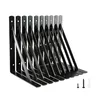
Home Master Hardware 12″ x 8″ Heavy Duty Shelf Brackets (600 lb rated, 10-pack)
A steel L-bracket sized to shore up a thick shelf exactly where the span chart above says you need it — every 24 to 32 inches on a long run.
- Best for: long spans or garage/closet shelves carrying heavy, dense loads
- Why we picked it: a published 600 lb rating per bracket gives real headroom over the chart’s bookshelf-load assumption
- Main drawback: the bracket arm is visible under the shelf — not a fit for a fully floating look
Compare more shelf bracket options
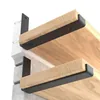
 Option 1 NeoDrop 4-Pack 12″ Heavy Duty Brackets
|
 Option 2 Leopo 12″ Industrial Shelf Bracket, 6-Pack
|
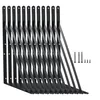 Option 3 12-Pack 16″ x 10″ Heavy Duty Brackets
|
As an Amazon Associate we earn from qualifying purchases.
Thick wood shelves are strong and can hold heavy items without a visible dip in the middle, and they’re one of the most approachable beginner woodworking projects to build in a weekend. Choosing the right wood matters as much as the thickness itself. Oak is prized for strength and grain; maple is hard and resists scratches well; pine is lighter and more affordable but softer under sustained weight.
One practical snag most first-time builders hit: most home-center lumber racks don’t stock solid hardwood boards over 1.5 inches thick. For anything beefier, plan on laminating two boards face-to-face with glue and clamps, or having a hardwood specialty yard resaw and plane a thicker blank for you.
Benefits of thick shelves go beyond strength — they add a substantial, rustic look that fits both modern and traditional rooms, and a well-sealed thick shelf needs little more than an occasional wipe-down to stay looking new. See our complete wood species guide if you’re still deciding between species.
Materials and Tools Needed
Creating thick wood shelves requires the right materials and tools. Essential materials include:
- Wood planks — a sturdy hardwood like oak, maple, or a hardwood-veneer plywood
- Wood screws for secure fastening
- Wood glue to strengthen joints
- Sandpaper in progressively finer grits for a smooth finish
- Wood stain or paint for the final look
Choosing the right tools is just as important. Necessary tools are:
- Drill for pilot holes and driving screws
- Circular saw or table saw for straight, clean cuts
- Measuring tape for accurate dimensions
- Level to keep shelves straight
- Clamps to hold pieces together while glue cures
How Thick Should Your Shelf Be? Real Span & Load Chart
Shelf thickness is a strength curve, not a straight line. Deflection follows a cube relationship with thickness: doubling a shelf’s thickness cuts its sag to one-eighth, while doubling the span makes it sag eight times more. That single fact explains why a slightly thicker board outperforms a much longer bracket-free run.
The chart below uses tested figures for a 10-inch-deep adjustable shelf carrying a 30 lb-per-foot load (a typical loaded bookshelf), targeting a sag of 0.02 inch per foot or less — the point most people start to notice a visible dip.
| Material | Max Span at 3/4″ Thick | Max Span at 1″ Thick |
|---|---|---|
| Pine / softwood plywood | 28 in | 38 in |
| Poplar | 28 in | 41 in |
| Oak (hardwood) | 32 in | 42 in |
📊 Adding a 3/4″ x 1.5″ hardwood edge band to the front of a plywood shelf increases stiffness by roughly 30–50%, stretching a 28-inch pine span out to about 34 inches — Source: Branching Out Wood, shelf sag engineering guide, 2026.
Beyond a board’s own thickness, three things move the needle: fixing both ends to the wall instead of leaving a shelf resting freely can stretch a safe span from around 28 inches to 48 inches, hidden internal bracing (below) adds rigidity without changing the board’s visual thickness, and evenly distributing weight — heavy items low and centered — keeps the load closer to what the chart above assumes. For a shelf sized to your own load and species, WoodBin’s free Sagulator calculator runs the same deflection math for your exact dimensions, or use our own wood load capacity calculator for a quick estimate.
Planning Your Shelf Design
Start by choosing the right dimensions for your thick wood shelves. Measure the space where you want to place them and consider how many items you’ll store — that decides the length and depth. Then check the length against the span chart above for your chosen wood and thickness before you cut anything.
Style considerations matter too. A lighter wood like pine or maple brightens a room; a darker wood like walnut or stained oak adds warmth. Most bookshelves fall between 8 and 12 inches deep and 24 to 36 inches wide, a range that keeps sag manageable at 3/4-to-1-inch thickness per the chart above.
Prepping the Wood
Start by measuring the wood carefully, then cut each piece to size using a straight edge and a circular saw or table saw for clean, square edges.
Next, sand for a smooth finish. Begin with coarse sandpaper (around 80–100 grit) to remove rough spots, then progress through medium (150 grit) to fine (220 grit) for a soft touch. Always sand along the wood grain, never across it, to avoid visible scratches under a clear finish.
Check the surface regularly for smoothness and dust off sawdust after each sanding pass — a clean surface is what lets stain absorb evenly later.
Assembly Techniques: Building in Internal Bracing
Joining pieces together requires careful planning. Use wood glue for a strong bond, and add screws or dowels for mechanical strength while the glue cures. The single most important rule for a load-bearing shelf: every load-bearing part should rest on a solid, continuous run of wood all the way down — the fasteners should hold pieces in alignment, not carry the actual load themselves.
For a shelf that needs to hold real weight without adding visible bulk, glue and screw a hidden internal frame — typically a 2×4 turned on edge, or two strips of 1×2 — to the underside before it goes up. This is the same technique used in heavy-duty garage shelving builds: the frame absorbs the bending stress so the board itself only has to carry the surface load. Combined with the bracket spacing from the span chart above, this is how a 48-inch run avoids sagging even at 3/4-inch board thickness.
Use a level to check evenness once assembled, and adjust as needed to achieve balance before the glue sets fully.
Finishing Touches
Staining and sealing thick wood shelves protects the wood and brings out its grain. Choose a stain that enhances the wood’s natural color and apply it evenly with a brush or lint-free cloth.
Let the stain dry completely before sealing. A clear polyurethane, applied in two to three thin coats, gives the best durability — lightly sand with fine-grit paper between coats and let each layer dry fully before the next.
Work in a well-ventilated area and follow the safety guidelines on the product label when handling stains and sealers.
Mounting Your Shelves
Choosing the right wall anchors is crucial for a thick, heavy shelf. Heavy-duty toggle bolts or lag screws driven into studs work best — a shelf loaded per the chart above can easily weigh 40–60 lbs before you add anything to it.
Match the anchor to the wall type: drywall alone needs metal toggle anchors rated for the full loaded weight, not just plastic anchors; solid masonry or concrete needs expansion anchors or masonry screws. Whenever a stud lines up with the shelf, a lag screw straight into the stud beats any drywall anchor. See our shelf bracket ideas guide for bracket styles that pair well with exposed-mount thick shelves.
Always check the manufacturer’s stated weight capacity for the anchor itself — not just the bracket — before you load the shelf.
Maintenance and Care
To keep thick wood shelves looking great, wipe them down regularly with a soft, dry cloth. For tough spots, use a barely damp cloth with a little mild soap, then dry the surface immediately — standing water is the main cause of finish damage on wood shelving.
Check periodically for scratches, dents, or the first signs of sag. Sand light scratches and re-apply matching stain and sealant to restore the finish, and if you spot early sag, that’s the signal to add the bracing discussed above before it gets worse.
Troubleshooting Common Issues
Sagging shelves almost always trace back to one of three causes: the span is too long for the thickness (check the chart above), the shelf has no internal bracing, or the load is heavier than the shelf was ever sized for. Add a bracket or hidden frame, redistribute weight with heavier items low and centered, and re-measure against the span chart before assuming the wood itself is defective.
Scratches and dents are cosmetic and easy to fix — use wood filler or a matching stain pen for small marks, and sand lightly before filling deeper dents. For matching techniques on other wood surfaces in the house, see our guide to fixing scratches on hardwood floors.
Gallery of Ideas
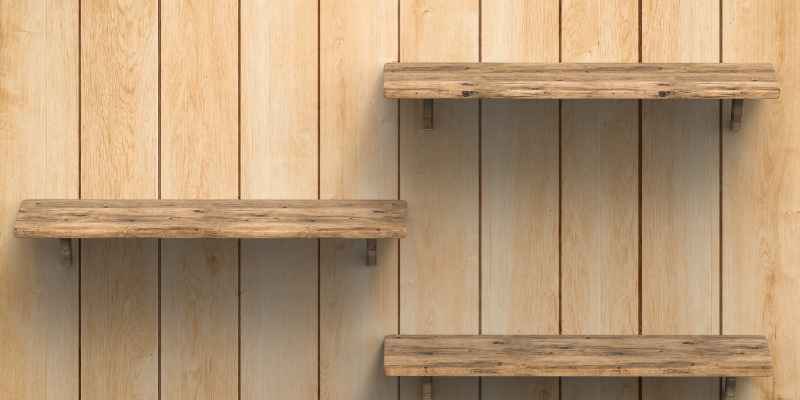
Thick wood shelves bring a substantial, built-in look to almost any room. Use them for books, plants, or decorative items — their sturdy design (built to the span chart above) holds heavy items with room to spare.
In a living room they work well as art display ledges; in a kitchen, thick shelves comfortably hold heavy cast iron and cookbooks; in a bedroom, they make a solid perch for personal items. For more layout inspiration, see our built-in bookshelf design ideas.
Consider using a thick wood shelf as a room divider, or explore floating shelf designs for a more minimal look — the same span math above still applies, since a floating shelf has no visible bracket to help it.
Frequently Asked Questions
How Do I Choose Wood For Thick Shelves?
Choose hardwoods like oak, maple, or walnut for durability — softwoods like pine can warp or sag under sustained weight. Always check for knots and defects, since these compromise strength at exactly the point a shelf needs it most. Match the species to the span chart above based on your shelf’s length and expected load.
What Tools Are Needed For Making Thick Wood Shelves?
You’ll need a circular saw or table saw for precise cuts, a drill for pilot holes and driving screws, sandpaper in several grits for a smooth finish, and clamps to hold pieces together while glue cures. A level and stud finder round out the list for mounting.
How Do I Finish Thick Wood Shelves?
Sand the surface smooth through progressively finer grits, apply a wood stain if you want color, then seal with two to three thin coats of clear polyurethane. Let each layer dry fully and sand lightly between coats for the smoothest, most durable finish.
How Much Weight Can Thick Wood Shelves Hold?
A 3/4-inch oak shelf spanning 32 inches or a 1-inch oak shelf spanning 42 inches can carry a typical 30 lb-per-foot bookshelf load without excess sag. Pine and plywood hold less at the same span — roughly 28 inches at 3/4 inch thick — and adding internal bracing or shortening the span both increase real-world capacity beyond the chart’s baseline.
How Thick Should a Shelf Be to Prevent Sagging?
For most residential spans of 24 to 36 inches, 3/4 inch is the minimum for hardwood, and 1 inch is safer for anything longer or under a heavier load. Because capacity scales with the cube of thickness, going from 3/4 inch to 1.5 inch roughly multiplies strength eightfold — a bigger gain than adding a second support bracket in most cases.
Do Plywood Shelves Sag More Than Solid Wood?
Yes, at the same thickness plywood typically sags slightly more than solid hardwood, though it matches solid pine fairly closely. A 3/4-inch hardwood-veneer plywood shelf spans about 28 inches before excess sag, versus 32 inches for solid oak. Gluing a solid hardwood edge band to the plywood’s front edge closes most of that gap.
Conclusion
Creating thick wood shelves that actually hold their load comes down to three things: pick a hardwood thick enough for your span using the chart above, build in hidden bracing rather than relying on the board alone, and anchor to the wall with hardware rated for the full loaded weight. Follow the steps in this guide and your shelves should stay flat and solid for years.
Happy building!
Sponsored / affiliate links. As an Amazon Associate I earn from qualifying purchases. I may earn additional commission from eligible campaigns.