
DIY Workbench Top: Transform Your Workspace with Ease
A sturdy workbench top is essential for any DIY enthusiast. It provides a reliable workspace for various projects.
Creating your own workbench top is a rewarding project. It ensures you have the perfect surface tailored to your needs. Whether you are a seasoned woodworker or a beginner, designing and building your own workbench top can save money and give you satisfaction.
This guide will walk you through the steps and materials needed. We will explore different options to suit various types of projects. From selecting the right wood to securing the best finish, you will find all the information necessary to create a durable and functional workbench top. Dive into this DIY project and enhance your workspace with a personalized touch.
Introduction To Diy Workbench Tops
A good workbench is the heart of any workshop. It provides a stable surface to work on. This helps in completing projects efficiently. A solid workbench top ensures safety. It reduces the risk of accidents. You can organize tools better. This keeps your workspace neat.
Custom workbench tops fit your needs perfectly. They are designed for your specific tasks. You can choose the right materials. This makes the workbench durable. It can handle heavy tools and projects.
Custom tops also allow you to add features. For example, built-in tool holders. This increases your productivity. You spend less time searching for tools. More time working. A custom workbench top truly enhances your work experience.

Credit: www.instructables.com
Choosing The Right Materials
Selecting the best materials for your DIY workbench top ensures durability and functionality. Opt for quality wood or sturdy plywood for lasting performance.
Popular Material Options
Many people choose plywood for their workbench top. It is affordable and easy to cut. Some prefer hardwood like maple or oak. These are strong and durable. Another option is MDF (Medium-Density Fiberboard). It is smooth and easy to work with.
Pros And Cons Of Each Material
| Material | Pros | Cons |
|---|---|---|
| Plywood | Affordable, Easy to cut | Not as durable, Can splinter |
| Hardwood | Strong, Durable | Expensive, Heavy |
| MDF | Smooth, Easy to work with | Prone to moisture damage, Heavy |
Essential Tools And Supplies
A workbench top needs some key tools. A measuring tape helps with accurate cuts. A circular saw makes smooth and fast cuts. Drills are vital for making holes and screwing parts together. A sander smooths rough edges and surfaces. Clamps hold pieces in place while you work. Safety gear like gloves and goggles protect you.
Strong wood like plywood or hardwood is a good choice. Screws and nails keep things together. Wood glue adds extra strength. Sandpaper smooths the wood before finishing. Paint or varnish gives a nice finish. Brushes or rollers help apply paint smoothly.

Credit: www.youtube.com
Measuring And Planning
Measure the space for your workbench. Use a tape measure for precise measurements. Write down each measurement. Double-check your measurements. Make sure they are correct. Accurate measurements are crucial for a good fit.
Plan every detail for your workbench. Decide on the size and shape. Think about the height and width. Draw a sketch of your workbench. Use your measurements for the sketch. This helps you see the final product.
Cutting And Preparing Materials
Always wear safety goggles to protect your eyes. Gloves keep your hands safe. Ensure the area is well-lit. Keep your workspace clean to avoid trips and falls. Use a sharp blade for clean cuts. A dull blade can slip and cause injuries. Always cut away from your body. Never cut towards yourself. Keep a first aid kit nearby. Accidents can happen. Stay focused and avoid distractions.
Start with cleaning the surface. Remove any debris or dust. Sand the surface smooth. Use a fine-grit sandpaper. Wipe the surface with a damp cloth. Let it dry completely. Check for any uneven areas. Use a level to ensure it is flat. Fill any gaps or holes with wood filler. Let it dry. Sand the filled areas smooth again. Now your surface is ready for the next step.
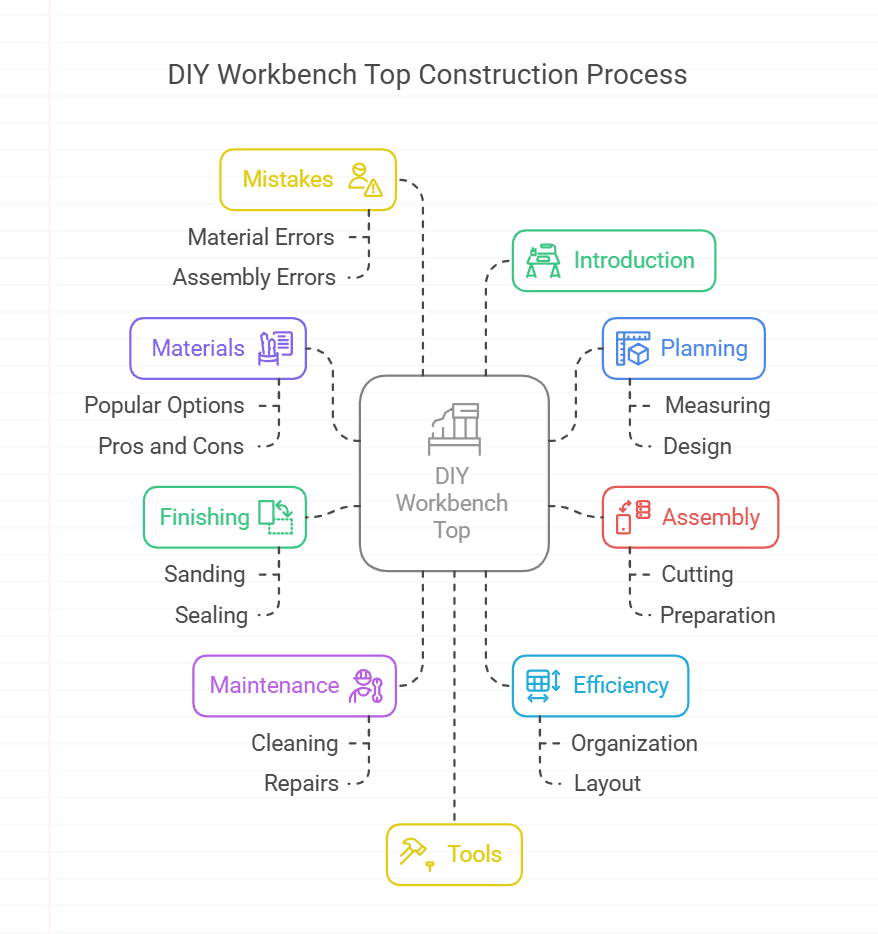
Assembling The Workbench Top
Place the workbench top on a flat surface. Ensure all tools are handy. Align the corners properly. Attach the legs using screws. Tighten screws with a screwdriver.
Check the alignment again. Attach braces for added support. Use wood glue for extra hold. Let glue dry completely. Double-check all connections.
Use strong, quality wood. Pick screws that are rust-resistant. Secure all joints tightly. Add clamps for more stability. Test by shaking the workbench.
If it wobbles, tighten screws more. Sand edges to smooth out. Apply a finish to protect wood. Regularly inspect the workbench top. Fix any loose parts quickly.
Finishing Touches
Sand the workbench top with fine sandpaper. This removes rough spots. Smooth edges with a sanding block. A smooth surface is easier to work on. Pay attention to corners. Ensure they are not sharp.
Apply a protective coating to the top. This can be varnish or oil. It protects the wood. Use a brush for even coverage. Allow it to dry completely. Apply a second coat for extra protection. Your workbench will last longer.
Maintenance And Care
Clean the workbench top often. Use a soft cloth. Remove dust and debris. Dust can scratch the surface. Avoid using harsh chemicals. They can harm the wood. Mild soap and water work best. Dry the surface well after cleaning.
Apply a protective finish. This keeps the wood safe. Use wax or oil. Follow the product instructions. Regularly check for any wear. Reapply the finish as needed. Keep the workbench in a dry area. Moisture can damage the wood.
Small scratches are common. Sand the area lightly. Use fine-grit sandpaper. Clean the dust after sanding. Apply a touch-up finish. It will blend in. For deeper scratches, fill with wood filler. Let it dry. Sand it smooth. Refinish the area.
Loose joints can happen. Tighten them with screws or nails. Use wood glue for extra strength. Let the glue dry fully. Check the workbench regularly. Fix any issues quickly. This keeps your workbench in good shape.
Maximizing Workspace Efficiency
Creating a neat workbench makes tasks easier. Use containers for small items. Label them clearly. Keep tools within reach. Use hooks for hanging tools.
Group similar items together. Keep screws, nails, and bolts in one place. This saves time and reduces clutter.
Install shelves above the workbench. Use them for storing larger items. Consider adding drawers under the bench. These are great for storing small parts.
A pegboard can be a useful addition. Hang tools on it. Easy to access and organize.
Common Mistakes To Avoid
Careful measurements are key to a good workbench top. Always double-check your numbers. Mistakes here can lead to uneven surfaces. Use a reliable tape measure. Mark clearly on the wood. This helps keep things accurate. Taking time to measure will save you trouble later.
Plan your cuts well. Think before you cut. This saves wood and money. Use a cut list. It helps you see all pieces needed. Efficient planning reduces waste. Leftover wood can be used for small projects. Smart planning is eco-friendly and cost-effective.
Frequently Asked Questions
What Can I Make A Workbench Top Out Of?
You can make a workbench top from plywood, MDF, hardwood, or butcher block. Choose materials based on durability and budget.
Is It Cheaper To Buy Or Build A Workbench?
Building a workbench is usually cheaper if you have the tools and skills. Buying one saves time and effort.
Is Plywood Or Osb Better For Workbenches?
Plywood is better for workbenches due to its strength and smooth surface. OSB is cheaper but less durable.
How Thick Should The Top Of A Workbench Be?
The top of a workbench should be 1. 5 to 3 inches thick. This ensures durability and stability for various tasks.
Conclusion
Building your own workbench top is a rewarding project. It saves money. It offers customization. You can make it fit your exact needs. The process is simple and enjoyable. With basic tools, anyone can do it. Plus, you’ll gain valuable skills.
Your workbench will be sturdy and reliable. Start your DIY workbench top today. Enjoy the satisfaction of a job well done. Happy crafting!