Sam Maloof Chair Design: The Philosophy Behind the Curves
“If it’s comfortable, it’s beautiful.” That’s how Sam Maloof summed up his entire design philosophy in one line – and it explains more about why his chairs look the way they do than any list of “organic curves” and “mid-century modern style” ever will.
The Actual Philosophy: Function Decides The Form
Best Hand-Rubbed Finish Pick

Watco Danish Oil Wood Finish, Natural – $14.98
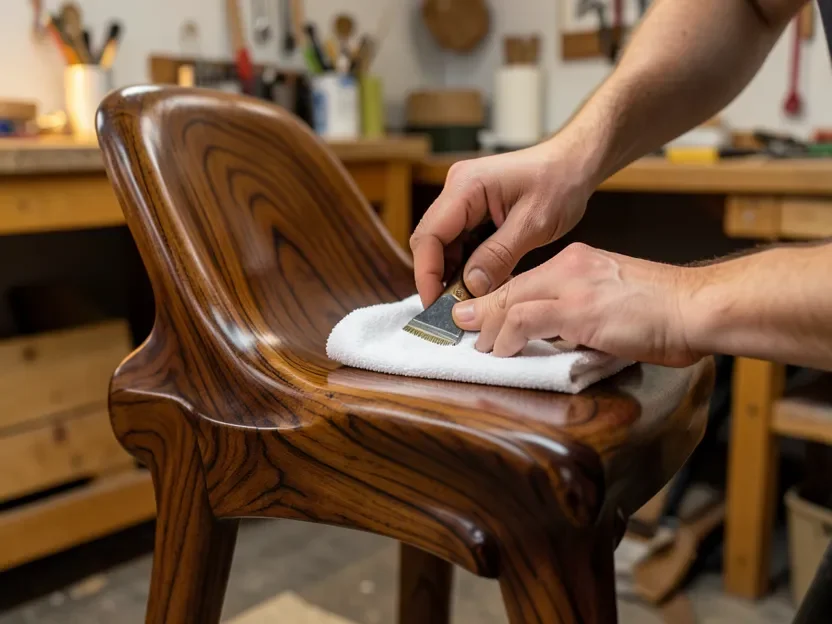
Maloof’s chairs were finished with hand-rubbed oil, not a film finish — this is the classic wipe-on choice for letting walnut and sapele grain show through.
- Best for: A traditional hand-rubbed look on walnut or sapele
- Why we picked it: Penetrates instead of sitting on the surface, matching how Maloof-style pieces were actually finished
- Main drawback: Needs multiple coats and full cure time between them
Compare more wood finish options
 Option 1 Watco Dark Walnut Danish Oil Wood Finish – $14.98
|
 Option 2 Hope’s 100% Pure Tung Oil, 16 oz – $17.99
|
 Option 3 Howard Restor-A-Finish (Walnut) – $14.99
|
Maloof’s own description of his approach was direct: “a piece could be very beautiful and very functional at the same time, and that is really the center of what I do.” He wasn’t sculpting furniture-shaped art objects and hoping they’d also work as chairs – every curve exists because it does something for the person sitting in it. He put it plainly elsewhere: “My goal is to make furniture that people can be comfortable living with.” That’s a different design goal than chasing a striking silhouette, and it’s why Maloof chairs photograph well but are actually built to be used daily, not displayed and avoided.
Structure As Ornament: No Hardware To Hide
The clearest expression of that philosophy is structural, not decorative: Maloof’s chairs use no screws, brackets, or metal fasteners visible anywhere on the finished piece. Legs lock into the seat through the rabbeted joint woodworkers now call the Maloof joint – assembled oversized, then hand-carved down until the leg and seat read as one continuous shape. There’s nothing to hide because there’s no separate hardware; the joint geometry itself is the ornament. For the full technical breakdown of how that joint is actually cut and shaped, see our guide to Maloof’s woodworking process.
Where The Curves Actually Come From
Maloof’s signature flowing lines aren’t freeform sculpture for its own sake – each curve is shaped around a specific ergonomic job: the seat is scooped to distribute weight across a wider area than a flat seat can, the backrest curves to meet the lower back at the exact point a flat backrest would dig in, and the rocker runners are tuned by hand so the chair settles at a stop rather than continuing to rock. That’s the difference between his chairs and purely sculptural studio furniture that looks similar in photos but wasn’t engineered to be sat in for hours. The low-back chair, which Maloof called his personal favorite after roughly four decades of refining it, is the clearest single example of this philosophy fully realized.
Materials In Service Of The Design
Maloof favored black walnut, later supplementing it with sapele as old-growth walnut became scarcer in the widths a sculpted seat needs. Both woods carve cleanly along tight compound curves without chipping out, which matters more to this design philosophy than it would to a flat-paneled furniture style – a wood that tears out under a spokeshave limits how far you can push a curve, so the material choice and the design language reinforce each other.
Recognition: Why This Wasn’t Just A Regional Style
In 1985, Maloof became the first craftsperson ever awarded a MacArthur Fellowship – the “genius grant” – putting studio furniture-making on the same footing as the sciences and fine arts in a way few woodworkers before him had achieved. A decade earlier, in 1975, he became the first woodworker elected a Fellow of the American Craft Council, and in 1988 the Council awarded him its Gold Medal for Consummate Craftsmanship. That trajectory from a self-taught furniture maker to an internationally recognized studio-furniture pioneer is covered in full in our history of the Maloof rocking chair’s design evolution. For the fuller story of his career and the foundation that preserves his workshop today, see our guide to Sam Maloof’s legacy.
Frequently Asked Questions
What Was Sam Maloof’s Design Philosophy?
Maloof summarized it himself: “If it’s comfortable, it’s beautiful.” Every visual element in his chairs — the curves, the joinery, the finish — exists to serve how the piece functions for the person using it, not as decoration applied afterward.
Why Is Sam Maloof Famous For His Chairs?
Beyond the design itself, Maloof was the first craftsperson to receive a MacArthur Fellowship (1985) and the first woodworker elected a Fellow of the American Craft Council (1975), recognition that helped establish studio furniture-making as a serious art form rather than just skilled trade work.
How Are Sam Maloof Chairs Made?
Legs lock into the seat with the rabbeted Maloof joint, assembled oversized and then hand-carved into one continuous shape — no screws or metal brackets appear anywhere on a finished chair. See our process guide for the full construction sequence.
What Materials Are Used In Maloof Chairs?
Black walnut was Maloof’s signature wood throughout his career; sapele became a common substitute as old-growth walnut got harder to source in usable widths. Both are chosen specifically because they carve cleanly on tight curves, and both are traditionally finished with a hand-rubbed oil rather than a film finish like polyurethane.
Bottom Line
Maloof’s design language reads as sculptural, but it was built entirely around comfort and structure, not aesthetics for their own sake. If you want to see that philosophy expressed as an actual build process, read our breakdown of how he actually shaped these joints next.
Sponsored / affiliate links. As an Amazon Associate I earn from qualifying purchases. I may earn additional commission from eligible campaigns.