Drill Driver Versus Hammer Drill: Picking the Right Tool
Choosing the correct power tool can feel a bit tricky, especially when you’re just starting. The question of Drill Driver vs Hammer Drill: Which One Do You Need? comes up a lot for anyone working on home projects. It’s easy to get confused by all the options. Don’t worry, though! This post will break down the differences in a simple, step-by-step way, so you know exactly which tool is best for your tasks. We’ll explore everything you need to know, so you can make the right decision.
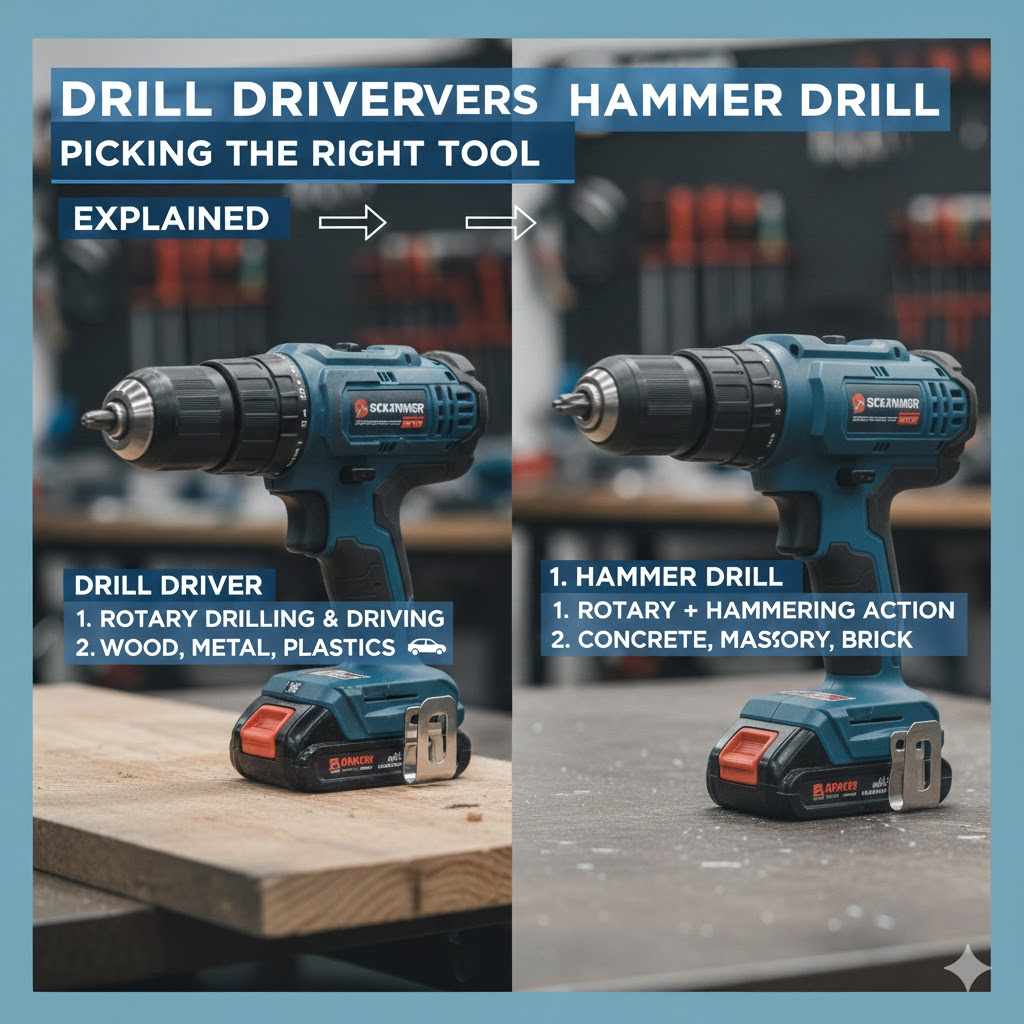
Drill Driver Explained: The Everyday Workhorse
The drill driver is your go-to tool for common tasks. Think about screwing things together or drilling holes in softer materials. It’s like the Swiss Army knife of power tools, handy for a bunch of different jobs. You’ll likely use a drill driver for things like assembling furniture, hanging pictures, or putting up shelves. It’s a great starting point for beginners because it’s usually easy to control and use.
Key Features of a Drill Driver
A drill driver has some important features that make it useful for many tasks. These features make the tool user-friendly and great for completing common projects. A good drill driver is a must-have for any tool collection.
Clutch Settings: This feature allows you to control how much torque (twisting force) the drill applies. It’s super helpful when you’re driving screws, because you can prevent them from going in too far and damaging the material.
The clutch is like a safety mechanism. You can set the clutch to slip, which means the drill stops applying force when it encounters resistance. This is perfect for delicate work or when you want to avoid stripping the screw head or damaging the wood.
Variable Speed: Most drill drivers have a variable speed trigger. This means you can adjust how fast the drill spins. Slower speeds are better for starting screws or drilling into delicate materials, while faster speeds are great for quickly driving screws or drilling in wood.
The speed control gives you more command over your projects. You can match the speed to the material you’re working with, for better results. The speed control is a game changer, allowing you to create precision.
Forward and Reverse: All drill drivers let you switch the direction of the drill. This is essential for both driving screws in and taking them out. It’s also useful if the drill bit gets stuck in the material.
The ability to change directions is key. It makes the drill driver a versatile tool for lots of different tasks. Without this feature, the drill driver would be much less effective.
Compact Size and Weight: Drill drivers are generally lightweight and easy to handle. This makes them easy to use for extended periods and in tight spaces.
This is a big plus for ease of use. A compact, lightweight drill driver is ideal for projects where you need to reach awkward spots or work overhead. This also reduces fatigue and allows for greater precision.
When to Use a Drill Driver
Knowing when to pull out your drill driver is simple. This tool is best for the projects you do every day around the house. Knowing what the tool is best suited for saves time and effort.
Assembling Furniture: Perfect for putting together flat-pack furniture. The clutch settings prevent over-tightening of screws, and the variable speed helps you manage the process.
Furniture assembly is a common project where a drill driver shines. It’s much faster and more accurate than using a screwdriver. The clutch function is particularly useful here to avoid damaging the furniture components.
Hanging Pictures and Shelves: Great for drilling pilot holes and driving screws into drywall or wood studs.
When hanging things, you’ll drill pilot holes first. A pilot hole helps guide the screw and prevents the wood from splitting. A drill driver makes this process fast and easy.
Light Drilling in Wood and Plastic: Works well for drilling smaller holes in soft materials.
Drilling holes in wood and plastic is made simpler with a drill driver. It is great for any DIY project around the house, like putting up a shelf or creating a sign.
Driving Screws into Various Materials: Ideal for driving screws into wood, drywall, and other soft materials.
Driving screws is a drill driver’s primary function. The tool is quick and effective for a wide range of screw-driving tasks, making it a valuable addition to your tool collection.
Hammer Drill Basics: When You Need More Power
A hammer drill is built for more heavy-duty jobs. It’s designed to drill into tough materials like concrete, brick, and stone. The difference between a drill driver and a hammer drill is in the action. A hammer drill has a hammering action, which makes it easier to break through these hard materials. If you plan to work on projects involving masonry or other hard materials, a hammer drill is your best friend.
How a Hammer Drill Works
The secret behind a hammer drill is a special mechanism. This mechanism allows the drill bit to hammer forward while it spins. It’s this hammering action that lets the drill break through hard surfaces more easily. The hammering is the reason hammer drills are ideal for concrete and brick.
Hammering Action: This is the key feature. The drill bit moves back and forth while it spins, chipping away at the material.
This forward and backward motion is what allows the drill to break through tougher materials. The hammering action is powered by either a mechanical or pneumatic system, which gives the drill its power.
Rotary Action: The drill bit also rotates, which helps to remove the debris created by the hammering.
The rotational movement is necessary for drilling the hole. It also helps to clear the dust and debris. This keeps the drill bit from getting stuck in the material.
Clutch: Most hammer drills have a clutch, like drill drivers.
The clutch allows you to control the torque, which prevents the bit from spinning too far and damaging the material.
Variable Speed: Similar to drill drivers, hammer drills have variable speed settings.
The variable speed allows you to start drilling slowly, then increase the speed as needed. This feature is great for maintaining control over the drill.
Situations Where a Hammer Drill Is Essential
If you’re dealing with hard materials, a hammer drill is the only option. The hammering action makes all the difference when you’re drilling into concrete, brick, or stone. Knowing when to use it will make your job much easier.
Drilling into Concrete: Essential for installing anchors or bolts into concrete.
When working with concrete, a standard drill driver simply can’t do the job. A hammer drill, with its hammering action, can get through concrete with ease. This is the only tool that will do the job.
Drilling into Brick: Great for projects like hanging outdoor fixtures or installing mailboxes.
The hammering action helps the drill bit to penetrate the brick, while removing any dust. This is what you need for most brick-related tasks.
Drilling into Stone: Useful for landscaping projects or installing posts.
Stone is hard, and a hammer drill is perfect for the job. It’s the most effective way to drill into materials like granite or slate.
Installing Wall Anchors: Needed for hanging shelves or cabinets on concrete or brick walls.
Wall anchors are used to secure objects to solid surfaces. A hammer drill is often needed to create the holes needed for these anchors.
Drill Driver vs Hammer Drill: Comparing Key Features
Now, let’s compare the key features of the drill driver and the hammer drill side-by-side. This helps you better understand what each tool brings to the table. By understanding the specifications of each, you can better match the tool to the task.
| Feature | Drill Driver | Hammer Drill |
|---|---|---|
| Action | Rotary (drilling) and clutch | Rotary (drilling) and hammering action |
| Best For | Wood, plastic, drywall, assembling furniture | Concrete, brick, stone, masonry |
| Torque Control | Clutch settings for screw driving | Clutch settings, but often more power |
| Speed | Variable speed settings | Variable speed settings |
| Weight | Typically lighter | Generally heavier |
One of the biggest differences is the action. The drill driver offers rotational movement, while the hammer drill adds a hammering action. This makes the hammer drill more useful for hard surfaces. The hammer drill often offers more power, too, making it the better choice for tougher projects.
What About Impact Drivers?
You may have heard of impact drivers. These are different from both drill drivers and hammer drills. They’re designed specifically for driving screws. Impact drivers provide a rotational force that is perfect for driving large screws. These are great if you work on heavy-duty jobs.
Driving Screws: Impact drivers are great for driving large screws into wood, especially if the wood is hard or thick.
Impact drivers deliver a powerful, rotational force that’s ideal for driving screws. Impact drivers are the best choice for this task.
High Torque: Impact drivers provide a high amount of torque, making them great for tough jobs.
The increased torque allows the impact driver to drive long or thick screws with ease. This makes it an ideal choice for heavy-duty construction projects.
Less Cam-Out: The impact mechanism reduces the chance of the screw head stripping (cam-out).
The way an impact driver works prevents the driver bit from slipping out of the screw head. This is useful for long-lasting results and to protect your project.
Fast Operation: Impact drivers work quickly, making them efficient tools for large-scale projects.
Their speed and power make impact drivers a popular choice for professional carpenters and DIY enthusiasts.
Choosing the Right Drill
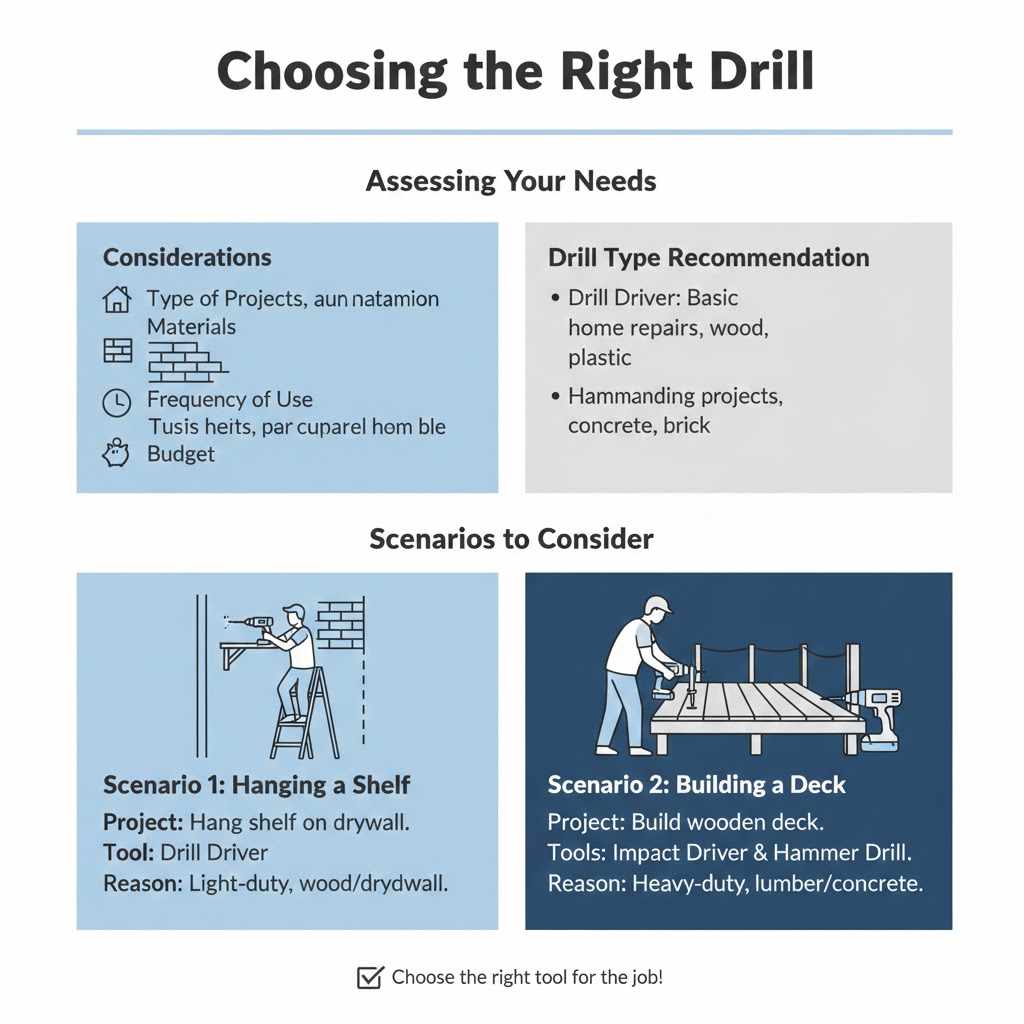
Deciding which drill is best for you depends on your projects. Think about the types of tasks you usually tackle. Consider both the materials and the frequency of your projects.
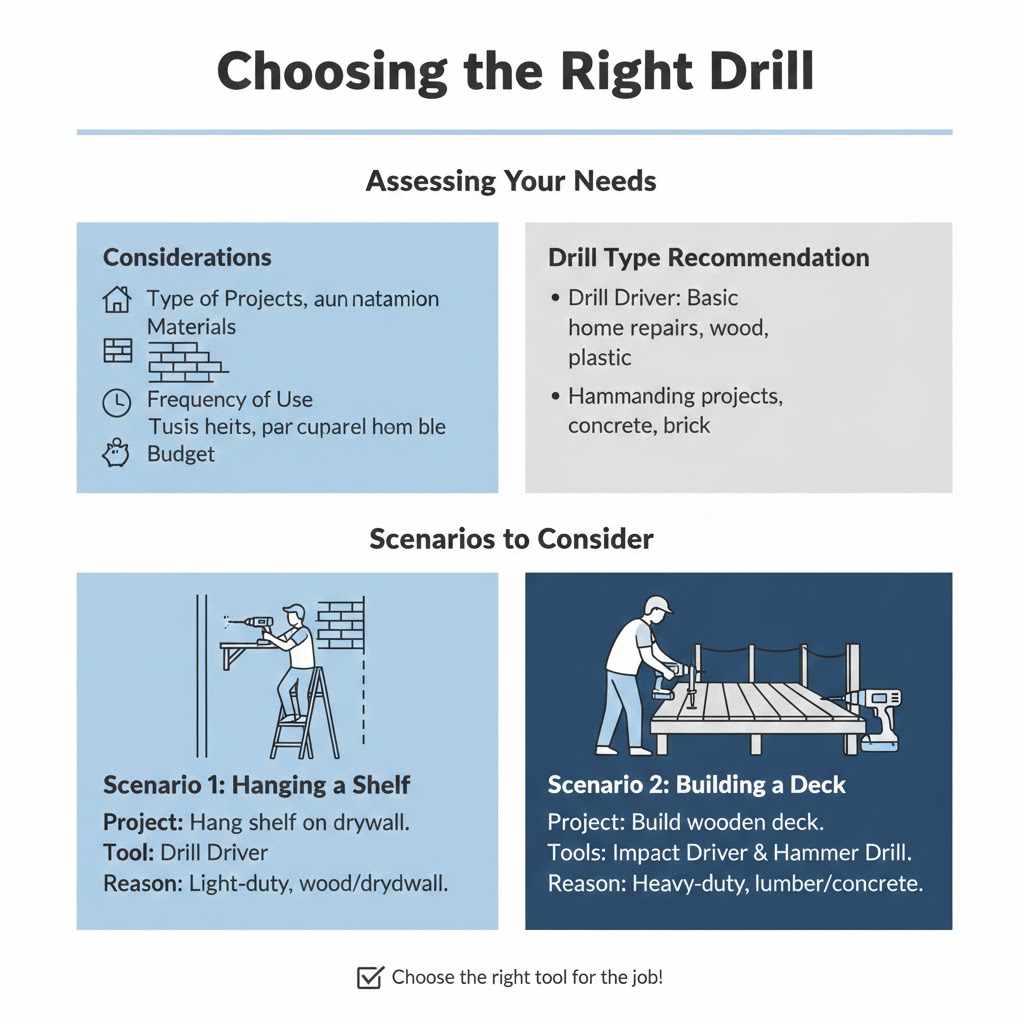
Assessing Your Needs
Before you buy, think about the projects you’re working on. Knowing your needs will help you pick the best tool. Here’s what you should consider:
Type of Projects: What kind of projects do you usually do? Are they mostly around the house, or are you working on outdoor projects?
If you’re doing basic home repairs, then a drill driver might be enough. If you’re tackling more demanding projects, the hammer drill is a better choice.
Materials: What materials do you work with most often? Do you need to drill into concrete, brick, or other hard surfaces?
The materials you use determine the tool you need. For wood and plastic, a drill driver is usually sufficient. But for concrete and brick, you’ll need a hammer drill.
Frequency of Use: How often will you use the tool? Will you need a drill on a daily basis, or just for occasional projects?
If you use the drill frequently, invest in a good-quality tool. If you use it rarely, a more basic model might be enough.
Budget: How much are you willing to spend? Prices can vary, so set a budget.
Drill drivers and hammer drills vary in price, and you can find a suitable option in all price ranges. Set a budget to help narrow down the options.
Scenarios to Consider
Let’s consider a couple of real-life scenarios to help you with your choice. These real-world examples can make the decision a little easier.
-
- Scenario 1: Hanging a Shelf
You want to hang a shelf in your living room. You need to drill holes into the drywall to install the anchors. For this project, a drill driver would work fine. You will be drilling into drywall, and possibly into wood studs.
-
- Scenario 2: Building a Deck
You’re building a deck, which means driving many screws into pressure-treated lumber. The type of wood and the number of screws mean that an impact driver would be an excellent choice for this. Also, you may need to drive screws into concrete, so having a hammer drill handy would be a bonus.
Frequently Asked Questions
Question: Can I use a hammer drill for regular drilling tasks?
Answer: Yes, you can. You can turn off the hammering function and use it like a regular drill driver, but it might be overkill for simple tasks.
Question: Are hammer drills dangerous?
Answer: Hammer drills, like any power tool, can be dangerous if not used with care. Always wear safety glasses and follow the instructions.
Question: Do I need both a drill driver and a hammer drill?
Answer: It depends on your projects. If you do a wide range of tasks, including working with hard materials, then having both is useful.
Question: What’s the difference between a hammer drill and a rotary hammer?
Answer: Rotary hammers are more powerful tools designed for heavy-duty drilling and demolition, often used by professionals.
Question: How do I choose the right drill bit for my project?
Answer: The drill bit you choose will depend on the material you’re drilling into. Check the bit’s packaging to make sure it’s correct for your project.
Final Thoughts
So, which tool is right for you? It all comes down to what projects you’ll be working on. If you’re mainly assembling furniture, hanging pictures, or doing other general home tasks, a drill driver is likely the perfect pick. It’s user-friendly and great for those everyday projects. If you’re planning on drilling into concrete, brick, or stone, you definitely need a hammer drill.
This tool is built to handle those tougher materials. Remember to consider your needs, the types of projects you’ll be doing, and the materials you’ll be working with. By keeping these points in mind, you can choose the right tool for your toolbox! Armed with the right information, you can get started confidently.