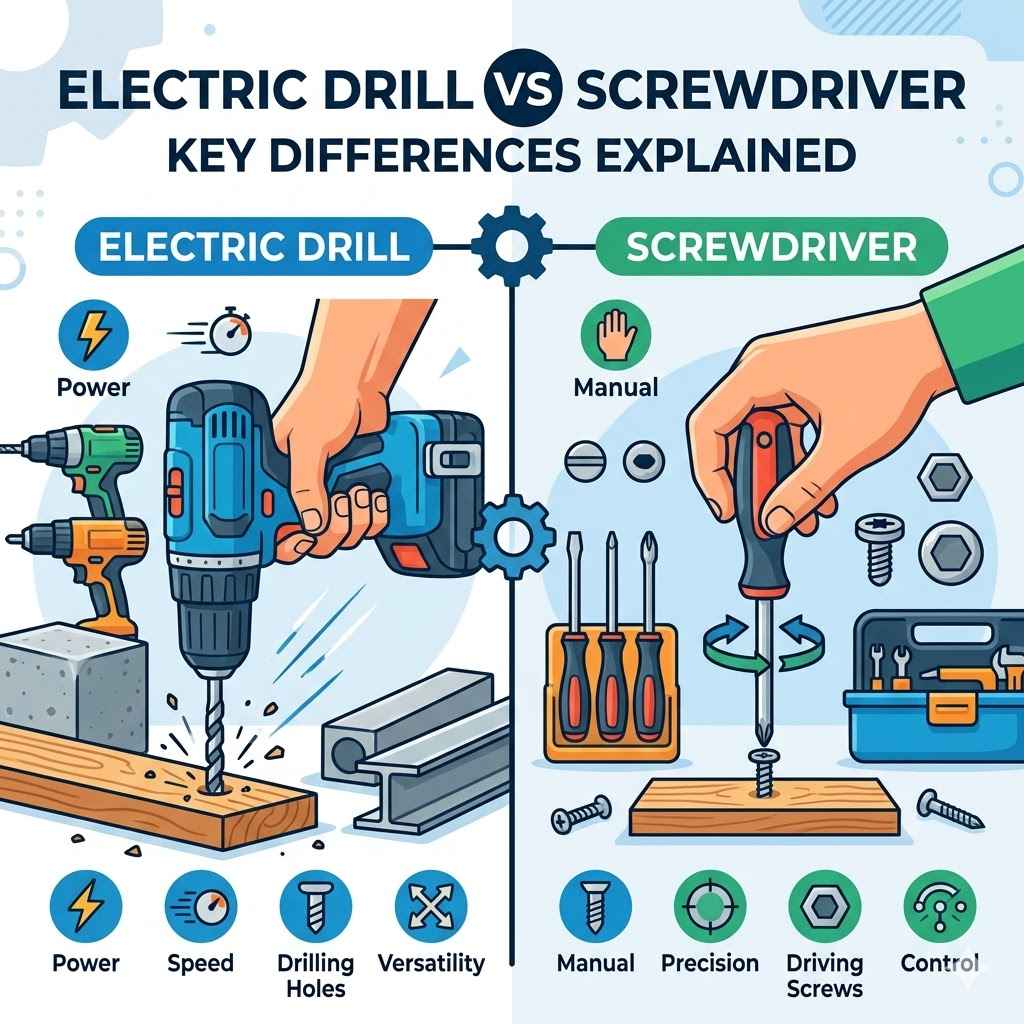
Electric Drill vs Screwdriver: Key Differences Explained
Many people starting DIY projects wonder about the Electric Drill vs Screwdriver: Key Differences Explained. It can be a bit confusing because they look similar but do different jobs. Don’t worry, this guide will make it super clear.
We’ll go step by step so you can easily pick the right tool for your task. Let’s get started and sort out what’s what.
Understanding Electric Drills
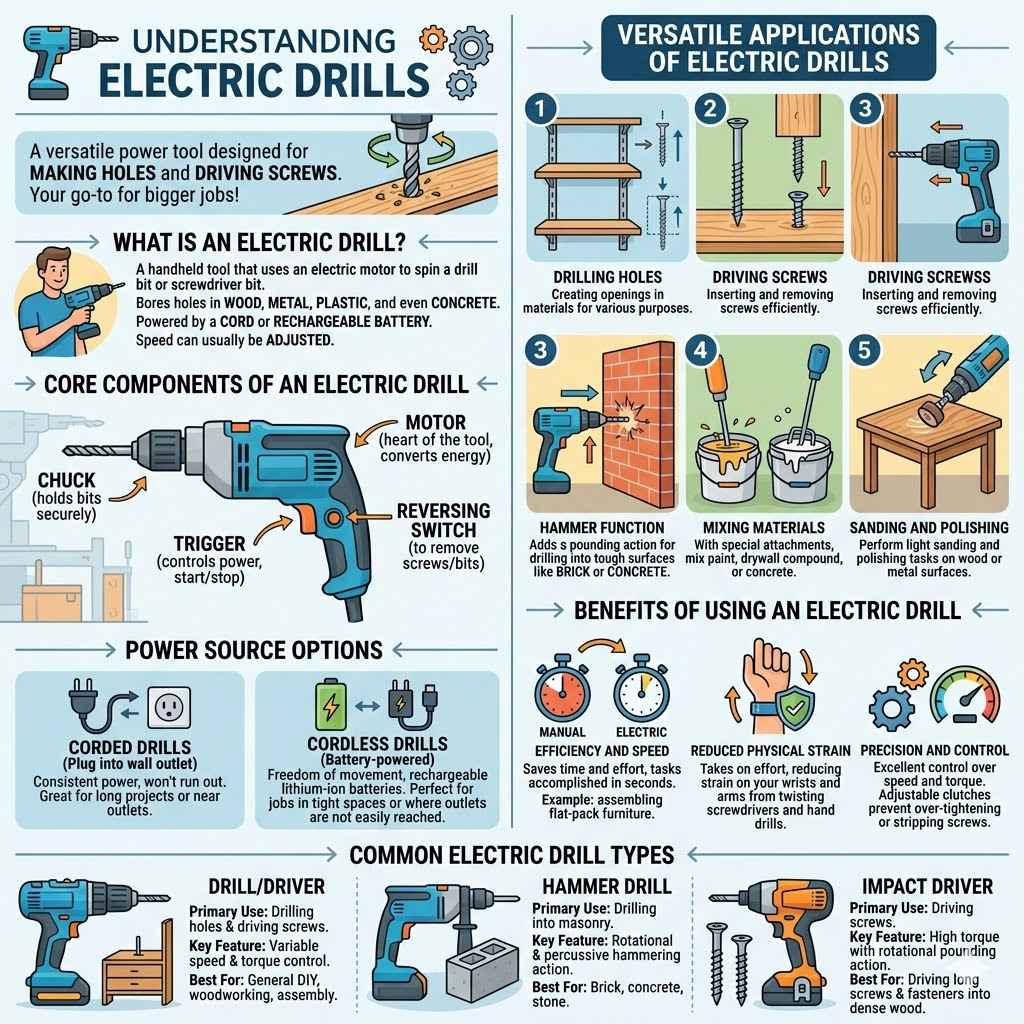
An electric drill is a versatile power tool. It’s designed for making holes and driving screws. Think of it as your go-to for bigger jobs.
It uses a rotating bit to cut through materials. This makes it much faster and easier than doing it by hand. We’ll explore its many uses and features.
What is an Electric Drill?
An electric drill is a handheld tool that uses an electric motor to spin a drill bit or screwdriver bit. This spinning action allows it to bore holes in various materials like wood, metal, plastic, and even concrete. It’s powered either by a cord plugged into an outlet or by a rechargeable battery, making it portable.
The speed at which the bit spins can usually be adjusted.
Core Components of an Electric Drill
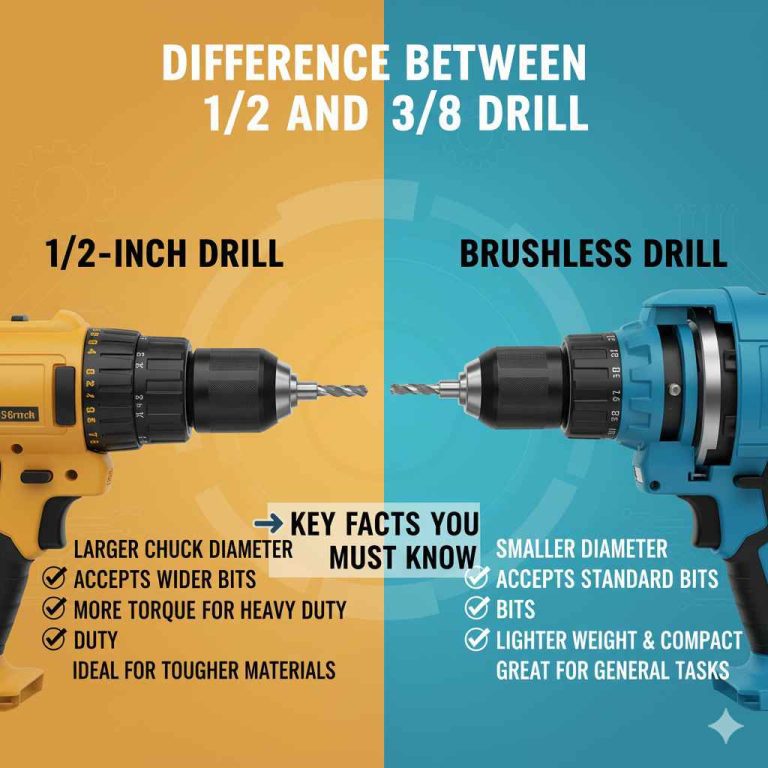
Electric drills have several key parts that work together. The motor is the heart of the tool, converting electrical energy into rotational force. The chuck is at the front, and it holds the drill or screwdriver bit securely in place.
You can usually adjust the chuck size to fit different bits. A trigger controls the power, allowing you to start and stop the drill. Many drills also have a reversing switch to easily remove screws or bits.
Power Source Options
There are two main types of electric drills based on their power source. Corded drills plug directly into a wall outlet. They offer consistent power and don’t run out of battery charge.
This makes them great for long projects or when you’re working near an outlet. Cordless drills, also known as battery-powered drills, use rechargeable lithium-ion batteries. They offer freedom of movement and are perfect for jobs where you can’t easily reach an outlet or need to work in tight spaces.
Versatile Applications of Electric Drills
Electric drills are incredibly useful for a wide range of tasks. Their primary function is drilling holes. This can be for hanging shelves, mounting fixtures, or creating pilot holes for screws.
They are also excellent for driving screws, especially longer ones or into harder materials. Some drills have a hammer function, which adds a pounding action to help drill into tough surfaces like brick or concrete. This makes them suitable for construction and renovation jobs.
- Drilling Holes: Creating openings in materials for various purposes, from hanging pictures to assembling furniture. This requires selecting the correct drill bit for the material.
- Driving Screws: Inserting and removing screws efficiently. Using the right bit and torque setting prevents stripping screws or damaging surfaces.
- Mixing Materials: With special attachments, some drills can be used to mix paint, drywall compound, or concrete. This is a less common but useful secondary function for larger projects.
- Sanding and Polishing: Using rotary attachments, drills can perform light sanding and polishing tasks on wood or metal surfaces. This extends their utility beyond just holes and screws.
Benefits of Using an Electric Drill
Using an electric drill saves a lot of time and effort compared to manual tools. It makes tasks much easier, especially when dealing with many screws or drilling multiple holes. For example, assembling flat-pack furniture that might have dozens of screws becomes a breeze with a drill.
It also ensures more consistent results, like uniformly sized holes.
Efficiency and Speed
The biggest advantage of an electric drill is its speed. What might take minutes to do by hand can often be accomplished in seconds. This is a huge benefit for any DIY enthusiast or professional tradesperson.
Imagine building a deck; drilling hundreds of holes and driving as many screws by hand would be incredibly time-consuming and physically demanding. A drill significantly reduces this workload.
Reduced Physical Strain
Manual screwdrivers and hand drills require significant physical effort. Repeatedly twisting a screwdriver, especially into tough materials, can lead to hand fatigue and even injuries like blisters. An electric drill takes on this effort, reducing strain on your wrists and arms.
This allows you to complete tasks without getting tired quickly.
Precision and Control
Modern electric drills offer excellent control over speed and torque. This allows you to set the power appropriately for the task, preventing over-tightening or stripping screws. Many drills have adjustable clutches that stop the drill when a set torque is reached.
This precision is vital for delicate projects or when working with softer materials.
Common Electric Drill Types
There are several variations of electric drills, each suited for specific needs. The most common is the standard drill/driver. Then there’s the hammer drill for masonry, and the impact driver, which offers a unique hammering action for driving screws.
Understanding these types helps choose the best tool for the job.
Drill/Driver
This is the most common type of electric drill. It’s designed for drilling holes and driving screws. It typically has a variable speed trigger and a clutch to adjust torque.
This makes it ideal for general household tasks, woodworking, and assembling furniture. It’s the workhorse for most DIY projects.
Hammer Drill
A hammer drill adds a percussive hammering action to its rotational function. This makes it excellent for drilling into hard materials like brick, stone, and concrete. When the hammer function is engaged, the drill bit moves forward and backward rapidly while it spins.
This breaks up tough materials, allowing the bit to penetrate more easily. It’s essential for any masonry work.
Impact Driver
An impact driver is specifically designed for driving screws. It delivers high torque through a hammering mechanism that strikes the screw head directly. This action is different from a hammer drill’s; it’s more of a rapid, rotational pounding.
Impact drivers are incredibly effective at driving long screws or fasteners into dense wood without stripping the screw head. They are also faster than standard drill/drivers for screw-driving tasks.
Here’s a quick comparison:
| Tool Type | Primary Use | Key Feature | Best For |
|---|---|---|---|
| Drill/Driver | Drilling holes and driving screws | Variable speed and torque control | General DIY, woodworking, assembly |
| Hammer Drill | Drilling into masonry | Rotational and percussive hammering action | Brick, concrete, stone |
| Impact Driver | Driving screws | High torque with rotational pounding action | Long screws, dense materials, repetitive driving |
Understanding Screwdrivers
A screwdriver is a much simpler tool. Its main job is to turn screws. There are manual screwdrivers and electric screwdrivers.
Manual ones are basic and good for light tasks. Electric ones offer more power and speed. We will look at how they work and when to use them.
What is a Screwdriver?
A screwdriver is a hand tool used for inserting and removing screws. It consists of a handle and a shaft that ends in a tip designed to fit into the head of a screw. The tip engages with the slot, recess, or indentation in the screw’s head, allowing torque to be applied by rotating the handle.
This simple mechanical action has been a cornerstone of assembly and repair for centuries.
Types of Screwdriver Tips
The shape of the screwdriver tip is crucial because it must match the screw head. The most common types include Flathead (or Slotted), Phillips, and Torx. Flathead tips have a single, straight slot.
Phillips tips have a cross-shaped recess. Torx tips have a star-shaped recess. Using the wrong tip can damage the screw or the screwdriver itself, making removal or insertion difficult.
Manual Screwdrivers
Manual screwdrivers are the most basic type. You turn them by hand. They are great for small jobs, like tightening a loose cabinet handle or assembling small items.
They offer a lot of control, which is helpful for delicate work where you don’t want to over-tighten. They are also very affordable and don’t require batteries or power.
Electric Screwdrivers
An electric screwdriver is a powered tool designed for driving screws. It looks similar to a small drill but is optimized for screw insertion and removal. They usually have lower torque settings than drills and are designed for speed and ease of use on repetitive tasks.
Many are cordless, making them very convenient. They are perfect for tasks like putting together furniture or installing light fixtures.
Benefits of Using a Screwdriver
Screwdrivers, both manual and electric, are essential for many tasks. They offer precision and control. Manual ones are ideal for delicate jobs, while electric ones speed up repetitive work.
They are less intimidating than full-sized drills for beginners.
Precision and Control
Manual screwdrivers give you direct control over how much force you apply. This is important when working with soft materials or small screws that can easily strip. You can feel exactly when the screw is tight.
Electric screwdrivers also offer control through adjustable torque settings, preventing over-tightening.
Ease of Use for Small Tasks
For simple tasks like changing a battery cover or tightening a hinge, a manual screwdriver is often the quickest and easiest tool to grab. They are lightweight and don’t require setup like charging batteries. Electric screwdrivers are also very user-friendly, often featuring simple controls and lightweight designs.
Cost-Effectiveness
Manual screwdrivers are very inexpensive. A basic set can be bought for just a few dollars. Even a good quality electric screwdriver is generally much cheaper than a power drill, making them a very budget-friendly option for basic home repairs.
When to Choose a Screwdriver
You should choose a screwdriver for most tasks involving screws, especially when precision is needed or when you are not drilling holes. This includes assembling flat-pack furniture, fixing electronics, or making minor repairs around the house. They are the primary tool for anything that primarily involves turning screws.
- Assembling Furniture: Flat-pack furniture often comes with many screws that need to be driven in carefully. An electric screwdriver makes this quick work.
- Electrical Work: Tightening screws on outlets, switches, or light fixtures requires precision to avoid damaging wires. A manual screwdriver or an electric one with a clutch is ideal.
- Repairing Electronics: Small screws in devices like laptops or remote controls need gentle handling. A set of small precision screwdrivers is essential here.
- Hanging Small Items: For lightweight items that only require a single screw, a manual screwdriver is often sufficient and faster than setting up a drill.
Electric Drill vs Screwdriver Key Differences Explained
The main distinction between an electric drill and an electric screwdriver lies in their primary function and power. Drills are built for heavy-duty tasks like creating holes and driving larger screws with more force. Screwdrivers are designed for more delicate screw insertion and removal, often with less power but more finesse.
Understanding these differences helps you pick the right tool.
Power and Torque Output
Electric drills generally have much higher power output and torque than electric screwdrivers. Torque is the rotational force applied to a screw or drill bit. A drill’s higher torque allows it to bore through tough materials and drive large screws with ease.
An electric screwdriver has lower torque, making it suitable for smaller screws and lighter materials, offering more control.
Drill Torque
Drills can have torque ratings measured in inch-pounds (in-lbs) or Newton-meters (Nm), often ranging from 300 in-lbs up to over 1000 in-lbs for heavy-duty models. This high torque is necessary for drilling large holes in hard materials and driving long screws into dense wood. Without this power, these tasks would be impossible or extremely slow.
Screwdriver Torque
Electric screwdrivers typically have torque settings much lower, often between 50-150 in-lbs. This is more than enough for most screw-driving tasks encountered in home assembly or minor repairs. The lower torque prevents damage to the screw head or the material being worked on.
Functionality and Versatility
Electric drills are far more versatile. They can drill holes, drive screws, and with attachments, even mix paint. Electric screwdrivers are almost exclusively for driving screws.
While some electric screwdrivers can drill very small holes, it is not their primary function and they lack the power for most drilling applications.
Drill’s Multifunctionality
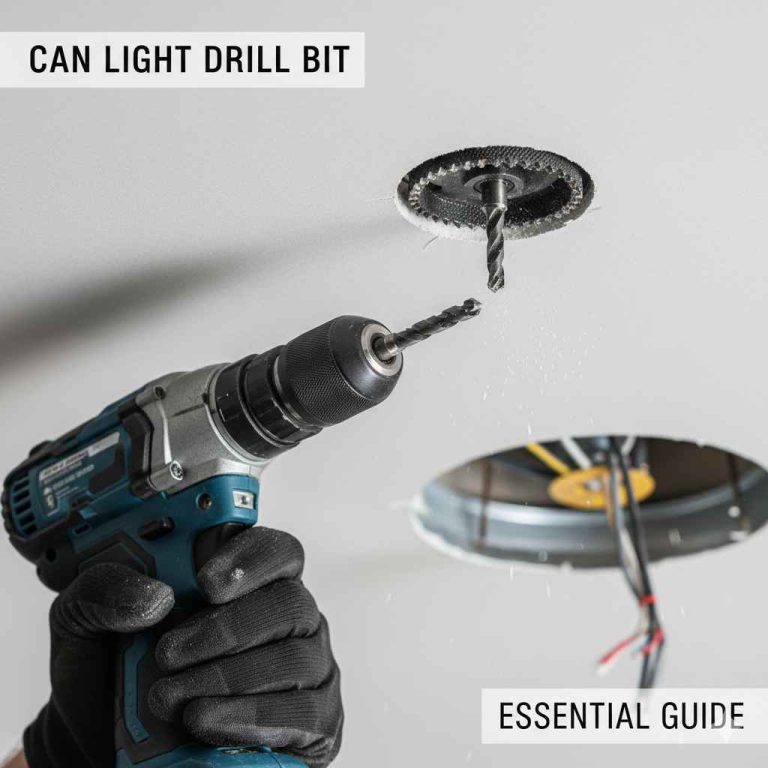
The drill’s ability to accept a wide variety of bits, from twist drills for wood and metal to masonry bits for concrete, makes it a true all-around tool. Add to that screwdriver bits, hole saws, wire brushes, and mixing paddles, and the drill becomes indispensable for many construction, repair, and craft projects.
Screwdriver’s Specialization
An electric screwdriver excels at one thing: driving screws. Its design is optimized for this, often featuring a quick-release chuck for easy bit changes and a comfortable grip for extended use. This specialization makes it very efficient for tasks where only screw insertion or removal is needed.
Speed and Control Considerations
While drills are powerful, they can sometimes be too fast or too powerful for delicate screw-driving. Electric screwdrivers often have a smoother start and more refined speed control for screws. However, many modern drills have excellent variable speed triggers that offer good control for screws too.
Variable Speed Triggers
Both drills and electric screwdrivers usually feature variable speed triggers. Squeezing the trigger lightly results in slow rotation, while squeezing it fully results in maximum speed. This allows for precise control, especially when starting a screw or working with delicate materials.
For instance, slowly starting a screw by hand with the trigger ensures it goes in straight.
Clutch Settings
A key feature on most drills and electric screwdrivers is an adjustable clutch. This allows you to set a maximum torque level. Once that torque is reached, the clutch disengages, preventing the screw from being driven too deep or stripping its head.
This is crucial for consistent results and preventing damage.
Size and Weight
Electric drills, especially those with batteries, are generally larger and heavier than electric screwdrivers. This makes drills better suited for jobs requiring sustained effort or when more power is needed. Electric screwdrivers are lightweight and compact, making them ideal for working in tight spaces or for tasks that require you to hold the tool for long periods.
Drill Ergonomics
The larger size of drills often means they have more substantial grips and balancing designed for two-handed operation when needed for maximum torque. Battery packs add to their weight, but also provide power. This heft contributes to their ability to handle demanding tasks without user fatigue from the tool itself.
Screwdriver Portability
The compact nature of electric screwdrivers makes them highly portable and easy to maneuver. They are often designed to fit comfortably in one hand, allowing the other hand to hold the workpiece. This makes them perfect for assembling furniture in awkward positions or working on detailed projects.
When to Use Which Tool
Choosing between an electric drill and an electric screwdriver depends entirely on the task at hand. For drilling holes or driving large screws, a drill is necessary. For purely screwing tasks, especially where precision and speed are needed for many screws, an electric screwdriver is often the better choice.
If you are unsure, consider the primary action needed.
Scenario 1: Assembling a Bookshelf
You are assembling a flat-pack bookshelf. This will involve driving dozens of screws into pre-drilled holes in particle board or MDF. An electric screwdriver is ideal here.
It offers speed, sufficient torque for particle board, and adjustable clutch settings to prevent over-tightening. Using a full-sized drill might be overkill and could potentially strip the screws or damage the material if not carefully controlled.
Scenario 2: Hanging a Heavy Mirror
You need to hang a heavy mirror on a drywall wall. This requires drilling a pilot hole for a wall anchor. After drilling, you will likely drive a screw to secure the anchor.
In this case, an electric drill/driver is the appropriate tool. You’ll use its drill function with a masonry bit (if needed) or a regular bit for the anchor, and then switch to its driver function with a screwdriver bit to secure the screw. The drill’s power is essential for creating the hole.
Scenario 3: Installing a Light Fixture
You are replacing an old light fixture with a new one. This involves removing old screws and then installing new ones into electrical boxes or mounting brackets. An electric screwdriver is often sufficient for this task, especially if the screws are not excessively tight or long.
However, if the existing screws are very tight or you are drilling new holes for mounting, a drill/driver would be more capable. The key is the torque needed.
Cost Comparison
Generally, manual screwdrivers are the cheapest. Electric screwdrivers are the next most affordable, with prices ranging from $20 to $100. Electric drills, especially powerful cordless models, are more expensive, typically ranging from $50 to $300 or more for professional-grade tools.
The choice often comes down to budget and the frequency of use.
Budget-Friendly Options
For occasional use or very light tasks, a basic set of manual screwdrivers or an inexpensive electric screwdriver is a great starting point. These tools are readily available at most hardware stores and online retailers and won’t break the bank. They are perfectly adequate for basic home maintenance.
Investment for Frequent Use
If you plan to do a lot of DIY projects, woodworking, or home improvement, investing in a quality cordless drill/driver is highly recommended. While more expensive upfront, its versatility and power will save you time and effort in the long run, making many tasks much more manageable.
Electric Drill vs Screwdriver Key Differences Explained for Beginners
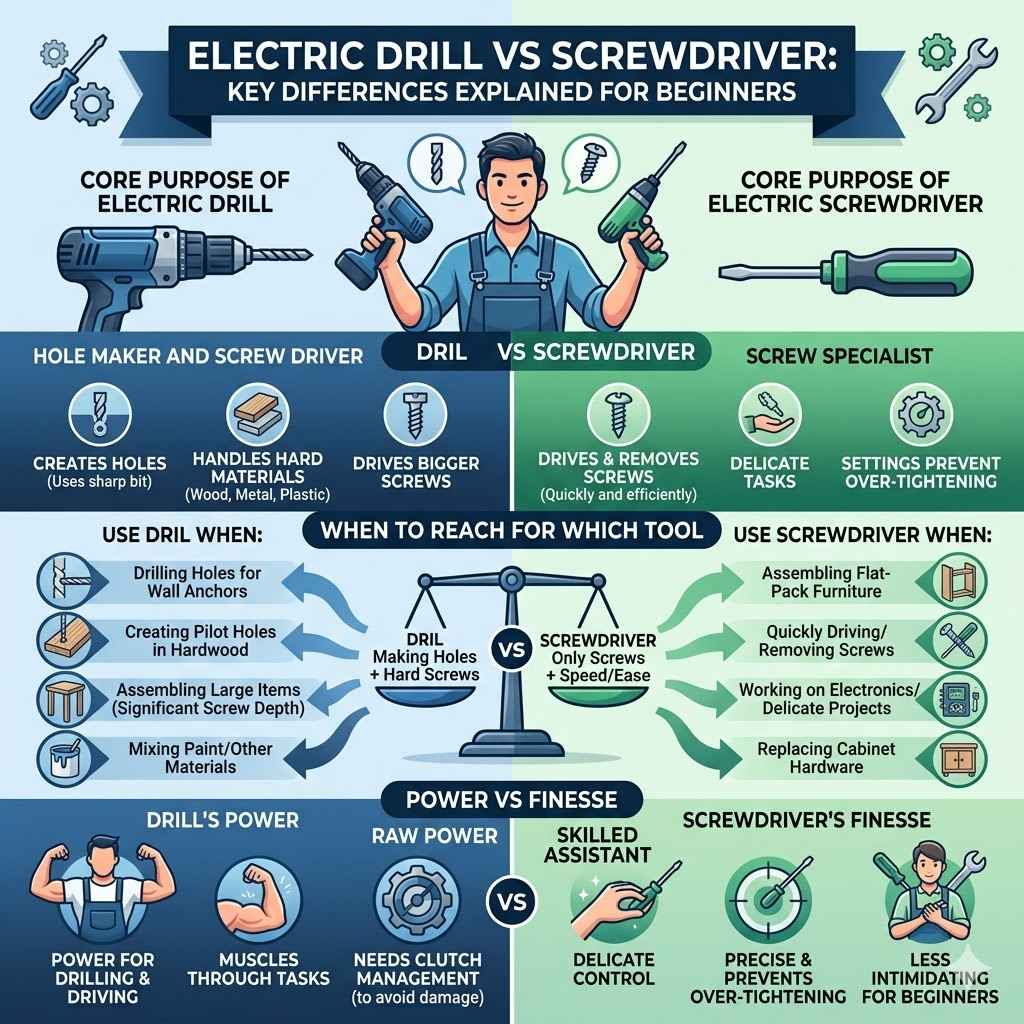
For anyone new to tools, the Electric Drill vs Screwdriver: Key Differences Explained can seem a bit confusing. They look similar, and both deal with screws, but they really have different jobs. This section aims to simplify it all.
We’ll break down the main things that set them apart so you can feel confident choosing the right one for your next project.
Core Purpose of Each Tool
Think of it this way: an electric drill is like a multi-tool for making holes and driving screws, especially bigger ones. It has power and is built for tough jobs. An electric screwdriver is more like a specialized helper just for turning screws.
It’s designed for speed and ease when you’re putting in many screws or working on delicate things.
Drill: Hole Maker and Screw Driver
The primary function of a drill is to create holes. It uses a sharp bit to cut through wood, metal, or plastic. While it can also drive screws, its power and size make it best for larger screws or when you need to drive them into harder materials.
Its versatility means it can handle a wider range of tasks than a screwdriver.
Screwdriver: Screw Specialist
An electric screwdriver is optimized solely for driving and removing screws. It spins screws in and out quickly and efficiently. Many have settings that prevent you from over-tightening, which is great for beginners.
They are less intimidating and easier to handle for simple screwing tasks.
When to Reach for Which Tool
If your task involves making holes, even small pilot holes, you need a drill. If you are only putting in or taking out screws, an electric screwdriver is usually the better choice, especially for speed and ease. For very large or stubborn screws, a drill’s extra power is often necessary.
Drill Use Cases
Use an electric drill when you need to:
- Drill holes for wall anchors.
- Create pilot holes for screws in hard wood.
- Assemble large items that require significant screw depth.
- Mix paint or other materials with an attachment.
Screwdriver Use Cases
Use an electric screwdriver when you need to:
- Assemble flat-pack furniture with many screws.
- Quickly drive or remove screws in general repairs.
- Work on electronics or delicate projects needing controlled torque.
- Replace cabinet hardware or install drawer slides.
Power vs. Finesse
The fundamental difference often boils down to power versus finesse. Drills offer raw power for drilling and driving, while electric screwdrivers offer a more controlled and often faster approach specifically for screws. Beginners might find the controlled torque of an electric screwdriver less intimidating than the raw power of a drill.
Drill’s Power
A drill’s power is its strength. It can muscle through tasks that would be impossible by hand. However, this power needs to be managed carefully, especially when driving screws.
Using the clutch setting correctly is key to avoiding damage. It’s like having a strong helper who needs clear instructions.
Screwdriver’s Finesse
An electric screwdriver provides more delicate control. Its lower power and often more sensitive trigger allow for precise screw over-tightening is a concern.
It’s like having a skilled assistant who is good at fine motor tasks.
Frequently Asked Questions
Question: Can an electric screwdriver drill holes
Answer: Most electric screwdrivers are not designed for drilling holes. They lack the power and the appropriate chucks to hold drill bits securely for effective drilling. While some very basic models might be able to make tiny pilot holes in very soft material, they are not suitable for general drilling tasks.
Question: Is a drill or screwdriver better for assembling furniture
Answer: For assembling furniture, an electric screwdriver is usually better. It offers speed and control for driving many screws, and its adjustable clutch prevents over-tightening, which is common with particle board furniture. A drill can be used, but it requires more careful handling to avoid stripping screws or damaging the material.
Question: Do I need both a drill and a screwdriver
Answer: It depends on your DIY needs. If you only do very light repairs involving a few screws, an electric screwdriver might suffice. However, for most home improvement projects, including hanging shelves, building furniture, or any task requiring holes, a drill/driver is essential due to its versatility.
Question: Which is faster for driving screws a drill or an electric screwdriver
Answer: Generally, an electric screwdriver is faster for driving screws, especially when dealing with many screws in repetitive tasks. Its design is optimized for this, and often it has a quicker bit change system. Drills can be fast too, but the setup and control needed for different screw types can sometimes make them slightly slower for pure screw-driving.
Question: Can I use a drill bit in an electric screwdriver
Answer: It is not recommended to use a standard drill bit in an electric screwdriver. Most electric screwdrivers have chucks designed only for screwdriver bits, and they lack the power and speed for effective drilling. Trying to drill with one could damage the tool or be ineffective.
Wrap Up
Understanding the Electric Drill vs Screwdriver: Key Differences Explained helps you choose the right tool. Drills are for holes and tough screws. Screwdrivers are for fast, controlled screw tasks.
Pick the drill for power and versatility. Choose the screwdriver for speed and finesse with screws. Start with the tool that best fits your first project.