Hammer Drill vs Impact Driver: Which One Do You Actually Need?
A hammer drill spins and pounds at the same time to punch through masonry; an impact driver spins and twists in rapid bursts to drive screws and bolts without stripping them. They solve two different problems, and the confusion between them gets worse because a third tool — the rotary hammer (often SDS) — gets lumped in with “hammer drills” even though it’s built for genuinely heavy concrete work that a consumer hammer drill can’t match. If you’re actually trying to decide between a plain drill and an impact driver rather than hammer drill vs. impact driver, see our drill vs. impact driver comparison.
How a Hammer Drill Works
Best Way to Get Both Tools at Once
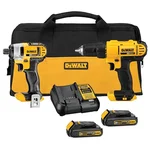 |
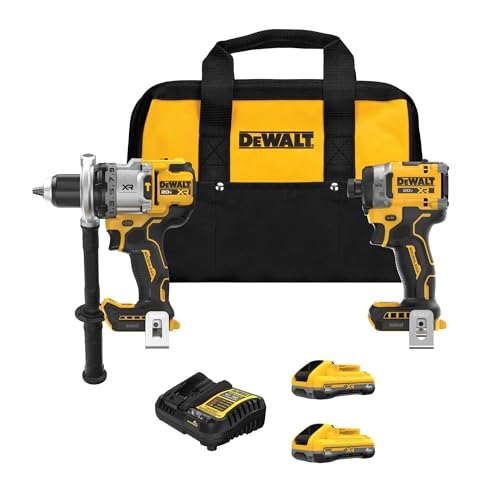
DEWALT DCK240C2 20V MAX Drill/Impact Combo Kit – $169.00 Since a drill and an impact driver solve different problems rather than overlapping, this kit gets you both instead of forcing a choice.
|
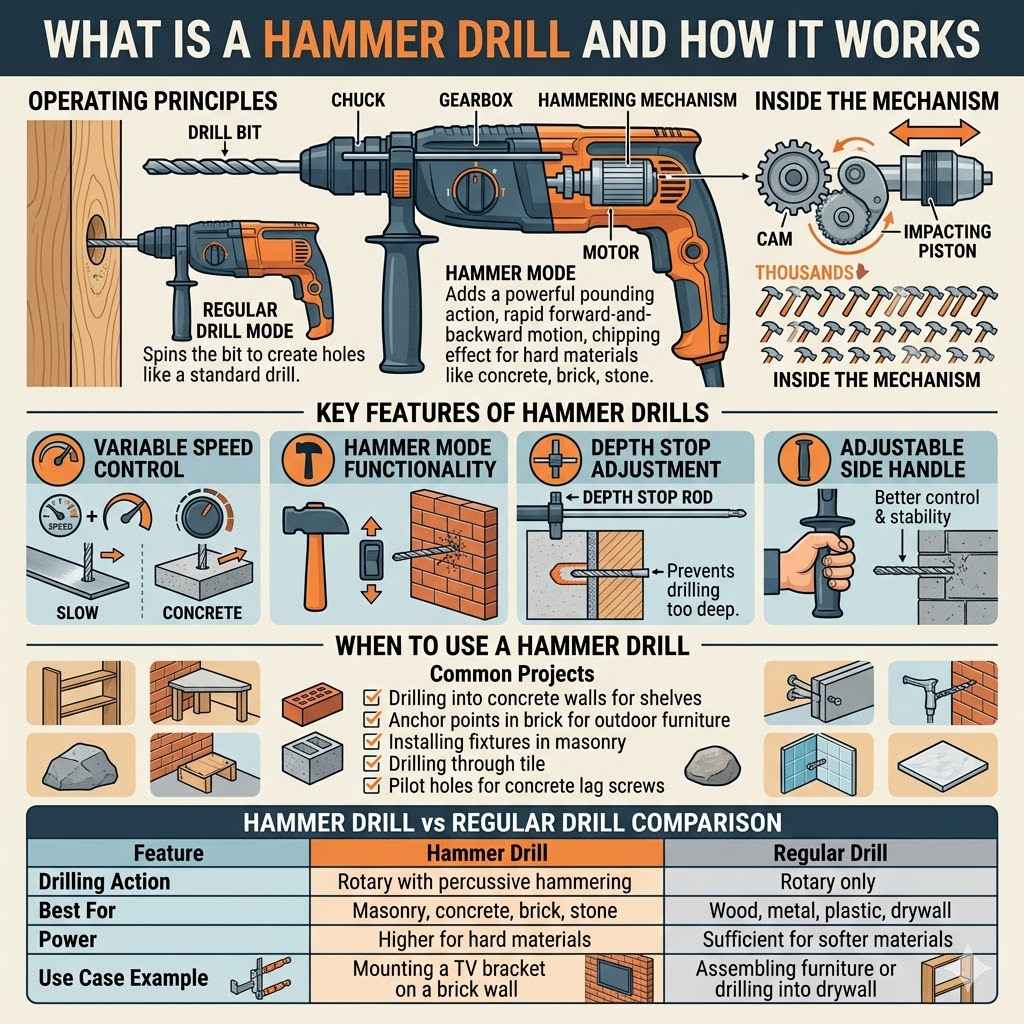
Switch a hammer drill into hammer mode and an internal cam mechanism makes the chuck pulse forward and backward thousands of times per minute while the bit spins — essentially a tiny, fast jackhammer riding along with the rotation. That combined chipping-and-spinning action is what lets it bore into brick, concrete block, and stone, materials a regular drill’s pure rotation can’t penetrate efficiently. Most hammer drills let you dial the hammering intensity down or switch it off entirely, so the same tool handles a quick masonry anchor hole and a routine wood or metal hole.
The Tool Most Guides Skip: Rotary Hammers
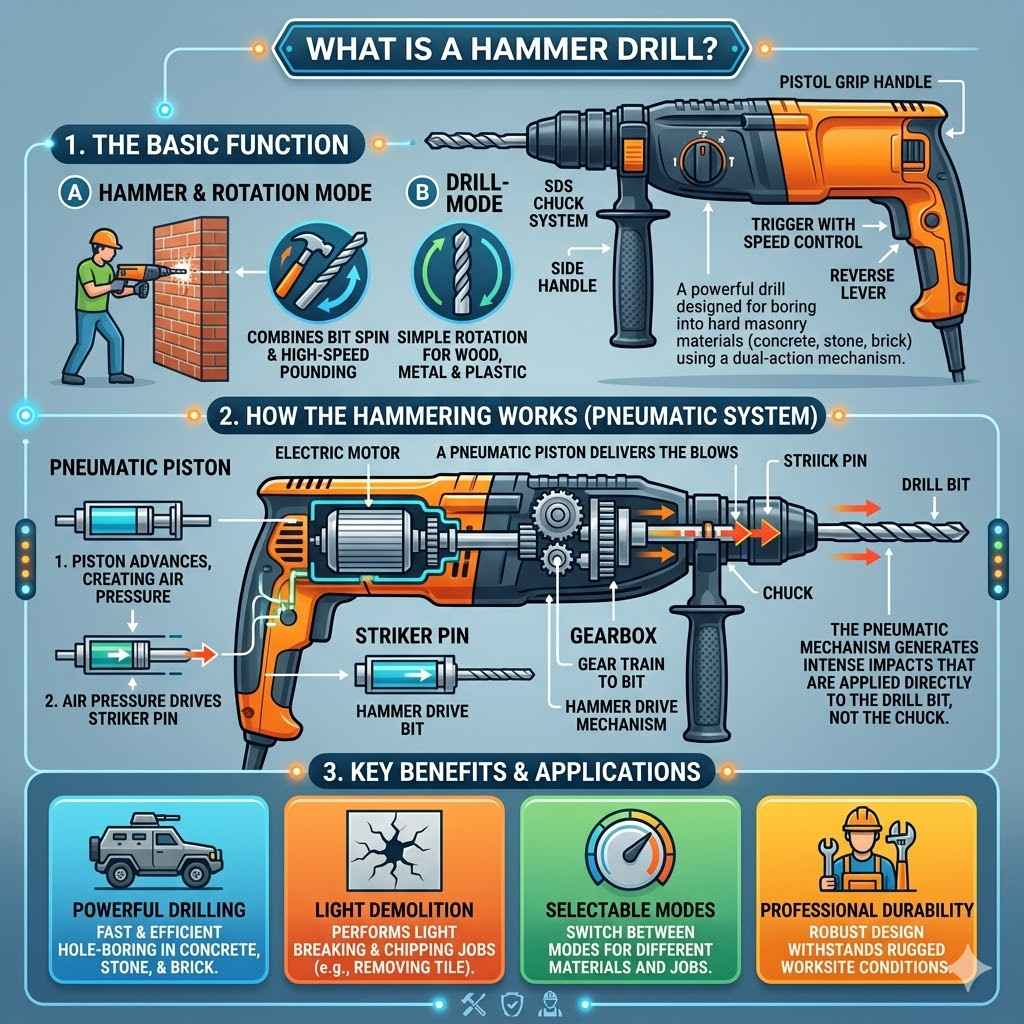
A standard hammer drill is genuinely different from a rotary hammer (commonly called an SDS drill after its bit-locking system), and mixing the two up leads to real frustration on bigger jobs. A hammer drill’s pounding comes from a spring-loaded cam mechanism and is measured loosely; a rotary hammer uses a piston-driven mechanism that delivers dramatically more impact energy, rated in foot-pounds, and uses SDS or SDS-max bits that lock in without a chuck key. For a handful of anchor holes in brick or block, a hammer drill is plenty. For repeated holes in poured concrete, rebar-reinforced foundations, or anything larger than roughly 3/8 inch in solid concrete, a rotary hammer is the right tool — a consumer hammer drill will overheat and wear out fast trying to do that job.
How an Impact Driver Works
An impact driver’s mechanism is entirely different: a rotating mass inside strikes an internal anvil in the same rotational direction as the spin, delivering rapid, powerful twisting impacts rather than a forward-backward pounding motion. That’s why it sounds like a buzzing ratchet in use. The result is very high torque delivered in short bursts, which drives long screws and lag bolts into dense material without the bit camming out of the screw head — a common failure point with a standard drill under heavy load. Impact drivers also tend to run smaller and lighter than hammer drills, which matters over a full day of driving fasteners.
Side-by-Side: What Each Tool Is Actually For
| Task | Best Tool | Why |
|---|---|---|
| Drilling anchor holes in brick or block | Hammer drill | Percussive action breaks up masonry as the bit spins |
| Repeated holes in poured concrete | Rotary hammer (SDS) | Far higher impact energy than a hammer drill can deliver |
| Driving deck screws or lag bolts | Impact driver | High torque bursts prevent cam-out and stripped heads |
| Assembling furniture, small pilot holes | Standard drill/driver | Simpler, lighter, plenty of torque for light fasteners |
Can One Tool Do the Other’s Job?
Technically, yes, poorly. An impact driver can spin a masonry bit, but without any percussive action it will be painfully slow in brick or concrete and may not finish the hole at all. A hammer drill can drive screws in its non-hammer drilling mode, but it lacks an impact driver’s torque, and running it in hammer mode while driving a screw risks damaging the screw head or the material around it. Neither substitution is a good long-term plan — they’re worth knowing about for a one-off emergency, not as your regular method.
When You Genuinely Need Both
A common real-world sequence: drill anchor holes into a concrete patio slab with a hammer drill (or rotary hammer, for larger anchors), then drive the anchor bolts and ledger board fasteners with an impact driver. Contractors and serious DIYers doing any mix of masonry and fastening work end up owning both tools because they genuinely don’t overlap — many cordless platforms sell them bundled together for exactly this reason.
Frequently Asked Questions
Can I Use an Impact Driver to Drill Into Concrete?
Not effectively. An impact driver has no percussive hammering action, so it will be slow and may not penetrate concrete at all. A hammer drill or rotary hammer is the correct tool for masonry.
Is a Hammer Drill Good for Driving Screws?
It can drive screws in regular (non-hammer) drill mode, but it delivers far less torque than a dedicated impact driver and is more likely to strip screw heads on tougher fasteners.
What’s the Difference Between a Hammer Drill and a Rotary Hammer?
A hammer drill uses a cam-driven pounding action suited to occasional masonry drilling; a rotary hammer (SDS) uses a piston mechanism that delivers far more impact energy for repeated holes or heavy work in poured concrete.
Do I Need Both a Hammer Drill and an Impact Driver?
If your projects mix masonry drilling with driving screws or bolts — decks, fencing, anchoring into brick or concrete — both tools earn their place, since neither one substitutes well for the other.
Bottom Line
Pick a hammer drill for masonry, an impact driver for fasteners, and a rotary hammer instead of a hammer drill once you’re doing more than occasional holes in real concrete. Matching the tool to the actual mechanism — pounding vs. twisting — is more useful than thinking of either as simply “more powerful.”
Sponsored / affiliate links. As an Amazon Associate I earn from qualifying purchases. I may earn additional commission from eligible campaigns.