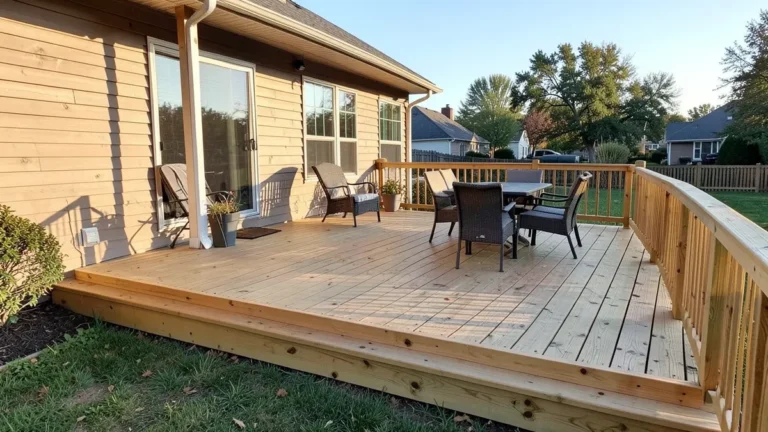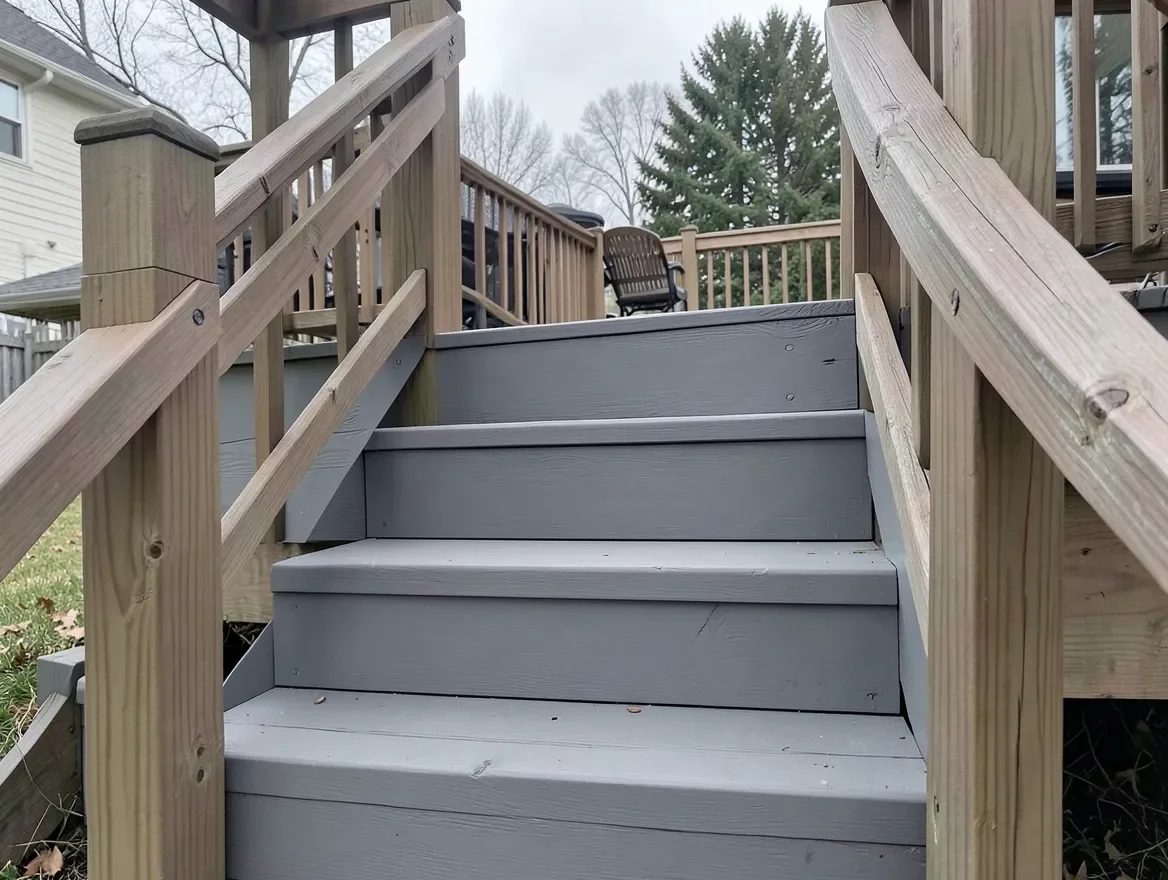
Grey Composite Decking Steps: Support, Code & Slip-Resistance Guide
Grey composite decking steps hold up like the rest of a composite deck — but the stairs themselves need two things the flat deck surface doesn’t: tighter structural support underneath, and more slip-resistance on top. Composite decking, grey or any other color, is a surface material only. It isn’t structural, and stair treads take a different kind of load than deck boards — a concentrated footstep landing at an angle, over and over, often wet. Get the support spacing and the slip-resistance right and a grey composite staircase is genuinely low-maintenance for decades. Skip either one and you get sagging treads or a slippery stair on the one part of the deck where a fall actually matters.
This guide covers what most “composite decking steps” pages skip: how stair tread support spacing differs from regular deck board spacing, the code minimums for rise and run, how to actually pick a shade of grey that won’t show every water spot, and what to do about slip resistance.
Grey Composite Stair Treads Need More Slip-Resistance Than Deck Boards
Most composite decking boards get a wood-grain embossed cap for traction, and on a flat deck that’s usually enough. Stairs are a different story. A tread only gets a few inches of contact from a shoe on the way down, often at an angle, and it’s the one part of the deck that regularly gets wet from rain, hose runoff, or melting snow — then dries into a thin film that’s harder to see on a light or mid-tone grey than it would be on a dark brown board. The embossed texture that grips fine on a flat walking surface can still feel slick on a sloped step edge, which is exactly why most manufacturer stair-building guides call out adding a nosing strip or grip tape on treads even when the same boards don’t need it anywhere else on the deck.
Best Non-Slip Strips For Composite Stair Treads
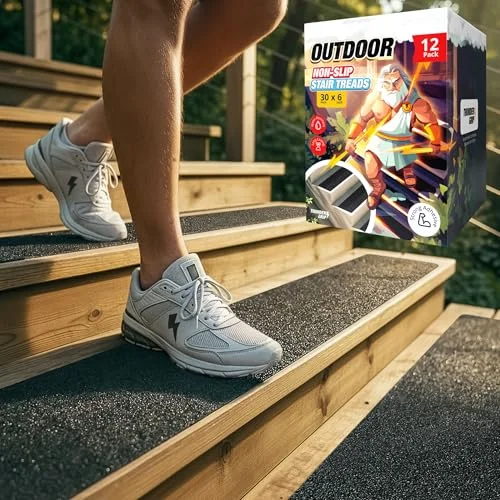 |
Thunder Grip Outdoor Stair Treads, 30″ x 6″ (12-Pack) – $28.99 A weatherproof 80-grit grip tape sized to run the width of a standard composite stair tread — the simplest fix for the slip-resistance gap this article covers.
|
If you’d rather not add visible grip tape, ask about a textured or “traction cap” composite line before you buy — several composite manufacturers now sell a rougher-finish board specifically for stair treads and pool-deck areas, separate from their standard smooth-embossed decking.
Composite Decking Isn’t Structural — Stair Stringers Still Carry the Load
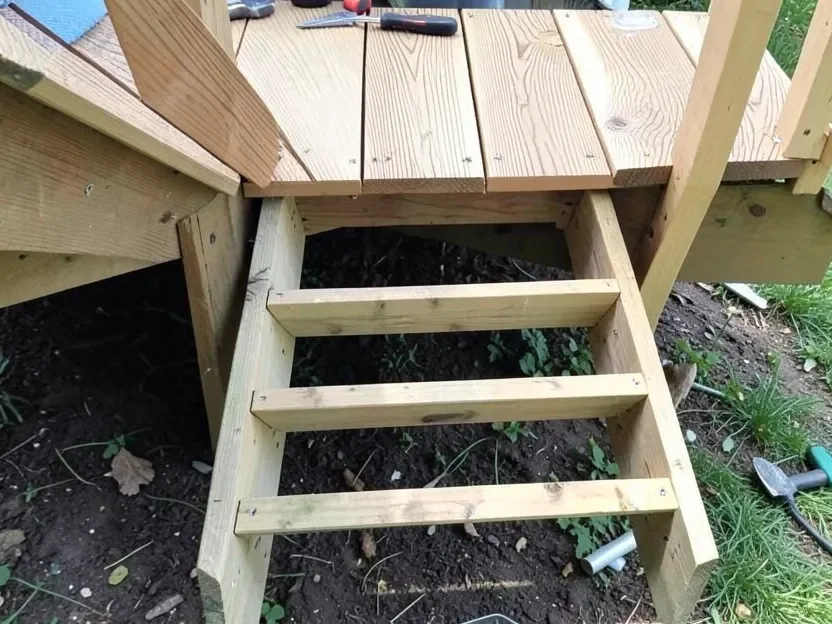
This is the part most “grey composite decking ideas” articles skip entirely: the composite boards are cladding, not framing. Every bit of structural strength in a set of deck stairs comes from the stringers underneath — solid-sawn or engineered lumber cut or notched to the stair angle — and the composite tread and riser boards just get screwed to the top and face of that frame.
What changes on stairs is how close together those stringers, or the blocking between them, need to be. A composite deck board on a flat deck is typically fine at 16 inches on-center joist spacing. A composite stair tread carries a much more concentrated load over a shorter span and flexes more than solid wood over the same distance, so manufacturers spec noticeably tighter support for treads — commonly in the 9 to 12-inch on-center range depending on the product line, with the tread fastened across a minimum of three to four points of support rather than just its two end stringers. Composite that looks perfectly rigid on a well-supported deck can visibly bounce or sag on a stair tread if it’s only resting on two stringers spaced the way a regular deck would be framed. Always check the specific installation guide for the composite line you’re buying — stair support spacing varies by manufacturer and even by product tier within the same brand, and building it to standard deck-board spacing can void the warranty on the stair application even if the same boards are covered for flat decking.
Rise, Run, and Code Minimums
Composite doesn’t change the code math — the International Residential Code’s stair provisions (IRC R311.7) apply the same way to composite treads as to wood ones. The common residential minimums most local codes follow, though you should always confirm your exact local amendment before cutting a stringer:
- Maximum riser height: 7¾ inches.
- Minimum tread depth (run): 10 inches, measured nosing to nosing.
- Riser/tread consistency: no more than 3/8 inch of variance between the largest and smallest riser or the largest and smallest tread in the same flight — this is a trip-hazard rule, not a cosmetic one, since a foot expects a consistent rhythm going down a staircase and a single odd step is where most stair falls happen.
- Nosing: typically 3/4 to 1¼ inches of projection required on closed-riser stairs unless the tread depth already meets minimum without it.
- Guards and handrails: a guard is generally required once the stair or landing is more than 30 inches above grade, and a graspable handrail is generally required on stairs with four or more risers.
Because composite boards come in fixed thicknesses, the riser height math has to account for both the tread board thickness on top of the stringer and the riser board’s own thickness — it’s easy to end up with a riser that’s technically over the 7¾-inch max if the stringers were cut assuming bare wood tread dimensions instead of the actual composite board stack height. Dry-fit and measure the real riser height with the actual boards before cutting every stringer to the same pattern.
Picking a Shade of Grey That Actually Works On Stairs
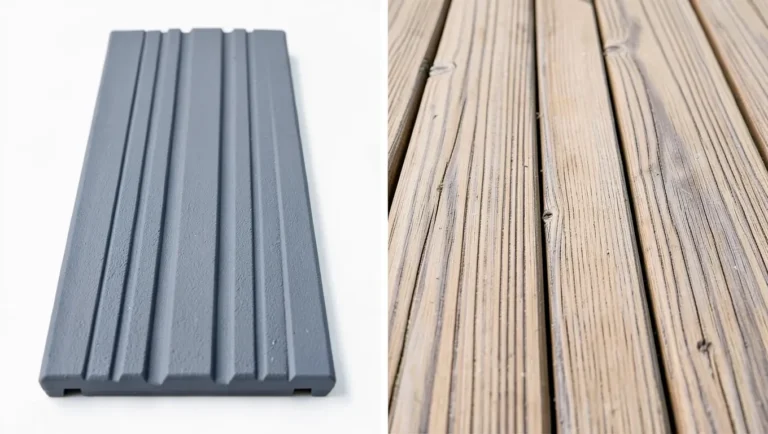
Grey composite decking spans a wide range, from a nearly-white driftwood tone to a charcoal that reads almost black in low light, and stairs show wear differently than a flat deck does because they get more direct foot traffic concentrated on a smaller surface.
- Light grey stays cooler underfoot in direct sun and reads bright and modern, but it shows scuff marks, dirt, and water spots from shoes more readily on a stair tread than it would spread across a large flat deck surface.
- Mid-tone grey is the most forgiving choice for stairs specifically — light enough to stay cool, dark enough to hide the everyday scuffing that stair treads take.
- Charcoal or dark grey hides scuffs and dirt best and pairs well with black or dark-toned railings, but it absorbs more heat in direct sun, which matters more on an exposed stair tread than a shaded deck.
Match the stair treads to the same board line as the main deck, not just the same color name — grey shades vary between manufacturers and even between product tiers from the same manufacturer, and a “grey” tread from a different line than your deck boards can be a visibly different shade once it’s outdoors in real light.
Frequently Asked Questions
Do grey composite decking steps need special support underneath?
Yes. Composite decking is a cladding material, not a structural one, so the stringers underneath carry the actual load. Stair treads need tighter support spacing than a flat composite deck — commonly 9 to 12 inches on-center depending on the manufacturer, versus roughly 16 inches for standard decking — because a tread carries a concentrated footstep load over a shorter span and flexes more than a flat deck board would over the same distance.
Are grey composite steps slippery when wet?
They can be, more so than the flat decking on the same deck. Stair treads get more direct, angled foot contact and hold water film longer, and that film is harder to spot on a light or mid-tone grey than on a dark board. A textured “traction cap” composite line, or an added grip strip on the tread’s leading edge, meaningfully reduces the risk.
What’s the maximum riser height allowed for composite deck steps?
Most residential codes following the IRC cap riser height at 7¾ inches, with no more than 3/8 inch of variance between the tallest and shortest riser in the same flight. Because composite tread and riser boards add their own thickness to the stack, measure with the actual boards in a dry-fit before cutting every stringer, and confirm the exact number with your local building department since amendments vary.
Which grey shade shows the least dirt and scuffing on stairs?
Mid-tone and charcoal greys hide everyday scuffing, dirt, and water spots better than light grey does, which matters more on a stair tread than on a large flat deck surface because the wear is concentrated in a small footprint. Light grey stays cooler underfoot and looks brighter, but it shows marks sooner.
The Bottom Line
Grey composite decking steps come down to two things that have nothing to do with color: stringer support spaced tighter than a flat deck needs, and enough slip-resistance on the tread surface for a stair that regularly gets wet. Get the code minimums right, support the treads to the manufacturer’s stair spec rather than standard deck spacing, and add traction where the boards alone don’t provide it, and the color choice becomes what it should be — a design decision, not a safety one. For layout ideas once the structure and safety basics are locked in, see our composite decking steps design ideas, and for hardware that holds the boards to the stringers, our guide to composite decking fasteners covers hidden-clip versus face-screw options.
Sponsored / affiliate links. As an Amazon Associate I earn from qualifying purchases. I may earn additional commission from eligible campaigns.
 SuperStructuring Plugs for Decking - 1/4" Trex Composite Decking Wood Plugs, Weather-Resistant, UV Protection, Hole Covers for Outdoor Home Improvement & Repair - Enhance Naturals Foggy Wharf, 100-PcSuperStructuring Plugs for Decking - 1/4" Trex Composite Decking Wood Plugs, Weather-Resistant, UV Protection, Hole Covers for Outdoor Home Improvement & Repair - Transcend Tiki Torch, 100-Pc