How Long Should a Deck Dry Before Staining? (2026)
A deck is ready to stain when a pin moisture meter reads about 15% or lower in several spots, or when a few drops of water soak in within seconds, not after a set number of days. Stain labels allow a few hours to 48 hours after washing, and rain usually costs 1 to 3 dry days. Below: what Cabot, Behr and Defy actually print, the moisture floor your region can reach, and a drying chart.
How Long Should a Deck Dry Before Staining?
Best Deck Moisture Meter Pick |
|
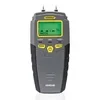 |
General Tools MMD4E Moisture Meter – $39.98 A two-pin meter gives you the actual percentage the makers talk about, so you can test the shaded boards and board ends below instead of guessing from the calendar.
|
As an Amazon Associate we earn from qualifying purchases.
There is no single number, because the wait depends on what made the wood wet. Use the chart below for a starting point, then let a meter or the water-drop test make the final call.
| Situation | Typical wait | How to confirm | Where the number comes from |
|---|---|---|---|
| After rain or a wet night | 1 to 3 dry days | Meter at about 15% or lower, boards no longer look dark | Contractor rule of thumb; makers print a condition, not hours |
| After rinsing or pressure washing | 1-3 hours (Behr) to 24-48 hours (Cabot) | Meter under the number on your can, or water drops soak in | Behr and Cabot data sheets |
| After deck cleaner and brightener | 24-48 hours (Cabot); “visibly dry”, usually a few hours (Defy) | Water-drop test after the wood is thoroughly dry | Cabot and Defy data sheets |
| New pressure-treated deck | 3 to 6 months of weathering (Defy) | Water-drop test; see our treated lumber timing guide for kiln-dried boards | Defy data sheet |
| Shaded or humid deck | Longer than the rows above | The reading, not the calendar | Outdoor moisture data, see below |
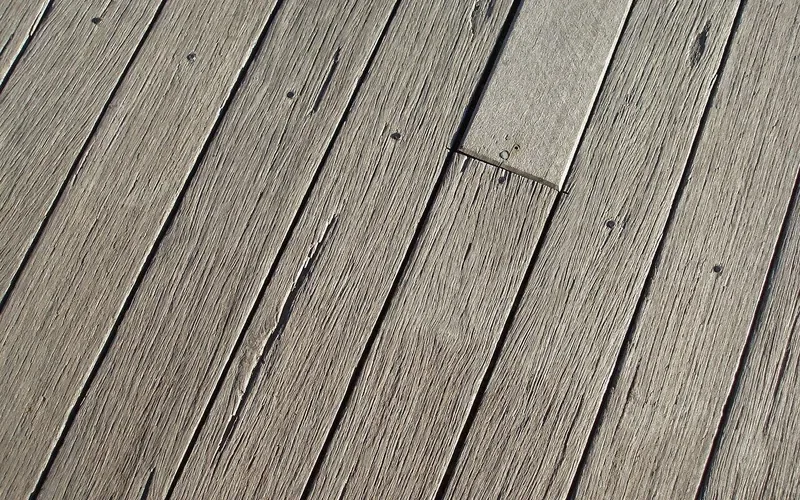
If you are redoing an old finish rather than staining fresh wood, the prep order changes. Our restain a deck guide covers the water test, stripping and sanding steps that come before any of this drying time.
What Cabot, Behr and Defy Say About Dry Wood
Most advice online repeats one number. The maker sheets are more specific, and they do not agree. Here is what the Cabot Australian Timber Oil #19400 data sheet, the BEHR Premium Semi-Transparent Penetrating Oil data sheet and the DEFY Extreme data sheet print for surface prep and application conditions.
| Stain | Dry time after cleaning | Readiness check | No rain for | Air and surface temperature | Touch-dry and traffic |
|---|---|---|---|---|---|
| Cabot Australian Timber Oil #19400 | 24-48 hours | “Absolutely dry” (no percentage printed) | Not applied when rain is “imminent” | 50°F or higher, and not falling below 50°F for 48 hours after | About 24 hours drying |
| BEHR Premium Semi-Transparent Penetrating Oil | About 1-3 hours after standing water is removed | Under 20% moisture content | 4 hours | 40-90°F | Touch 2-4 hours, foot traffic 24 hours, full cure 72 hours (77°F, 50% RH) |
| DEFY Extreme | Visibly dry, usually a few hours | Water drops soak in within a few seconds | 12 hours | 45-95°F | Touch 2-6 hours, 24 hours before using the deck |
Two things stand out. Behr is the only one of the three that prints a moisture percentage, and it is 20%, which is looser than the 15% most guides repeat. Cabot gives a time and Defy gives a water test. The rain windows also differ by a factor of three, from 4 hours (Behr) to 12 hours (Defy).
Labels get revised, so the sheet for your exact can wins over this chart. When your can prints no number, our rule of thumb is 15% or lower, and never above whatever the can says. Our wet wood and the 15% moisture rule article explains where that figure comes from.
Why 15% Is Not Always Reachable: Moisture Limits by Region
Wood left outdoors only dries down to the moisture content of the surrounding air, called its equilibrium moisture content. That floor varies a lot by place and season, which is why the same 48-hour wait works in Nevada and fails in the Pacific Northwest.
| Location | Outdoor wood moisture floor | What it means for staining |
|---|---|---|
| Las Vegas, NV | Annual average 5.9%, monthly range 3.7% to 8.3% | A dry deck reads well under 15% in every month |
| Houston, TX | 13.8% in October to 14.6% in December | Narrowest range of any location in the study, so a 15% reading leaves about one point of margin year-round |
| Spokane, WA | 8.2% in August to 18.5% in December | Widest range in the study: a deck will struggle to dry to 15% in winter, so wait for a summer window |
| Quillayute, WA | Annual average 17.3% | Highest annual average in the lower 48 states: expect readings above 15% for much of the year |
Source: figures from the NC State Extension study of outdoor wood moisture (NOAA 1981-2010 climate normals, 252 US locations), calculated for wood exposed to outdoor air.
This is the information most drying-time guides leave out. If your meter will not drop below 15% in a damp season, the deck is not failing to dry. The air has set the floor, so check the number printed on your stain (Behr allows under 20%), run the water-drop test, and pick the driest stretch of weather you can get. These are regional averages, so a shaded deck by a creek can sit higher than the figure for your town.
How to Tell Your Deck Is Dry Enough: Meter and Water-Drop Tests
Two checks work on any deck, and they catch different problems. The meter gives you a percentage. The water-drop test tells you whether the surface will actually accept stain.
- Wait out the weather first: let the deck go through at least one dry, breezy day after the last wet event before testing.
- Press the meter pins in at 6 or more spots: include shaded boards, boards against the house wall, spots under planters or furniture, and near board ends, which absorb water fastest.
- Use the highest reading as your deck number: one wet board near a downspout matters more than five dry ones in full sun.
- Run the water-drop test: sprinkle a few drops of water on bare wood. They should soak in within a few seconds. If they bead up, the wood is either too wet or too sealed to take stain.
No meter? Our guide to checking wood moisture without a meter covers the low-cost alternatives, though none is as reliable as a reading.
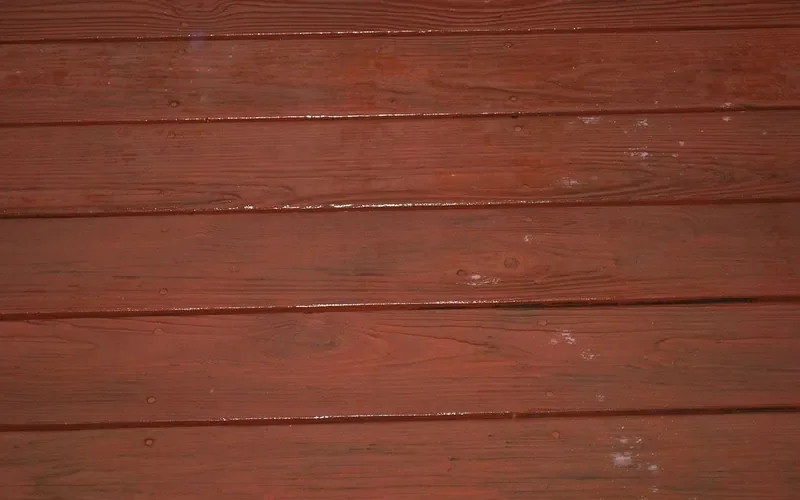
“Sprinkle a few drops of water on the wood. It should soak in within a few seconds.”
DEFY Extreme Wood Stain product data sheet, surface preparation
After Rain, Dew or a Cold Night: Check the Forecast Window
The drying wait before staining is only half the weather problem. The label also sets a window after you stain, and it is shorter or longer depending on the product.
- Behr: do not apply if rain is expected within 4 hours of application.
- Defy: do not apply when rain is expected within 12 hours. A slightly damp surface is acceptable, but not a wet or saturated one.
- Cabot: temperature must not fall below 50°F for 48 hours after application, so a cold night counts, not just rain.
That makes overnight dew and a falling temperature just as important as a storm. A clear, mild 48-hour window beats a sunny afternoon followed by a cold, damp night. For what happens once the stain is on, our stain dry and cure time guide covers the second half of the schedule.
Ways to Speed Up Drying (and What to Avoid)
These are practical judgment calls, not maker instructions, so treat them as sensible defaults rather than guarantees.
- Sweep off standing water, leaves and debris, and clear planters and furniture so air can reach every board.
- Pick a low-humidity, breezy day. Sun alone is slower than sun plus airflow under and across the deck.
- Do not cover the deck with a tarp to keep rain off. A tarp can hold moisture against the boards.
- Do not rush with heat tools. Uneven drying across a board is worse than a slower, even dry.
- If you are scheduling around a forecast, wash and brighten early in the week so the 24-48 hour drying window lands on the dry days.
Deck Dry Time Mistakes That Cause Peeling
- Going by a fixed number of days: 48 hours is a floor in dry air and not enough in a damp season. Always back it with a reading or the water-drop test.
- Testing one sunny spot: shaded boards and board ends hold water longest.
- Staining over a surface that still beads water: Defy says not to apply when drops do not soak in.
- Ignoring the cold-night rule: Cabot ties its recommended temperature range to the 48 hours after application.
- Trusting the 15% rule blindly: your can may print a different number, and your region may never reach it. See the table above.
Frequently Asked Questions
How long should a deck dry before staining?
Dry it until a meter reads about 15% or lower or water drops soak in within seconds. As a starting point, makers print 24-48 hours after washing (Cabot) and 3 to 6 months of weathering for a new deck (Defy). After rain, plan on 1 to 3 dry days.
How long after rain can I stain a deck?
Plan on 1 to 3 dry days, then confirm with a meter or the water-drop test. Makers print a condition, not a number of hours: Cabot says not to apply over wet surfaces, and Defy allows a slightly damp surface but not a wet or saturated one.
How long after pressure washing can I stain a deck?
Cabot says to let the surface dry 24-48 hours after cleaning. Behr says about 1-3 hours to under 20% moisture content under normal conditions. Because the two differ, use 48 hours as a safe starting point, then check the reading or the water-drop test before you stain.
What moisture level should a deck be before staining?
Our rule of thumb is 15% or lower, and never above the number on your stain label. BEHR Premium Semi-Transparent Penetrating Oil prints under 20%. Cabot and DEFY Extreme print no percentage, so check a few spots, including shaded boards, and use the highest reading.
Can I stain a deck that is slightly damp?
Only if your label allows it. The DEFY Extreme sheet says the surface may be slightly damp but not wet or water saturated. Cabot says not to apply over wet surfaces. A damp deck that beads water in the drop test should wait.
Once the deck passes both tests, the stain you choose decides how long the finish lasts. Our guide to the best deck stain compares the main options.
Sponsored / affiliate links. As an Amazon Associate I earn from qualifying purchases. I may earn additional commission from eligible campaigns.