Hardwood Mulch Vs Pine Bark Mulch Which Is Better
Choosing the right mulch can feel a bit tricky when you’re just starting out in the garden. Many people wonder about the difference between hardwood mulch and pine bark mulch, and which one is the best choice for their plants. It’s a common question because both have their own good points.
Don’t worry, this guide will make it simple. We will break down everything you need to know about Hardwood Mulch vs Pine Bark Mulch: Which Is Better? so you can pick the perfect mulch for your garden needs with ease.
Understanding Mulch Types
Hardwood Mulch vs Pine Bark Mulch Which Is Better
Mulch is a vital part of any garden. It helps keep soil moist, stops weeds, and makes your garden look neat. But not all mulches are the same.
Two popular choices are hardwood mulch and pine bark mulch. Deciding between them is a big step for many gardeners. This section explains what makes each type unique so you can start to see the differences.
We will look at what they are made of and how they are processed.
What Is Hardwood Mulch
Hardwood mulch comes from trees like oak, maple, and walnut. These trees are known for their dense wood. The wood is usually shredded or chipped into small pieces.
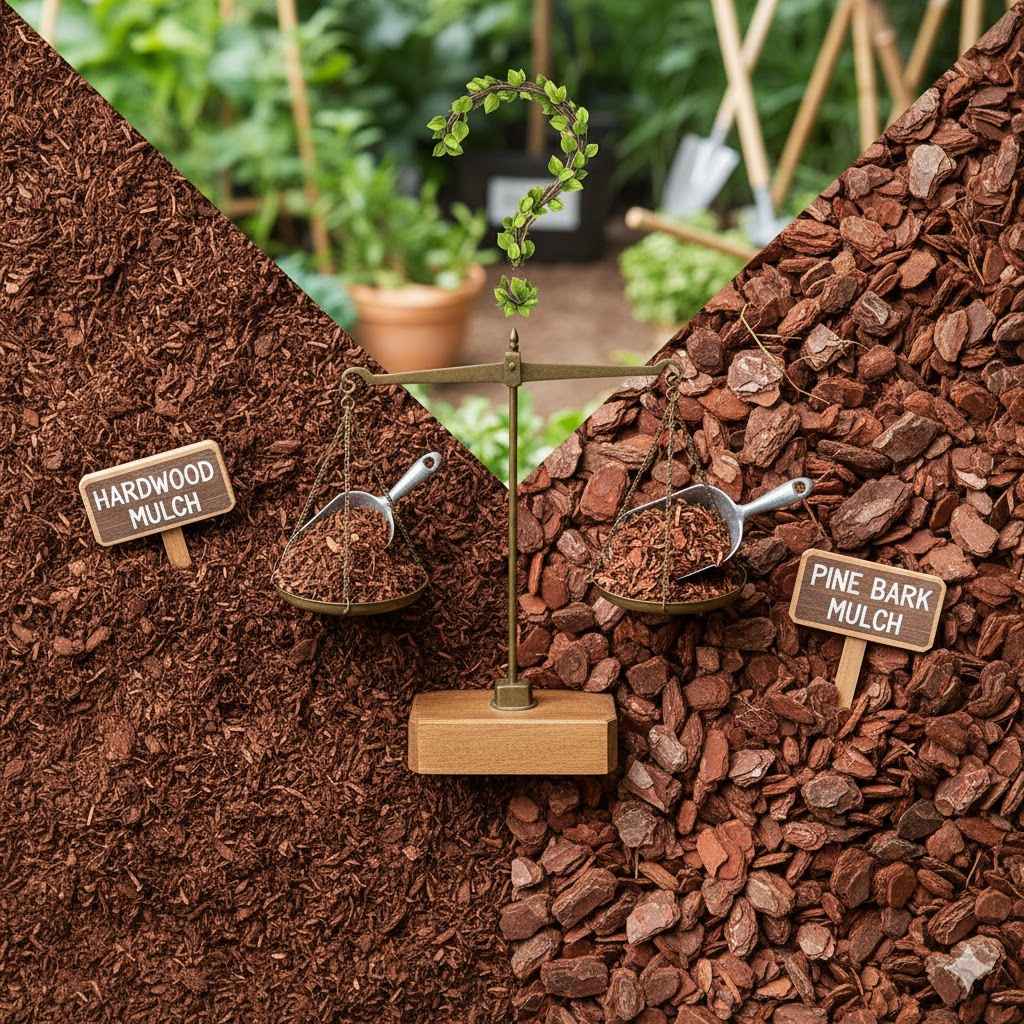
The color of hardwood mulch can vary. It often has a dark brown or black appearance. This makes it look good in gardens.
Hardwood mulch is a common choice because it is readily available. It is also usually a bit more affordable than some other types.
One key characteristic is its durability. Because it’s made from dense wood, it breaks down more slowly than some other mulches. This means it stays in place longer.
It’s also good at retaining soil moisture. This helps plants by reducing the need for frequent watering.
However, the breakdown rate can also be a downside for some. If you want to add nutrients to your soil as the mulch decomposes, hardwood mulch might not do that as quickly as other options.
What Is Pine Bark Mulch
Pine bark mulch comes from pine trees. It is often sold in different forms, such as shredded bark, nuggets, or chips.
Its color is typically a rich reddish-brown. This can add a warm tone to garden beds.
Pine bark mulch has a distinct, pleasant aroma. This can be a nice bonus for gardeners.
One of the main benefits of pine bark mulch is how it helps the soil. As it breaks down, it releases tannins. These tannins can slightly lower the soil’s pH, which is good for acid-loving plants like blueberries and azaleas.
Pine bark mulch is also good at suppressing weeds. Its texture can make it harder for weed seeds to sprout.
It tends to float away less easily than some other mulches, especially if you choose larger nuggets. This means it stays put on slopes or in windy areas.
On the other hand, pine bark mulch can be more expensive than hardwood mulch. Its breakdown rate is also a bit faster, meaning you might need to replace it more often.
Some gardeners also find that the acidity it adds can be too much for plants that prefer neutral or alkaline soil.
Comparing Mulch Benefits And Drawbacks
The Key Differences Hardwood Mulch vs Pine Bark Mulch
When we talk about Hardwood Mulch vs Pine Bark Mulch: Which Is Better?, it really comes down to what you want from your mulch. Both are great for gardens, but they offer different advantages. This section will help you see those differences clearly.
We will compare how they affect soil, how long they last, and how they look. This will help you make the best choice for your specific garden needs.
Soil Health And pH
Soil health is super important for happy plants. Mulch plays a big role in keeping your soil healthy. Let’s see how hardwood and pine bark mulches measure up.
Hardwood mulch is mostly neutral in terms of soil pH. This means it won’t significantly change the acidity or alkalinity of your soil. This is a good thing if you have plants that like a balanced soil pH.
It’s a safe bet for most general gardening uses.
Pine bark mulch, however, is known to make the soil more acidic as it breaks down. This is because it contains tannins. These tannins are natural compounds from the pine trees.
For plants that love acidic soil, like hydrangeas, rhododendrons, and azaleas, this can be a great benefit. It helps create the ideal environment for them to thrive.
If you have plants that prefer neutral or alkaline soil, using too much pine bark mulch could harm them. Their roots might not be able to take up nutrients as well if the soil becomes too acidic.
So, when thinking about Hardwood Mulch vs Pine Bark Mulch: Which Is Better?, consider your plants’ needs. For a wide variety of plants, hardwood is often a safe choice. For acid-loving plants, pine bark can be excellent.
Longevity And Decomposition Rate
How long mulch lasts in your garden is a big factor. It affects how often you need to buy and spread more. It also impacts how quickly it adds nutrients back to the soil.
Hardwood mulch tends to break down quite slowly. Because it’s made from dense wood, it takes a longer time to decompose. This is a plus if you want your mulch to stay looking neat and in place for an extended period.
You might only need to top it up once a year.
This slower decomposition also means it releases its organic matter into the soil more gradually. This is good for long-term soil improvement.
Pine bark mulch usually breaks down a bit faster than hardwood mulch. Especially if it’s in smaller chip or shredded forms. This means it will need to be replenished more often, perhaps every six months to a year, depending on the thickness you apply.
The faster breakdown rate means it can add nutrients and improve soil structure more quickly. This can be beneficial if you are focused on actively enriching your soil.
The trade-off is that you might have to buy more pine bark mulch over time.
Here’s a look at how long each might last:
| Mulch Type | Typical Lifespan | Decomposition Rate |
|---|---|---|
| Hardwood Mulch | 12-18 months | Slow |
| Pine Bark Mulch | 6-12 months | Moderate |
This table shows that hardwood mulch generally lasts longer before needing to be replaced.
Aesthetic Appeal
How your garden looks is very important to many people. Mulch plays a big part in this. The color and texture of mulch can really change the look of your flower beds and garden paths.
Hardwood mulch often comes in rich, dark colors. Think deep browns, blacks, or even dark grays. This dark color can make the vibrant colors of your flowers and plants really pop.
It creates a clean, defined look.
It’s very versatile. Its neutral color works well with almost any garden style, from formal landscapes to more casual cottage gardens. Many people find it gives their garden a polished appearance.
Pine bark mulch typically has a warm, reddish-brown hue. This can create a cozier, more natural feel. The color can complement earthy tones in your garden.
Pine bark also comes in various sizes, from fine shreds to larger nuggets. Larger nuggets can create a more rustic look, while shredded bark offers a smoother finish. The texture can vary significantly depending on the product.
When considering Hardwood Mulch vs Pine Bark Mulch: Which Is Better? for looks, think about the overall style you are going for.
Here are some aesthetic points to ponder:
- Dark, Uniform Appearance Hardwood mulch often provides a consistent dark color. This can be very appealing for creating neat garden borders and pathways. Its uniformity gives a clean, well-maintained look.
- Warm, Natural Tones Pine bark mulch brings a warmer color palette to the garden. Its reddish-brown shades can feel more natural and rustic. It blends well with natural landscapes.
- Variety in Texture Pine bark offers more texture options, from fine shredded material to chunky nuggets. This allows for more creative choices in how you landscape. Large nuggets can be particularly striking in certain garden designs.
Weed Suppression And Moisture Retention
Stopping weeds and keeping soil moist are two of the most important jobs mulch does for a garden. Both hardwood and pine bark mulches are good at these tasks, but they have slight differences.
Both types of mulch create a physical barrier on top of the soil. This barrier stops sunlight from reaching weed seeds. Without sunlight, most weed seeds cannot sprout and grow.
A good, thick layer of either mulch can greatly reduce the number of weeds you see.
In terms of moisture retention, both are effective. They help to reduce evaporation from the soil’s surface. This means your soil stays moist for longer.
Plants need consistent moisture to grow well, and mulch helps ensure this.
Hardwood mulch, due to its density, can sometimes form a slightly tighter mat on the soil surface. This can be very effective at blocking weeds. It also holds moisture well.
Pine bark mulch, especially the shredded varieties, also forms a good barrier. The nuggets can sometimes allow for a bit more airflow, which can be beneficial in very wet climates. However, they still do a great job of keeping the soil underneath moist.
Generally, the effectiveness of weed suppression and moisture retention depends more on the thickness of the mulch layer you apply than the exact type. A 2-3 inch layer of either mulch will perform well.
Cost And Availability
When planning your garden projects, the cost and how easy it is to find your materials are always important. This is true for mulch too.
Hardwood mulch is often more widely available. You can find it at most garden centers, landscape supply stores, and even some big-box home improvement stores. Because it’s made from common types of trees, it’s usually produced in large quantities.
This high availability often translates to a lower price point. Hardwood mulch is frequently one of the more budget-friendly options for gardeners. This makes it a popular choice for large landscaping projects or for those on a tight budget.
Pine bark mulch can sometimes be a bit more expensive. This is because pine trees might not be as readily available in all regions, or the processing of pine bark might be more involved. It’s also often sold in specific types like nuggets or shredded, which can affect the price.
While it might cost a little more upfront, some gardeners find the longer lifespan or specific benefits of pine bark make it worth the investment.
Here is a simple comparison of cost and availability:
| Mulch Type | Typical Cost | Availability |
|---|---|---|
| Hardwood Mulch | Lower | High |
| Pine Bark Mulch | Moderate to Higher | Moderate to High |
This shows that hardwood mulch is generally the more economical choice and easier to find everywhere.
Best Uses For Each Mulch Type
When To Choose Hardwood Mulch
So, you are trying to decide between Hardwood Mulch vs Pine Bark Mulch: Which Is Better? Hardwood mulch is a fantastic all-around choice for many garden situations. Its neutral properties and long-lasting nature make it suitable for a wide range of gardening goals.
One of the biggest reasons to pick hardwood mulch is its versatility. It works well with almost any type of plant. If you have a mixed garden with flowers, vegetables, and shrubs, hardwood mulch is a safe and effective option.
It won’t negatively affect the soil pH for any of your plants.
It’s also a great choice if you are looking for a mulch that will stay in place and look good for a long time. Its slower decomposition rate means you won’t have to reapply it as frequently as some other mulches. This saves you time and money over the gardening season.
Hardwood mulch is also ideal for creating clean, defined borders around garden beds and along pathways. Its dark, consistent color makes everything look tidy and well-maintained. It provides a nice contrast that helps your plants stand out.
Think about using hardwood mulch in these situations:
- General Landscaping For large areas or when you want a uniform, neat appearance, hardwood mulch is excellent. It covers the soil well and gives a professional finish to any garden.
- Vegetable Gardens Its neutral pH is perfect for vegetable patches. You don’t have to worry about it affecting the growth of your food crops. It helps retain soil moisture, which is crucial for growing healthy vegetables.
- Around Established Trees and Shrubs The slow decomposition of hardwood mulch makes it ideal for the base of trees and shrubs. It helps retain moisture and suppress weeds without altering the soil too much.
Hardwood Mulch Application Example
Let’s say you have a large flower garden with a mix of perennials and annuals. You want the beds to look neat and help keep weeds down over the summer.
First, you would prepare the area by weeding and then raking the soil smooth.
Next, you would spread a layer of hardwood mulch about 2 to 3 inches deep around your plants. Make sure to keep the mulch a little bit away from the stems of the plants to prevent rot.
You would notice that the dark color immediately makes the garden look much more put together. The mulch helps keep the soil moist, so you won’t have to water as often, especially during hot, dry spells. You would also find that fewer weeds sprout up through the mulch.
By the end of the season, the mulch would still look good. It would have started to break down slightly, adding some organic matter to the soil, but it would still be effective.
This scenario highlights how hardwood mulch provides both aesthetic and practical benefits for a typical garden setup.
When To Choose Pine Bark Mulch
Pine bark mulch has some special qualities that make it the top choice for certain gardeners and specific plants. If your garden has particular needs or you are aiming for a certain look, pine bark might be perfect for you.
The most common reason to choose pine bark is for its ability to make the soil more acidic. As it breaks down, it releases tannins that lower the pH. This is a big advantage if you are growing plants that love acidic conditions.
Acid-loving plants include blueberries, raspberries, azaleas, rhododendrons, and many types of evergreens. If you have these plants in your garden, pine bark mulch can help create the ideal soil environment for them.
Pine bark mulch also comes in attractive forms like nuggets. These larger pieces are visually appealing and can give your garden a rustic or natural look. They tend to stay in place well, even on slopes or in windy areas.
If you like the idea of your mulch having a pleasant, natural scent, pine bark is a good pick. The aroma can be a subtle enhancement to your outdoor space.
Consider pine bark mulch for these uses:
- Acid-Loving Plants If you grow blueberries, hydrangeas, or azaleas, pine bark is an excellent choice. It helps maintain the slightly acidic soil conditions they need to thrive.
- Natural or Woodland Gardens The reddish-brown color and textured nuggets of pine bark fit beautifully into naturalistic or woodland-style gardens. It complements the look of trees and native plants.
- Areas Prone to Erosion The chunkier forms of pine bark mulch, like nuggets, are good for stabilizing soil on slopes. They are less likely to wash away in heavy rain compared to finer mulches.
Pine Bark Mulch Application Example
Imagine you have a small patch dedicated to growing blueberries. You want to ensure they get the right soil conditions to produce the best fruit.
You start by preparing the soil, perhaps adding some compost to improve drainage.
Then, you spread a generous layer of pine bark mulch, perhaps the shredded kind or smaller nuggets, around the blueberry bushes. You apply it about 2 to 3 inches deep, keeping it a few inches away from the main stems.
As the pine bark slowly breaks down over the next few months, it will release tannins into the soil. This will help lower the soil’s pH, creating a more acidic environment that blueberries love.
You’ll notice the warm, reddish-brown color adds a nice touch to the blueberry patch. The mulch will also help keep the soil consistently moist, which is vital for fruit development.
This application shows how pine bark mulch can directly benefit specific plants by creating a preferred soil environment.
Choosing The Right Mulch For Your Garden
Making The Final Decision Hardwood Mulch vs Pine Bark Mulch
Deciding between Hardwood Mulch vs Pine Bark Mulch: Which Is Better? is about understanding your garden’s unique needs. Both mulches offer fantastic benefits, but one might be a better fit for your specific situation. This section helps you pull together all the information.
We will give you simple steps to make sure you pick the right mulch for success.
First, think about what you are planting. Do you have plants that need slightly acidic soil, like blueberries or azaleas? If yes, pine bark mulch is a strong contender.
If you have a general mix of plants or those that prefer neutral soil, hardwood mulch is usually the safer and more versatile choice.
Next, consider how you want your garden to look. Do you prefer a dark, uniform, and tidy appearance? Hardwood mulch is excellent for this.
If you like a warmer, more natural, or rustic look, especially with textured nuggets, pine bark might be your preference.
Think about how much time and money you want to spend on your mulch. Hardwood mulch is generally less expensive and lasts longer, meaning fewer applications and lower overall cost. Pine bark might require more frequent replenishment, but it can offer specialized benefits.
Finally, consider the climate and any specific landscape challenges. For example, if you live in a very windy area or have sloped garden beds, the chunkier textures of some pine bark mulches might be more stable.
Step-By-Step Selection Process
To make your decision easy, follow these simple steps:
- Identify Your Plants’ Needs Research your plants. Do they need acidic soil? This is the most important factor. If they do, lean towards pine bark. If not, hardwood is a safe bet.
- Consider Your Garden’s Style Think about the look you want. Dark and neat (hardwood) or warm and natural (pine bark)? Your aesthetic preference matters for your enjoyment.
- Evaluate Your Budget and Time How much can you spend? How often do you want to buy and spread mulch? Hardwood is typically cheaper and lasts longer.
- Assess Your Landscape Look at your garden’s features. Are there slopes? Windy areas? Consider how well each mulch will stay in place.
- Check Local Availability and Pricing Visit your local garden centers. See what’s readily available and compare the prices of both types of mulch in your area. Sometimes local availability can influence your choice.
Sample Scenarios
Here are a couple of examples to help you visualize the choices:
-
Scenario 1: The Vegetable Gardener Sarah is starting a large vegetable garden. She wants to keep weeds down, retain moisture for her tomatoes and peppers, and add nutrients to the soil over time. She doesn’t have any specific pH needs for her vegetables.
In this case, hardwood mulch is the best choice. It’s cost-effective for a large area, its neutral pH won’t harm her vegetables, it will suppress weeds, and it will break down slowly, improving the soil structure gradually.
-
Scenario 2: The Blueberry Enthusiast Mark wants to grow blueberries. He knows blueberries need acidic soil to produce well. He also likes a more natural, earthy look in his garden.
Pine bark mulch is ideal for Mark. Its ability to lower soil pH is perfect for blueberries. The reddish-brown color and textured nuggets will also give his blueberry patch the natural look he desires.
Frequently Asked Questions
Question: Is hardwood mulch better than pine bark for attracting beneficial insects
Answer: Neither hardwood mulch nor pine bark mulch is specifically chosen for attracting beneficial insects. Their primary roles are soil moisture retention, weed suppression, and temperature regulation. The presence of beneficial insects is more influenced by the diversity of plants in your garden and the absence of harmful pesticides.
Question: Can I mix hardwood mulch and pine bark mulch
Answer: Yes, you can mix hardwood mulch and pine bark mulch. However, be mindful of the pH impact. If you mix them, the overall pH change in your soil will be a blend of their individual effects.
It’s best to use a mix if you have a variety of plants with different pH needs, or if you are aiming for a balanced effect.
Question: How thick should I apply hardwood mulch or pine bark mulch
Answer: For both hardwood mulch and pine bark mulch, a layer of 2 to 3 inches is generally recommended. This thickness provides adequate weed suppression and moisture retention without smothering plant roots or causing rot. Too thin a layer won’t be as effective, and too thick a layer can restrict air and water flow to the soil.
Question: Which mulch breaks down faster
Answer: Pine bark mulch generally breaks down faster than hardwood mulch. Hardwood mulch, being denser, decomposes more slowly. This means hardwood mulch will last longer in your garden beds before needing to be replenished.
Question: Will pine bark mulch make my soil too acidic
Answer: Pine bark mulch can make the soil more acidic as it decomposes due to its tannin content. However, for most garden situations and typical plant types, the effect is usually mild and beneficial, especially for acid-loving plants. If you are concerned, you can test your soil pH and adjust accordingly or use hardwood mulch for a neutral effect.
Conclusion
Final Thoughts
Choosing between hardwood mulch and pine bark mulch is about matching the mulch to your garden’s needs. Hardwood mulch offers a neutral pH, long-lasting appearance, and affordability, making it a great all-around choice for most gardens. Pine bark mulch excels for acid-loving plants and offers a natural aesthetic.
Consider your plants, desired look, and budget to make the best decision for your successful gardening.