How Do Carpenter Bees Drill Perfect Holes?
Many folks wonder, How Do Carpenter Bees Drill Perfect Holes? It might seem tricky, especially if you’re new to understanding these busy bees. They make these neat tunnels, and it looks like they use special tools! Don’t worry, it’s not as complicated as it appears.
We’ll walk through it simply, step by step. Get ready to see how they do it so cleanly.
Carpenter Bee Hole Creation Explained
Carpenter bees are known for their ability to create very round, smooth holes in wood. This process is not done with teeth or pincers in the way we might imagine. Instead, they utilize a fascinating combination of their powerful mandibles and a specialized salivary secretion.
These bees are quite resourceful, using their biological tools to make their homes. Understanding this process helps us appreciate their natural engineering skills.
The holes they drill serve a vital purpose in their life cycle. They are used for nesting, where the female bee lays her eggs and provisions them with food. The precision of these holes is important for protecting the developing larvae from predators and the elements.
This natural behavior is a testament to millions of years of evolution, leading to an efficient and effective method of home construction. It’s a wonder of nature right in our backyards.
The Tools Carpenter Bees Use
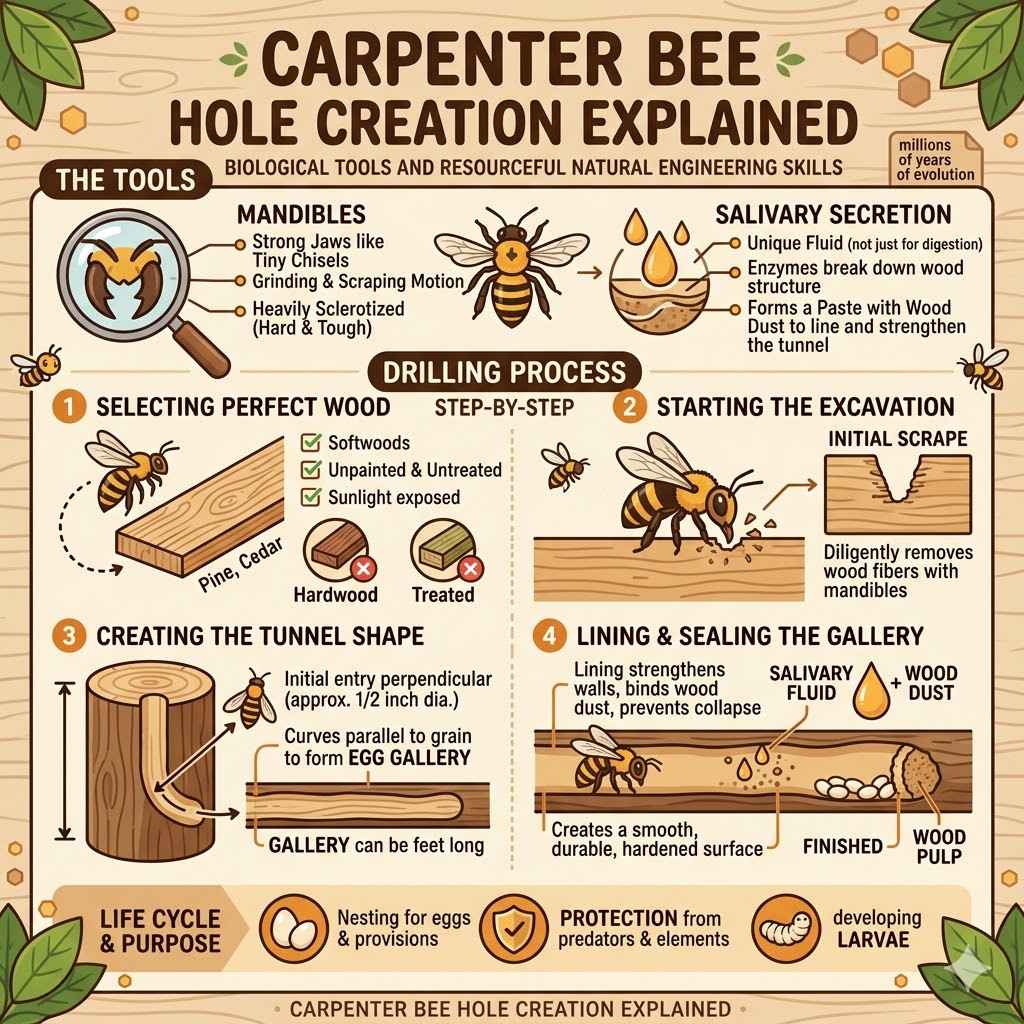
Carpenter bees possess a set of biological tools perfectly suited for their woodworking tasks. Their primary instruments are their strong, sharp mandibles. These are powerful jaws located on the sides of their heads.
Think of them like tiny, incredibly strong chisels. They are capable of chewing through wood fibers. The bees use these mandibles with a strong, grinding motion.
Beyond the mandibles, carpenter bees have another secret weapon: a unique salivary fluid. This secretion is not just for digestion. When mixed with wood particles, it forms a paste.
This paste is then used to line the inside of the tunnel. It hardens to create a smooth, durable surface. This lining also helps to bind the wood dust together, making the tunnel structure more stable.
Mandibles Powerful Jaws
The mandibles of a carpenter bee are the main tools for excavating wood. These are heavily sclerotized, meaning they are very hard and tough. They have serrated edges in some species, which can help grip and tear wood fibers.
The bee opens and closes its mandibles with considerable force. This action scrapes away small particles of wood.
The chewing motion is not a simple bite. It’s more of a grinding and scraping action. The bee positions its head against the wood and uses its mandibles to wear away the surface.
This process is slow and steady. Over time, these repeated actions create the initial entrance to the nest tunnel. The size and shape of the mandibles vary slightly among different carpenter bee species, influencing the dimensions of the holes they create.
The Salivary Secretion
The salivary fluid produced by carpenter bees plays a crucial role in their tunneling. This substance is rich in enzymes and other compounds. When released, it mixes with the chewed wood particles.
The enzymes begin to break down the wood’s structure, making it softer and easier to chew. This also helps to lubricate the drilling process.
As the bee continues to excavate, it mixes this fluid with the wood dust. This creates a sort of wood-and-saliva paste. The bee then uses its mouthparts to pack this paste against the tunnel walls.
As the moisture from the saliva evaporates, the paste hardens. This leaves a smooth, almost varnished interior to the gallery. This lining strengthens the tunnel and prevents it from collapsing.
The Drilling Process Step-by-Step
The creation of a carpenter bee hole is a methodical process. It begins with the selection of suitable wood. The female bee then uses her mandibles to start scraping away at the surface.
This initial action creates a small indentation. She works diligently, removing tiny wood fragments.
Once a small opening is made, she begins to excavate deeper. The salivary fluid is introduced into the mix. This paste is applied to the tunnel walls as she works.
The tunnel is typically started perpendicular to the wood surface. After a short distance, it curves to run parallel to the grain of the wood. This is where the majority of the egg gallery will be formed.
Selecting the Perfect Wood
Carpenter bees have specific preferences when it comes to the wood they tunnel into. They generally prefer softwoods that are unpainted and untreated. Woods like pine, fir, redwood, and cedar are common targets.
They avoid hardwoods and treated lumber. The condition of the wood also matters; aged or weathered wood is often more appealing.
They look for wood that has not been painted or stained. These coatings make the wood too hard to chew. Natural wood surfaces offer better grip for their mandibles.
They also tend to choose wood that is exposed to sunlight. This warmth can help in their excavation and for the development of their young. The wood should also be relatively soft.
This allows them to excavate more easily.
Starting the Excavation
The female bee’s work begins with a small scrape. She positions her head against the chosen spot on the wood. Her powerful mandibles are then used to shear off tiny wood fibers.
This is a slow process, removing only small amounts of material with each movement.
Initially, she is trying to break through the surface layer. Once an initial depression is formed, she can gain better leverage. The mandibles grind and scrape, creating a small but visible mark.
This first stage is critical for establishing a secure entry point.
Creating the Tunnel Shape
As the bee drills deeper, the tunnel’s shape begins to take form. The initial entry hole is typically about half an inch in diameter. This size is perfect for the bee to fit through comfortably.
The tunnel then extends into the wood.
The direction of the tunnel changes. After a short distance, usually a few centimeters, the bee turns her tunnel. It then runs parallel to the grain of the wood.
This is where the main egg gallery will extend. The length of this gallery can vary significantly, often up to several feet long.
Lining and Sealing the Gallery
Throughout the drilling process, the bee constantly mixes her salivary secretions with the wood dust. This mixture is then packed against the interior walls of the tunnel. This acts as a binding agent and a sealant.
It creates a smooth, hardened surface.
This lining serves multiple purposes. It strengthens the tunnel walls, preventing collapse. It also creates a smooth surface that can help regulate humidity and temperature within the nest.
The hardened paste forms a barrier against moisture and potential pests. Once the gallery is complete, the entrance may be partially closed with wood pulp.
Why the Holes Appear So Perfect
The perception of “perfect” holes drilled by carpenter bees comes from a combination of their biological adaptations and the nature of their woodworking. Their mandibles are designed for chewing and scraping, not for making jagged cuts. The salivary secretion further refines the tunnel’s interior, creating a polished finish.
The wood grain itself plays a role. When a bee drills parallel to the grain, it encounters less resistance. This allows for a straighter, smoother excavation.
The consistent direction of the force applied by the bee, combined with the inherent structure of the wood, contributes to the roundness and smoothness of the hole. It’s a natural process that yields impressive results.
The Role of Wood Grain
Wood grain refers to the parallel arrangement of wood fibers. When a carpenter bee excavates, it tries to follow this grain. The fibers are easier to separate when cut along their length.
This natural alignment of wood fibers aids the bee in creating a straighter and smoother tunnel.
If the bee were to drill against the grain, it would be much more difficult. The wood would splinter more, and the hole would be rougher. By utilizing the grain, the bee maximizes its efficiency and the quality of its excavation.
It’s like cutting through butter along the grain versus across it.
Consistency in Mandible Action
Carpenter bees are creatures of habit and instinct. Their drilling motion is repetitive and consistent. The bee’s head moves in a specific pattern as it chews.
This consistent application of force, combined with the grinding action of the mandibles, leads to a uniform removal of wood particles.
Imagine a sculptor carefully shaping a piece of stone. The bee’s mandibles act like tiny, precise tools, working over and over in the same manner. This persistent, patterned action carves out a clean, round opening.
The uniformity of their effort results in the smooth appearance of the holes.
The Saliva’s Finishing Touch
The salivary secretion is the finishing touch that makes the holes appear so perfect. After the wood particles are chewed, they are mixed with this fluid. This paste is then applied to the walls of the tunnel.
As this paste dries, it hardens. It fills in any microscopic irregularities left by the mandibles. This process creates a smooth, almost polished surface on the inside of the tunnel.
It also binds loose wood dust, preventing it from falling out and making the tunnel appear cleaner. It’s like a natural wood filler and sealant combined.
Examples of Carpenter Bee Holes
Observing carpenter bee holes in real-world situations can highlight their construction methods. You can see these holes on decks, eaves, fences, and even wooden furniture. The appearance and location of the holes can tell us a lot about the bee’s activity.
For instance, a single, clean hole on a wooden beam might indicate the start of a new nest. Multiple holes clustered together could mean an established population. The wood type and its condition often correlate with the presence and number of these tunnels.
Holes on Wooden Decks and Fences
Wooden decks and fences are prime real estate for carpenter bees. They provide large, accessible surfaces of untreated or weathered wood. You’ll often find small, perfectly round holes on the underside of deck railings or on fence posts.
These holes are usually about half an inch in diameter. They are clean and free of splinters. The bees prefer exposed wood, so you might see them on the surfaces that get the most sun.
This is because the sun helps warm the wood, aiding their excavation.
One common scenario is finding holes along the edges of deck boards or on the vertical supports of a fence. A homeowner might notice these holes after a warm spring. Sometimes, sawdust can be seen beneath the holes, indicating active boring.
This sawdust, called frass, is a clear sign of carpenter bee activity.
Holes in Eaves and Overhangs
The wooden elements of house eaves and overhangs are also attractive to carpenter bees. These areas often consist of softwoods like pine or fir. They are typically unpainted on the undersides, offering an ideal nesting site.
The holes here are often drilled into the fascia boards or soffits. They can be found along the edges where the wood meets the roofline. The bees can drill deep tunnels here, potentially causing structural issues over time if left unaddressed.
A homeowner might discover these holes while performing routine home maintenance. The presence of sawdust near the eaves is a tell-tale sign. Sometimes, the bees can be seen hovering around these areas, especially on sunny days.
The tunnels can extend several feet into the wooden structure.
Holes in Untreated Wooden Furniture
While less common, carpenter bees can also target untreated wooden outdoor furniture. Wooden benches, picnic tables, or Adirondack chairs can become targets if left exposed and unpainted.
The bees will drill into the legs, arms, or seat supports of the furniture. The holes will be consistent with their typical size and shape. This can weaken the furniture over time, making it unsafe to use.
Imagine a wooden garden bench that has been left out for several years without any treatment. You might notice small, perfectly round holes drilled into the legs or the seat. This indicates that carpenter bees have decided to make it their home.
It’s a good reminder to maintain wooden outdoor items.
Preventing Carpenter Bee Damage
While the holes carpenter bees drill are impressive, they can cause significant damage to wooden structures. Preventing them from nesting is often the best approach. This involves treating the wood and making it less appealing to the bees.
Several methods can be used to deter these insects. The goal is to make the wood unattractive or inaccessible for nesting. Understanding their preferences is key to effective prevention.
This saves homeowners from costly repairs down the line.
Treating and Sealing Wood Surfaces
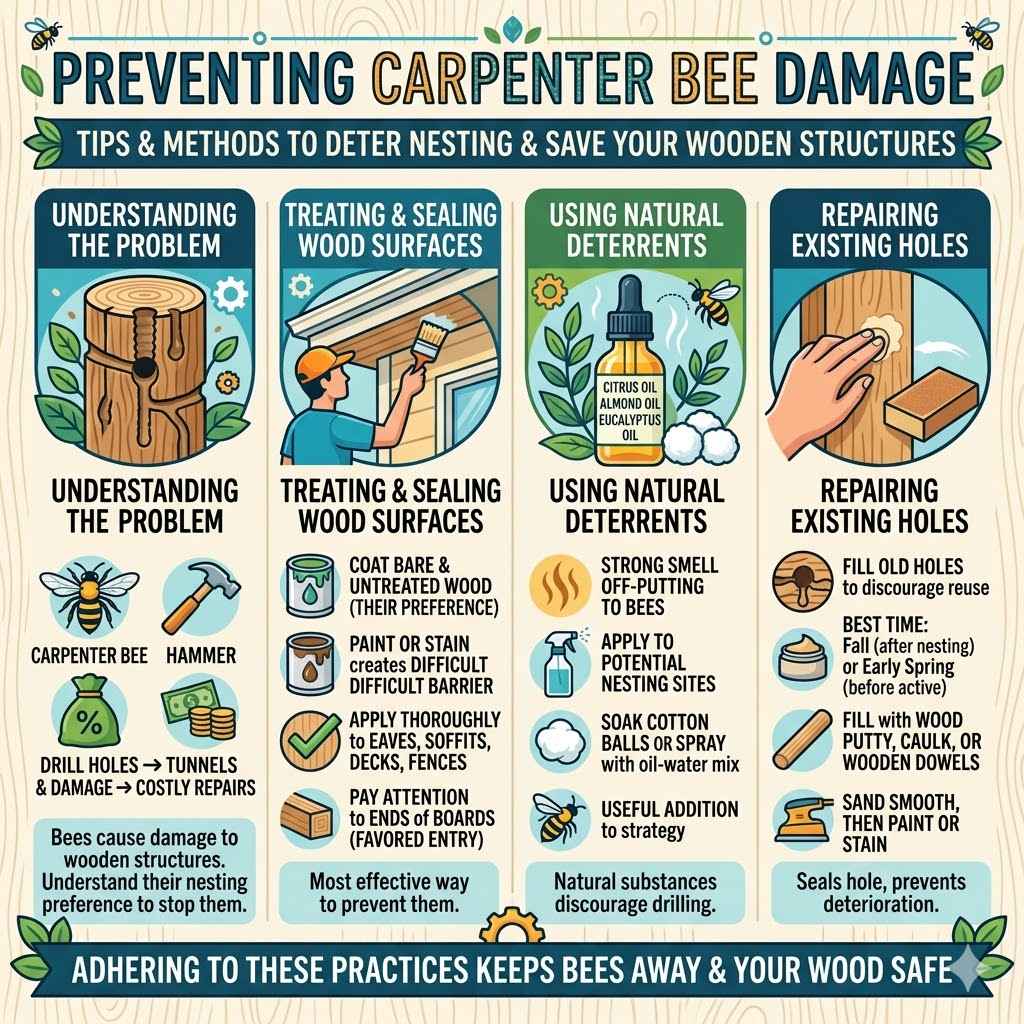
The most effective way to prevent carpenter bees is to treat and seal the wood surfaces they prefer. Painting or staining wood creates a barrier that carpenter bees find difficult to penetrate. They prefer bare, untreated wood.
Ensuring all exposed wood surfaces are thoroughly coated is important. This includes eaves, soffits, decks, fences, and any other wooden structures around the home. Pay attention to the ends of boards, as these are often favored entry points.
A good quality exterior paint or stain can make a big difference.
Using Natural Deterrents
Some natural substances can also help deter carpenter bees. The strong smell of certain essential oils can be off-putting to them. Citrus oils, almond oil, and eucalyptus oil are often cited.
Applying these oils to potential nesting sites can discourage bees from drilling. You can soak cotton balls in the oil and place them near holes, or mix the oil with water and spray it on the wood. While not as effective as sealants, they can be a useful addition to your prevention strategy.
Repairing Existing Holes
If you already have carpenter bee holes, it’s important to repair them. Leaving holes open can encourage more bees to nest there in the future. It can also lead to further wood deterioration.
The best time to repair holes is in the fall, after the bees have finished their nesting for the season, or in early spring before they become active. You can fill the holes with wood putty, caulk, or even wooden dowels. After filling, sand the area smooth and then paint or stain it.
This seals the hole and makes it unattractive for future nesting.
Frequently Asked Questions
Question: Do carpenter bees sting people?
Answer: Male carpenter bees do not have stingers and cannot sting. Female carpenter bees can sting, but they are generally not aggressive and will only sting if they feel directly threatened or are handled. They are more focused on drilling wood than attacking people.
Question: How long does it take for a carpenter bee to drill a hole?
Answer: Drilling a single entrance hole can take a carpenter bee several days to a week, depending on the wood hardness and the bee’s activity level. The entire nesting gallery, which can be several feet long, takes considerably more time to excavate.
Question: Can carpenter bees damage my house structure?
Answer: Yes, they can. While individual holes might seem minor, a large infestation over many years can weaken wooden structures. The tunnels can compromise the integrity of beams, posts, and other structural elements.
Question: What is the difference between carpenter bees and bumblebees?
Answer: Carpenter bees look like large bumblebees but are usually shiny black on their abdomens, while bumblebees are fuzzy all over. Carpenter bees bore into wood for nests, whereas bumblebees build nests in the ground or in cavities.
Question: Is it okay to leave carpenter bee holes alone?
Answer: It is generally not recommended to leave carpenter bee holes alone. They can weaken wood over time, invite secondary pests, and encourage more carpenter bees to nest in the same location. Repairing them is usually the best course of action.
Summary
Carpenter bees drill perfect holes using their strong mandibles to chew wood and a special salivary secretion that hardens. This creates smooth, durable tunnels. Following the wood grain and consistent drilling motions contribute to the neat appearance.
Protecting wood with paint or stain is the best way to prevent them.