What Size Screw for 3/4 Wood? (#8 vs #10 + Pilot Holes)
For 3/4-inch wood, use a #8 or #10 screw, 1.25 to 1.5 inches long — go with the shorter length in 3/4-inch plywood so the tip doesn’t poke through the opposite face. A screw too short pulls loose under load; one too long splits solid wood or blows through thin plywood veneer. This guide covers pilot hole sizes by wood type, the two-thirds penetration rule, and when to size up for hardwood or decking.
This article contains Amazon affiliate links. As an Amazon Associate, WoodWorkingAdvisor.com earns from qualifying purchases at no extra cost to you.
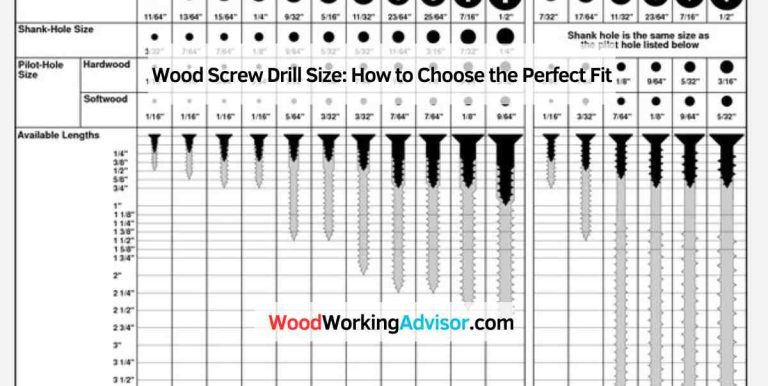
Screw Gauge and Pilot Hole Chart for 3/4″ Wood
Best 3/4″ Wood Screw Kit Pick
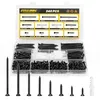
240PCS Wood Screw Assortment Kit – $8.98
Covers the #6 and #8 gauges and the 3/4″-to-2″ length range this guide’s chart recommends, so you’re not buying a whole box for one project.
- Best for: furniture and cabinetry where you need several gauges on hand
- Why we picked it: matches the #6/#8 sizes and 3/4″-2″ lengths in the chart above
- Main drawback: no #10 gauge included for heavier joints
Compare more 3/4″ wood fastening options
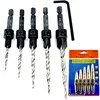 Option 1 Countersink Bit Set (5 Pc) – $17.90
|
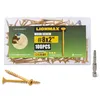 Option 2 #8 x 2″ Exterior Deck Screws – $8.99
|
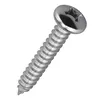 Option 3 #10 x 1-1/4″ Stainless Screws – $8.48
|
As an Amazon Associate we earn from qualifying purchases.
A wood screw’s size is described by two numbers: gauge (shaft diameter) and length. For 3/4-inch stock, gauge #8 (0.164″ diameter) or #10 (0.190″ diameter) gives enough thread engagement without needing an oversized pilot hole that weakens the joint. For screw and drill-bit sizing across other project types, see our full screws and drilling guide.
| Screw Gauge | Shaft Diameter | Pilot Hole – Softwood | Pilot Hole – Hardwood |
|---|---|---|---|
| #6 | 0.138″ | 5/64″ | 3/32″ |
| #8 | 0.164″ | 7/64″ | 1/8″ |
| #10 | 0.190″ | 1/8″ | 9/64″ |
Softwoods like pine, cedar, and fir take a smaller pilot hole because the fibers compress around the threads. Hardwoods like oak, maple, and walnut need the larger hole in that row — their density resists fiber displacement, so an undersized hole is what actually causes splitting, not the screw itself.
For length, match the project rather than defaulting to one size for everything:
| Project Type | Recommended Screw Length |
|---|---|
| Furniture assembly | 1.25″ to 1.5″ |
| Cabinet installation | 2″ |
| Decking (into joists) | 2.5″ to 3″ |
📊 Standard machine-screw gauge diameters (#6 = 0.138″, #8 = 0.164″, #10 = 0.190″) come from ANSI/ASME B18.6.3 sizing. — Source: B&S Stainless, American Screw Sizes
Does 3/4″ Plywood Need a Different Screw Than Solid Wood?
Yes, mainly on length. Plywood is built from thin cross-grain veneer layers glued together, so it holds a screw’s threads well even at 3/4″ (0.75″) thickness — the risk isn’t weak grip, it’s the tip punching through the opposite face.
Keep total penetration under about 5/8″ (roughly 80% of the panel’s 0.75″ thickness) whenever the back face will be visible, such as a cabinet side or a drawer bottom. A 1″ screw driven straight in from one face of 3/4″ plywood will often show its tip on the other side once you account for driving angle and any flex in the panel — step down to a 3/4″ or 1″ screw for face-to-face plywood joints, and reserve the full 1.25″-1.5″ length for fastening the plywood into open framing behind it.
The Two-Thirds Rule: How Deep Should a Screw Go?
The threaded portion of a screw should penetrate at least two-thirds of the thickness of the piece it’s anchoring into — not the piece it passes through first, but the receiving material underneath. Go shallower and the joint pulls loose under load; go past about 80% of the receiving piece’s thickness and you risk the tip breaking through or splitting it.
- 1/2″ receiving material: aim for at least 3/8″ of thread engagement
- 3/4″ receiving material: aim for at least 1/2″ of thread engagement
- 1.5″ receiving material (framing): aim for at least 1″ of thread engagement
Wood Screws vs. Deck Screws vs. Drywall Screws
All three look similar, but they’re not interchangeable in 3/4″ wood.
| Screw Type | Best Use | Watch Out For |
|---|---|---|
| Wood screws | Furniture, cabinetry, indoor joinery | Uncoated steel rusts outdoors |
| Deck screws | Decking, fences, anything outdoors | Coating adds slight cost over plain steel |
| Drywall screws | Drywall only — not structural wood joints | Hardened and brittle; they shear off under lateral load instead of bending |
Drywall screws are case-hardened so they drive fast without stripping, but that hardness makes them brittle. In a wood-to-wood joint under sideways stress — a shelf bracket, a chair rail — a drywall screw is more likely to snap clean than a wood screw or deck screw, which are engineered to flex slightly instead.
Matching the Screw to Softwood or Hardwood
Hardwoods like oak, maple, and walnut are dense enough to split if you skip the pilot hole or undersize it. Softwoods like pine and cedar are more forgiving but still benefit from pre-drilling near edges.
| Wood Type | Recommended Screw Length (3/4″ stock) | Pre-Drill? |
|---|---|---|
| Hardwood (oak, maple, walnut) | 1.25″ or longer | Always |
| Softwood (pine, cedar, fir) | 1″ to 1.5″ | Recommended near edges |
Screw material matters as much as wood type. Use stainless steel or coated deck screws outdoors and on fence and pressure-treated projects — plain steel corrodes fast against the chemicals in treated lumber and will streak the wood with rust within a season.
How to Drive a Screw Into 3/4″ Wood Without Splitting It
Pre-drilling is what actually prevents splitting — not the screw itself. A pilot hole gives the wood fibers somewhere to go instead of being forced apart.
- Match the gauge to the wood: pick a #8 screw for general work or step up to #10 for hardwood or a load-bearing joint.
- Drill the pilot hole: use the chart above — 7/64″ in softwood or 1/8″ in hardwood for a #8 screw.
- Countersink the head: run a countersink bit over the pilot hole so the head sits flush or slightly below the surface.
- Drive the screw straight: keep the driver perpendicular to the wood and ease off the clutch as the head seats.
- Stop the moment resistance jumps: that spike means the screw has bottomed out or started tearing fibers — back off instead of forcing it.
If you’re joining panels edge-to-edge instead of driving straight down — face frames, drawer boxes — a pocket-hole jig changes the screw length math entirely, since the screw travels at an angle through two layers instead of straight into one.
Frequently Asked Questions
What is the best screw size for 3/4-inch wood?
A #8 or #10 screw, 1.25 to 1.5 inches long, works for most 3/4-inch wood projects. Use #8 for general furniture and cabinetry, and step up to #10 for hardwood or joints that carry real load, like shelf brackets or deck framing.
What size screw should I use for 3/4-inch plywood?
For face-to-face plywood joints, use a shorter 3/4″ to 1″ screw so the tip can’t poke through the opposite side. Reserve the full 1.25″-1.5″ length for fastening the plywood into open framing behind it, where there’s no back face to worry about.
Can I use drywall screws in wood?
Not for structural joints. Drywall screws are hardened and brittle, so they tend to snap under sideways stress instead of bending. Use wood screws or deck screws instead — they’re designed to flex slightly and hold up better in load-bearing connections.
How deep should a screw go into 3/4-inch wood?
Follow the two-thirds rule: the threaded portion should penetrate at least two-thirds of the thickness of the piece it’s anchoring into. For a 3/4-inch receiving piece, that’s roughly 1/2 inch of thread engagement at minimum.
Do I need to pre-drill holes for wood screws?
Yes, especially in hardwood or near an edge, where splitting is most likely. Softer woods like pine are more forgiving, but pre-drilling still improves accuracy and keeps the screw from wandering off-center.
What’s the difference between wood screws and deck screws?
Deck screws are coated (often with a corrosion-resistant finish) and rated for outdoor exposure, while standard wood screws are typically plain steel meant for indoor furniture and cabinetry. Use deck screws anywhere the wood will see rain, humidity, or direct ground contact.
Conclusion
For most 3/4-inch wood, a #8 or #10 screw between 1.25″ and 1.5″ long gives a secure hold without splitting the wood — go shorter in plywood, size up for hardwood, and always pre-drill near an edge. Match the screw type to the environment (wood screws indoors, deck screws outdoors) and follow the two-thirds penetration rule, and the joint will outlast the project.
Sponsored / affiliate links. As an Amazon Associate I earn from qualifying purchases. I may earn additional commission from eligible campaigns.