How Do You Clean a Chainsaw? The Step Most People Skip
Cleaning a chainsaw properly means more than wiping sawdust off the housing: pull the chain and bar, clear the guide bar’s oil outlet hole and groove (the single most common reason a “clean” saw still runs dry), scrub the chain in a degreaser, and clean or replace the air filter before it starves the engine. Skip the oil channel and you can hand-wash the whole saw and it’ll still wear out a bar and chain early.
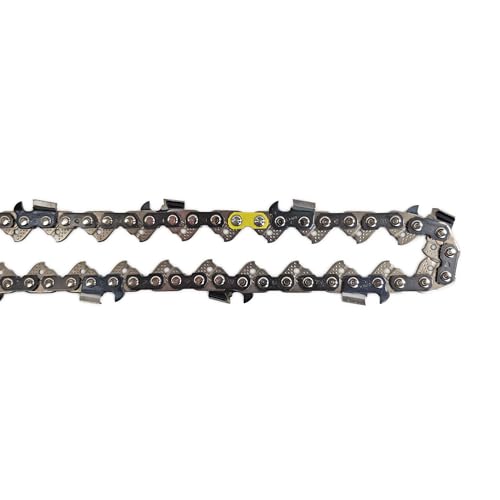
The Step Most People Skip: the Bar’s Oil Channel
Best Tool for the Bar Oil Channel
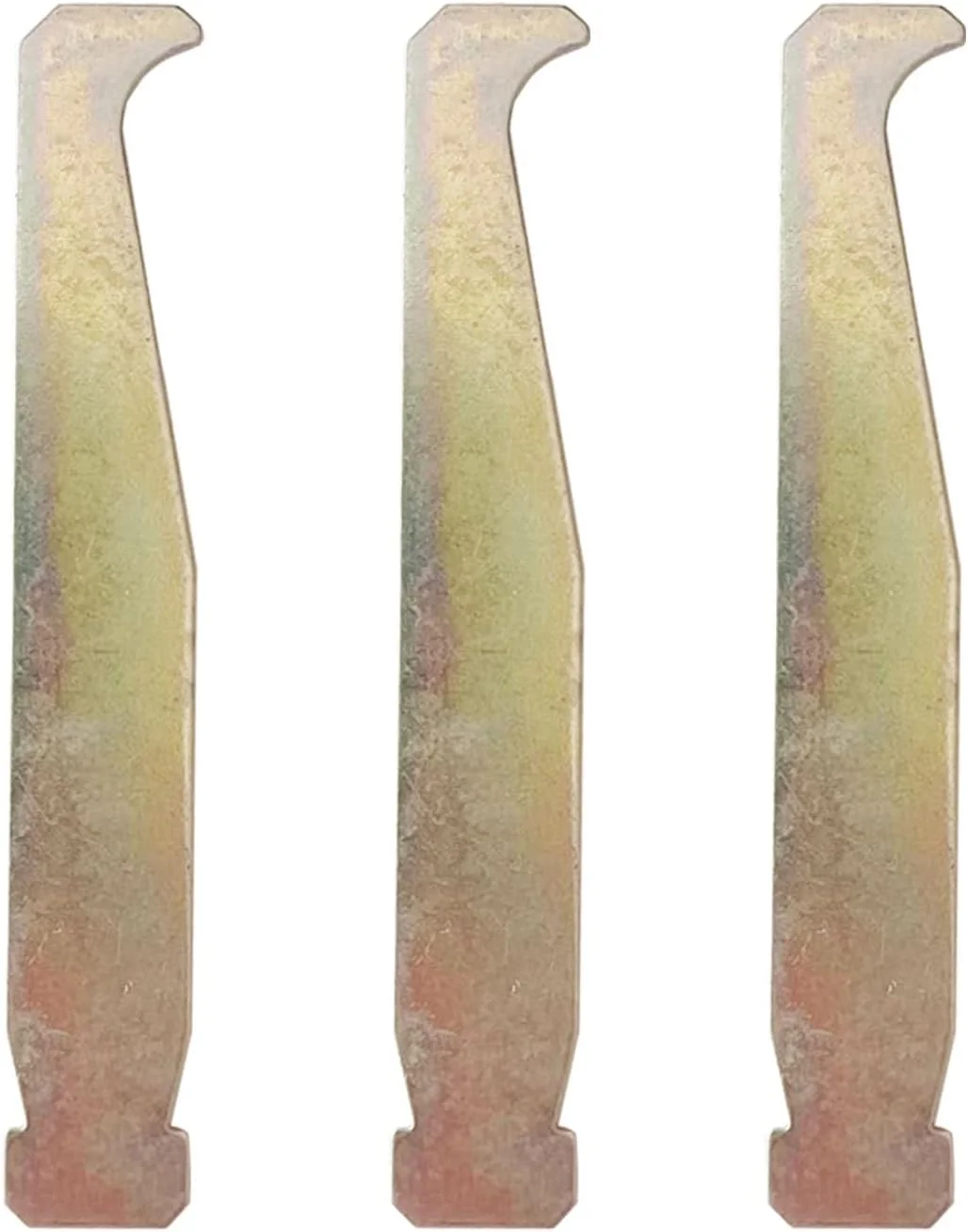 |
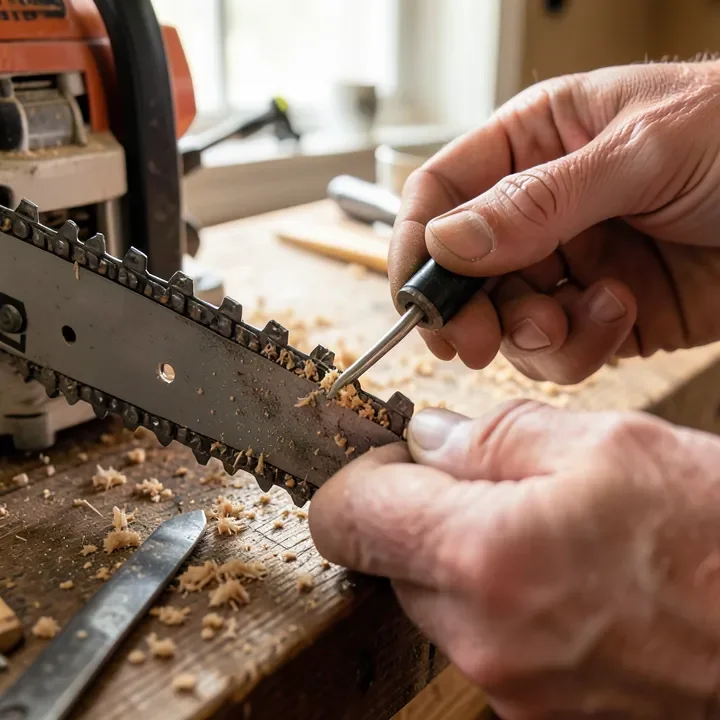
Halbeira Carbon Steel Bar Groove Cleaner (3-Pack) – $5.99 A small hooked scraper shaped to fit a guide bar groove and oil outlet hole – the exact spot a wire brush and rag cannot reach.
|
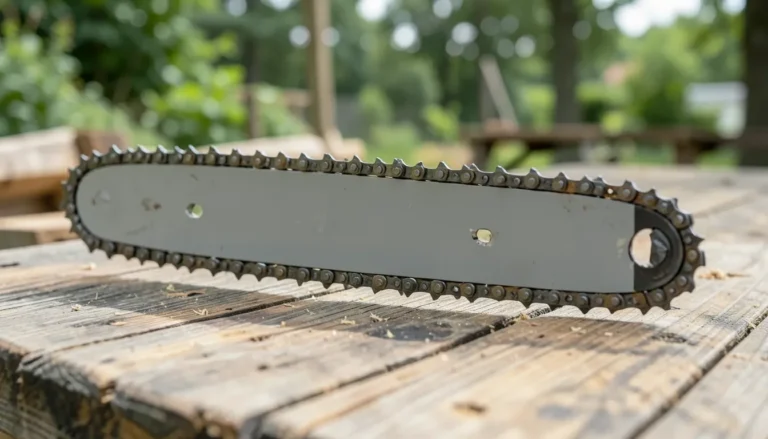
Every guide bar has a small oil outlet hole near the base and a groove running its full length that carries bar-and-chain oil to the tip. Sawdust and pitch pack into that hole and groove faster than almost any other part of the saw, and once it’s even partially clogged, the chain runs starved of oil even though the oiler is working fine – which shows up as a chain that heats up, dulls fast, or throws metal shavings instead of clean chips. A wire brush and a rag clean the outside of the bar, but they don’t reach that channel. Use a bar groove cleaner (a small hooked scraper made for this) or a folded piece of thin wire to pick the channel and the oil hole clean, then flush it with compressed air or carb cleaner until oil flows freely from the outlet when you tip the bar.
What You Need Before You Start
- Chain cleaner or a mild dish-soap solution for soaking the chain
- A bar groove cleaner tool (or thin wire/pick) for the oil channel
- A stiff nylon brush for the housing and a wire brush for metal parts only
- Compressed air or a shop vac for the engine housing and air filter
- Screwdriver and socket wrench set matching your saw’s fasteners
- Bar and chain oil, plus fresh two-cycle mix if you’re due for a fuel change
Step 1: Remove the Chain and Guide Bar
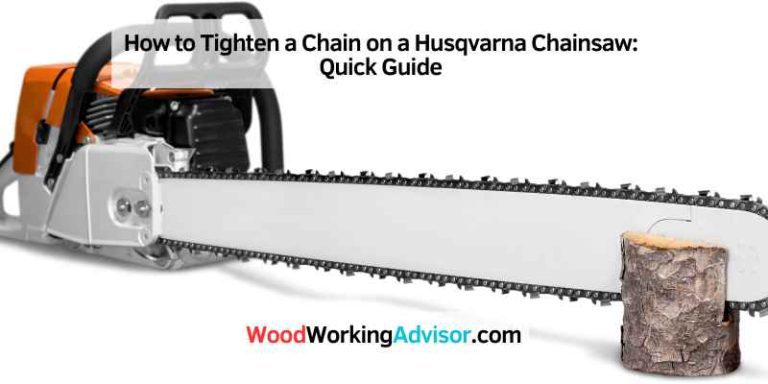
With the saw off and the spark plug boot disconnected, loosen the tensioning screw until the chain has slack, then remove the side cover nuts and lift the bar and chain off together. Slide the chain off the bar and set both aside – working on them separately makes it much easier to reach every surface.
Step 2: Clean the Chain
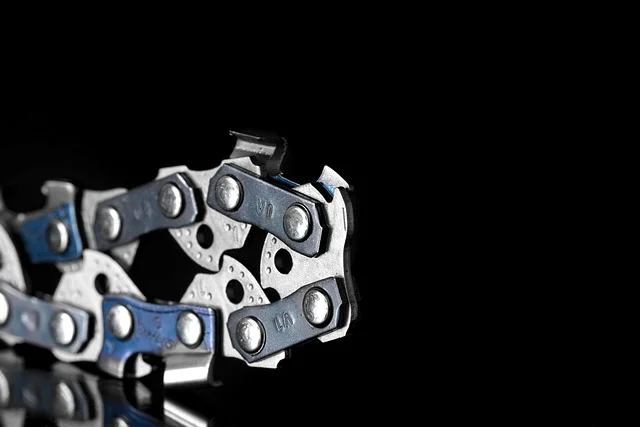
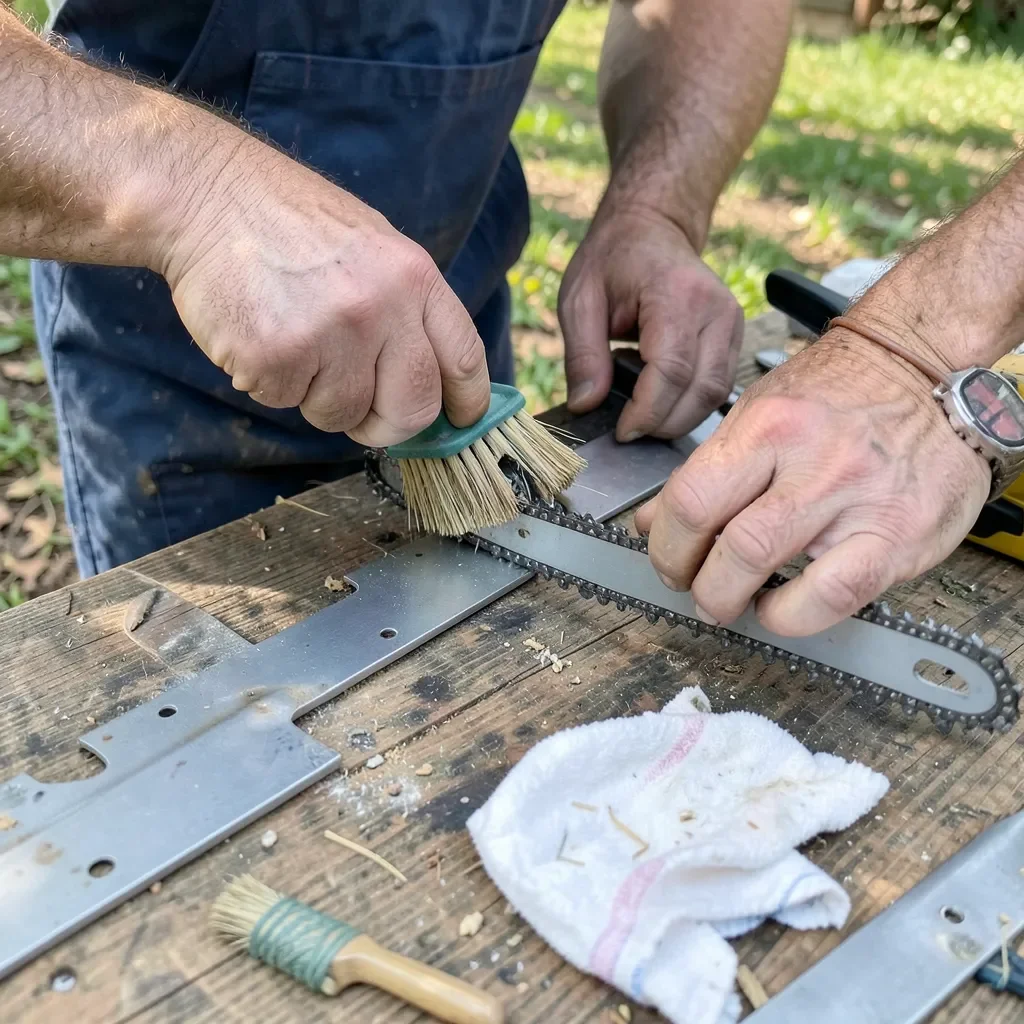
Soak the chain in a dedicated chain cleaner or warm water with a little dish soap for 15-20 minutes to loosen baked-on pitch and oil. Scrub between the drive links and around each cutter with a stiff brush, paying attention to the underside where debris packs in hardest. Rinse with clean water, then dry it completely – a chain left even slightly damp will start surface rust within a day.
Step 3: Clean the Guide Bar
Wipe the bar down with a rag dampened in solvent or chain cleaner, then work on the two areas people usually miss: the oil outlet hole and groove (see above) and the nose sprocket, where sawdust packs in tight enough to slow the sprocket’s rotation. Flip the bar and repeat on both sides – guide bars wear unevenly, and flipping the bar each cleaning also evens out that wear.
Step 4: Clean the Air Filter and Engine Housing
Remove the cylinder cover to access the air filter. For light dust, blow compressed air through it from the inside out – blowing from the outside in just drives debris deeper into the mesh. For heavier buildup, wash a foam or felt filter in warm water with a little dish soap, then let it dry completely before reinstalling; a damp filter restricts airflow just as much as a dirty one. If the filter is torn, oil-soaked, or won’t come clean, replace it – a compromised filter lets grit into the carburetor and cylinder, which causes far more expensive wear than the filter itself costs. While the housing is open, brush and blow out the cooling fins and the area around the spark plug, since packed debris there is a common cause of overheating.
Step 5: Reassemble and Test
Reinstall the air filter and housing cover, slide the chain back onto the clean bar with the cutting edges facing the right direction, and reattach the bar and side cover. Retension the chain so it sits snug against the bar but still pulls around freely by hand, fill the oil reservoir, and reconnect the spark plug. Start the saw, let it idle for a minute, and check that oil is flowing to the bar (hold the tip a few inches from a light-colored surface and rev briefly – you should see a faint spray of oil) before putting it back to work.
How Often to Clean a Chainsaw
Wipe down sawdust and check the air filter after every use. Do the full teardown above – chain soak, bar groove clearing, air filter cleaning – every 5-10 hours of cutting, or sooner if you’ve been cutting resinous softwoods like pine, which gum up a chain and bar noticeably faster than hardwood.
Frequently Asked Questions
What are the steps to clean a chainsaw?
Disconnect the spark plug, remove the guide bar and chain, soak and scrub the chain, clear the guide bar’s oil outlet hole and groove, clean or replace the air filter, then reassemble, oil the chain, and test that oil reaches the bar tip before cutting.
Can you use water to clean a chainsaw?
Water works fine for soaking and rinsing the chain, and soapy water is fine for a foam air filter, but avoid hosing down the engine housing directly – water can get into the carburetor, ignition components, or a paper air filter and cause damage. Wipe the housing with a damp cloth instead.
How do you remove sap from a chainsaw?
Soak the affected parts in a dedicated chain/bar cleaner or citrus-based degreaser, which breaks down pitch far faster than soap and water alone. Scrub with a stiff brush while the solvent is still working, then rinse and dry thoroughly before reassembling.
Sponsored / affiliate links. As an Amazon Associate I earn from qualifying purchases. I may earn additional commission from eligible campaigns.