Sawzall vs. Chainsaw: Which One Actually Fits the Job
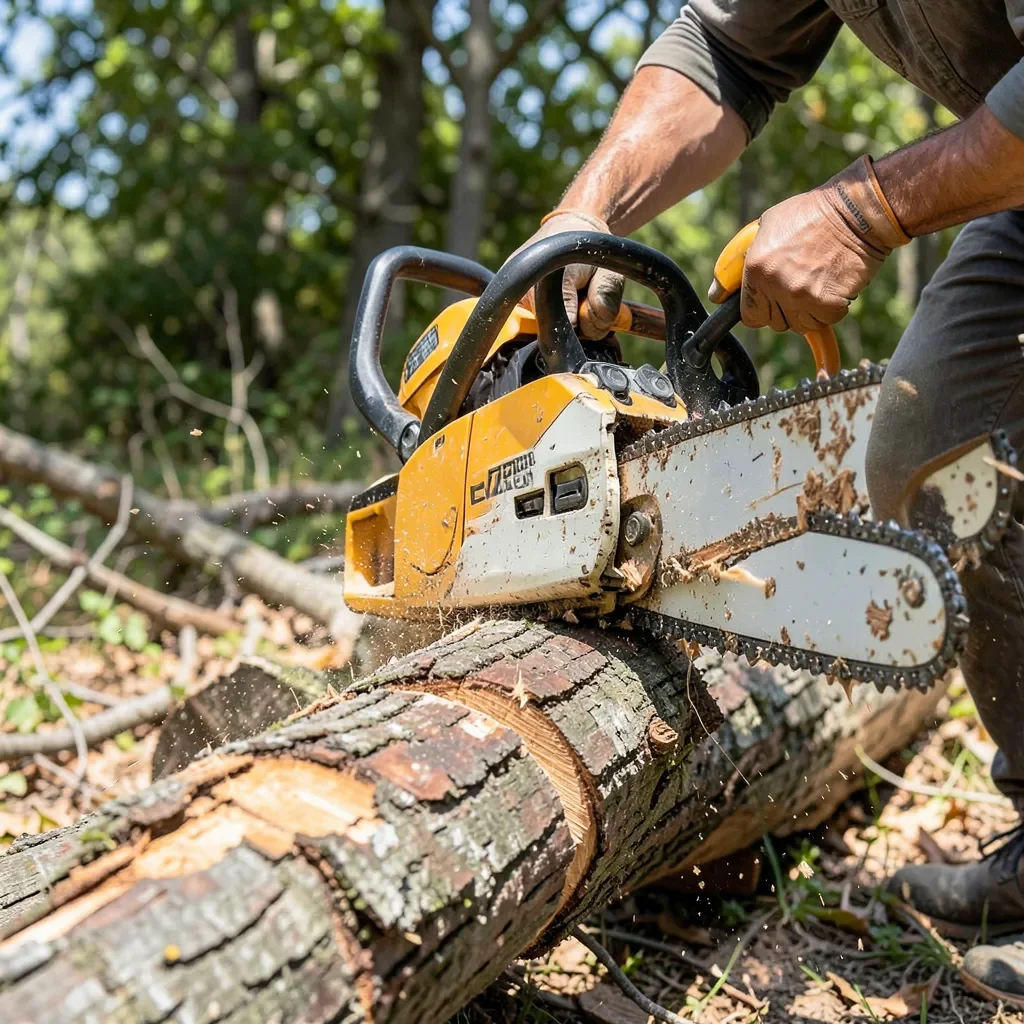
A reciprocating saw (Sawzall is Milwaukee’s brand name for one) and a chainsaw both cut wood with a back-and-forth or rotating blade, but they’re built for different jobs entirely. A reciprocating saw excels at demolition and cutting in tight spaces – through walls, pipes, or nail-embedded lumber – while a chainsaw is built for fast, high-volume cutting of trees, logs, and thick timber that would take a reciprocating saw many times longer.
Where a Reciprocating Saw Wins
Best for Demolition and Tight-Space Cuts
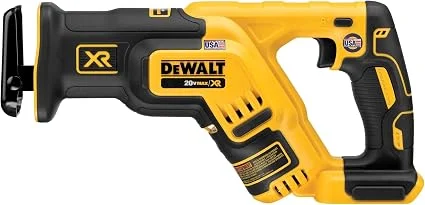 |
DEWALT 20V MAX XR Brushless Reciprocating Saw (DCS367B) – $179.00 Exactly the tool this guide recommends for demolition and nail-embedded lumber – situations where a chainsaw’s size and kickback risk make it the wrong choice.
|
Demolition and remodeling work favor a reciprocating saw: cutting through wall studs with embedded nails, trimming pipes, or making plunge cuts in tight spaces where a chainsaw’s size and kickback risk make it impractical or dangerous. A reciprocating saw’s blade can be swapped for wood, metal, or masonry-cutting blades, giving it far more material versatility than a chainsaw, which is built exclusively for wood.
Where a Chainsaw Wins
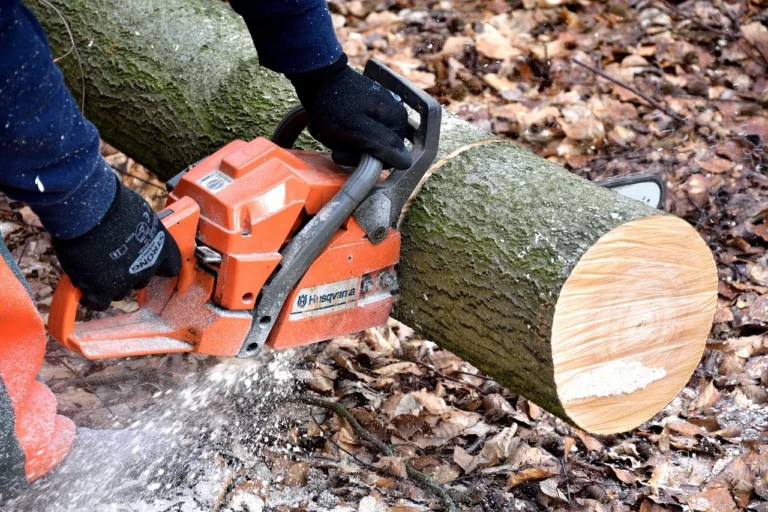
Felling trees, bucking logs into firewood lengths, and any cut through timber more than a few inches thick is chainsaw territory – a reciprocating saw’s short stroke length (typically 1-1.25 inches) makes it painfully slow and prone to overheating on anything beyond framing lumber. A 16-18 inch chainsaw bar cuts through a log in seconds that would take many minutes and multiple blade changes with a reciprocating saw.
Safety Profile Is Genuinely Different
A chainsaw’s kickback (the bar’s tip catching and violently throwing the saw back toward the operator) causes far more serious injuries than a reciprocating saw’s mostly-contained back-and-forth motion. This isn’t a minor detail – it’s the main reason chainsaw safety gear (chaps, face shield, ear protection) is considered essential in a way reciprocating saw use generally isn’t.
Cost and Ownership Comparison
A decent cordless reciprocating saw runs $100-250, while a comparable homeowner-grade chainsaw runs $150-400, with gas models typically needing more ongoing maintenance (fuel mixing, chain sharpening, bar oil) than either an electric chainsaw or a reciprocating saw. Most homeowners genuinely need both eventually rather than choosing one over the other, since they cover almost entirely non-overlapping tasks.
Blade and Chain Maintenance Differences
Reciprocating saw blades are inexpensive and simply replaced when dull, typically not worth sharpening given how cheap new blades are. A chainsaw’s chain, by contrast, is routinely sharpened rather than replaced – a chain file or a bench grinder attachment extends chain life significantly, and a dull chain is both slower and genuinely more dangerous, since it requires more force and is more prone to kickback than a sharp one.
Noise and Neighbor Considerations
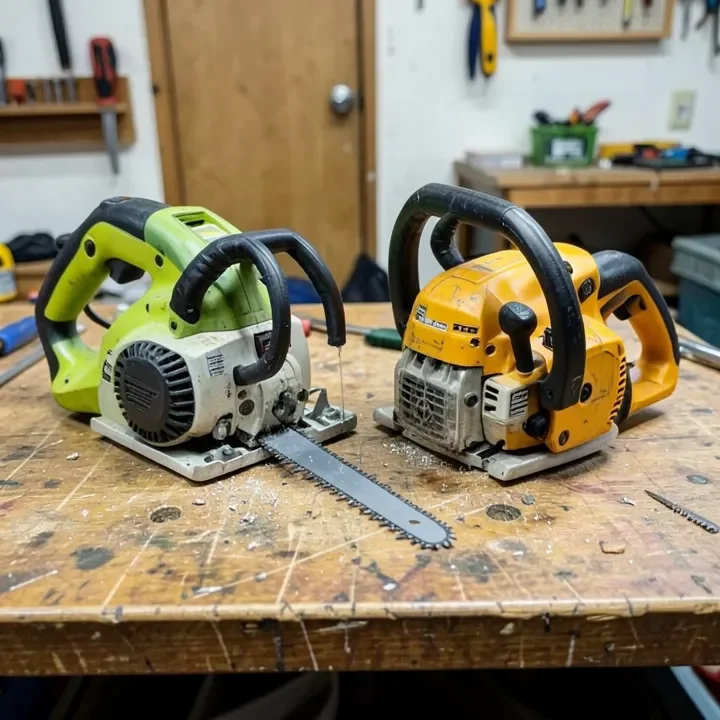
A gas chainsaw is significantly louder than either an electric chainsaw or a reciprocating saw, which matters for early-morning work in residential areas with noise ordinances – an electric or battery chainsaw splits the difference, offering chainsaw-level cutting capability at closer to reciprocating-saw noise levels, worth considering if neighborhood noise rules are a real constraint.
Storage and Portability
A reciprocating saw’s compact size makes it easy to keep in a truck toolbox or job bag for opportunistic use, while a chainsaw’s bar length and bulk generally mean dedicated storage and deliberate transport – a real consideration for tradespeople who want quick access to a demolition tool without committing truck space to chainsaw storage they’d rarely use on a typical job.
Learning Curve for New Users
A reciprocating saw is genuinely easier and safer for a first-time user to pick up and use competently within minutes, while a chainsaw has real technique requirements (proper stance, understanding kickback zones, chain tension checks) that a first-time user should learn from instruction or a class rather than trial and error, given the more serious injury potential.
Attachments That Blur the Line
Pole saw and pruning attachments exist for both tool families, and some reciprocating saw pruning blades can handle small branches a full chainsaw would be overkill for – for light yard pruning specifically, a reciprocating saw with a pruning blade is often the safer, more practical choice over starting up a chainsaw for a handful of small cuts.
Personal Protective Equipment for Each Tool
Chainsaw use calls for a more extensive PPE kit – chaps, a face shield or safety glasses, hearing protection, and cut-resistant gloves are all standard recommendations – while reciprocating saw work generally needs safety glasses and gloves but not the same level of dedicated protective gear, reflecting the real difference in injury severity between the two tools.
Frequently Asked Questions
Can a reciprocating saw cut down a tree?
Technically on small trees, but it’s far slower and less safe than a chainsaw, which is purpose-built for felling and bucking timber.
Is a Sawzall the same as a reciprocating saw?
Sawzall is Milwaukee’s brand name for its reciprocating saw line – the terms are often used interchangeably the way “Kleenex” is used for tissues generally.
Which is more dangerous, a chainsaw or a reciprocating saw?
A chainsaw, primarily due to kickback risk – the bar’s tip catching material can violently throw the saw back toward the operator, which is far more serious than typical reciprocating saw injuries.
Sponsored / affiliate links. As an Amazon Associate I earn from qualifying purchases. I may earn additional commission from eligible campaigns.