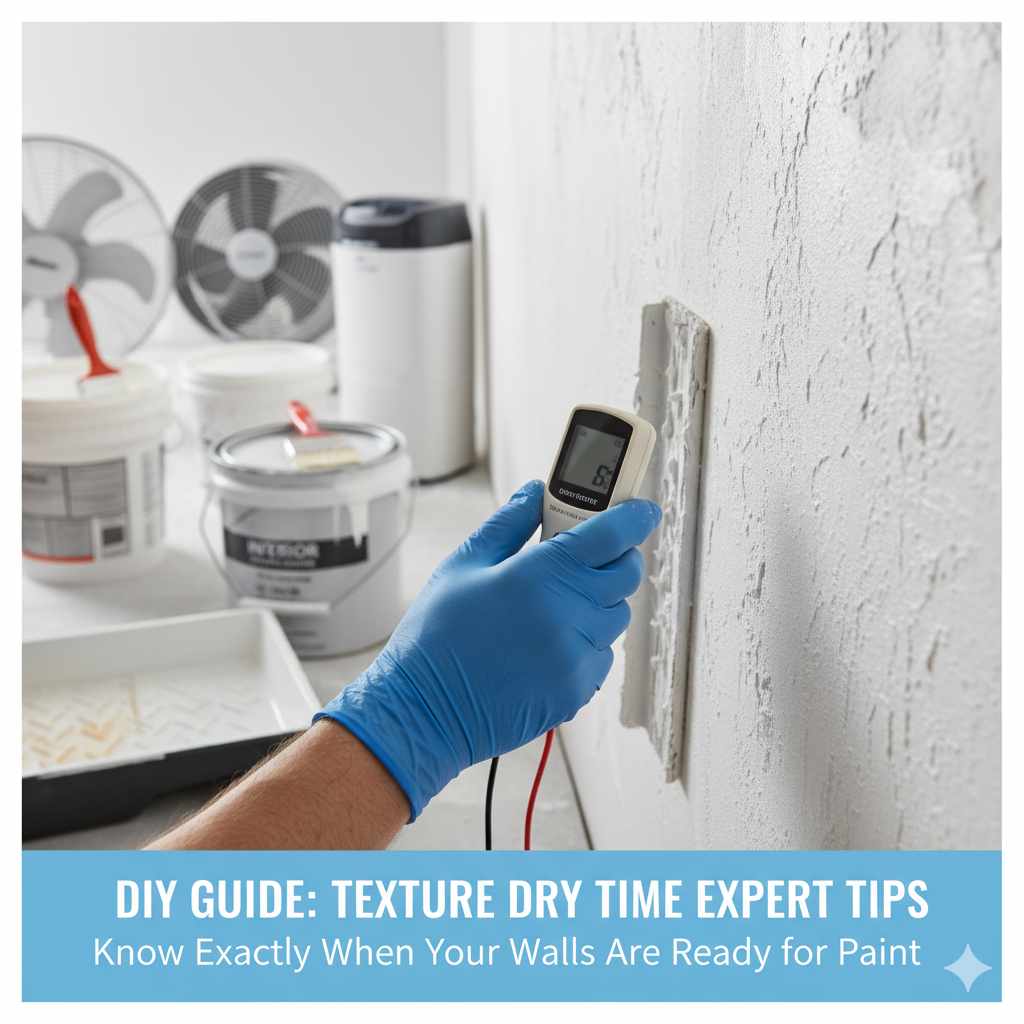
How Long Does Texture Take to Dry before Painting: Expert Tips
You’ve decided to add a fresh coat of paint to your textured walls, but there’s a crucial question lingering in your mind: “How long does texture take to dry before painting?” This is a common concern, and for good reason.
Painting too soon can lead to a host of issues, from uneven surfaces to peeling paint. Understanding the right drying time can save you from the frustration of having to redo your work and ensure a flawless finish. In this guide, you’ll discover the secrets to perfect timing, allowing you to tackle your painting project with confidence and achieve professional-looking results.
Stick around to uncover tips that could save you time, money, and effort in your home improvement journey.
Factors Affecting Drying Time
The drying time varies with texture type. Joint compound dries slowly. Spray textures dry faster. Plaster takes much longer to dry. Each material needs different drying times. Check the packaging for guidance.
Temperature and humidity matter. Warm air speeds up drying. Cold and damp air slows it down. Good ventilation helps too. Open windows or use fans if possible. This makes the process quicker.
Thick layers dry slowly. Thin layers dry fast. Apply in thin coats for quicker results. Thicker coats trap moisture inside. This extends drying time. Be patient with thick textures.
Common Texture Drying Times
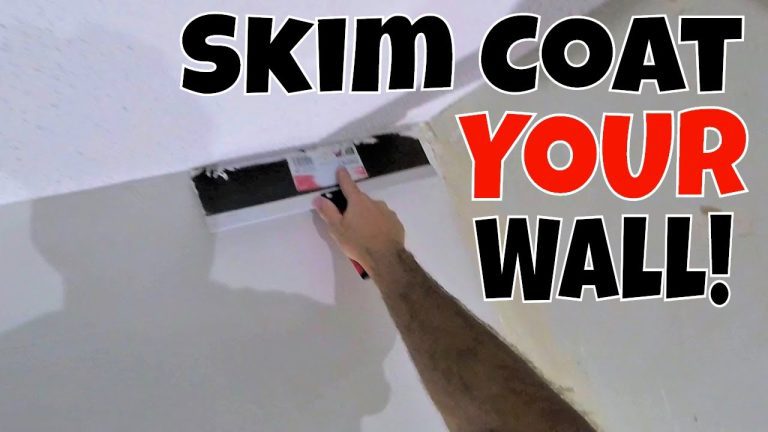
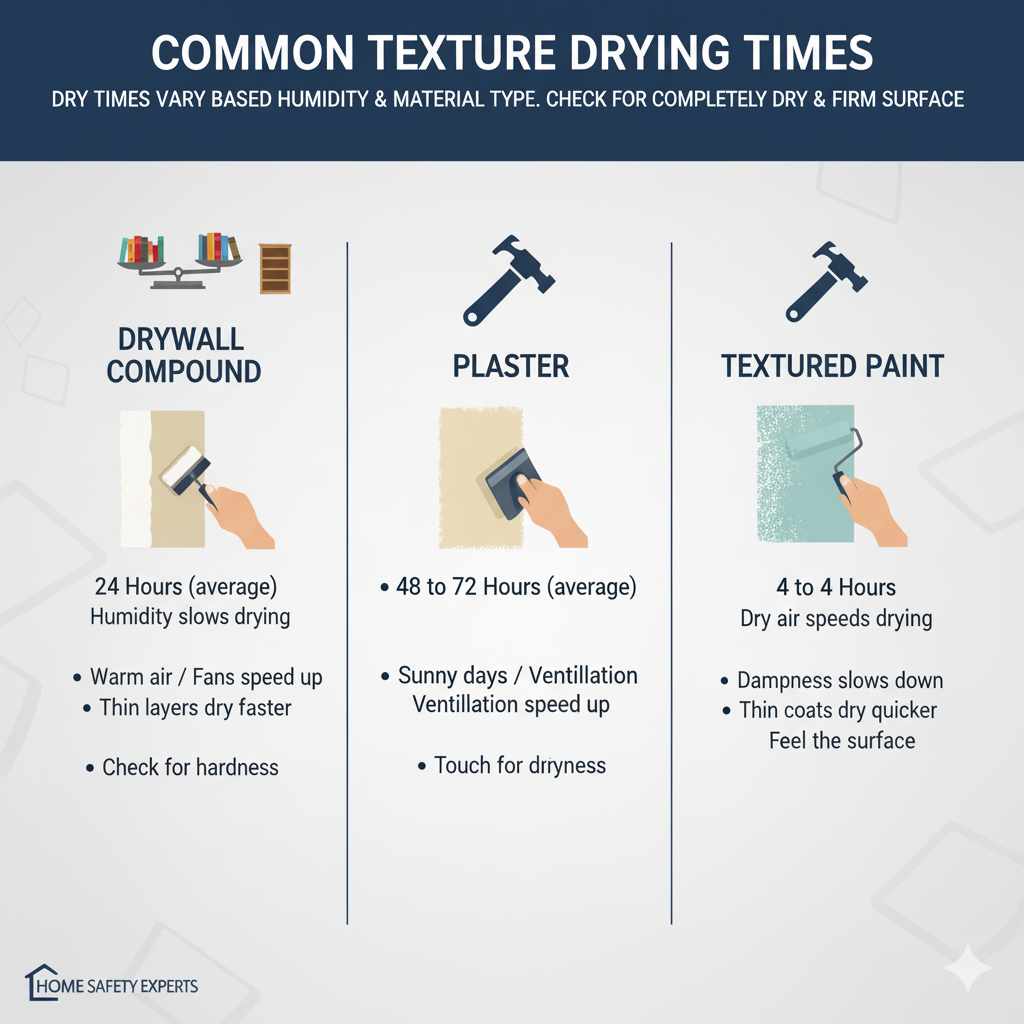
Texture drying times vary based on factors like humidity and material type. Generally, textures dry within 24 to 48 hours before painting. Ensure the surface feels completely dry and firm to touch for optimal painting results.
Drywall Compound
Drywall compound usually dries in 24 hours. Humidity can slow it down. Warm air helps it dry faster. Thin layers dry quicker. Thick layers need more time. Fans can speed up drying. Check for hardness before painting.
Plaster
Plaster drying takes 48 to 72 hours. Cool temperatures make it dry slowly. Sunny days help it dry faster. Ventilation is important for quick drying. Thicker areas may take longer. Touch to see if it’s dry. Avoid painting over wet plaster.
Textured Paint
Textured paint dries in 2 to 4 hours. Dry air speeds up drying. Dampness slows it down. Thin coats dry quickly. Thick coats need more time. Fans can help. Feel the surface to check dryness.
Accelerating The Drying Process
Fans help texture dry faster. They blow air over wet surfaces. The moving air removes moisture. Place fans near the wet texture. Make sure the air flows evenly. This helps speed up the drying time. Use more than one fan if possible. It makes the process quicker.
High humidity slows drying. Lower it to speed up the process. Use a dehumidifier to reduce moisture in the air. Keep windows and doors closed. This prevents more moisture from entering. Control the environment for best results. Dry air helps texture dry quickly.
Warm rooms help texture dry faster. Increase the room temperature slightly. Use a heater if necessary. Be careful not to overheat. High heat can cause problems. Maintain a consistent temperature. This ensures even drying.
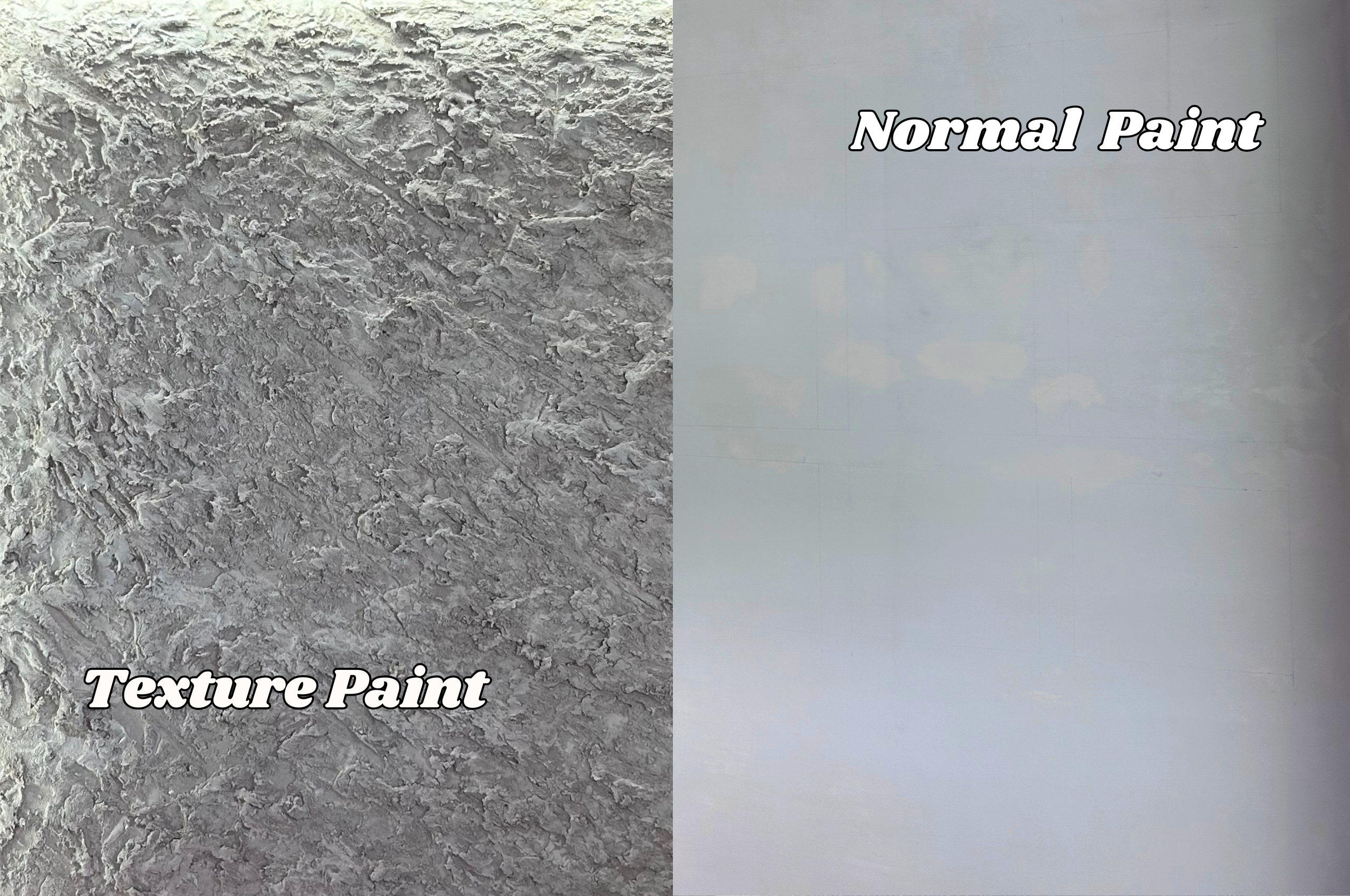
Credit: paintingdrive.com
Signs Texture Is Ready For Painting
Gently touch the surface with your finger. If the texture feels dry and firm, it is ready. If your finger leaves a mark, wait longer. Avoid painting if the texture feels sticky.
Examine the texture closely. Look for any wet spots or color differences. A uniform color means it’s dry. If it looks shiny or dark, it needs more time.
Press a small area lightly. Does it feel solid? It should not crumble or feel soft. A stable surface indicates it’s ready to paint. Soft areas mean more drying time is needed.
Common Mistakes To Avoid
Before painting, texture must be dry. Wet texture makes paint look bad. It can cause bubbles or cracks. Waiting is important. Always wait for texture to dry. Check dryness with touch. If it feels dry, it’s ready. Dry texture helps paint stick better.
Weather affects drying time. Humidity slows drying. Rainy days are bad for texture. Dry days are better. Temperature matters too. Cold days slow drying. Warm days help texture dry fast. Always check weather before painting. This ensures good results.
Proper preparation is key. Clean surfaces before texturing. Dust and dirt can ruin texture. Use right tools for spreading texture. Uneven texture causes problems. Smooth texture dries evenly. Always follow instructions for texture mix. This prevents mistakes.
Credit: housepaintingbergencounty.com
Expert Tips For Successful Application
Clean the surface well. Dirt and dust affect drying. Use a damp cloth for cleaning. Wait until the surface is dry. Check for cracks or holes. Fix them before applying texture. Smooth surfaces help texture stick well. Make sure the surface is ready.
Select tools based on texture type. Brushes work for some textures. Rollers work for others. Test tools on a small area first. Choose quality tools for better results. Cheap tools may cause problems. High-quality tools make the job easier.
Good airflow is important. Open windows or use fans. Fresh air helps texture dry faster. Avoid closed spaces while drying. Poor ventilation slows down the process. Check humidity levels too. High humidity affects drying time.
Frequently Asked Questions
How Long Should I Wait To Paint After Texture?
Wait 24 hours before painting over a newly textured surface. Ensure the texture is completely dry. Use a moisture meter if unsure. Proper drying prevents paint issues and ensures a smooth finish. This waiting period is crucial for achieving professional results on your walls.
How Long Does Texture Paint Take To Dry?
Texture paint typically dries within 24 to 48 hours. Drying time depends on humidity and temperature. Ensure proper ventilation for faster drying. Check the manufacturer’s instructions for specific details.
Can You Paint Over Fresh Texture?
Yes, you can paint over fresh texture. Allow the texture to dry completely first. Typically, this takes 24 hours. Use a quality primer to ensure even paint application. Check the manufacturer’s instructions for specific drying times and recommendations. Proper preparation ensures a smooth, durable finish.
How Long After Spraying Texture Do You Knock It Down?
Wait 10 to 15 minutes after spraying texture before knocking it down. Ensure texture is partially dry but still pliable. Use a knockdown knife or trowel for best results. Timing may vary based on humidity and temperature. Test a small area first to ensure optimal results.
Conclusion
Drying times for texture depend on thickness and humidity. Thin layers dry faster. Thicker ones need more time. Check texture with your finger. If it feels dry, it’s ready. Rushing can ruin your paint job. Patience is key. Plan ahead for best results.
Use fans or dehumidifiers if needed. This helps speed up drying. Always read product instructions. They provide helpful guidelines. Properly dry texture leads to a smooth finish. Happy painting!