How Long Does It Take to Straighten Warped Wood? (By Warp Type)
Straightening warped wood takes 24 hours for mild cupping fixed with the moisture method, up to 3–7 days of clamping for severe twists and bows — thicker boards and dense hardwoods like oak need the long end of that range. Unclamping too early is why the warp comes right back. This guide breaks down exact time by warp type and thickness, five fix methods, and how to confirm the correction actually holds.
Quick Answer
Straightening warped wood takes 24 hours to a few days: mild cupping fixes overnight with the moisture method, iron-and-steam pieces need about a day, and severe twists or bows need 3–7 days of clamping plus 1–2 weeks to re-acclimate. Thicker boards and hardwoods like oak take roughly twice as long as thin softwood.
What Causes Wood to Warp?
Best Clamp Kit Pick
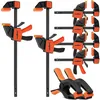
HORUSDY 8-Pack Bar Clamps for Woodworking (6″ and 12″)
A mixed 6″/12″ set that covers small cupped boards and longer bowed stock in one kit, with a 150 lbs load limit per clamp.
- Best for: Clamping boards flat during the moisture or iron-steam method
- Why we picked it: Two clamp sizes in one set means you’re not buying twice for short and long boards
- Main drawback: Nylon body has less clamping force than steel bar clamps on thick, severe twists
Compare more warped-wood fixing tools
 Option 1 JORGENSEN 4-Pack Steel 600LBS Bar Clamps
|
 Option 2 Bessey BPC-H34 Pipe Clamp
|
 Option 3 General Tools MMD4E Moisture Meter
|
As an Amazon Associate we earn from qualifying purchases.
Wood keeps absorbing and releasing moisture with the air around it. When that moisture changes unevenly — one face drying faster than the other — the board shrinks unevenly and pulls itself out of shape. According to the USDA Forest Products Laboratory, warping comes from wood shrinking at different rates along the grain, across the width, and through the thickness.
Wood species and grain matter too. Softer woods like pine warp more easily than dense hardwoods like oak, and a board with wandering grain direction twists faster than straight-grained stock. Storing wood stacked flat with spacers, away from direct sun or heaters, and letting it acclimate to your shop’s humidity for a week before use prevents most of this before it starts.
The 5 Types of Wood Warping (And Why the Type Changes the Time)
Warps aren’t all the same, and the type you’re dealing with is what actually determines how long the fix takes — not just the method.
- Cupping: The board curves across its width, like a shallow “U.” Usually from one face drying faster than the other. Fastest to fix.
- Bowing: The board curves along its length, like a gentle arch. Common in long boards from end-to-end moisture shifts.
- Crooking: Similar to bowing, but the curve shows up edge-on at the ends rather than the face.
- Twisting: The four corners don’t sit in the same plane — the board looks like a propeller. Hardest and slowest to correct.
- Kink: A sharp, localized bend at one spot rather than a smooth curve — often from a knot or a moisture pocket. Doesn’t respond well to moisture or clamping alone; usually needs planing.
To check your warp, set the board on a flat surface and shine a light underneath to see where it rocks or gaps. For twists, use “winding sticks” — two straight, identical boards held at each end so you can sight down the pair and see the twist clearly.
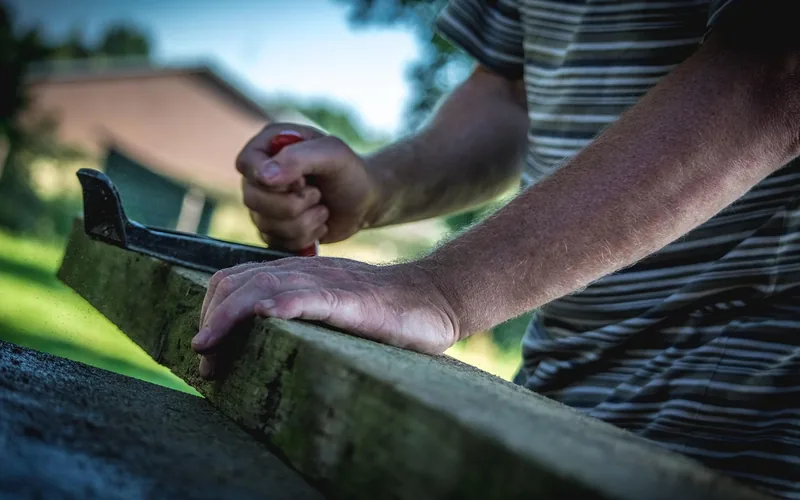
Tools You Need to Straighten Warped Wood
None of these fixes need a full shop. Most of what you need is already in a junk drawer or under $50 total.
| Item | Purpose | Cost Estimate |
|---|---|---|
| Damp cloth or spray bottle | Wets the wood evenly for the moisture method | $1–5 |
| Bar or C-clamps (4–6) | Holds the board flat while it dries | $10–20 each |
| Household steam iron | Applies heat and steam for fast, small-piece fixes | $10–30 |
| Flat reference surface | A plywood sheet or workbench to clamp against | $0–20 |
| Weights (bricks, sandbags) | Adds pressure without extra clamps | $0–5 |
| Wood moisture meter | Confirms the fix actually holds before you build | $15–40 |
| Jack plane | Levels a kink or a warp that won’t fully release | $25–60 |
How Long Each Method Takes to Straighten Warped Wood
Five methods cover almost every warp you’ll run into, from a quick overnight fix to a full week of clamping for a stubborn twist.
Method 1: Moisture Absorption (Quickest for Mild Warps)
Best for cupped or bowed boards under 1 inch thick. Wood expands when wet, and that expansion pushes the warp back out.
- Prep the board: Lay it flat, convex (bulged) side up, and identify the dry, concave side.
- Dampen evenly: Wipe the concave side with a water-soaked cloth — damp, not dripping.
- Flip it: Turn the board so the wet side faces down against the flat surface.
- Add light pressure: Place weights or light clamps across the board without overtightening.
- Wait 8–24 hours: Check in the morning — most mild warps flatten by then.
- Re-acclimate: Stack it with spacers in your shop for 1–2 weeks to lock the fix in.
Total time: 24 hours for the main step, plus about a week to fully stabilize. If it doesn’t fully flatten overnight, repeat the dampening rather than forcing more pressure.
Method 2: Iron and Steam (Fast for Small Pieces)
Best for a warped cutting board or a thin panel under 12 inches wide. Steam softens the fibers, and iron heat helps them set flat.
- Set up safely: Work on a heat-safe surface, and set the iron to its steam setting.
- Wet the warp: Cover the convex side with a wrung-out damp towel.
- Iron steadily: Glide the iron over the towel in slow passes, 10–15 seconds per spot.
- Check progress: Lift the towel every couple of minutes; re-wet if it’s drying out.
- Clamp while warm: Once the board softens, clamp or weight it flat.
- Cool and dry: Hold under pressure for 2–4 hours, then air-dry another 24 hours.
Total time: About 30 minutes of active work, plus 24 hours of drying — under a day start to finish. Never leave the iron unattended, and test a scrap corner first on oily woods like teak.
Method 3: Clamping and Drying (Best for Severe Twists or Bows)
Best for stubborn twists in framing lumber or anything the first two methods didn’t fully correct. It’s slower, but it’s the most reliable fix for a bad warp.
- Wet the convex side thoroughly to help the wood move.
- Position cauls — straight wood scraps along the edges — to spread clamp pressure evenly and avoid dents.
- Clamp firmly every 6–8 inches, tightening gradually from the center outward.
- Add weight on top for extra push on stubborn bows.
- Hold for 48–72 hours, up to a week for the worst cases, checking daily.
- Release slowly and re-acclimate for 1–2 weeks. Re-clamp briefly if it springs back.
Total time: 3–7 days, plus re-acclimation. Wear eye protection while tightening — a heavily stressed board can snap a clamp or kick back.
Method 4: Jack Plane (When the Warp Won’t Fully Release)
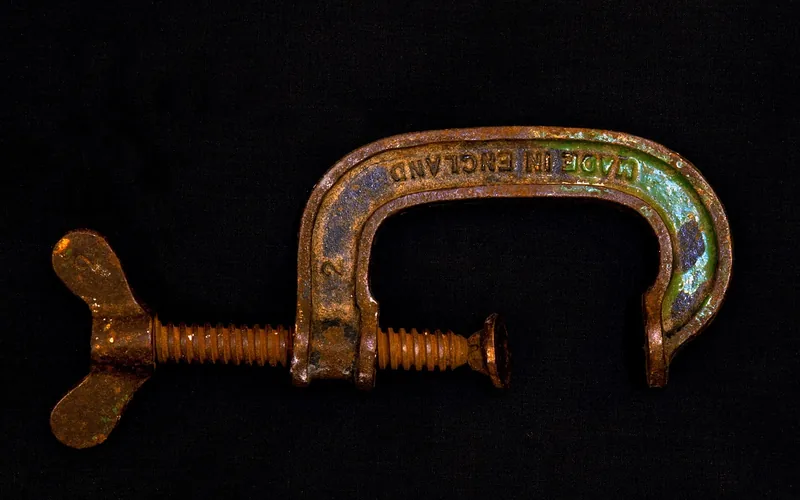
Best for a kink or a warp that’s set for so long that moisture and clamping only get it partway flat. A jack plane removes the high spots instead of trying to bend the board back.
Set the board on a flat bench, sight down its length to find the high points, and take light passes with the plane across the grain first, then with it, checking against a straightedge as you go. This shaves the board thinner, so it works best on stock you can afford to lose 1/16″ to 1/8″ from — not on a board you need at full thickness.
Total time: 20–40 minutes of active planing, no drying wait. It’s the only method here with an immediate result instead of a clamp-and-wait cycle.
Method 5: Sun and Moisture (Low-Tool Alternative)
Best when you don’t have clamps or an iron on hand. Lay the board warped-side-up in direct sun with a damp towel over the convex face, and re-wet the towel as it dries out.
Total time: Several hours of direct sun for a mild warp, up to 3–4 days of repeated sessions for a more stubborn one. It’s slower and less predictable than the iron or clamping methods since it depends on weather, but it needs nothing but a towel and a sunny spot.
Comparing the 5 Methods
| Method | Time to Flatten | Best For |
|---|---|---|
| Moisture Absorption | 24 hrs + 1 week acclimate | Mild cups/bows, thin boards |
| Iron and Steam | Under 1 day total | Small pieces, quick jobs |
| Clamping and Drying | 3–7 days + acclimate | Severe twists/bows, any size |
| Jack Plane | 20–40 min, no wait | Kinks, warps clamping won’t release |
| Sun and Moisture | Hours to 3–4 days | No clamps or iron on hand |
Does Board Thickness or Wood Species Change the Time?
Yes, and it’s the variable most guides skip. Moisture has to travel through more material on a thick board, so a 2-inch-thick piece takes roughly twice as long as a 3/4-inch board using the same method — plan on 48 hours instead of 24 for the moisture method, and 5–7 days instead of 3 for clamping.
Species matters just as much. Dense, tight-grained hardwoods like oak and maple hold their shape better once corrected but take longer to move in the first place — add 25–50% to the times above. Softwoods like pine and fir respond fastest but are also the quickest to warp again if you skip re-acclimation. Quarter-sawn boards of any species resist warping better than plain-sawn boards from the same log, because the grain runs straighter through the thickness.
How to Confirm the Warp Is Actually Fixed
A board that looks flat on the bench can still be holding stress that brings the warp back once you build with it. The straightedge test tells you the shape is correct; a moisture meter tells you the fix will actually hold.
Check the board with the meter and compare it to the room it’ll live in. The NWFA’s standard calls for the wood’s moisture content to land within 2–4% of the surrounding air before you consider it acclimated — the same target used for stacking new hardwood flooring. If your board reads outside that range, re-stack it with spacers and give it more time rather than building with it early.
Common Mistakes That Make Warping Worse
- Skipping re-acclimation: The single biggest cause of a warp coming back — the board looks flat, then cups again days later once it settles into your shop’s humidity.
- Uneven wetting: Misting one spot heavily and leaving the rest dry creates a new warp instead of fixing the old one.
- Rushing the dry: Fast heat without clamps to hold the shape leads to surface checking and cracks.
- Over-tightening clamps: Start loose and build pressure gradually — forcing it flat in one go can split the board.
- No ventilation: Steam methods need airflow, or the humidity buildup slows drying and can encourage mold.
For more on why wood moves the way it does, the Popular Woodworking guide to wood movement covers the science in more depth.
Preventing Warped Wood in Future Projects
Store boards flat, sticker-stacked with 1-inch spacers every foot, in stable 50–70% humidity. Buy kiln-dried wood from a reputable mill, and let it sit in your shop a week before cutting — the same acclimation principle covered in our hardwood stacking guide. For outdoor projects, seal the end grain with wax to slow moisture loss, since end grain dries and absorbs much faster than the face of the board and is where most warps start. Wood also naturally expands and contracts with the seasons, so even properly stored wood needs a week to adjust to a new shop before you build with it.
Frequently Asked Questions
How long does it really take to straighten badly warped wood?
Plan on 3–7 days of clamping for severe twists or bows, plus another 1–2 weeks to fully re-acclimate before you build with it. Mild cupping is much faster — usually overnight with the moisture method.
Does warped wood go back to normal on its own?
Rarely, and not reliably. A mild, recent warp can sometimes relax on its own if you store it flat with even airflow, but most warps need active moisture, heat, or clamping to correct because the wood fibers have already set in the bent position.
Can I straighten wood without any tools?
Yes. The moisture method needs only a damp cloth and a flat surface, and household weights like bricks or books can replace clamps. It’s the easiest method to start with if your shop is bare.
Can you use a jack plane on warped wood?
Yes, and it’s the right call when moisture and clamping only get a board partway flat. A jack plane removes the high spots directly instead of trying to bend the wood back, but it does thin the board by roughly 1/16″ to 1/8″ in the process, so it’s best kept for boards you don’t need at full thickness.
What if the wood warps again after fixing it?
That almost always means acclimation got skipped. Re-check it with a moisture meter, re-stack it with spacers for another 1–2 weeks, and store it properly once it’s built into a project.
Does wood thickness affect the time?
Yes — roughly double the time for a board twice as thick, since moisture has to travel through more material either way. A 3/4-inch board that fixes overnight can take 48 hours at 2 inches thick.
Can you fix warped plywood the same way?
Plywood warps less often than solid wood, but when it does, the iron-and-steam method works if you go gently and avoid over-wetting the veneer layers, since too much moisture can separate the glue lines.
Get Straightening
Match the method to your warp type, give it the time the wood actually needs instead of rushing the clamps off early, and always re-acclimate before you build. For step-by-step fixes on specific warp shapes, see our full guide on how to fix warped wood, our heat, steam, and clamping breakdown, or our guide to flattening a warped tabletop specifically. For more shop tips and material prep guides, browse our woodworking tips and projects guide.
Sponsored / affiliate links. As an Amazon Associate I earn from qualifying purchases. I may earn additional commission from eligible campaigns.