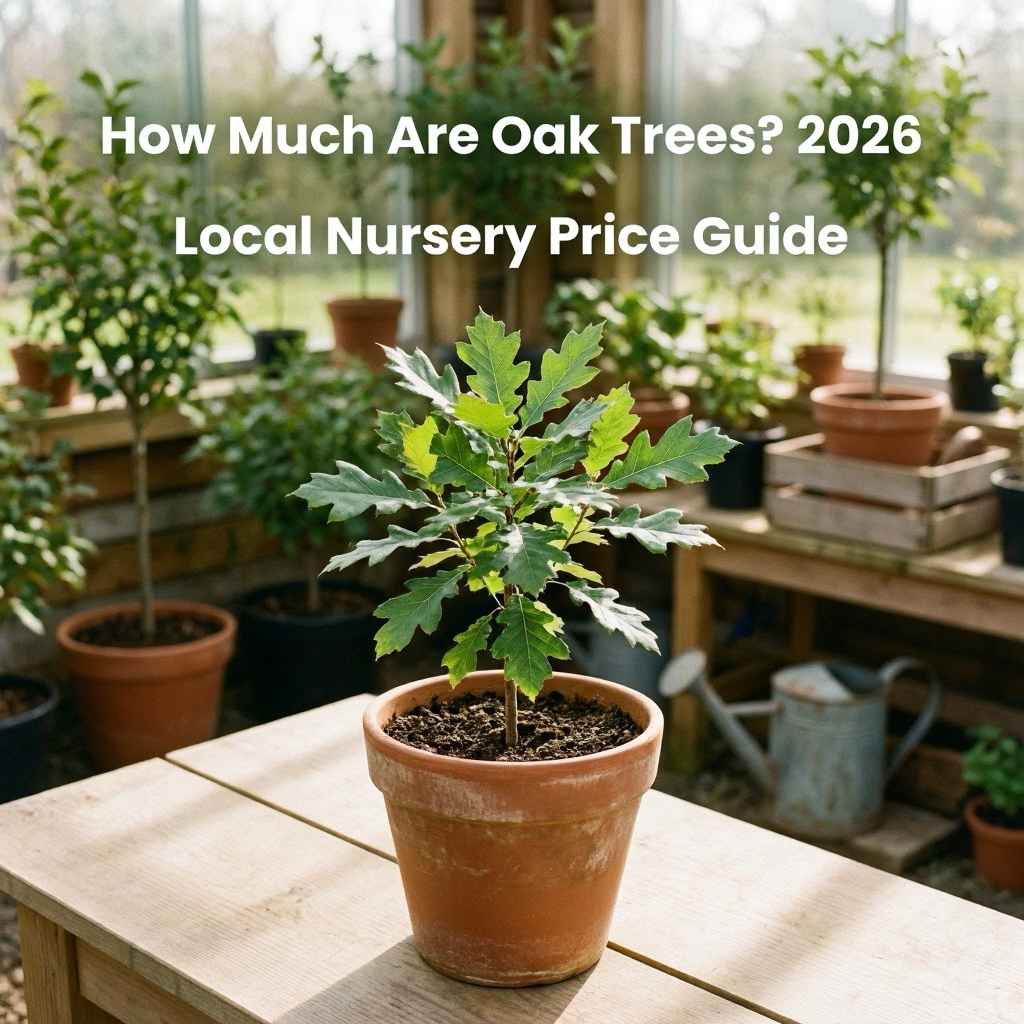
How Much Are Oak Trees? 2026 Local Nursery Price Guide
Figuring out How Much Are Oak Trees? 2026 Local Nursery Price Guide can feel a bit confusing when you’re just starting out. So many different kinds of oak trees exist, and their sizes and ages really change the price.
It’s easy to get lost in all the options! But don’t worry, we’ll break it all down simply. You’ll learn exactly what to expect when you visit your local nursery.
Let’s find the perfect oak for your yard without any guesswork.
Factors Affecting Oak Tree Prices
When you want to buy an oak tree, several things will change how much you pay. The size of the tree is a big one. A tiny sapling, still in a small pot, will cost much less than a large, mature tree that’s already several feet tall and has a thick trunk.
Nurseries price them differently based on how much work and time has gone into growing them to that stage. It’s like buying a small plant versus a fully grown bush; the bigger one always costs more because it’s taken longer to get there.
Tree Size and Age
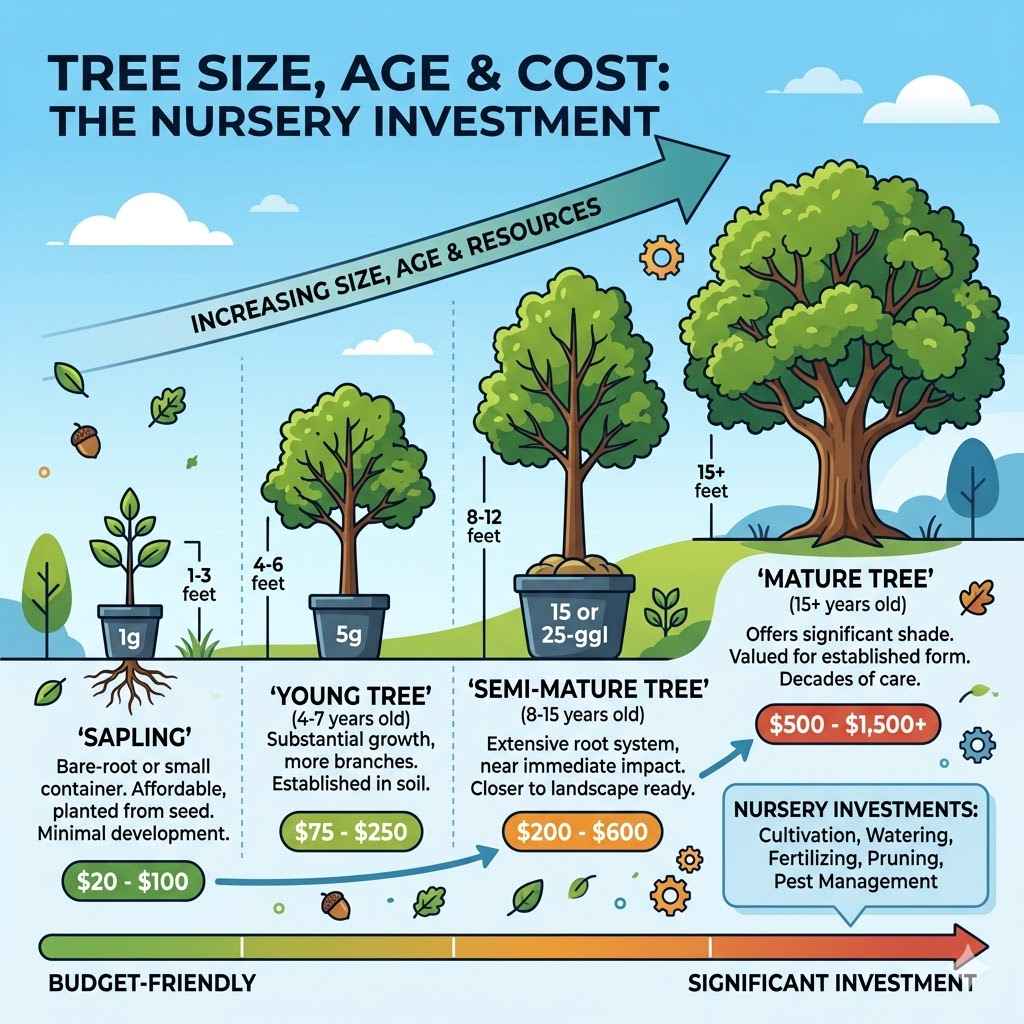
The size of an oak tree is a major driver of its cost. Smaller trees, often sold as bare-root or in one-gallon containers, represent an initial investment. These are typically 1 to 3 feet tall.
Their prices can range from $20 to $100, depending on the species and nursery. As trees grow, they require more resources, space, and care, which is reflected in their price. A tree in a five-gallon container might be 4 to 6 feet tall and could cost between $75 and $250.
Trees that are 8 to 12 feet tall, often in larger containers like 15 or 25 gallons, can fetch prices from $200 to $600 or more. These trees have a more established root system and are closer to providing immediate landscape impact. The age of the tree is directly linked to its size.
Older, more mature trees have spent more years growing and developing, requiring significant time and resources from the nursery. This longevity translates to a higher purchase price.
The age of an oak tree plays a significant role in its price, often correlating directly with its size and maturity. Younger trees, typically saplings, are very affordable. These are often just a few years old, possibly 2-5, and are planted from seed or cuttings.
They might be sold as bare-root specimens, meaning they have no soil around their roots, or in small pots. Their initial development is minimal, making them the most budget-friendly option. As trees age, they gain caliper (the diameter of their trunk) and height, and their root systems become more extensive.
A tree that is 5-10 years old might be considered young to semi-mature. It will have a more substantial trunk and branching structure than a sapling and will command a higher price. For trees 10-20 years old, they are considered mature enough to offer significant shade and landscape presence.
The cost increases substantially due to the decades of growth and care required. These trees are often sold as specimen trees, valued for their established form. For very old or historical oak trees, their value can be exceptionally high, often exceeding thousands of dollars, due to their rarity, aesthetic appeal, and established presence in a landscape.
Nurseries factor in the years of cultivation, watering, fertilizing, pruning, and pest management into the final price of older, larger trees.
Consider these price ranges for different age/size categories at a local nursery:
- Saplings (1-3 feet tall, 1-3 years old): $20 – $100
- Young Trees (4-6 feet tall, 4-7 years old): $75 – $250
- Semi-Mature Trees (8-12 feet tall, 8-15 years old): $200 – $600
- Mature Trees (15+ feet tall, 15+ years old): $500 – $1,500+
Species of Oak Tree
Different oak species have varying growth rates, shapes, and disease resistance, which affects their cost. Some oaks are popular for their ornamental value, like the Live Oak with its broad canopy, while others are chosen for their rapid growth or specific environmental benefits. These unique traits make certain species more desirable and, therefore, more expensive.
For example, a native oak species that is naturally resistant to common local pests might be more sought after than one that requires extensive treatment, driving up its price.
The variety of oak tree you choose is a significant factor in its price. Some oak species are much more common and easier to propagate, making them less expensive. Others might be rarer, slower-growing, or have specific desirable traits like attractive fall color or a unique growth habit, making them more costly.
For instance, the common Northern Red Oak (Quercus rubra) is widely available and relatively fast-growing, often making it a more affordable choice. On the other hand, a more ornamental species like the English Oak (Quercus robur) or a specific cultivar known for its distinctive form might command a higher price. The demand for certain species, influenced by their suitability for local climates and their aesthetic appeal, also plays a part.
Nurseries will often stock more of the readily available and popular varieties, which can lead to competitive pricing.
Here’s a look at how some popular oak species might differ in price:
| Oak Species | Typical Size (at purchase) | Estimated Price Range | Notes |
|---|---|---|---|
| Northern Red Oak (Quercus rubra) | 5-8 feet | $150 – $400 | Fast-growing, adaptable, good fall color. |
| Swamp White Oak (Quercus bicolor) | 5-7 feet | $180 – $450 | Tolerant of wet soils, attractive bark. |
| Live Oak (Quercus virginiana) | 6-10 feet | $250 – $700 | Evergreen, broad spreading canopy, popular in warmer climates. |
| Pin Oak (Quercus palustris) | 5-7 feet | $160 – $420 | Pyramidal shape, good for formal landscapes, tolerates moist soil. |
| Bur Oak (Quercus macrocarpa) | 5-8 feet | $200 – $500 | Very hardy, drought-tolerant, large acorn. |
Nursery Location and Type
Where you buy your oak tree also matters. Large chain garden centers might offer lower prices due to bulk buying and lower overhead. However, smaller, local nurseries often provide higher quality trees, more expert advice, and a wider selection of native or specialized varieties.
These specialized nurseries might charge more, but the investment can be worthwhile for the health and suitability of the tree for your specific environment.
The geographic location of the nursery and the type of nursery itself can significantly influence the price of oak trees. Nurseries situated in areas with higher costs of living or greater demand for landscaping products may reflect those costs in their pricing. A small, independent nursery that specializes in native plants and offers personalized advice might charge more than a large big-box store.
This difference is often due to higher labor costs, a greater investment in plant quality, and a more curated selection of specimens. Conversely, large retail chains can sometimes offer lower prices because they buy in massive quantities and have less specialized staff. However, the quality and long-term health of trees from these larger stores can sometimes be variable.
Local nurseries often have a better understanding of which oak species will thrive in the specific climate and soil conditions of the area. They may also offer guarantees or replacement policies that add value to the purchase, justifying a slightly higher price point.
Consider these points about nursery type:
- Local Independent Nurseries: Often higher quality, expert advice, wider selection of native species, potentially higher prices. They focus on plant health and customer support.
- Large Garden Centers/Big Box Stores: May offer lower prices due to volume, convenience, and basic selection. Quality can vary, and expert advice might be limited.
- Online Nurseries: Prices can be competitive, but shipping costs for larger trees can be substantial. Selection is often broad, but you cannot see the tree before purchase.
Root System Health and Ball-and-Burlap vs. Container Grown
The way a tree’s root system is handled impacts its price and its ability to establish well in your yard. Trees sold as ‘ball-and-burlap’ (B&B) are dug from the ground with a large soil ball wrapped in burlap. These are typically larger, more established trees.
Container-grown trees are grown in pots and are generally easier to transport and plant, often at a slightly lower price point for comparable sizes. The health and density of the root system are critical for a tree’s survival and growth. Nurseries invest time and resources in ensuring healthy root development, which is factored into the price.
The health and structure of an oak tree’s root system are paramount to its successful establishment and long-term vitality. Nurseries invest considerable effort in cultivating trees with robust, well-developed root balls. This involves careful watering, appropriate soil amendments, and root pruning, if necessary, to encourage fibrous root growth rather than a few dominant taproots.
Trees that have been consistently cared for and have a dense, healthy root system will command a higher price because they offer a greater chance of survival and faster growth after planting. This is a key indicator of a tree’s quality and the nursery’s commitment to producing high-grade stock.
When comparing tree types, two common methods are ball-and-burlap (B&B) and container-grown:
- Ball-and-Burlap (B&B): These trees are dug from the ground at the nursery, retaining a large ball of soil around their roots, which is then wrapped in burlap and often secured with twine or a wire basket. B&B trees are typically larger and more mature, often weighing hundreds of pounds. Their advantage is that they are already established in a natural soil environment, so their root systems are generally well-developed. However, they are heavier, more difficult to transport and plant, and require careful handling to ensure the root ball stays intact. The prices for B&B trees are generally higher than comparable container-grown trees due to the labor and resources involved in digging and preparing them for sale.
- Container-Grown: These trees are grown from a young age in containers of various sizes, from small pots to large tubs. They are easier to handle, transport, and plant, making them a popular choice for many homeowners. Container-grown trees often have a more compact root ball and can be planted at almost any time of year, provided the ground is not frozen. The price of container-grown trees varies greatly with size. While smaller container trees are very affordable, larger ones can become quite expensive, sometimes approaching the cost of B&B trees due to the years of cultivation and the cost of the containers themselves. The key consideration for container-grown trees is to ensure they have not become “root-bound,” a condition where the roots have circled the pot excessively, which can hinder future growth.
Estimating Oak Tree Costs
To get a good idea of what you’ll spend, you need to think about the total picture. It’s not just the tree itself. You’ll also need to consider things like delivery if the tree is too big to haul yourself, and then planting.
Some people hire professionals to plant the tree, which adds to the cost. But if you’re handy, you might be able to do it yourself. We’ll look at how these extra costs can add up.
Delivery and Planting Fees
Beyond the sticker price of the oak tree itself, you need to budget for delivery and planting services. Delivery fees vary based on distance from the nursery and the size of the tree being transported. A small tree might cost $50-$100 for local delivery, while a very large specimen could cost several hundred dollars.
Professional planting services are an additional expense, often ranging from $100 to $500 or more per tree, depending on the size and complexity of the planting job. This fee typically covers the labor to dig the hole, carefully place the tree, backfill with soil, and initial watering. If the site has difficult soil conditions or requires special equipment for placement, these costs can increase.
For many homeowners, investing in professional planting ensures the tree is positioned correctly and the root ball is handled properly, increasing its chances of survival and vigorous growth.
Here’s a general breakdown of associated costs:
- Delivery: $50 – $300+ (depending on distance and tree size)
- Professional Planting: $100 – $500+ (depending on tree size, site conditions, and labor rates)
- Soil Amendments/Mulch: $20 – $100 (if needed for site preparation)
DIY vs. Professional Planting
Deciding whether to plant your oak tree yourself or hire professionals involves weighing cost against convenience and potential risks. Doing it yourself can save money, especially if you have the necessary tools like a shovel, wheelbarrow, and possibly a dolly for moving the tree. However, planting large trees can be physically demanding and requires proper technique to avoid damaging the roots or the tree itself.
Incorrect planting, such as planting too deep or not providing adequate space for the root flare, can lead to long-term health problems and even tree death. Hiring a professional planting service, while more expensive, offers peace of mind. Experienced landscapers or arborists know the best practices for planting, ensuring the tree is positioned correctly, the hole is the right size and depth, and the root flare is exposed.
They also have the equipment to handle large, heavy trees safely.
Consider these points when making your decision:
- DIY Planting:
- Pros: Saves money, provides a sense of accomplishment.
- Cons: Physically demanding, risk of improper technique leading to tree stress or death, requires tools and knowledge.
- Professional Planting:
- Pros: Expert handling, increased chance of tree survival and healthy establishment, saves time and physical effort, often comes with a guarantee.
- Cons: Higher initial cost, less hands-on involvement.
Long-Term Care Costs
The initial purchase price is just the beginning. Oak trees require ongoing care to thrive. This includes regular watering, especially during dry periods and the first few years after planting.
Fertilizing may be needed to ensure good growth and health, particularly in nutrient-poor soils. Pruning is essential to shape the tree, remove dead or damaged branches, and improve its structure. You may also need to consider pest and disease management, though many native oak species are quite resilient.
The cost of mulch for the root zone, stakes and ties if needed, and occasional soil testing all contribute to the long-term expense of owning an oak tree. While some of these are minimal, consistent care is key to a healthy, long-lived tree.
Factor in these ongoing care expenses:
- Watering: Initial years require consistent watering, especially during droughts. This can increase water bills.
- Fertilizing: May be necessary every 1-3 years, costing $20-$100 per application depending on the product and tree size.
- Mulching: Annual application of mulch around the base of the tree helps retain moisture and suppress weeds, costing $20-$50 for materials.
- Pruning: May be needed every few years for shaping and health. Minor pruning can be DIY, but larger jobs by an arborist can cost $200-$800+.
- Pest/Disease Control: Usually minimal for healthy, native oaks, but treatments can range from $50-$200 if issues arise.
How Much Are Oak Trees? The 2026 Nursery Price Guide Breakdown
Let’s put it all together. When you visit a nursery to find out How Much Are Oak Trees? 2026 Local Nursery Price Guide, remember that prices are not fixed.
They fluctuate based on many factors we’ve discussed. A small, common oak sapling might cost as little as $20-$50. A medium-sized, healthy specimen, perhaps 6-8 feet tall and a few years old, could be in the $150-$400 range.
For larger, more mature trees, especially desirable species or those with exceptional form, you could be looking at $500 to over $1,000, before even factoring in delivery and planting. The price is an investment in the future of your landscape. A well-chosen oak tree will provide shade, beauty, and ecological benefits for generations.
Typical Price Ranges for Different Tree Sizes
Understanding the typical price ranges for oak trees based on their size can help you set a realistic budget. These figures represent the cost of the tree itself, without delivery or planting. Smaller trees are more accessible for those on a tighter budget, while larger, more established trees represent a significant investment but offer immediate impact.
| Tree Size | Estimated Price Range (Tree Only) | Description |
|---|---|---|
| Bare-root Sapling (1-3 ft) | $20 – $75 | Young, often dormant trees with exposed roots. Easiest to plant and establish. |
| 1-5 Gallon Container (3-6 ft) | $75 – $250 | Young trees with a developed root system in a pot. Good for quick growth. |
| 5-15 Gallon Container (6-10 ft) | $200 – $500 | More established trees offering noticeable size and quicker landscape impact. |
| 15-25 Gallon Container (8-12 ft) | $350 – $700 | Larger, well-developed trees offering substantial presence. Heavier and harder to move. |
| Ball-and-Burlap (10-15 ft) | $400 – $1,000+ | Mature trees dug from the ground. Offer immediate landscape impact but are very heavy. |
Example Scenarios
Let’s walk through a couple of common scenarios to see how costs can add up for purchasing and planting an oak tree.
Scenario 1: The Budget-Conscious Homeowner
You’re looking for a small, manageable oak tree to plant in your backyard. You decide on a 5-foot tall Northern Red Oak sapling in a 5-gallon container from your local nursery. Cost of Tree: $150
Delivery Fee (5 miles): $60
DIY Planting (you buy mulch and a bag of compost): $40
Total Estimated Cost: $250
Scenario 2: The Landscape-Enhancing Project
You need a more established tree to create immediate shade and curb appeal. You select a 10-foot tall Live Oak tree, ball-and-burlap, from a reputable nursery. Cost of Tree: $600
Delivery Fee (15 miles): $150
Professional Planting Service: $300
Soil Amendments/Mulch: $75
Total Estimated Cost: $1,125
Where to Find Oak Trees
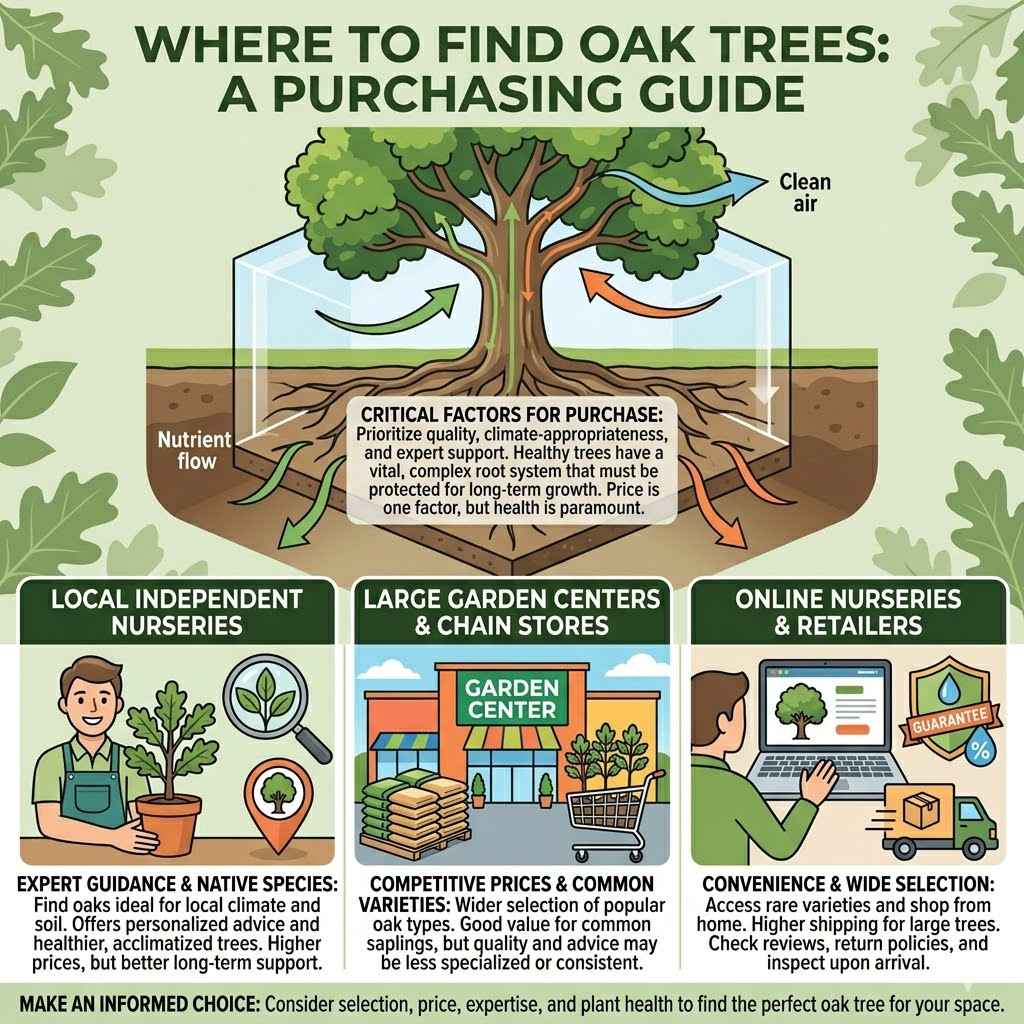
Finding the right place to buy your oak tree is important for quality and price. Your options include local independent nurseries, large garden centers, and online retailers. Each has its pros and cons regarding selection, price, and advice.
Local nurseries are often the best bet for native species and expert guidance, helping you choose the right oak for your climate and soil. They might have a slightly higher price but offer healthier trees and better support. Large chain stores can offer competitive prices on common varieties, but the quality and advice might be less specialized.
Online nurseries offer convenience and wide selection, but be mindful of shipping costs for larger trees and the inability to inspect the tree in person before purchase. Always check reviews and ask about their return or replacement policies before buying.
Frequently Asked Questions
Question: Are native oak trees more expensive than non-native ones?
Answer: Not necessarily. While some rare native species might be more expensive, many common native oaks are widely available and can be competitively priced. Local nurseries often prioritize native species, making them accessible.
The cost is more often driven by size, age, and overall demand rather than just whether it’s native or not.
Question: How much should I expect to pay for a very large, mature oak tree?
Answer: Purchasing a large, mature oak tree, often over 15 feet tall and with a significant trunk diameter, can cost anywhere from $500 to $2,000 or even more. These are typically sold as specimen trees and include substantial nursery investment in years of growth and care. Delivery and professional planting for such trees will add several hundred dollars more.
Question: Does the time of year affect oak tree prices?
Answer: While prices are generally stable throughout the year, nurseries might offer sales or promotions during planting seasons like spring and fall. Buying during these peak times could potentially lead to slight savings, but the base price of the tree remains largely consistent. The availability of certain sizes or species might also fluctuate seasonally.
Answer: Beyond the tree, delivery, and planting fees, potential hidden costs include the need for soil amendments if your soil is poor, specialized tools for digging if planting yourself, or regular maintenance like watering and fertilizing which adds to utility bills and material costs over time. It’s wise to budget a bit extra for these ongoing needs.
Question: Can I find good oak trees for under $100?
Answer: Yes, you can often find smaller oak trees for under $100. These would typically be bare-root saplings or very young trees in small containers, usually standing 1 to 3 feet tall. They will take several years to reach a significant size but are an excellent starting point for those on a budget.
Conclusion
Determining How Much Are Oak Trees? 2026 Local Nursery Price Guide involves looking at size, species, and nursery type. Expect to spend anywhere from $20 for a sapling to over $1,000 for a large, mature tree, not including delivery and planting.
Local nurseries offer valuable advice and quality specimens. Plan your budget to include potential extra costs for delivery and planting. Investing in a healthy oak tree now brings lasting beauty and benefits to your home.