Rustic Wide Plank Hickory Flooring: 2026 Labor Cost Guide
Labor to install rustic wide plank hickory hardwood flooring runs $4 to $10 per square foot in 2026 — wider boards (5–12 inches) often install 20–30% faster than narrow strip flooring, since fewer pieces cover the same floor. The catch: planks over 6 inches wide usually need full-trowel glue in addition to nailing, which can offset that time savings. This guide covers real 2026 labor pricing, what actually drives the cost, and how to save without ruining the rustic look.
Quick Answer
Installing rustic wide plank hickory hardwood flooring costs $4–$10/sq ft in labor and $5–$15/sq ft in materials, for a total installed cost of about $9–$25/sq ft — roughly $4,500–$12,500 for a 500 sq ft room. Engineered planks and prefinished hickory both save $1–$3/sq ft over solid, site-finished installs.
What Makes Rustic Wide Plank Hickory Flooring Special?
Best Flooring Nailer Pick
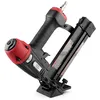
3PLUS HFS509040SP 4-in-1 Pneumatic 18 Gauge Flooring Stapler/Nailer
A 4-in-1 flooring nailer/stapler that handles both 15.5-gauge and 16-gauge cleat nails, built for solid and engineered hardwood installs.
- Best for: DIYers installing solid wide plank hickory who want one tool for multiple flooring thicknesses
- Why we picked it: Lowest-priced option in this roundup that still handles 3/4″ solid hardwood, the thickness most wide plank hickory ships in
- Main drawback: Requires an air compressor, which isn’t included
Compare more flooring nailer options
 Option 1 Bostitch Pneumatic Flooring Nailer/Stapler
|
 Option 2 DEWALT Flooring Stapler, 2-in-1 Tool (DWFP12569)
|
 Option 3 NuMax SFL618 Pneumatic 3-in-1 15.5-Gauge and 16-Gauge 2″ Flooring Nailer / Stapler with Flooring Mallet and Interchangeable Base Plates
|
As an Amazon Associate we earn from qualifying purchases.
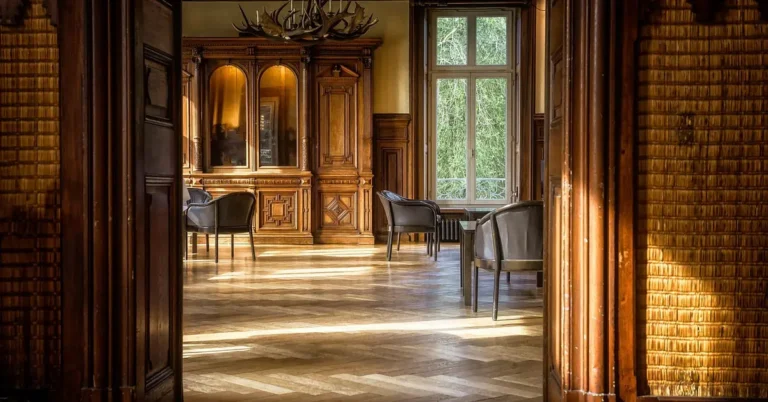
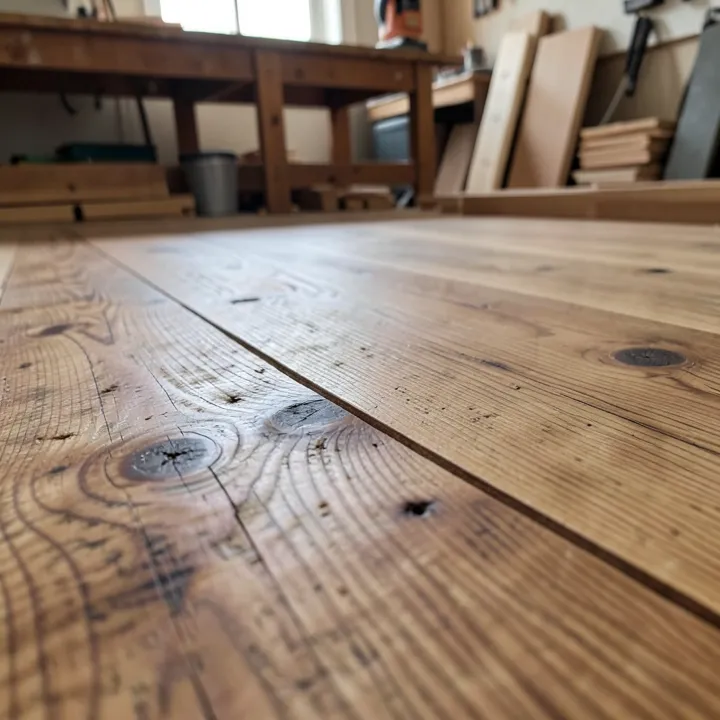
Rustic wide plank hickory stands out for its bold, knotty grain and dramatic color variation, from creamy blonde sapwood to reddish-brown heartwood. Wide planks, typically 5–12 inches, make rooms feel more open and reduce the number of visible seams. Hickory’s Janka hardness of 1820 — well above oak’s 1290 — makes it one of the most dent-resistant domestic hardwoods, which is why it holds up in high-traffic living rooms, kitchens, and homes with dogs. Rustic grades (Character or #2 Common) intentionally keep the knots, mineral streaks, and color contrast that give the wood its cabin-style character.
Average Labor Cost to Install Rustic Wide Plank Hickory Flooring
Based on 2026 pricing from Angi, Homewyse, and flooring retailer installation programs, labor to install rustic wide plank hickory hardwood flooring runs $4 to $10 per square foot. For a 500-square-foot room, that’s $2,000 to $5,000 in labor alone. The high end of that range reflects rustic Character grade’s knots and irregularities, which take a skilled installer more time to lay out for a balanced, non-repetitive look — not the plank width itself.
Here’s a breakdown of labor costs by install type:
- Basic installation: $4–$6/sq ft for prefinished rustic hickory wide planks in a straight layout — the most common choice for open living rooms and bedrooms.
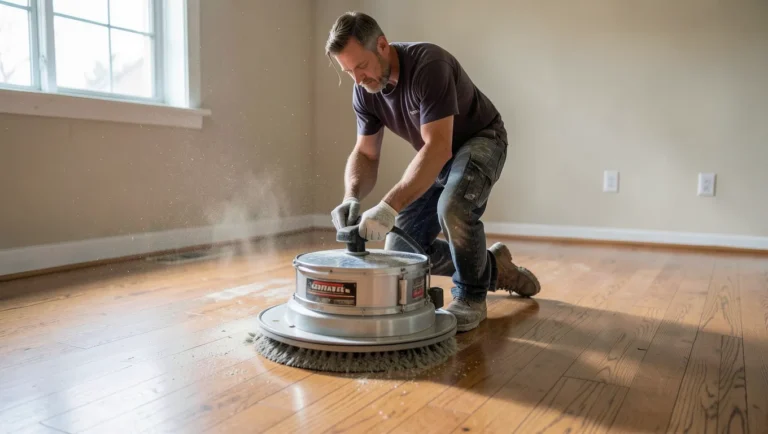
- Mid-range installation: $6–$8/sq ft for unfinished rustic hickory that needs on-site sanding and staining, or a layout with a few obstacles like a fireplace hearth or built-ins.
- High-end installation: $8–$10/sq ft for custom patterns (herringbone, chevron), the widest planks (8–12 inches), or rooms with kitchen islands and angled walls.
Do Wider Planks Really Cost More to Install?
Not automatically — and this is where a lot of flooring cost guides get it backwards. Because wide planks cover more square footage per board, installers typically lay wide plank flooring 20–30% faster than narrow 2¼-inch strip flooring, simply because there are fewer pieces to cut, nail, and align.
What actually adds labor time on wide plank hickory is the installation method, not the width alone: boards wider than 6 inches typically need full-trowel glue applied to the subfloor in addition to nailing, for extra stability against seasonal expansion. That glue-down step, plus the extra care rustic Character grade needs for knot placement, is what pushes wide plank hickory toward the top of the $4–$10/sq ft range — not the plank size by itself. A straight-laid 8-inch plank floor with a skilled crew can go down faster than a fussy herringbone pattern in 3-inch strips.
Total Installed Cost: Labor + Materials
Rustic wide plank hickory materials run $5 to $15 per square foot for solid hardwood, and $4 to $10 per square foot for engineered, per 2026 Home Depot flooring price listings and specialty wide plank suppliers. Combined with labor, here’s what total installation costs look like:
| Type | Installed Cost/Sq Ft | Best For |
|---|---|---|
| Solid rustic hickory wide plank | $9–$25 ($4,500–$12,500 / 500 sq ft) | Nail-down over wood subfloor, long-term refinishing |
| Engineered rustic hickory wide plank | $8–$20 ($4,000–$10,000 / 500 sq ft) | Basements, over concrete, humid climates |
What Affects Labor Cost for Rustic Wide Plank Hickory
Installing rustic wide plank hickory is more labor-intensive than a basic strip-oak install, but not always for the reasons homeowners expect. Here’s what actually drives the price:
- Solid vs. engineered: Solid hickory ($4–$10/sq ft labor) requires precise nail-down or glue-down installation and specialized tools for its Janka 1820 hardness. Engineered hickory ($4–$8/sq ft labor) uses easier click-lock or glue-down methods and is more stable in humid basements and kitchens.
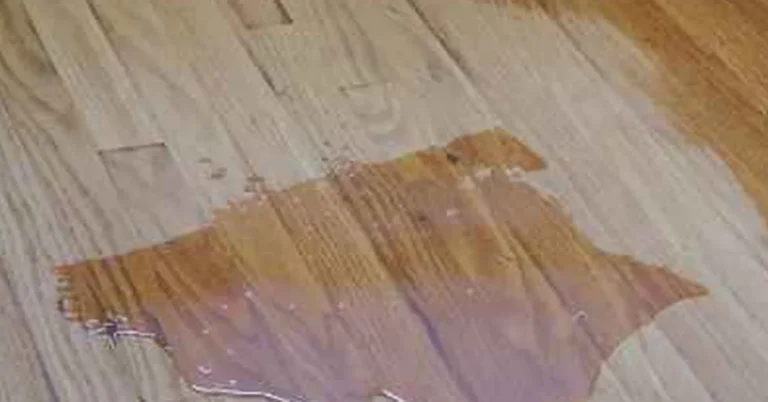
- Prefinished vs. unfinished: Prefinished rustic hickory saves $1–$3/sq ft by skipping on-site sanding and finishing. Unfinished wide planks add $1–$3/sq ft for custom staining that enhances the rustic knots.
- Layout complexity: Straight layouts are cheapest ($4–$6/sq ft). Herringbone or diagonal patterns push labor to $8–$10/sq ft due to the extra angled cuts.
- Room shape and obstacles: Open rooms cost less than spaces with islands, hearths, or built-ins, which add $1–$2/sq ft for precise cutting around fixed features.
- Stairs: Labor for stairs runs $100–$400 per step, or $1,000–$4,000 for a full staircase, since wide planks need custom-fit treads and risers.
- Subfloor condition: Leveling an uneven subfloor adds $1–$2/sq ft; replacing damaged subfloor adds $2.20–$4.75/sq ft; a moisture barrier for engineered hickory over concrete adds $0.50–$1/sq ft.
- Old flooring removal: Carpet removal runs $0.70–$1.60/sq ft; tile or existing hardwood removal runs $2–$4/sq ft.
- Location: Urban markets (New York, Los Angeles, San Francisco) run $6–$10/sq ft due to higher installer wages; rural and Midwest markets run $4–$6/sq ft.
Subfloor Prep and Acclimation Requirements
Wide plank hickory moves more with humidity changes than narrow strip flooring simply because each board is wider, so skipping prep steps shows up as gaps or cupping later. Most flooring manufacturers and installers require the following before wide plank hickory goes down:
- Acclimation: Let the planks sit in the installation room, out of their packaging, for at least 5–7 days (up to 2 weeks in very dry or very humid climates) so the wood adjusts to indoor moisture levels before nailing or gluing.
- Subfloor flatness: Most manufacturers require the subfloor to be flat within 3/16 inch over a 10-foot span. Wider boards telegraph subfloor dips more visibly than narrow strips, so this tolerance matters more on a wide plank job.
- Indoor humidity: Keep relative humidity between 35% and 55% during acclimation and year-round after installation. Running the HVAC system for a few days before delivery helps stabilize the room.
- Moisture testing: For solid hickory over a wood subfloor, installers typically test moisture content with a meter and expect a gap of no more than 2–4% between the subfloor and the flooring boards.
DIY vs. Professional Installation
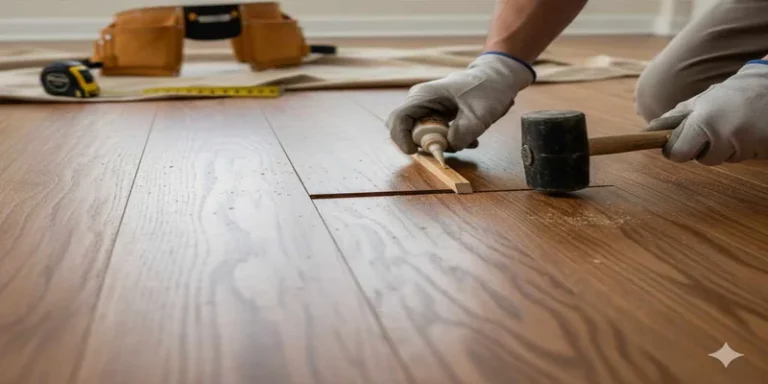
- DIY: Saves the full $4–$10/sq ft labor cost, but rustic wide plank hickory is a harder DIY project than narrow strip flooring. Its width and knotty grain require precise cuts, a flooring nailer or stapler, and real subfloor-leveling skills. Misaligned wide boards are much more noticeable than misaligned narrow strips.
- Professional: Costs $4–$10/sq ft but includes subfloor leveling, acclimation timing, and knot placement handled by someone who does it daily — especially valuable for Character grade hickory or any custom pattern.
For rustic wide planks specifically, most flooring retailers recommend hiring a pro unless you’ve installed hardwood before — the rustic look depends on precise, even seams and balanced knot placement that’s hard to correct after the fact.
How to Save on Labor Costs
- Choose prefinished hickory: Saves $1–$3/sq ft by skipping on-site finishing.
- Consider engineered hickory: Labor runs $1–$2/sq ft less than solid, and it’s the better choice for basements or over concrete.
- Handle demo yourself: Removing old flooring, furniture, and baseboards before the crew arrives can save $1–$4/sq ft in labor.
- Get 3–5 quotes: Installer rates for the same job commonly range $2–$3/sq ft between bids — compare Home Depot Home Services, Floor & Decor, and local pros through Angi or HomeAdvisor.
- Stick to a straight layout: Skipping herringbone or diagonal patterns keeps labor at the $4–$6/sq ft end of the range.
- Time it with a sale: Home Depot and Floor & Decor run flooring promotions in spring and after major holidays, often bundling material and installation discounts.
Where to Find Installers
- Home Depot Home Services: Quotes typically start at $4–$6/sq ft for hickory installation.
- Floor & Decor: Offers installation for flooring purchased in-store, typically $4–$8/sq ft.
- Angi or HomeAdvisor: Connects you with local pros; get 3–5 quotes averaging $4–$7/sq ft before choosing.
- Local flooring contractors: Search local review sites for hardwood installers who specialize in wide plank or Character-grade hickory specifically — not every installer has experience balancing rustic grain.
Frequently Asked Questions About Rustic Wide Plank Hickory Flooring Labor Costs
Is labor more expensive for wide plank flooring than standard-width planks?
Not necessarily. Wide planks (5–12 inches) can install 20–30% faster than narrow 2¼-inch strip flooring because fewer boards cover the same floor area. But planks wider than 6 inches usually need full-trowel glue in addition to nailing, and rustic Character-grade hickory needs extra time to balance knots and grain — so total labor often lands in the same $4–$10 per square foot range as narrow strip installs.
How much does it cost to install hickory hardwood flooring?
Labor for hickory hardwood flooring runs $3–$8 per square foot for standard widths and $4–$10 per square foot for rustic wide plank hickory, according to 2026 pricing from Angi, Homewyse, and major flooring retailers. Materials add $4–$15 per square foot depending on solid vs. engineered and grade, for a total installed cost of roughly $8–$18 per square foot.
Do wide plank hardwood floors need to acclimate before installation?
Yes. Solid and engineered wide plank hickory should acclimate in the room where it will be installed for at least 5–7 days, and up to 2 weeks in drier or more humid climates. Keep indoor humidity between 35% and 55% during acclimation and after installation to prevent gaps or cupping as the wide boards expand and contract.
Is solid or engineered hickory cheaper to install?
Engineered hickory is usually $1–$2 per square foot cheaper to install than solid hickory because it uses click-lock or glue-down methods instead of nail-down, and it doesn’t require on-site sanding when prefinished. Engineered is also the better choice for basements or over concrete, where solid hardwood isn’t recommended.
Can I install wide plank hickory flooring myself?
DIY is possible with engineered click-lock hickory, but solid, nail-down rustic wide plank hickory is a harder DIY project — wide boards need precise cuts, a flooring nailer or stapler, and subfloor leveling skills. Misaligned knots or gaps are hard to hide on wide, character-grade boards, which is why most flooring retailers recommend professional installation for solid wide plank hickory.
Rustic wide plank hickory creates a warm, timeless look that transforms a room, and its Janka 1820 hardness holds up to pets and daily traffic better than most domestic hardwoods. Labor costs of $4–$10/sq ft reflect the skill needed to balance rustic knots and, for planks over 6 inches, the extra glue-down step — not the plank width by itself. Measure your space, get several quotes, and confirm your installer has acclimated the wood and checked subfloor flatness before nail day. For ongoing care once your floor is down, see our guide on how to make hardwood floors last, or browse our full wood flooring guide for other species and finish options.
Sponsored / affiliate links. As an Amazon Associate I earn from qualifying purchases. I may earn additional commission from eligible campaigns.