Oak Vs Maple Leaf: Discover the Unique Charm of Oak Leaves
Oak leaves and maple leaves are iconic symbols of nature. Both hold distinct beauty and characteristics.
Oak leaves are strong and sturdy, often associated with resilience. Their lobed shape and deep green color make them unique. They have a leathery texture, which helps them withstand harsh weather. Oak trees can grow very tall, providing shelter and habitat for many creatures.
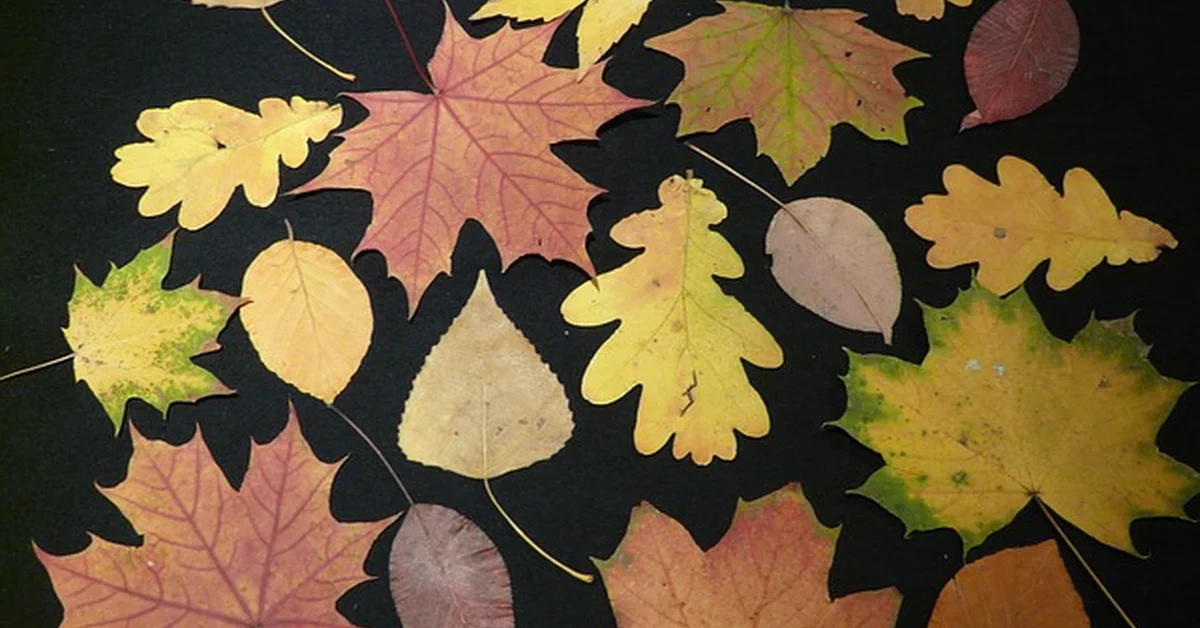
The leaves turn golden-brown in the fall, adding a warm hue to landscapes. Maple leaves, on the other hand, are known for their vibrant colors. They are softer and have a classic shape, resembling a hand with fingers spread. Maple trees are celebrated for their stunning red, orange, and yellow leaves in autumn. They produce sap, which is used to make maple syrup. Both leaves offer distinct seasonal beauty and ecological importance.
How To Tell Oak And Maple Leaves Apart
Best Tree & Leaf ID Guide Pick

The Audubon Society Field Guide to North American Trees – $9.87
A long-running photographic field guide covering hundreds of North American tree species with leaf, bark, and fruit photos — useful for confirming whether a leaf you’re looking at is oak, maple, or something else entirely.
- Best for: Comparing leaf shape and species characteristics on a walk or in the yard
- Why we picked it: Long-running Audubon Society reference covering leaf, bark, and fruit identification across the U.S. and Canada
- Main drawback: Older photographic format; a newer illustrated field guide can be quicker to page through for beginners
Compare more tree & leaf ID options
 Option 1 Peterson First Guide to Trees – $7.31
|
 Option 2 Audubon Trees of North America – $22.49
|
 Option 3 10X Illuminated Loupe – $9.99
|
As an Amazon Associate we earn from qualifying purchases.
The fastest way to separate the two is leaf shape. Oak leaves are pinnately lobed — the lobes branch off a central vein like the barbs of a feather, and the sinuses (the notches between lobes) cut in fairly deep. Maple leaves are palmately lobed — the lobes radiate outward from a single point where the leaf stem meets the blade, the same way fingers spread from a palm.
Lobe tips are the next clue. Oaks split into two groups: the white oak group has rounded, smooth-edged lobe tips, while the red/black oak group has pointed lobes tipped with a tiny bristle. Maple lobes are almost always pointed, with toothed or lightly serrated edges running along the margin between the points — sugar maple is the exception, with smoother margins and fewer, broader teeth.
One clue that has nothing to do with lobes at all: branching pattern. Maple twigs and leaves grow in an opposite arrangement, directly across from each other in pairs. Oaks grow in an alternate arrangement, staggered one after another along the twig. This tell works even in winter, once the leaves are gone.
| Feature | Oak Leaf | Maple Leaf |
|---|---|---|
| Overall shape | Pinnately lobed (feather-like, lobes off a central vein) | Palmately lobed (finger-like, lobes radiate from one point) |
| Lobe count & tips | Usually 5–9 lobes; rounded (white oak group) or pointed with a bristle tip (red oak group) | Usually 3–5 lobes; pointed tips, often with toothed edges |
| Leaf margin | Smooth between lobes, no fine teeth | Often finely toothed/serrated along the lobe edges |
| Branching arrangement | Alternate | Opposite |
| Typical fall color | Russet, brown, deep red; some species hold leaves into winter (marcescence) | Vivid orange, yellow, or scarlet, depending on species |
| Seed type | Acorn (a nut sitting in a cap) | Samara (a winged, spinning “helicopter” seed) |
| Bark | Thick, deeply furrowed, blocky gray-brown | Smoother when young, developing furrows or plates with age |
| Common species | White oak, red oak, bur oak, pin oak | Sugar maple, red maple, silver maple, bigleaf maple |
Quick ID Checklist
Next time you’re standing under an unfamiliar tree, run through these five checks in order:
- Lobe direction: Do the lobes branch off a central line (oak) or fan out from one point like fingers (maple)?
- Lobe tips: Rounded or bristle-tipped and pointed with smooth margins between them (oak) vs. pointed with toothed edges (maple)?
- Branching: Are the leaves/twigs staggered (alternate — oak) or growing in exact pairs across from each other (opposite — maple)?
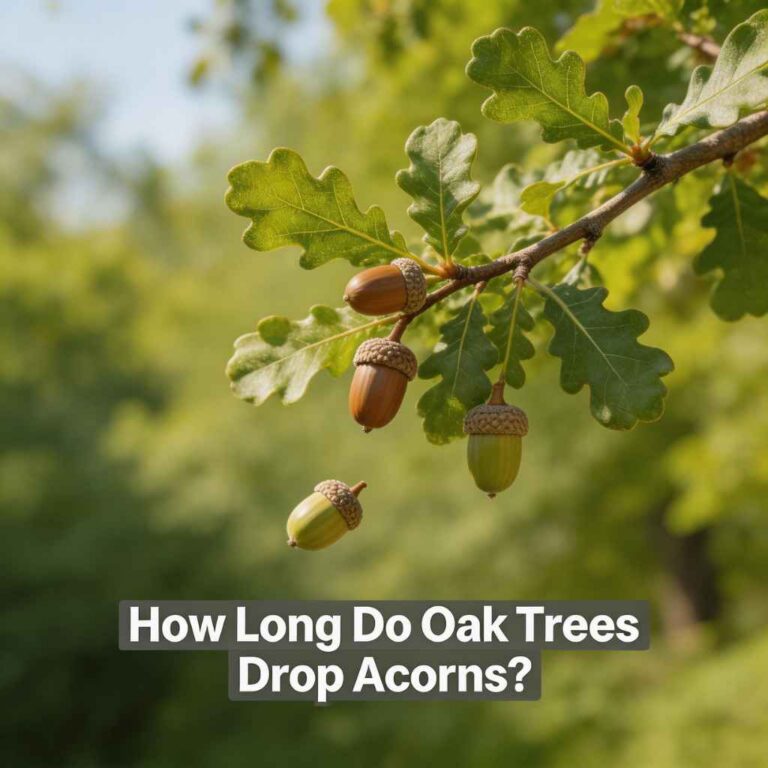
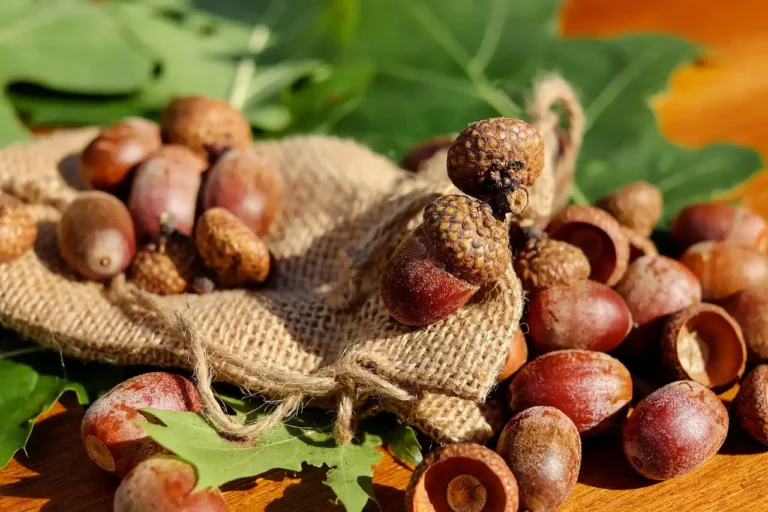
- Seeds on the ground: Acorns (oak) or the papery, winged samaras that spin like helicopters (maple)?
- Bark texture: Deep, blocky furrows (mature oak) or smoother plates that develop with age (mature maple)?
Recommended Tree & Leaf Identification Guides
Why It Matters For Woodworkers: Oak Vs Maple Lumber
Once a tree is milled into lumber, the differences that started with the leaves show up again in the grain. Oak has an open, coarse-pored grain structure with prominent medullary rays — the reason quartersawn oak shows that distinctive fleck figure. Maple, by contrast, has a tight, fine, closed grain with almost no visible pore structure, which is why maple surfaces look and feel so smooth.
Hardness follows a similar split. On the Janka hardness scale, red oak sits around 1,290 lbf and white oak around 1,360 lbf, while hard (sugar) maple runs harder still at roughly 1,450 lbf — soft maples like red or silver maple drop to around 950 lbf, closer to walnut. That makes hard maple one of the more dent- and wear-resistant domestic hardwoods, which is exactly why it shows up in cutting boards, butcher blocks, workbenches, bowling alley lanes, and flooring for high-traffic areas.
The open grain that makes oak easy to spot in the woods also affects how it finishes. Oak’s large pores soak up stain unevenly on purpose — that’s what gives it dramatic, high-contrast color and makes it a favorite for traditional furniture, cabinetry, and flooring. Maple’s tight grain does the opposite: it resists stain and can blotch badly without a wood conditioner or gel stain first, so it’s usually finished clear, painted, or left natural to show off its subtle figure instead. White oak also has closed cell structures called tyloses that make it naturally water-resistant, which is why it’s the traditional choice for whiskey barrels and outdoor furniture, while maple is prized more for shock resistance and a smooth working surface than for weather exposure.
Frequently Asked Questions
What Are The Characteristics Of Oak Leaves?
Oak leaves are typically lobed and vary in shape depending on the oak species. They have a strong, sturdy structure, making them resistant to weather damage. Their color ranges from vibrant green in spring and summer to rich browns and reds in autumn.
Oak leaves play a crucial role in identifying the tree species.
How Do Oak Leaves Change In Autumn?
In autumn, oak leaves transition from green to a spectrum of reds, oranges, and browns. This color change occurs due to the breakdown of chlorophyll as daylight decreases. The vibrant hues make oak trees a popular choice for fall foliage enthusiasts, enhancing landscapes with their vivid displays.
Are Oak Leaves Good For Composting?
Yes, oak leaves are excellent for composting. They are rich in carbon, which helps balance nitrogen-rich materials in compost. To speed up decomposition, shred the leaves before adding them to the compost pile. Oak leaves contribute to creating nutrient-rich compost, which is beneficial for soil health and plant growth.
How Do Oak Leaves Benefit Wildlife?
Oak leaves provide essential habitat and food for various wildlife species. Insects, such as caterpillars, feed on oak leaves, supporting bird populations. The leaf litter also offers shelter for small mammals and insects. Oak ecosystems are biodiversity hotspots, supporting numerous species across different trophic levels.
Why Do Oak Leaves Remain On Trees In Winter?
Some oak species retain their leaves through winter, a phenomenon known as marcescence. This may protect buds from harsh winter conditions and provide winter habitat for animals. The retained leaves eventually fall in spring, contributing to the nutrient cycle by decomposing and enriching the soil.
Can You Tell Oak And Maple Apart By Bark Or Seeds Alone?
Yes, even without a single leaf in hand. Oaks drop acorns — a hard nut sitting in a scaly cap — while maples drop samaras, the papery, two-winged seed pairs that spin as they fall (often called “helicopters” or “whirligigs”). Bark tells a similar story on mature trees: oak bark forms thick, deep, blocky furrows, while maple bark tends to stay smoother longer before breaking into shallower plates or ridges with age. These clues are especially useful in winter or early spring, before leaves are out.
Which Wood Is Harder, Oak Or Maple?
It depends on the species. Hard (sugar) maple is actually harder than either red or white oak on the Janka hardness scale, which is why it’s a top choice for cutting boards, workbenches, and flooring in high-wear areas. Soft maples like red or silver maple, however, are notably softer than oak. If you’re choosing lumber for a project, it’s worth checking the specific species rather than assuming “oak” or “maple” alone tells you the hardness.
Conclusion
Oak leaves have a unique charm with their bold and jagged edges. They stand strong and proud. These leaves are often associated with strength and durability. Their dark green color in summer turns to a deep red or russet in fall.
Oak trees provide excellent shade and shelter for wildlife. Their leaves take longer to decompose, adding to the soil’s richness over time. Maple leaves, on the other hand, are known for their vibrant colors. They transform into stunning shades of orange, yellow, and red during autumn.
Their simple shape is easy to recognize. Maple trees are often used in landscaping for their beauty. The leaves decompose quickly, enriching the soil faster. Both oak and maple leaves offer unique benefits. Choosing between them depends on your preference for durability or color vibrancy.
Understanding their differences helps in making informed decisions for gardening or landscaping.
Sponsored / affiliate links. As an Amazon Associate I earn from qualifying purchases. I may earn additional commission from eligible campaigns.