How Much Does a Glue Cost: Your Ultimate Essential Guide
The cost of glue ranges from $2 for a simple craft glue to over $50 for specialty industrial adhesives. For most DIY and woodworking projects, a quality wood glue, super glue, or epoxy will cost between $5 and $20. The final price depends on the glue’s type, brand, size, and special features like being waterproof or fast-drying.
Walking down the adhesive aisle at a hardware store can feel a bit overwhelming, can’t it? You see rows of bottles, tubes, and cartridges, all promising the strongest bond. Prices are all over the place, and it’s hard to know if you need the $5 bottle or the $25 kit. It’s a common challenge for every DIYer, but I promise, it’s much simpler than it looks.
Don’t worry, you’re in the right place. I’m here to help you make sense of it all. Together, we’ll break down the different types of glues, what they cost, and how to choose the perfect one for your project without wasting a single dollar. Let’s get you ready to buy with confidence!
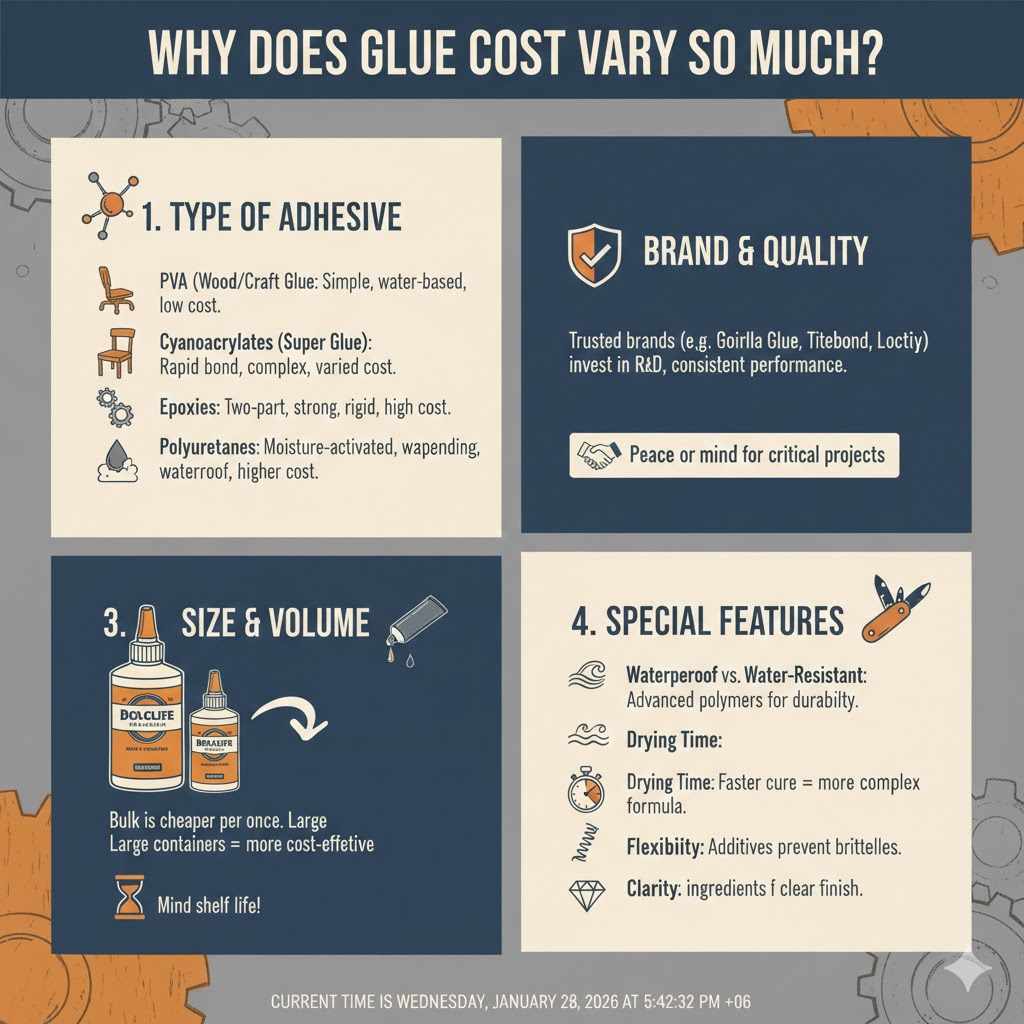
Why Does Glue Cost Vary So Much?
You might wonder why one small bottle of glue costs $3 while another of the same size costs $15. The price tag on an adhesive isn’t random; it’s based on some key factors. Understanding these will help you see why you’re paying what you are and ensure you get the right value for your project.
Type of Adhesive
The core chemistry of the glue is the biggest price driver. A simple water-based school glue is inexpensive to make. On the other hand, a two-part epoxy system requires more complex chemical components—a resin and a hardener—that need to be precisely formulated. Each type is designed for a different job, and their chemical makeup directly impacts the cost.
- PVA (Polyvinyl Acetate) Glues: These are your standard wood and craft glues. They are water-based and relatively cheap to produce.
- Cyanoacrylates (Super Glues): These create a rapid, strong bond through a chemical reaction. The formulation for different viscosities and additives (like rubber for impact resistance) affects the price.
- Epoxies: These are two-part systems that create an incredibly strong, rigid, and gap-filling bond. Their advanced chemistry and strength come at a higher cost.
- Polyurethanes: These glues are moisture-activated and expand as they cure, making them great for outdoor use and bonding dissimilar materials. Their waterproof nature and unique properties add to the cost.
Brand and Quality
Just like with tools, brand names often mean a history of research, development, and consistent quality control. Brands like Titebond, Gorilla Glue, and Loctite invest heavily in making sure their glues perform reliably every time. You’re paying for that peace of mind. Generic or store-brand glues can be a great value for non-critical applications, but for a tabletop you want to last for decades, the proven performance of a trusted brand is often worth the extra dollar or two.
Size and Volume
This one is simple economics: buying in bulk is usually cheaper per ounce. A small 2 oz. bottle of super glue might cost $5, while an 8 oz. bottle of the same type might cost $15. If you know you’ll be using a lot of a certain glue for a large project or multiple future projects, buying a larger container is more cost-effective. Just be mindful of the glue’s shelf life—it’s no bargain if half of it dries out before you can use it!
Special Features
Any feature that goes beyond a basic bond will add to the price. Think of these as upgrades.
- Waterproof vs. Water-Resistant: Creating a fully waterproof bond (like Titebond III) that can withstand constant moisture requires more advanced polymers than a water-resistant glue (Titebond II) meant for occasional humidity. This technology costs more.
- Drying Time: A 5-minute epoxy is more complex to formulate than a 30-minute epoxy, so it often carries a slightly higher price for the convenience.
- Flexibility: Adhesives that remain flexible after curing contain special additives to prevent them from becoming brittle, which increases the cost.
- Clarity: Glues that dry perfectly clear, like certain epoxies or super glues, may require more refined ingredients than those that dry a cloudy or yellowish color.
By keeping these four factors in mind, you can look at any glue on the shelf and have a good idea of why it’s priced the way it is.
A Breakdown of Common Glue Types and Their Costs
Let’s roll up our sleeves and look at the most common glues you’ll find. I’ve broken them down by type, typical cost, and what they’re best for. This will be your cheat sheet for your next trip to the store.
PVA Wood Glue (The Workhorse)
This is likely the glue you picture when you think of woodworking. PVA glue is creamy, easy to use, and creates a bond that is actually stronger than the wood itself. It cleans up with water and is non-toxic, making it a favorite for beginners and pros alike.
- Common Uses: Almost all indoor woodworking projects, including furniture building, cabinet making, joinery, and general wood repairs.
- Cost Range: $5 – $10 for a 16 oz. bottle.
- Pros: Affordable, strong, long working time, easy cleanup.
- Cons: Not fully waterproof (unless you buy a water-resistant or waterproof version), can fail in high-heat situations.
Cyanoacrylate or CA (Super Glue)
Known universally as “super glue,” this adhesive works in seconds. It’s perfect for quick fixes and bonding small, non-porous parts. It comes in different viscosities (thicknesses): thin for wicking into cracks, medium for general use, and thick for more control.
- Common Uses: Small, rapid repairs on wood, plastic, or ceramic. Reinforcing small wood joints or temporarily holding pieces together while the main glue dries (a “clamp-free” method).
- Cost Range: $4 – $12 for a small bottle or multi-pack.
- Pros: Incredibly fast bonding, works on many materials, available in different thicknesses.
- Cons: Brittle bond (can break on impact), can be messy, bonds skin instantly (be careful!).
Epoxy (The Powerhouse)
When you need ultimate strength and the ability to fill gaps, epoxy is your answer. It comes in two parts—a resin and a hardener—that you mix together. This starts a chemical reaction that creates a rock-solid, waterproof bond.
- Common Uses: Filling knots or cracks in wood, bonding dissimilar materials (like metal to wood), high-stress joints that need to be completely rigid.
- Cost Range: $8 – $30 for a dual-syringe or kit. Marine-grade epoxies can cost more.
- Pros: Extremely strong, 100% waterproof, excellent gap-filler, sticks to almost anything.
- Cons: Can be messy to mix and apply, longer curing time, more expensive than other glues.
Polyurethane Glue (The Expander)
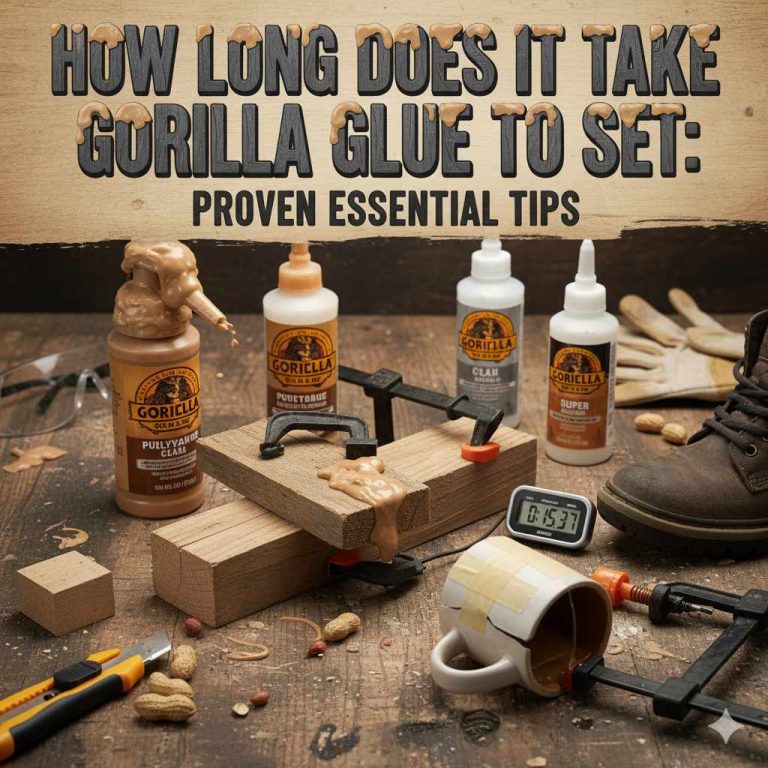
Polyurethane glue is unique because it is moisture-cured. It needs moisture to work, and as it cures, it expands into a foam. This makes it amazing for bonding imperfect surfaces and for projects that will live outdoors. Gorilla Glue is the most well-known brand of this type.
- Common Uses: Outdoor furniture, bonding wood to non-porous materials like stone or metal, joinery that may have small gaps.
- Cost Range: $10 – $25 for an 8 oz. bottle.
- Pros: 100% waterproof, expands to fill gaps, incredibly strong bond, sticks to many different materials.
- Cons: Can be very messy due to expansion (a little goes a long way!), requires clamping, stains skin. For more on how these glues work, the Department of Chemistry at the University of Southern Connecticut offers great explanations on polymers.
Construction Adhesive (The Heavy Lifter)
Sold in large caulk tubes, construction adhesive is a thick, paste-like glue designed for heavy-duty building tasks. It has amazing grab and can hold heavy materials in place, even vertically.
- Common Uses: Attaching subflooring, drywall, wall paneling, or securing landscape blocks. Not typically used for fine woodworking.
- Cost Range: $5 – $12 for a 10 oz. tube.
- Pros: Very strong, excellent gap-filler, grabs materials instantly.
- Cons: Long cure time, messy application, requires a caulk gun.
Glue Cost Comparison Table
Here’s a simple table to help you compare these common types at a glance:
| Glue Type | Average Cost | Best For | Key Feature |
|---|---|---|---|
| PVA Wood Glue | $5 – $10 (16 oz) | General Woodworking | Easy to Use & Strong |
| CA (Super Glue) | $4 – $12 (small bottle) | Quick Repairs | Bonds in Seconds |
| Epoxy | $8 – $30 (kit) | Gap-Filling & Ultimate Strength | Waterproof & Rigid |
| Polyurethane Glue | $10 – $25 (8 oz) | Outdoor Projects | Expands & Waterproof |
| Construction Adhesive | $5 – $12 (10 oz tube) | Heavy Construction | High Initial Grab |
How to Choose the Right Glue Without Overspending
Now that you know the players, how do you pick the winner for your project? The goal is to match the glue’s strengths to your needs. This way, you never pay for features you don’t require.
1. Match the Glue to Your Project’s Needs
First, ask yourself a few simple questions about your project:
-
- Will it live indoors or outdoors? If it’s going outdoors, you need a waterproof glue like a polyurethane or Titebond III. For an indoor bookshelf, standard PVA wood glue is perfect and more affordable.
- Is the joint structural? For a chair leg that will hold weight, you need a strong glue like PVA or epoxy. For attaching a decorative piece of trim, a simpler adhesive will do.
– What materials are you joining? If you’re bonding wood to wood, wood glue is the obvious choice. But for wood to metal, you’ll need an epoxy or polyurethane adhesive.
2. Consider Cure Time vs. Work Time
“Work time” (or “open time”) is how long you have to position your pieces before the glue starts to set. “Cure time” is how long it takes to reach full strength.
- If you are assembling a complex project with many parts, you need a longer work time. Standard wood glues give you 5-10 minutes, which is usually plenty.
- If you need a quick fix for a small item, a CA glue that sets in seconds is ideal.
- Epoxies come in different cure times, from 5-minute quick-sets to 60-minute versions that give you lots of time for adjustments.
3. Buy the Right Amount
Glue has a shelf life, typically 1-2 years. Buying a giant gallon of wood glue is a bad deal if you only use a quarter of it before it goes bad. For most DIYers, a 16 oz. bottle of wood glue is a great starting point. It provides a good value per ounce and you’ll likely use it up before it expires. Always check the container for a manufacturing or expiration date if possible.
4. Read the Label!
This is the most important tip I can give you. The manufacturer’s label is your instruction manual. It will tell you everything: what materials it works on, the ideal application temperature, the expected work and cure times, and safety information. Paying attention to warnings about ventilation is important, especially when working with products that contain volatile organic compounds (VOCs). The U.S. Environmental Protection Agency (EPA) has excellent information on this topic to keep you safe.
Is Expensive Glue Always Better?
This is a fantastic question, and the simple answer is no. “Better” always depends on the job. The most expensive glue is not always the best choice.
Think of it this way: you wouldn’t use a sledgehammer to hang a picture frame. In the same way, you don’t need a $40 marine-grade epoxy to build a simple wooden birdhouse. A $7 bottle of waterproof PVA wood glue would be “better” for that job because it’s strong enough, easier to use, and more cost-effective.
The best glue is the one that meets the specific demands of your project. An expensive glue might have features—like the ability to cure underwater or withstand extreme temperatures—that you simply don’t need for your indoor shelf project. Paying for those features is a waste of money. Focus on matching the glue’s capabilities to your project, not on a higher price tag.
Tips for Storing Glue to Maximize Its Lifespan (and Your Money!)
Buying the right glue is only half the battle. Storing it properly ensures you can use every last drop you paid for. A bottle of glue that dries out or spoils is money down the drain.
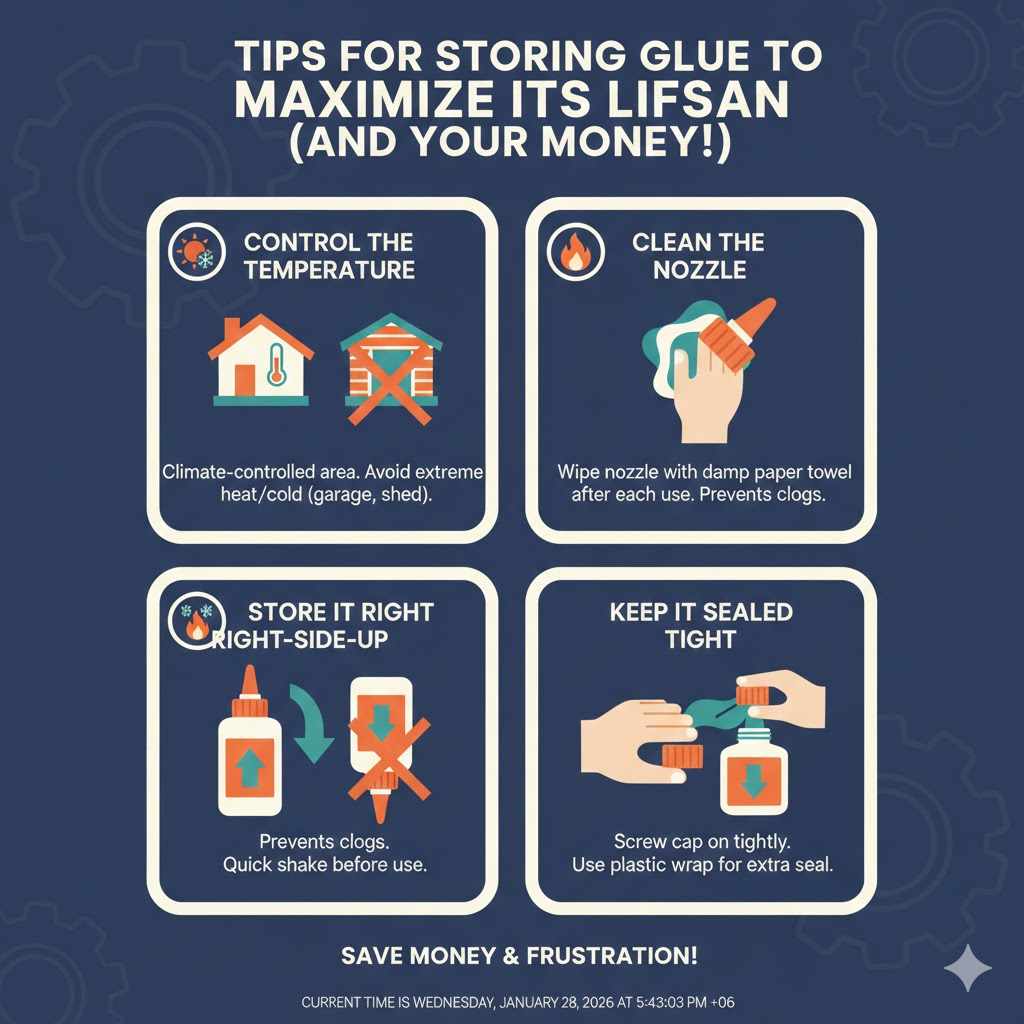
- Control the Temperature: Most glues don’t like extreme heat or cold. The ideal storage spot is in a climate-controlled area, like a cabinet in your home or a heated shop. Avoid leaving glue in a freezing garage in the winter or a hot shed in the summer, as this can break down the chemical structure.
- Clean the Nozzle: After each use, wipe the nozzle clean with a damp paper towel. This prevents the cap from getting glued shut and stops dried flakes from getting into your glue line on the next project.
- Store It Right-Side Up: While some people suggest storing bottles upside down, I find it’s better to store them right-side up. This prevents glue from collecting in the nozzle and drying out, creating a plug. A quick shake before use is all you need.
- Keep It Sealed Tight: Make sure the cap is screwed on tightly to prevent air from getting inside. Air is what causes many glues to cure or skin over. For extra protection, you can place a small piece of plastic wrap over the opening before putting the cap on.
By following these simple steps, you can easily double the effective life of your adhesives, saving you money and frustration.
FAQs: Your Glue Cost Questions Answered
What is the cheapest all-purpose glue for home repairs?
For general home repairs, a good quality PVA wood glue is one of the most versatile and affordable options, usually costing around $5-$10. It works great on wood, paper, and other porous materials. For quick fixes on non-porous items like plastic or ceramic, a multi-pack of super glue (CA glue) is a great value, often under $5.
How much does waterproof wood glue cost?
Waterproof wood glue typically costs a bit more than standard interior wood glue. Expect to pay between $8 and $20 for a 16 oz. bottle of a quality waterproof glue like Titebond III. This is a small price to pay for the durability it provides for any outdoor or bathroom projects.
Do I really need expensive epoxy?
Most of the time, no. You only need epoxy for specific, demanding jobs. These include projects that require extreme strength, need to be 100% waterproof and weatherproof, involve filling large gaps or voids in wood, or require bonding two different materials like metal to wood. For standard furniture building, wood glue is perfectly sufficient and more affordable.
Is brand name glue worth the extra cost?
For most woodworking projects, I believe it is. Established brands like Titebond or Gorilla Glue have invested years in research and have strict quality control. This means you can trust the glue to perform consistently every time. The extra dollar or two you spend is for reliability and peace of mind, especially on a project you’ve spent hours working on.
Can I save money by making glue at home?
While you can make simple glues at home from things like flour or milk (casein glue), these are not suitable for modern woodworking or structural repairs. Commercial adhesives are precisely engineered chemical formulas designed for strength, durability, and specific applications. The cost and performance of a good quality wood glue are far superior to any DIY alternative for serious projects.
How much glue do I need for my project?
A little goes a long way! For most wood joints, you only need a thin, even layer of glue on one surface. When you clamp the pieces together, you should see a small, even bead of squeeze-out along the joint line. A standard 16 oz. bottle of wood glue can handle numerous small to medium-sized projects, like several cutting boards, picture frames, or a small end table.
Putting It All Together
So, how much does a glue cost? As we’ve seen, the answer truly is: it depends on the job. It’s not about finding the cheapest bottle on the shelf, nor is it about grabbing the most expensive, high-tech adhesive. It’s about making a smart choice based on your project’s needs.
You can now walk into that hardware store aisle with a clear head. You know the difference between PVA, epoxy, and polyurethane. You understand that “waterproof” costs a little more for a reason, and you know how to choose the right amount so none of it goes to waste. For most people starting out, a reliable 16 oz. bottle of PVA wood glue for under $10 is the perfect tool to begin your journey.
Forget the confusion and the guesswork. You have the knowledge now to pick the right glue at the right price, every single time. Happy building!