How to Glue Painted Wood Together (Step-by-Step)
Gluing painted wood requires sanding the joint line first — paint prevents adhesive from reaching wood fibers and cuts bond strength to 20-60% of a bare-wood joint. Skipping that step gives you a bond only as strong as the paint’s own adhesion, which fails under load. This guide covers which glue works by paint type, the step-by-step process, why cure time extends to 36-48 hours on painted surfaces, and how to fix a failed joint.
Quick Answer
Sand the joint area with 120-grit sandpaper, then use PVA wood glue for water-based paint or two-part epoxy for oil-based paint. Clamp for at least 30-60 minutes and allow 36-48 hours of cure time — longer than the standard 24 hours because paint film slows moisture migration out of PVA glue.
Why Paint Makes Gluing Difficult
Best Wood Glue for Painted Surfaces Pick
Gorilla Wood Glue (18 oz)
PVA water-resistant formula that bonds to water-based painted surfaces reliably after light sanding. Widely available and easy to apply.
- Best for: Water-based painted surfaces and general painted-wood joints
- Why we picked it: PVA formula bonds well over latex/acrylic paint; water-resistant once cured
- Main drawback: Needs 30-60 min clamp time; sanding still required for best hold
Compare more wood glue for painted wood options
 Option 1 Titebond III Ultimate Wood Glue (16 oz)
|
 Option 2 Gorilla Ultimate Waterproof Wood Glue (8 oz)
|
 Option 3 Titebond Instant Bond Wood Adhesive (Thick, 2 oz)
|
As an Amazon Associate we earn from qualifying purchases.
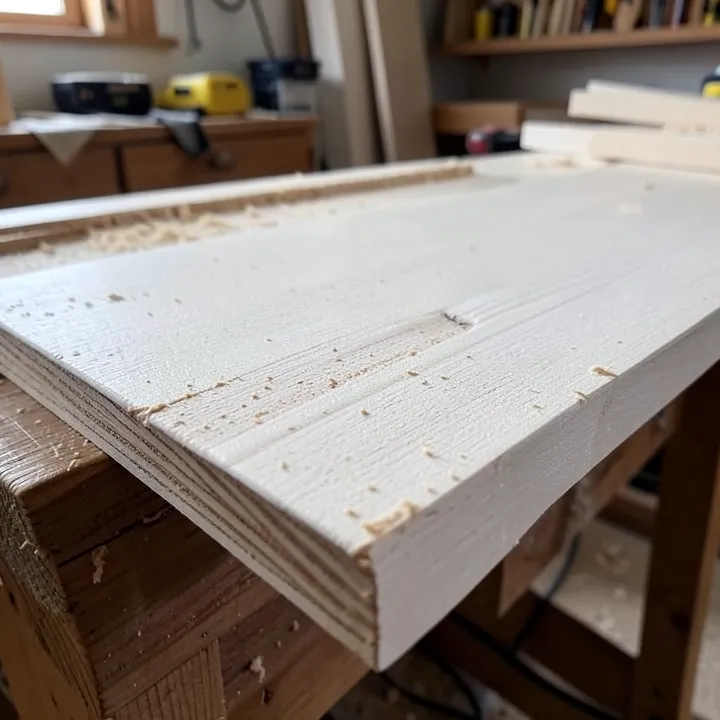
Painted wood is a non-porous surface that prevents wood glue from penetrating wood fibers. Standard PVA wood glue cures by absorbing into open wood cells and mechanically interlocking with the fiber structure — paint creates a barrier that stops this process. The adhesive bonds to the paint layer instead of the wood, and the joint is only as strong as the paint’s adhesion to the substrate beneath.
Bond strength on painted surfaces: PVA adhesives bonded over paint typically achieve 20-60% of bare-wood bond strength, depending on paint type and prep quality. Oil-based paints produce the lower end of that range without sanding; water-based paints with 120-grit prep can reach the higher end.
This matters most in structural applications — furniture joints, cabinet repairs, load-bearing trim. For decorative or light-duty projects (picture frames, craft pieces), a 40-60% bond may be sufficient. Knowing the use case determines how aggressively you need to sand and which glue type to choose.
What Type of Glue to Use on Painted Wood
Paint type determines your glue choice more than any other factor. Water-based (acrylic/latex) paints are slightly porous and compatible with PVA glues; oil-based paints are dense and non-porous, requiring epoxy or polyurethane for a reliable bond.
Glue by Paint Type: Quick Reference
| Paint Type | Best Glue | Prep Required | Cure Time |
|---|---|---|---|
| Water-based (latex/acrylic) | PVA / Titebond III | 120-grit sand at joint | 36-48 hours |
| Oil-based (alkyd/enamel) | Two-part epoxy | 120-150 grit sand + wipe | 24-72 hours (epoxy-dependent) |
| Unknown paint type | Polyurethane (Gorilla Glue) | Light sand, moisten surface | 24 hours initial, 72 full |
| Cannot sand (decorative) | Construction adhesive | Clean surface only | 24-48 hours |
PVA Glue on Painted Wood
PVA (polyvinyl acetate) glues like Titebond III and Gorilla Wood Glue are the best choice for water-based painted surfaces after sanding. They’re easy to apply, clean up with water, and provide adequate strength for most non-structural applications. The one limitation: PVA requires moisture to cure, and paint slows that moisture exchange — extend your cure time to 36-48 hours rather than the standard 24.
Epoxy on Painted Wood
Two-part epoxy is the strongest option for oil-based painted surfaces and the best choice when you cannot sand down to bare wood. Epoxy cures through chemical polymerization rather than moisture absorption, so the paint barrier doesn’t affect its cure process. The trade-off: epoxy can cause paint delamination over time on flexible or outdoor joints — the wood moves with temperature changes, the epoxy doesn’t, and the paint bond eventually fails at the interface. Use epoxy for rigid indoor joints; use polyurethane for outdoor or flexible applications. See our guide on sealing wood before epoxy for related prep steps.
Polyurethane Adhesive on Painted Wood
Polyurethane adhesives (original Gorilla Glue) work on both paint types and are particularly useful when the paint type is unknown or when the joint will face moisture or temperature changes outdoors. They require a lightly dampened surface to activate, expand slightly during cure (foam slightly), and grip both porous and non-porous surfaces. Sand first, wipe the surface with a barely damp cloth, apply glue to only one surface, and clamp firmly.
How to Glue Painted Wood Together: Step-by-Step
Follow these steps in order. The surface prep takes 5-10 minutes but determines whether the bond lasts weeks or years.
Step 1: Identify the Paint Type
Rub a cotton ball dampened with rubbing alcohol on the painted surface. If paint color transfers to the cotton, it’s water-based (acrylic/latex) — use PVA glue. If nothing transfers, it’s oil-based (alkyd/enamel) — use epoxy. This two-minute test determines everything about your glue selection.
Step 2: Sand the Joint Line
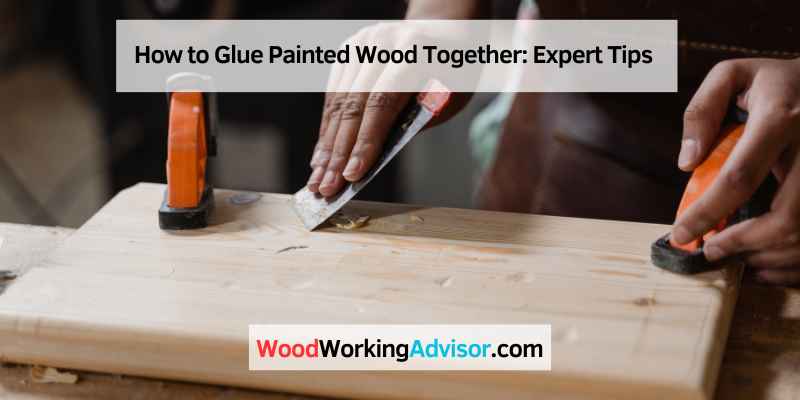
Sand only the area where the glue will be applied — not the whole surface. Use 120-grit sandpaper and apply moderate pressure along the grain. Sand until the paint is dull and slightly scratched; you don’t need to remove all the paint, just break the surface gloss. For best results on structural joints, sand down to bare wood at the glue line. Wipe away dust with a dry cloth.
- Mark the joint line: Use a pencil to mark exactly where the glue will contact each piece — sand only within those marks to avoid visible sanding marks on the painted finish.
- Sand with 120-grit: Use short strokes parallel to the wood grain. Apply even pressure for 20-30 seconds per surface. The paint should look scratched and dull, not shiny.
- Remove dust: Wipe with a dry, lint-free cloth. Do not use water here — moisture on the sanded surface interferes with PVA adhesion.
- Apply glue to both surfaces: Spread an even, thin bead of your chosen adhesive on both mating surfaces. Too much glue squeezes out under pressure and doesn’t improve strength.
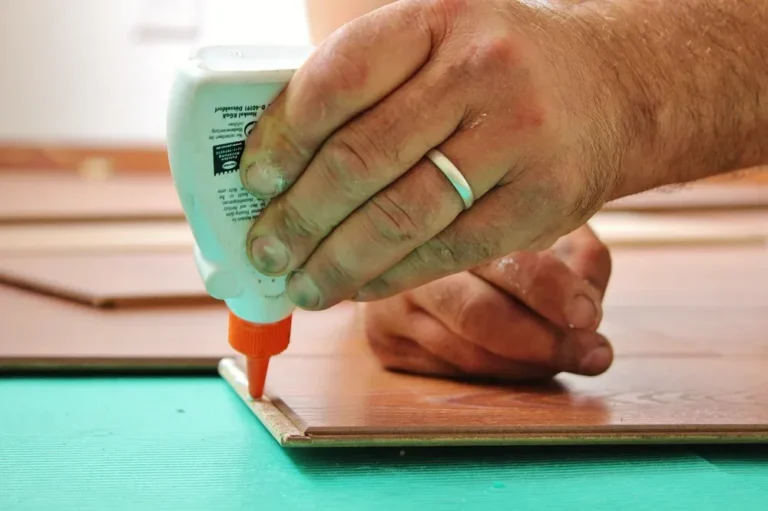
- Press pieces together and clamp: Align the pieces, press firmly by hand for 30 seconds, then apply clamps. Use enough pressure to squeeze a small amount of glue out at the joint line (that tells you coverage is complete).
- Let cure 36-48 hours: Do not apply stress to the joint until fully cured. On painted surfaces, 36-48 hours is minimum for PVA; epoxy joints vary by product (check the label).
Cure Time on Painted Wood Surfaces (Why It Takes Longer)
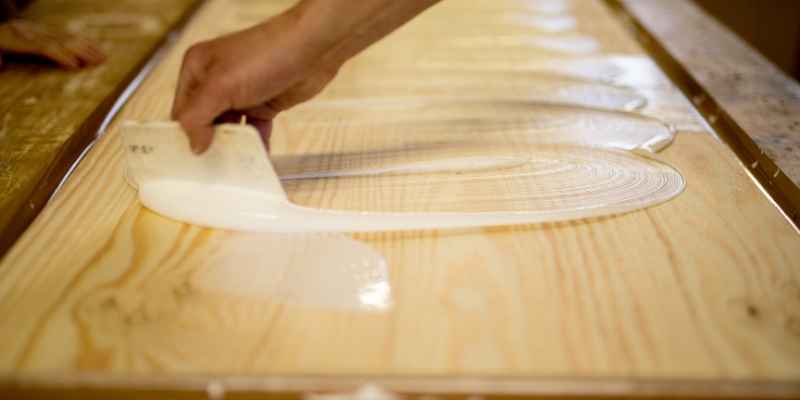
PVA wood glue cures by releasing moisture into surrounding wood fibers through a process called diffusion. On bare wood, moisture migrates rapidly into the open cell structure, allowing full cure in 24 hours at 70 degrees Fahrenheit and 50% relative humidity. On painted wood, the paint film acts as a vapor barrier: moisture escapes more slowly, the glue stays workable longer, and full polymer cross-linking takes 36-48 hours minimum.
Removing clamps at the standard 30-60 minute mark is fine — the joint has enough initial tack to hold alignment. But applying any real load (closing a cabinet door, bearing weight on a furniture joint) before 36-48 hours risks breaking the bond before it has fully developed. Mark the piece with painter’s tape as a reminder and leave it undisturbed.
Temperature and humidity matter: Below 50 degrees F, PVA glue gels and cures incompletely — keep the gluing area above 50 degrees F during cure. High humidity (above 70%) slows cure further; low humidity (below 30%) can cause the glue to skin over before assembly, weakening the bond.
Troubleshooting: When Glue Won’t Stick to Painted Wood
Glue Not Bonding at All
If the joint separates cleanly with no wood fibers on either surface, the glue bonded only to the paint. This happens when the surface wasn’t sanded, or when oil-based paint was used with PVA glue. Fix: strip the joint, sand more aggressively (or down to bare wood), and switch to epoxy if the paint is oil-based. For painted surfaces where visible sanding marks would be a problem, use construction adhesive instead — it bonds to unprepared painted surfaces well enough for decorative pieces.
Glue Working Initially But Failing Later
Delayed failure (joint holds for days or weeks then separates) usually means the glue bonded to paint that later delaminated from the wood — particularly common with old or poorly adhered paint layers. Before gluing, check that the existing paint is firmly adhered by pressing adhesive tape onto the surface and pulling it off sharply. If paint lifts with the tape, strip that area first. There’s no point gluing a joint whose substrate is already failing.
Uneven Gap at the Joint Line
For gaps up to 1/8 inch, two-part epoxy gap-fills reliably. PVA glue is not a gap filler — it requires tight contact to develop strength. For decorative repairs where gap-filling is the primary goal (cracked painted trim, loose miters), construction adhesive or a paintable wood filler is more appropriate than wood glue.
Finishing After Gluing Painted Wood
Once the joint is fully cured, sand the squeeze-out flush with 120-grit, then 220-grit. PVA glue does not accept paint well — any visible glue residue will show as a dull, non-absorbent patch through new paint. Wipe the joint area with a damp cloth first to confirm the glue is fully cured (tacky glue will smear; fully cured glue will not). Touch up with matching paint using a small brush; two thin coats cover better than one thick coat. For painted surfaces that were prematurely painted, allow additional drying time before the touch-up coat.
Frequently Asked Questions
Does wood glue work on painted wood?
Yes, but at reduced strength. PVA wood glue on painted surfaces bonds to the paint layer rather than the wood, producing 20-60% of bare-wood bond strength depending on paint type and prep quality. For reliable results, sand the joint line with 120-grit sandpaper first to expose wood fibers, then apply glue directly to the sanded area. See our dedicated guide on whether wood glue works on painted wood for more detail on each paint type.
What type of glue is best for painted wood?
PVA (Titebond III or Gorilla Wood Glue) is best for water-based painted surfaces after sanding. Two-part epoxy is best for oil-based painted surfaces or when sanding is not possible. Polyurethane adhesive (original Gorilla Glue) works on both paint types without as much sanding. Construction adhesive is the choice when the surface cannot be sanded and the application is decorative rather than structural.
Can you glue painted wood to unpainted wood?
Yes, and it produces a stronger bond than gluing two painted surfaces together because the unpainted side bonds directly to wood fibers. Apply glue to both surfaces, including the painted one. Sand the painted side with 120-grit at the joint line. The unpainted side requires no special prep beyond being clean and dust-free. The bond strength depends on the paint prep on the painted side.
How long does glue take to dry on painted wood?
PVA glue requires 36-48 hours to fully cure on painted surfaces — longer than the standard 24 hours on bare wood because the paint film slows moisture migration, which PVA needs to cross-link properly. Clamps can typically come off after 30-60 minutes (the joint has enough tack to hold alignment), but do not apply any structural load until the full 36-48 hour cure is complete. Epoxy cure times vary by product, typically 24-72 hours.
Do you need to sand painted wood before gluing?
Yes, for any joint that needs to hold under load. Sanding with 120-grit breaks the paint film’s gloss, creating a mechanical key for the adhesive and allowing it to partially penetrate the paint layer. Without sanding, the bond relies entirely on the paint’s adhesion to the wood beneath — which is weaker than a direct wood-to-glue-to-wood joint. The exception: construction adhesive on decorative pieces where no structural strength is required.
Conclusion
Gluing painted wood successfully comes down to three decisions: identify the paint type (alcohol rub test), choose the right glue (PVA for water-based, epoxy for oil-based), and sand the joint line with 120-grit before applying anything. Allow 36-48 hours of cure time — longer than bare wood because paint slows moisture migration. For structural joints, sand down to bare wood at the glue line. For decorative repairs where sanding isn’t possible, construction adhesive gives the most reliable hold on unsanded painted surfaces.
For more on adhesive options and wood preparation, see our wood glue buying guide and the complete reference on what wood glue won’t stick to.
Sponsored / affiliate links. As an Amazon Associate I earn from qualifying purchases. I may earn additional commission from eligible campaigns.